Mindful travel is not about checking places off a list; it is about stepping together into a quieter rhythm, where every shared sunset, whispered conversation, and unhurried cup of tea becomes part of the story you are writing as a couple.In an age of relentless notifications and bottomless to-do lists, the idea of escaping with a partner has never felt more urgent. Yet the most meaningful journeys are no longer measured in miles or passport stamps, but in the depth of attention we offer each other along the way. Mindful travel asks couples to slow down, to soften the edges of everyday life, and to treat time together as the rare and luminous resource it is. It is less a vacation and more a conscious practice: putting the phone face down, looking up at the sky, and choosing, again and again, to be fully present with the person beside you.
Psychologists who study relationships and travel have long suggested that shared experiences can strengthen emotional bonds. When partners step outside their usual environment, they often see new sides of each other: the way one person negotiates a crowded market, the joy the other finds in a spontaneous detour down an unfamiliar lane. Novelty, handled gently rather than frenetically, nudges couples into deeper communication. They must rely on each other, interpret new cultures together, soothe anxieties, and celebrate the small triumphs of navigating the unknown. Over time, those memories become a private language, a mosaic of moments to return to when daily life feels heavy.
Mindful travel is, at its heart, an act of intentional pause. Instead of rushing to capture every viewpoint for social media, it invites couples to watch the way afternoon light moves across a stone courtyard, or to listen to the distant call to prayer drifting over a lagoon. It means planning days with pockets of stillness: a slow breakfast by a river before a hike, an hour of quiet reading side by side in a shady garden, ten minutes of shared breathing on a balcony as the world hums softly below. These pauses become the container that holds everything else – the laughter, the missteps, the unexpected delights.
For many couples, technology is the invisible third presence in their relationship. It sits on the dinner table between them, glows on bedside tables in dark hotel rooms, and steals glances meant for each other. To travel mindfully is to renegotiate that relationship with your devices. Perhaps it looks like agreeing to check messages only twice a day, switching phones to airplane mode during meals, or leaving them behind entirely for a sunrise walk. When the constant tug of the digital world fades, partners often rediscover the simple pleasure of unbroken conversation and mutual curiosity. The absence of distraction reveals not emptiness, but space – space to ask deeper questions, to share quieter worries, to dream out loud.
Most of all, mindful travel reframes the journey as a shared practice rather than a performance. You are not trying to have the perfect trip; you are learning, together, how to inhabit each moment more fully. This mindset can transform a delayed flight into an unexpected chance for people-watching over a pot of tea, or a rainy afternoon into a luxurious retreat under soft blankets with a novel and room-service soup. When couples travel this way, they are not running from their lives; they are building a more expansive, compassionate version of it – one that they can carry home long after the suitcases are unpacked.
Unplug and Reconnect: Why Mindful Travel Matters
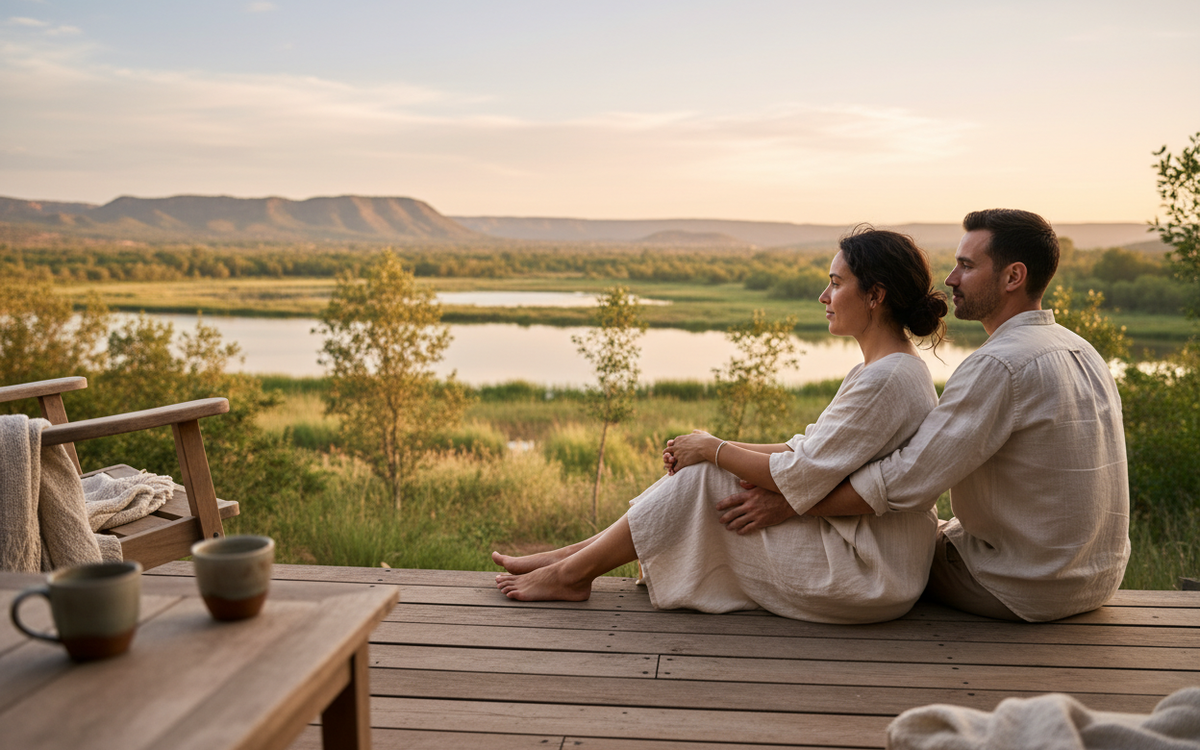
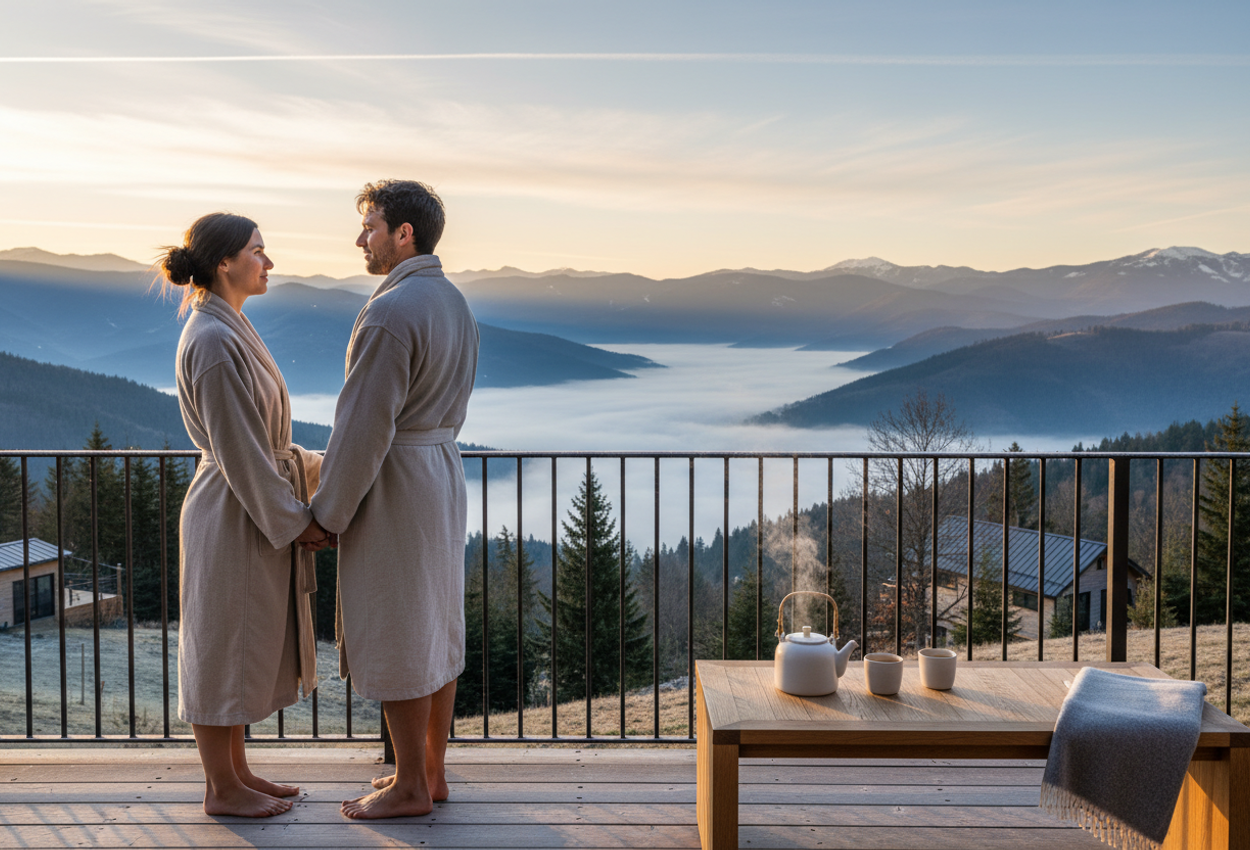
To understand why mindful travel matters so deeply for couples today, it helps to picture an ordinary evening at home. One partner clears a few lingering emails from the laptop; the other scrolls through social media in bed, thumb moving almost unconsciously. The television murmurs in the background. Hours pass in proximity but not in presence. By contrast, imagine both of you stepping onto a quiet terrace in a new place just before dawn, the air cool against your skin, the horizon slowly brightening. There is no laptop, no never-ending feed. Instead, there is the scent of damp earth, a kettle beginning to whistle, the warmth of your partner’s hand around yours. This is the difference mindful travel offers: the chance to trade habitual distraction for deliberate togetherness.
Relationship researchers often note that couples who engage in shared, meaningful activities experience stronger feelings of intimacy and satisfaction. When those activities are framed mindfully – approached with curiosity, presence, and a willingness to experience rather than control – they become even more potent. Navigating a new city, joining a meditation class, or simply wandering through a night market together becomes an exercise in collaborative awareness. You notice details at the same time: the sound of rain on temple roofs, the citrusy scent of a local herbal tea, the way children’s laughter echoes down a narrow alley. Later, recalling those impressions becomes a form of storytelling that reinforces your connection. Each memory is not just an image, but a felt experience you both can step back into.
Unplugging plays an essential role in this process. Continuous connectivity fragments attention; minds leap between messages, updates, and obligations. Even when partners sit side by side, their inner worlds are elsewhere. On the road, a conscious digital sabbatical can be transformative. Couples who set simple boundaries – no phones at meals, a shared charging station away from the bed, a commitment to spend the first and last 30 minutes of each day offline – often report that conversations deepen organically. Silences become comfortable rather than anxious. Eye contact lingers. Time stretches and softens when it is not carved into notifications, leaving both people more attuned to subtle shifts in each other’s moods and needs.
Intentional pauses are another cornerstone of mindful travel. These are not the accidental lulls that arise when you are too exhausted to move, but deliberately chosen moments of stillness threaded into your days. A couple might block out an afternoon with no plans except to sit beneath olive trees with a book, or to float in the sea without speaking, counting breaths instead of minutes. In those unhurried spaces, deeper emotional conversations often surface naturally. Without the pressure to rush off to the next attraction, there is time to talk about dreams, fears, or long-neglected topics that daily life rarely accommodates. These pauses also give each partner room to notice their own inner landscape – to ask what they are feeling, what they are craving, how they wish to show up in the relationship.
Mindful travel does not demand perfection or constant serenity; it simply encourages couples to wake up, again and again, to the moment they are already in. It asks one partner to listen fully when the other describes a strange dream from the night before, to really taste the spiced rice served on a banana leaf, to feel the warmth of a shared blanket on a mountain train. Over time, this repeated act of paying attention can shift the emotional climate of a relationship. Trust grows when each person feels seen and heard. Small irritations lose their edge when held within a larger sense of gratitude for the journey you are sharing. And because mindfulness is a portable skill, the habits built while wandering temple paths or coastal trails can return home with you, quietly changing the texture of everyday life.
Sacred Sanctuaries: Meditation Retreats in Sedona, Arizona
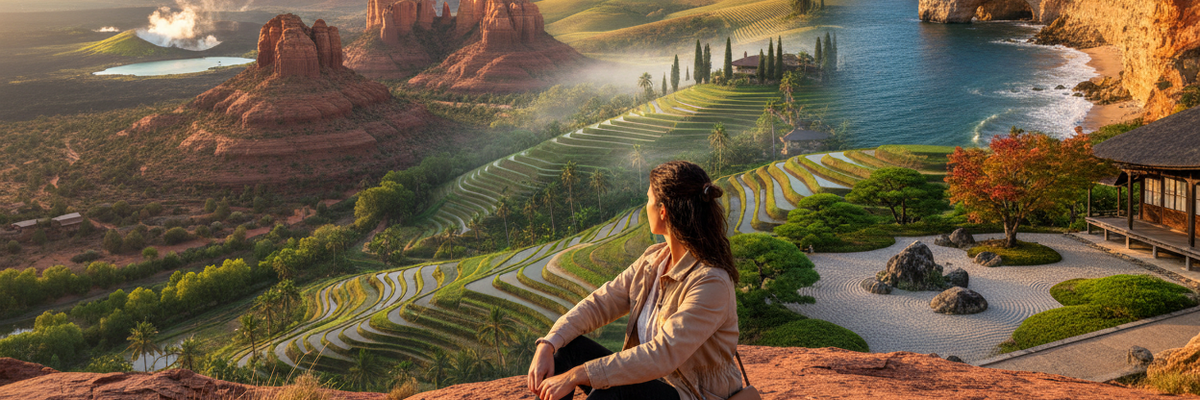
As your car winds into Sedona, the landscape begins to feel almost otherworldly. Monolithic red rock formations rise abruptly from the high desert like ancient cathedrals, their striated faces glowing rust, rose, and gold in the shifting light. The air is unusually clear; on still days, it seems to hum with a kind of quiet intensity. Long regarded as a place of potent spiritual energy, with vortex sites that many visitors experience as palpable fields of calm or awakening, Sedona has become a sanctuary for couples seeking not just escape, but transformation. Here, the land itself feels like a collaborator in your practice of presence.
Along the shaded banks of Oak Creek, L'Auberge de Sedona offers a more intimate, earthbound kind of magic. Creekside cottages are tucked among sycamores and cottonwoods, wooden decks hovering just above the murmuring water. Mornings often begin with soft light filtering through green leaves and the melodic rush of the creek, a natural sound bath that invites both of you to linger in bed a little longer. Step outside, and you can feel the coolness of the wooden planks under bare feet, smell coffee blooming in the morning air, and watch sunlight spark off the water. Many couples begin their day here with a short, guided meditation on the lawn, learning to follow the rhythm of the creek as an anchor for their breath.
In nearby Boynton Canyon, Mii amo sits cradled by towering red sandstone walls, an ultra-intentional destination spa designed around the idea of journey rather than quick-fix escape. With just a handful of suites, it feels more like a private sanctuary than a resort. Couples arrive, often a little frayed from the pace of their lives, and are invited to set a shared intention for their stay – healing, clarity, reconnection. Daily itineraries might include sound healing sessions in candlelit rooms where bowls sing in low, resonant tones around your bodies, chakra balancing rituals that use touch, crystals, and visualization to gently realign, or breathwork classes that leave you both floating in a strange but welcome lightness. Stepping back into the desert dusk after an evening session, the canyon seems even more alive, its rocks streaked violet and indigo under a rising moon.
Forest bathing, though more often associated with lush green landscapes, takes on an austere, poignant beauty in the juniper and piñon pine groves that skirt the red rocks. Couples can join guided walks that unfold at a pace so slow it initially feels unnatural. You are encouraged to run your fingers along weathered bark, to notice the delicate silver lichen spreading across a rock face, to inhale the resinous scent of sun-warmed needles. Over an hour or two, the nervous system begins to downshift. Conversation drifts in and out; sometimes you walk in silence, simply existing in parallel. In this desert version of forest bathing, the spaciousness of the land becomes a mirror for the spaciousness opening between you.
Evenings in Sedona belong to the sky. Far from major cities, the area offers some of the clearest stargazing in the American Southwest. At many retreats and resorts, local astronomers wheel out serious telescopes onto darkened lawns and terraces. Wrapped in blankets, you and your partner can recline on loungers while someone quietly points out constellations and distant galaxies, their red laser tracing stories that have guided humans for millennia. The Milky Way appears as a gauzy river overhead; shooting stars slice briefly through the darkness. It is difficult not to feel small in the best possible way, your worries dissolving into that immensity. For couples, this cosmic perspective can be gently humbling, a reminder that your love story is both tiny and precious against such an expansive backdrop.
For those willing to lean into the spiritual reputation of the region, intention-setting ceremonies and couples’ rituals can add another layer of meaning. Some practitioners offer customized sessions that blend Native-inspired elements with modern mindfulness: smudging with sage as you articulate what you wish to release, writing shared intentions on smooth stones and leaving them at a lookout, or creating simple altars of found feathers and leaves in a quiet corner of the canyon. What matters less is the specific form and more the shared devotion behind it – two people carving out time to ask who they want to become, together, in the years ahead.

Island Time: Mindful Moments in the Maldives
Landing in the Maldives feels like stepping into a watercolor. From the small seaplane window, you see a scattering of tiny emerald islets ringed by electric-blue lagoons and encircled with threads of white sand. The ocean grades from turquoise to inky navy, coral atolls revealed in shifting mosaics beneath the surface. When your boat finally cuts its engine at the jetty of your island resort, a hush descends, broken only by the soft lap of water against wood and the rustle of palm fronds in the trade winds. Time here moves differently – slower, more fluid – and for couples who arrive with the intention to be present with one another, the setting is almost impossibly supportive.
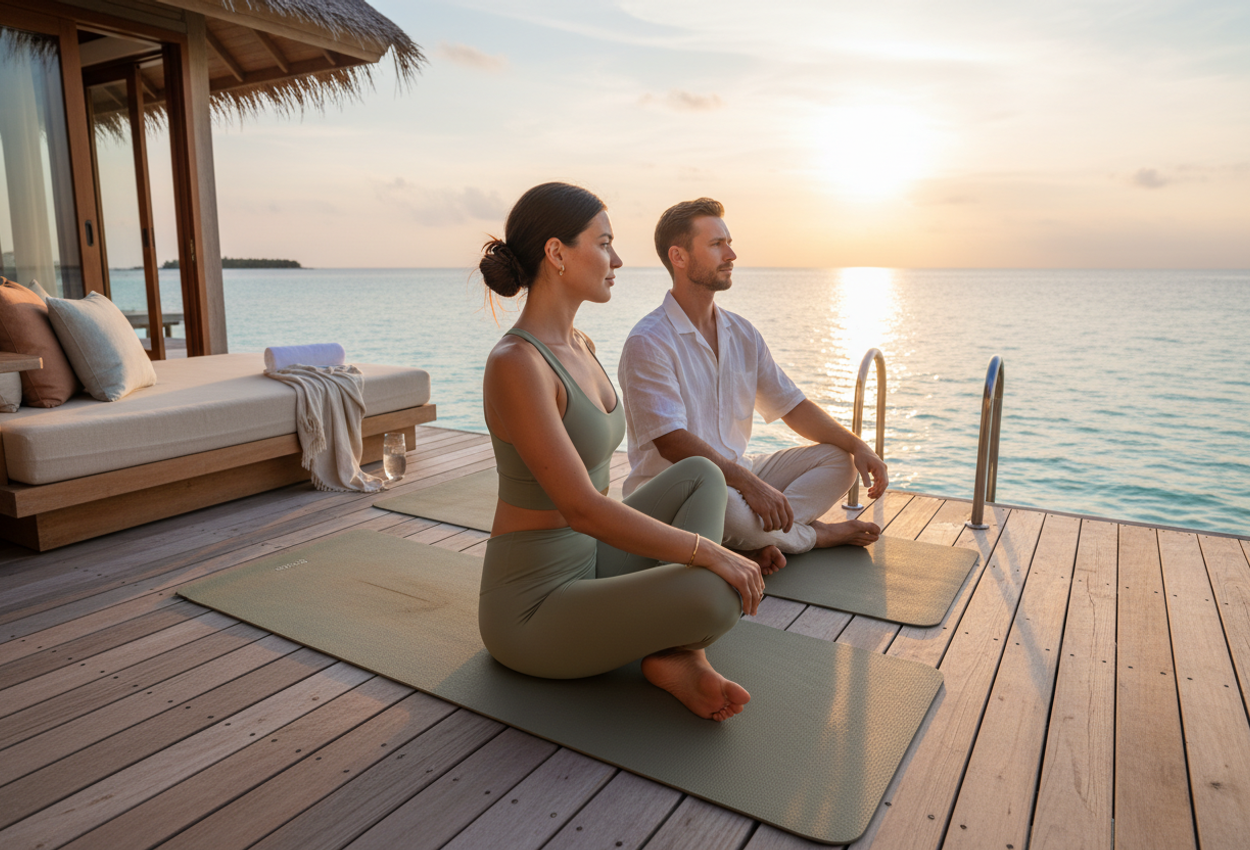
Overwater bungalows, perched on stilts above translucent lagoons, offer a kind of solitude that is rare in contemporary life. You wake to the sound of water whispering beneath your floorboards, slivers of sunlight slipping through the wooden shutters. Swinging open the glass doors, you step directly onto a private deck, the warm planks smooth underfoot. The early air tastes faintly of salt and frangipani; a gentle breeze moves through your hair. Many resorts offer sunrise yoga sessions either on these decks or in open-sided pavilions facing east. Side by side on your mats, you move slowly through postures as the horizon blushes pink and gold, the sun slowly lifting itself over the curve of the earth. The soundscape is minimal – just waves, breath, and the occasional distant call of seabirds. In that simplicity, couples often find an easeful, wordless intimacy.
Days in the Maldives invite a meditative rhythm. After a breakfast of just-cut tropical fruit, fresh coconut water, and flaky pastries enjoyed barefoot on the sand, you might pull on masks and fins and slip off your bungalow’s ladder directly into the sea. The first touch of water is a cool embrace, clearing whatever mental residue remains from your journey. As you float over a coral reef, a technicolor world rises up to meet you: parrotfish in flashes of turquoise and lime, angelfish hovering like stained glass, perhaps a slow, gliding turtle or a shy reef shark in the distance. Communication becomes reduced to gestures – pointing, widening your eyes behind your mask, squeezing your partner’s hand as a school of tiny silver fish pulses past like liquid light. It is a form of mindfulness that bypasses language altogether, rooted in shared wonder.
Back on the deck, there is no urgency to fill the hours. Maybe one of you reads while the other dozes in a hammock, the fabric cradling your body in a soft cocoon. The sun warms your skin; occasional clouds drift over, shifting the light. Lunch might be grilled reef fish, lime-bright salads, and cool glasses of sparkling water with mint. Mid-afternoon, you cool off with another swim, practicing the art of doing one thing at a time: swimming when you swim, tasting when you sip tea, listening when your partner speaks. Small rituals – reapplying sunscreen to each other’s shoulders, sharing a bowl of sorbet, pausing together to watch a heron stalk the shallows – become surprisingly tender.
Evenings in the Maldives are built for romance, but they can also be framed as mindful ceremonies of closure for the day. Many resorts arrange private dinners on the deck or on a small patch of sand at the water’s edge. Imagine a low table scattered with lanterns, toes buried in powder-soft sand, the sky above streaked peach, then mauve, then ink-dark. As you share dishes – perhaps fragrant curries, grilled lobster slick with lemon butter, or coconut-scented rice – you can make it a practice to eat slowly, describing flavors to each other, savoring textures. Between courses, you might reflect on the day: naming a moment that brought you peace, a conversation that surprised you, something you noticed about your partner that you appreciated.
Planning a mindful Maldivian escape also means paying attention to the subtler rhythms of place, like weather patterns and monsoon seasons. For many atolls, the clearest skies and calmest seas often fall between late December and April, though microclimates can vary. Taking the time to research when the sun will be gentlest, when visibility for snorkeling is highest, and when rainfall is less likely is an act of care, especially if one of you is sensitive to heat or storms. Knowing you have aligned your travel with the environment’s own cycles can set a calmer tone from the start, allowing you to spend less energy worrying about the forecast and more energy simply inhabiting the present moment together.
Kyoto's Quiet Charms: Finding Serenity in Tradition
Where the Maldives offers infinite horizon lines, Kyoto offers intimacy: narrow lanes edged with wooden machiya townhouses, hidden courtyards scented with moss and stone, temple bells echoing softly across tiled rooftops. Once the imperial capital of Japan, the city is a living palimpsest of history, its ancient rituals still pulsing beneath the surface of modern life. For couples drawn to a quieter, more contemplative kind of journey, Kyoto is an ideal classroom in the art of attentive living.
Begin in the gardens. At temples such as Ryoan-ji and Ginkaku-ji, linear time seems to loosen. You step onto weathered wooden verandas that border raked gravel gardens, where rocks are arranged in meticulously considered groupings amid swirls of white sand. Sit side by side on the tatami edge and let your eyes rest, not dart. Over a few minutes, details emerge: a single maple leaf resting on the gravel, the faint trace of a gardener’s rake marks, the subtle gradation between moss and stone. In these spaces, conversation naturally quiets, replaced by a shared absorption in something larger and older than either of you. It is a perfect setting to practice simply being, without the pressure to photograph or explain.
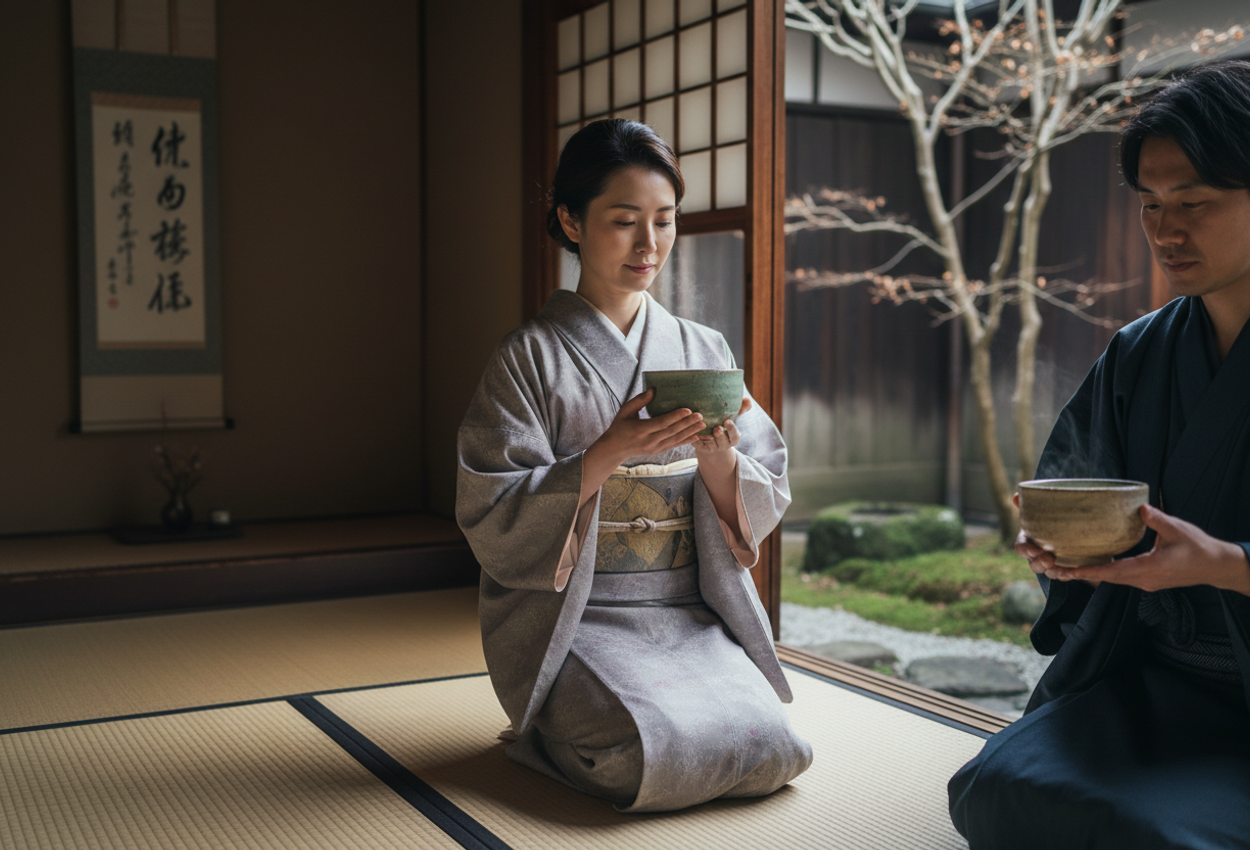
A traditional tea ceremony, often held in a small tearoom overlooking a garden, offers another opportunity for deep, shared attention. You might remove your shoes and step onto cool tatami mats, the faint aroma of straw rising as you kneel. The host moves with deliberate grace, whisking vibrant green matcha in ceramic bowls. You notice the soft rasp of bamboo whisk against clay, the gentle clink as porcelain meets wood, the sound of water just below boiling – a low, almost musical murmur. When the bowl is passed to you, its surface is warm against your palms, the glaze smooth in some places and slightly rough in others. Lifting it to your lips, you taste the thick, velvety bitterness of the tea, edged with a subtle sweetness. Its grassy intensity feels grounding, almost meditative. Sharing glances across the low table, you and your partner become co-participants in a centuries-old ritual that elevates something as simple as drinking tea into an act of reverence.
For couples curious about more overtly meditative practices, many temples in Kyoto offer Zazen – seated Zen meditation – sessions open to visitors. You might find yourselves in a wooden hall facing an open garden, sitting side by side on small cushions. A monk explains the posture: crossed legs or seiza, spine tall, hands gently resting in your lap. The invitation is to watch the breath, to notice thoughts without clinging. At first, the experience can feel challenging; knees ache, the mind leaps to dinner plans or travel logistics. Yet there is a particular intimacy in struggling through this stillness together. You might open your eyes at the sound of a bamboo clapper marking the end of the session and meet your partner’s gaze, both of you slightly dazed, a little proud. The shared silence leaves a residue of calm that can soften the rest of the day.
Outside temple grounds, mindful wandering becomes its own practice. Walking through districts like Higashiyama at dusk, when tour buses have departed and lanterns begin to flicker on, you can let yourselves be guided by sensory cues rather than a strict itinerary. The air carries layers of scent: grilling yakitori, wet stone after a passing shower, the faint perfume of incense wafting from a small shrine tucked into an alley. Your feet thrum softly against centuries-old paving stones; paper lanterns bob faintly in the breeze. Perhaps you duck into a tiny kissaten coffee shop where an elderly owner carefully hand-pours coffee into thick porcelain cups, or peek through a sliding wooden door to glimpse a small group practicing shamisen. Each discovery feels earned, not staged.
In Kyoto, even meals can be mindful experiences. A kaiseki dinner – the traditional multi-course haute cuisine of Japan – invites you to slow your pace to match the procession of dishes. Plates arrive like little artworks: a single grilled fish glossed with yuzu, a cube of sesame tofu trembling in a lacquered bowl, pickled vegetables arranged in careful color gradients. Instead of rushing, you and your partner might choose to describe to each other what you notice: the silkiness of tofu against the sharp salt of miso, the crunch of pickled radish, the aromatic steam rising from a pot of rice cooked over a small flame at the table. Speaking these sensations aloud anchors you both in the experience, turning a meal into a joint contemplation of taste and craftsmanship.
Bali Bliss: A Journey to Ubud's Spiritual Heart
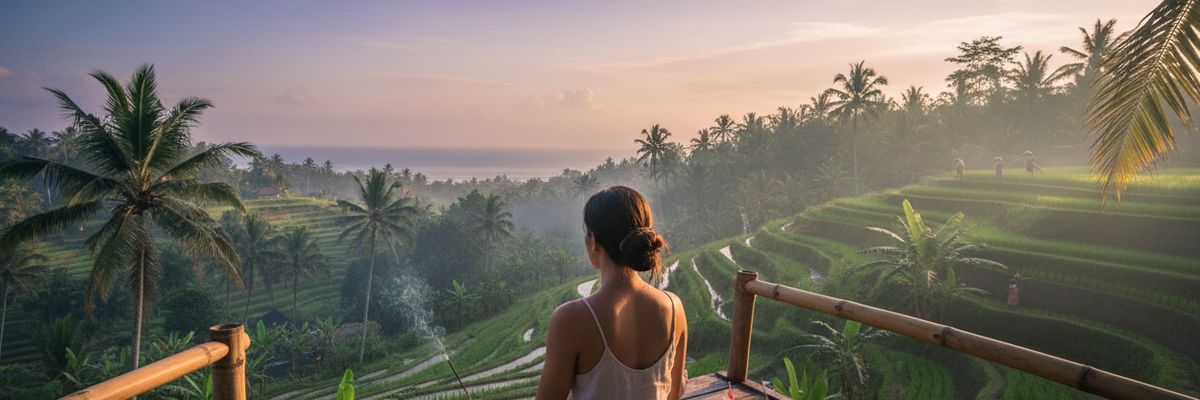
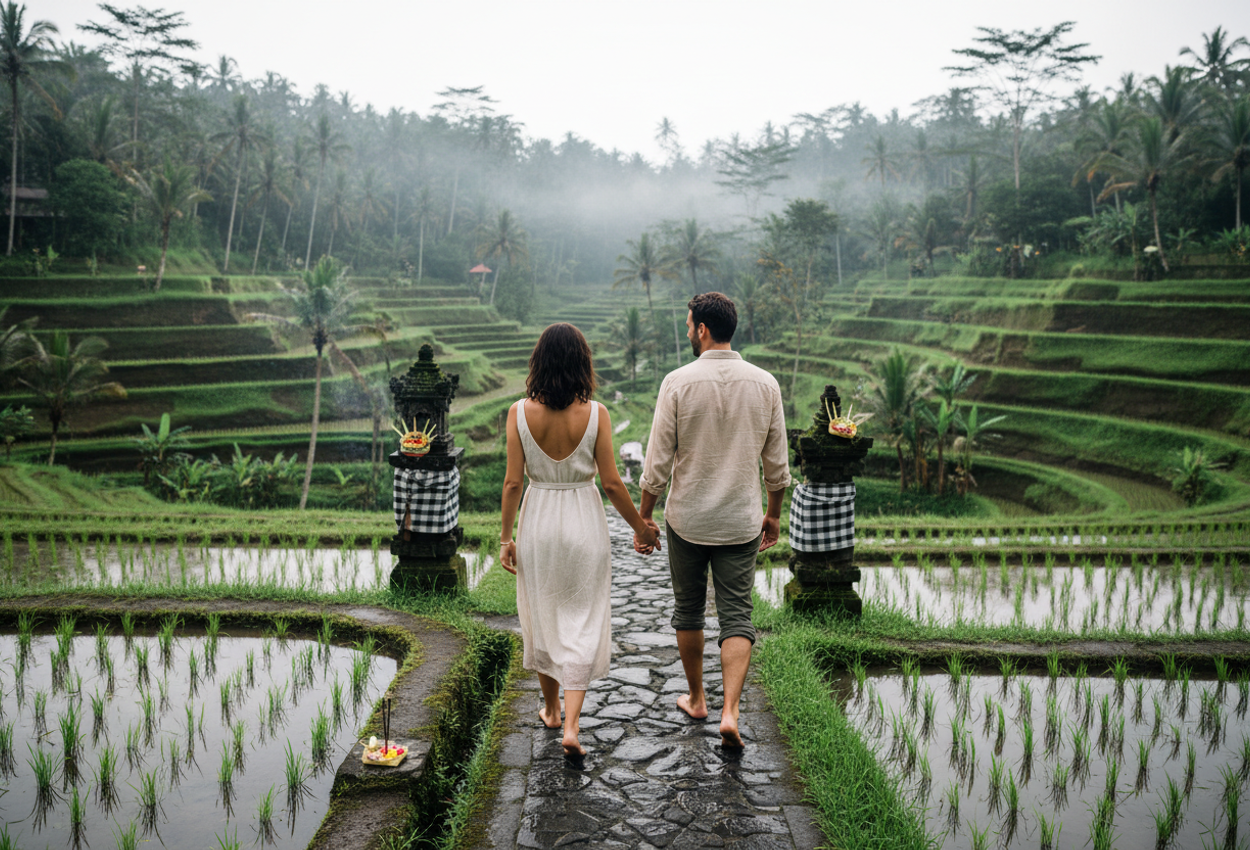
Arriving in Ubud, the spiritual heart of Bali, feels like stepping into a living tapestry of green. Terraced rice paddies cascade down hillsides in geometric ribbons, their flooded surfaces mirroring shifting clouds. Narrow roads wind past shrines draped with marigold garlands, scooters weaving between offerings of flowers and rice left in woven palm baskets. The air is heavy with the scent of frangipani, damp earth, and the faint curl of incense rising from family compounds. For couples, Ubud offers not just scenery, but a palpable sense of ritual woven into daily life – an ideal backdrop for deep reconnection.
Just outside town, retreats like COMO Shambhala Estate are tucked into jungle-clad hills above the Ayung River. Villas cling to the slopes, hidden among banana trees and bamboo groves, each with views of dense tropical foliage and, in some cases, private pools that seem to hover above the canopy. Mornings often begin in open-air yoga pavilions where you and your partner move through sun salutations as mist lifts from the valley, the chorus of cicadas and birds providing a wild soundtrack. Afterwards, you might wander down stone paths to a spring-fed vitality pool, the water cool and mineral-rich around your ankles, before sharing a breakfast of papaya, dragon fruit, and just-baked bread on a terrace open to the jungle’s breath.
At nearby Fivelements Retreat Bali, the architecture curves organically along the riverbank, pavilions built of bamboo and thatch that feel almost grown, rather than constructed. This is a place rooted in Balinese healing traditions, where the unseen – emotions, energy, ancestral stories – is given as much importance as the seen. Couples can book riverfront healing suites for treatments that blend intuitive massage with herbal oils, water blessings, and subtle energy work. Imagine lying side by side as practitioners move in slow, choreographed arcs around you, the sound of the river mingling with soft chanting and the occasional crackle of a distant offering being burned. The oils smell of lemongrass and vetiver; hands move with both tenderness and precision. Emerging afterward, limbs loose, you might sit together on a low platform above the water, sipping ginger tea and watching the play of light on the current.
One of Ubud’s quietest gifts is the opportunity to witness ritual up close. Early in the morning, streets are dotted with canang sari – small, woven palm offerings topped with bright petals and rice – placed on thresholds, statues, and dashboards. As a couple, you might walk slowly through the village lanes, careful not to step on the offerings, watching women in lace kebaya blouses carry towering temple baskets on their heads, sarongs swishing gently around their ankles. The clink of gamelan instruments drifts from community halls where rehearsals are underway. In this environment, mindfulness arises almost unbidden; there is so much texture, so many layers of meaning, that you cannot help but pay attention.
Wellness resorts in Ubud often invite guests into deeper layers of local wisdom through Balinese healing rituals. A hidden gem for open-hearted couples is arranging a visit to a traditional healer, often called a balian. In a simple open-air pavilion, surrounded by carved stone deities and curling ferns, you might sit together as the healer asks gentle questions through a translator, reads your pulses, or traces patterns of tension across your bodies. Treatments can range from strong, almost startling pressure-point work to quieter energetic clearing with flowers and blessed water. The experience is less about miraculous cures and more about submitting, together, to an unfamiliar form of care – trusting, listening, and reflecting on what arises afterwards as you share notes over fresh coconut at a roadside warung.
Back at the retreat, daily rhythms support a mindful way of being. There are jungle paths ideal for silent walks, where you can focus on the squelch of damp earth underfoot, the rustle of palm fronds, the flash of a kingfisher’s blue wings over the river. Open-air dining rooms serve organic, mostly plant-based cuisine: vibrant salads scattered with edible flowers, bowls of red rice and coconut, fragrant vegetable curries. Taking the time to eat slowly, to notice how you feel after nourishing meals, can subtly shift your relationship both to your own bodies and to each other. You may find yourselves discussing not just what tastes good, but what makes you feel energized, grounded, or at ease.
In the evenings, as darkness falls quickly over the valley, candlelight flickers in shrines and along stone steps. You and your partner might soak together in a stone bath strewn with flower petals, warm water loosening any remaining tension. Outside, the jungle’s night chorus swells: frogs, insects, the distant bark of a dog. Wrapped in sarongs afterward, you can sit on your balcony and let the humidity settle against your skin, talking softly or simply listening. In Ubud, the line between the sacred and the everyday feels porous; with a little intention, each hour can be treated as a kind of ceremony in which your presence with each other is the central offering.
Coastal Calm: Seaside Mindfulness in Kerala, India
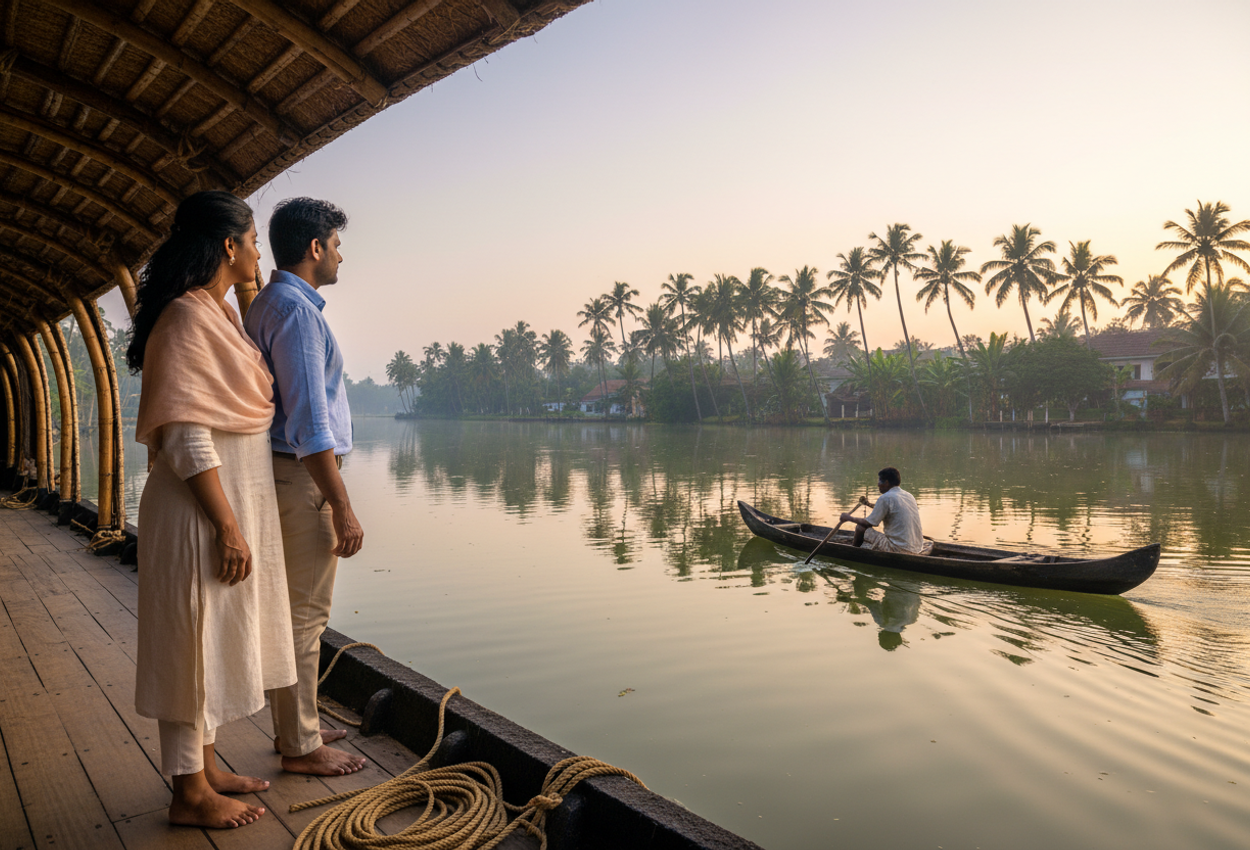
If Ubud is the realm of emerald jungle, Kerala is defined by water. On the southwestern edge of India, the state’s famed backwaters form a labyrinth of canals, rivers, and lakes fringed with coconut palms and tiny villages. Here, life unfolds at a languid pace on and beside the water’s surface: fishermen casting nets at dawn, children paddling to school, women washing clothes at the ghats, their saris bright flags of color against the green. For couples, a journey through these backwaters – particularly around the town of Alleppey – offers a rare chance to surrender to slow travel in its purest form.
Stepping aboard a traditional kettuvallam houseboat, crafted from wooden planks lashed together with coir rope, you leave roads and schedules behind. The deck becomes your floating living room, furnished with low loungers and a small dining table; a private bedroom nestles toward the back of the boat, simple but cozy, often with windows opening directly onto the canal. As the boat’s engine murmurs to life and you ease away from the jetty, there is a distinct sense of crossing a threshold. The banks slide past at a hypnotic pace, close enough that you can make out the pattern on a woman’s dupatta as she pauses in her chores to wave.
Houseboat life invites a different kind of mindfulness. There is little to do but watch, listen, and occasionally talk. As the sun climbs, light dapples through palm fronds onto the water, creating shifting patterns on the ceiling. The air smells of river mud warmed by the sun, wood smoke from distant cooking fires, and, later in the day, the spice of your lunch being prepared in the small onboard kitchen – perhaps fresh-caught fish fried with curry leaves, coconut, and chilies, served with fluffy rice and tangy pickles. Eating on deck while the world glides by, you and your partner can practice a simple ritual: between bites, pausing to share something you notice outside – the way a cormorant dries its wings on a post, the color of a passing boat, the laughter of children playing on the banks.
As afternoon eases into evening, the backwaters take on a golden hush. The sky softens to amber, then deepens to a dusky rose; silhouettes of palms and church steeples are etched black against the fading light. Your boat may anchor for the night along a quiet stretch of canal, engines silenced. Crickets begin their steady chorus; occasionally, you hear the distant call to prayer or the ring of a bicycle bell on a nearby path. Sitting together on deck with cups of hot masala chai between your hands, you can feel layers of tension unwinding almost imperceptibly. Without the distractions of television or city noise, even the smallest sounds – the plop of a fish, the creak of the boat’s rope – become part of a gentle, shared soundscape.
Back on land, Kerala’s long association with Ayurveda offers couples another pathway into mindful exploration. At seaside or backwater retreats, you might consult with an Ayurvedic doctor who takes your pulse, asks detailed questions about your routines, and recommends treatments tailored to your dosha, or constitutional type. Experiencing a synchronised Abhyanga massage together – warm herbal oils poured in steady streams over your limbs, two therapists working in mirrored movements – can feel almost like being rocked back into balance. The table is firm beneath you, the air scented with sesame oil and medicinal herbs, the therapists’ hands moving in long, rhythmic strokes that quiet the mind. Emerging from the treatment room, hair slicked with oil, you and your partner may feel both deeply relaxed and oddly alert, senses sharpened but peaceful.
Mindfulness in Kerala is also about engaging respectfully with the culture that hosts you. In small canal-side villages, you might step off the boat with a local guide for a walk along narrow footpaths, greeting residents with a smile and a nod, observing daily rituals without intruding. There is a particular tenderness in watching your partner interact with these surroundings – the care they take to step around rangoli designs drawn in rice flour, the way they listen to a farmer explain how rice paddies are rotated, their delight at discovering the taste of just-chopped jackfruit. Later, back on the boat or at your Ayurvedic resort, these small encounters often become the stories you retell most fondly.
On your final morning, perhaps you rise before dawn and stand together at the edge of the water as the sky lightens from indigo to pale blue. Mist curls low over the canal; a lone fisherman paddles past, silhouette reflected in the water’s glassy surface. In that quiet interval before the day fully begins, it is easy to recognize what mindful travel for couples is ultimately about. It is not the number of countries visited or the luxuries sampled, but the quality of attention you have offered each other, and the world, along the way. In Kerala, as in Sedona, the Maldives, Kyoto, and Ubud, the outer landscapes may differ, but the inner invitation is the same: to slow down, look up, and remember that the most transformative journey is the one you are taking together.