Iceland, the land of fire and ice, offers a mesmerizing spectacle that draws travelers from across the globe: the Northern Lights. As the solar maximum approaches in 2025/2026, the aurora borealis is set to intensify, promising even more vibrant displays.
Positioned ideally within the 'aurora belt,' Iceland provides long, dark nights from September to mid-April, creating the perfect canvas for nature's most stunning light show. Compared to many other European countries, Iceland boasts significantly lower light pollution, enhancing the visibility and intensity of the auroras. This makes it a prime destination for both seasoned aurora hunters and first-time viewers seeking an unforgettable experience.
While Iceland's allure extends far beyond the aurora, witnessing the Northern Lights adds an ethereal dimension to its already breathtaking landscapes. From the capital city of Reykjavík to the remote Westfjords, each location offers a unique vantage point and a chance to connect with the magic of the Arctic. As you embark on this celestial journey, prepare to be captivated by the dancing lights and the serene beauty of Iceland's winter wonderland.
Reykjavík's Retreats: Urban Aurora Hunting
Even within the city limits of Reykjavík, the Northern Lights can make a surprising appearance, offering a unique blend of urban exploration and natural wonder.
Despite the presence of city lights, several strategic locations provide excellent viewing opportunities. Grotta Lighthouse, situated on the Seltjarnarnes peninsula, is a favorite spot among locals and tourists alike. Its coastal location and minimal light interference create a dark haven from which to observe the auroras. While visiting Grotta Lighthouse, consider dipping your feet in the nearby Kvika Foot Bath, a geothermal pool offering warmth and relaxation as you wait for the lights to appear. Just remember to check the tide tables, as the path to the lighthouse is submerged during high tide.
Another prime viewing spot within Reykjavík is Öskjuhlíð hill, where the Perlan museum stands. This iconic landmark offers panoramic views of the city and the surrounding sky, making it an ideal location to witness the aurora's dance. The museum itself provides an educational experience, with exhibits on Icelandic nature and the Northern Lights, enhancing your understanding of this natural phenomenon.
For a deeper immersion into Icelandic culture and aurora hunting, consider joining 'The Icelandic Storyteller' tour in Reykjavík. This tour combines captivating tales of Icelandic heritage and sagas with a boat ride into the bay, offering a unique perspective on the Northern Lights from the water. As you sail away from the city lights, you'll be treated to stunning views of the aurora reflecting on the ocean's surface, creating a truly magical experience.
Local Tip: Check the aurora forecast and cloud cover predictions before heading out to maximize your chances of seeing the lights. Even a short drive away from the city center can make a significant difference in visibility.
South Coast Spectacle: Vík and Jökulsárlón Lagoon
Venture beyond Reykjavík to Iceland's South Coast, where dramatic landscapes meet the raw power of the Atlantic Ocean, creating a breathtaking backdrop for the Northern Lights.
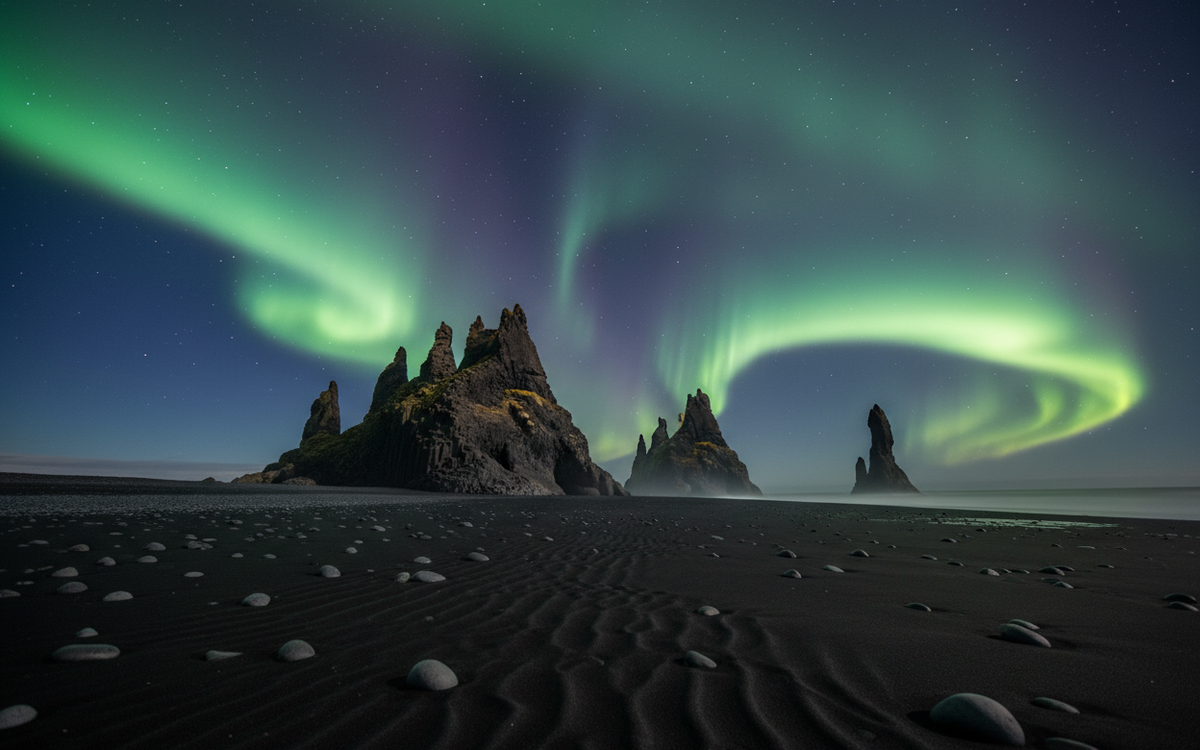
The village of Vík, nestled beneath towering cliffs, offers a unique vantage point with its black sand beach of Reynisfjara. Here, the basalt columns of Reynisdrangar rise majestically from the sea, providing a striking foreground for the aurora's ethereal glow. Imagine witnessing the Northern Lights dance above the crashing waves and the imposing rock formations, a truly unforgettable sight.
Further east along the South Coast lies the Jökulsárlón glacier lagoon, a surreal landscape where icebergs drift serenely towards the ocean. This location offers an unparalleled opportunity to see the Northern Lights reflected on the surface of the ice, creating a mesmerizing spectacle of light and color. The contrast between the dark sky, the shimmering aurora, and the ancient icebergs is a photographer's dream and a memory that will last a lifetime.
For safe access to Jökulsárlón and other remote locations along the South Coast, consider joining a guided tour. These tours provide expert knowledge of the area, ensuring your safety and maximizing your chances of witnessing the aurora in all its glory.
Hidden Gem: Explore the ice caves near Jökulsárlón during the day for an otherworldly experience, and then return at night to witness the magic of the Northern Lights above the glacier lagoon.
Westfjords' Wilderness: Drangajökull Glacier and Ísafjörður
Escape the crowds and immerse yourself in the raw, untouched beauty of the Westfjords, a remote region in Iceland's northwest corner that offers unparalleled opportunities for aurora viewing.
With its rugged coastline, towering mountains, and sparsely populated settlements, the Westfjords provide long hours of darkness and minimal light pollution, creating the perfect conditions for witnessing the Northern Lights. Consider embarking on a hike to Drangajökull glacier, the northernmost glacier in Iceland, for a truly unique and secluded aurora experience. Alternatively, explore the Heydalur valley on snowshoes, immersing yourself in the tranquility of the winter landscape as you await the celestial display.
The town of Ísafjörður, the capital of the Westfjords, offers a charming base from which to explore the region. This historic fishing village boasts a vibrant cultural scene and a range of accommodation options, making it an ideal starting point for your aurora adventure.
The raw, untouched nature of the Westfjords enhances the visibility of the aurora, allowing you to witness its full intensity and brilliance. As you gaze upon the dancing lights, you'll feel a deep connection to the natural world and a sense of awe at the power and beauty of the Arctic.
Local Tip: Rent a 4x4 vehicle for exploring the Westfjords, as some roads may be challenging during winter. Check road conditions and weather forecasts before setting out.
North Iceland's Canvas: Lake Mývatn and Akureyri
Journey to North Iceland, where longer hours of darkness and less cloud cover create an optimal canvas for the Northern Lights to paint their masterpiece.
The Lake Mývatn area, renowned for its volcanic landscapes and diverse birdlife, offers a unique setting for aurora viewing. During the day, explore the otherworldly formations of Dimmuborgir, the geothermal area of Hverir, and the pseudo-craters of Skútustaðagígar. As night falls, find a secluded spot away from the limited light pollution and prepare to be mesmerized by the Northern Lights dancing above the volcanic terrain.
While Akureyri, the largest town in North Iceland, does experience some light pollution, it still offers opportunities for aurora viewing. Consider joining an aurora tour that takes you away from the town's lights to darker locations in the surrounding countryside. Alternatively, embrace the winter spirit with snowmobiling and other activities.
The combination of stunning landscapes and favorable weather conditions makes North Iceland a prime destination for aurora hunters. Whether you're whale watching by day or gazing at the Northern Lights by night, this region offers a wealth of unforgettable experiences.
Hidden Gem: Visit the Mývatn Nature Baths for a relaxing soak under the Northern Lights. The geothermal waters provide warmth and comfort as you watch the aurora dance above.
Photography Pointers: Capturing the Light
To capture the magic of the Northern Lights, it's essential to have the right equipment and settings.
A DSLR or mirrorless camera with good ISO capabilities is highly recommended. Pair it with a wide-angle lens (e.g., 14mm, 24mm) to capture as much of the sky as possible. Set your focus to manual and adjust it to infinity. Turn off both flash and autofocus to avoid any interference with the aurora's delicate light.
As a starting point, use an aperture of f/2.8 or lower, an ISO of around 1600, and a shutter speed of approximately 5 seconds. Adjust these settings based on the aurora's intensity and the ambient light. Shooting in RAW format will give you more flexibility during post-processing.
A sturdy tripod is essential for capturing sharp images, as long exposures are required. Bring extra batteries, as cold temperatures can drain them quickly. Experiment with different compositions and foreground elements to add depth and interest to your photos.
Local Tip: Download a Northern Lights photography app to help you calculate the optimal settings based on your location and the aurora's intensity.
Decoding the Forecast: When to Go
To maximize your chances of witnessing the Northern Lights, it's crucial to check the aurora forecast and understand the factors that influence its visibility.
The Icelandic Met Office provides a comprehensive aurora forecast, including a map of predicted auroral activity and cloud cover. The Kp index, which measures solar activity on a scale from 0 to 9, is a key indicator of the aurora's strength. A Kp index of 3 or higher generally indicates a good chance of seeing the Northern Lights.
In addition to the aurora forecast, it's essential to check the cloud cover predictions. Clear skies are necessary for optimal viewing, as clouds can obscure the aurora. The best viewing times are typically between 11 PM and 2 AM, when the sky is darkest.
Keep in mind that the aurora forecast is not an exact science, and the Northern Lights can be unpredictable. However, by monitoring the forecast and being prepared to adjust your plans, you can significantly increase your chances of witnessing this natural wonder.
Hidden Gem: Sign up for aurora alert services that notify you when the Northern Lights are visible in your area.
Beyond the Lights: Cultural Immersion
While aurora hunting is a primary draw for visitors to Iceland, exploring the country's rich culture and folklore can add another layer of depth to your experience.
Icelandic folklore is filled with tales of the Northern Lights, often associating them with spirits of the deceased, dancing elves, and omens of good fortune or bad weather. Some legends say that pregnant women should avoid looking at the aurora, lest their child be born cross-eyed, while others believe that the lights can ease labor pains and bring good luck to newborns.
The storytelling tradition is deeply ingrained in Icelandic culture, and many museums and cultural centers offer opportunities to learn about these fascinating beliefs. Consider visiting Perlan's Northern Lights show, which combines stunning visuals with captivating narration to bring the folklore of the aurora to life.
By immersing yourself in Icelandic culture, you'll gain a deeper appreciation for the Northern Lights and their significance in the country's history and identity.
Local Tip: Attend a traditional Icelandic storytelling session to learn more about the folklore surrounding the Northern Lights.
Minimizing Light's Impact: Finding Darkness
To fully appreciate the beauty of the Northern Lights, it's essential to minimize light pollution and seek out dark locations away from cities and streetlights.
Traveling away from urban areas will significantly improve your chances of seeing the aurora. National parks, the countryside, and remote coastal areas offer the darkest skies and the most unobstructed views. Even a full moon can reduce the visibility of the Northern Lights, so plan your trip accordingly.
Consider locations like Þingvellir National Park, Vatnajökull National Park, and the Snæfellsnes Peninsula which are known for their dark skies and stunning landscapes. By venturing into these remote areas, you'll be rewarded with a truly awe-inspiring aurora experience.
Hidden Gem: Find a secluded spot with a natural foreground element, such as a waterfall, a mountain, or a coastline, to add depth and interest to your aurora viewing.
Essential Gear: Staying Warm and Prepared
When embarking on an aurora hunting adventure in Iceland, it's crucial to pack the right gear to stay warm, comfortable, and prepared for the elements.
Warm layers are essential, including a base layer of thermal underwear, a mid-layer of fleece or wool, and an outer layer of waterproof and windproof outerwear. Don't forget a hat, gloves, and a scarf to protect your extremities from the cold. Insulated waterproof boots are also highly recommended.
If you plan to photograph the Northern Lights, bring a tripod, extra batteries for your camera, and a remote shutter release. A thermos with hot drinks can provide comfort during long waits in the cold. A flashlight or headlamp with a red light setting can help you navigate in the dark without affecting your night vision.
By packing the right gear, you'll be able to focus on enjoying the magic of the Northern Lights without being distracted by discomfort or the elements.
Local Tip: Rent or purchase high-quality outdoor gear in Reykjavík before heading out into the countryside.