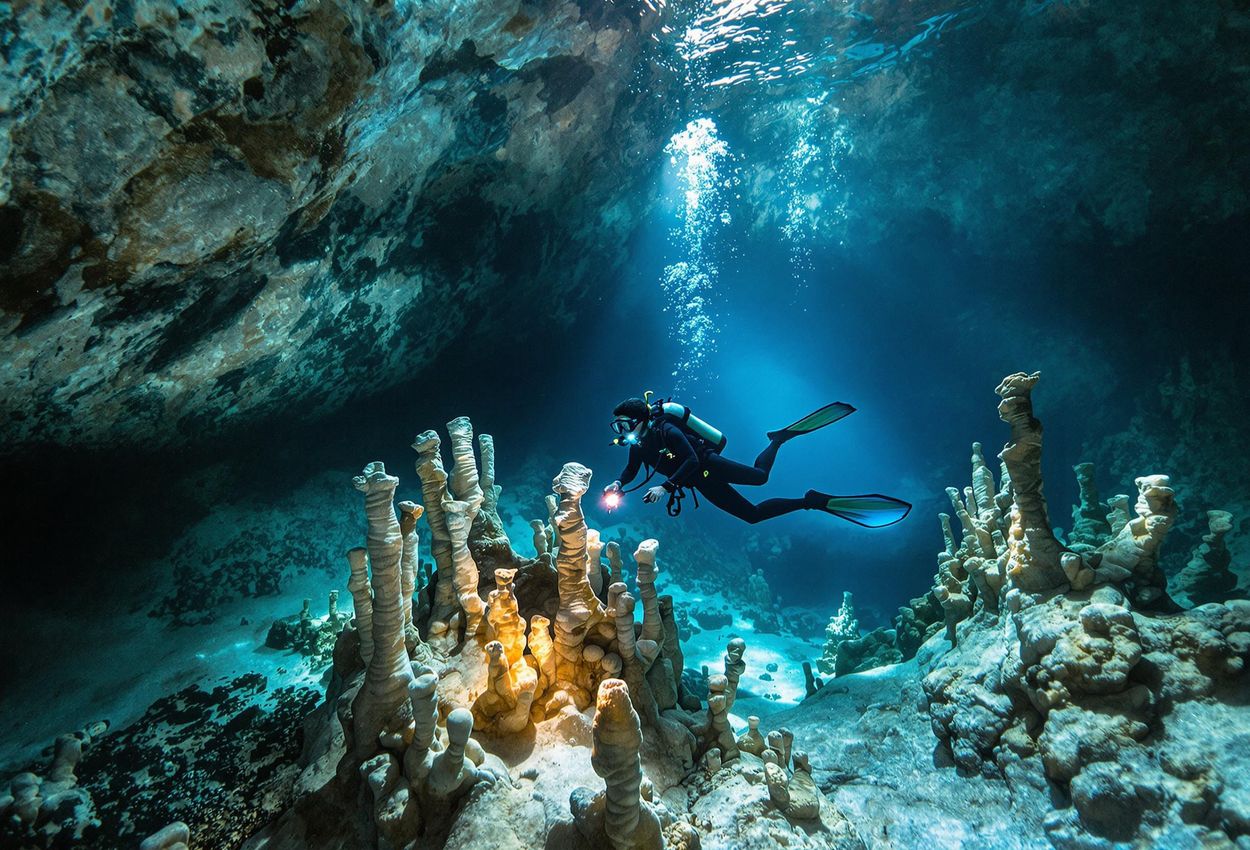
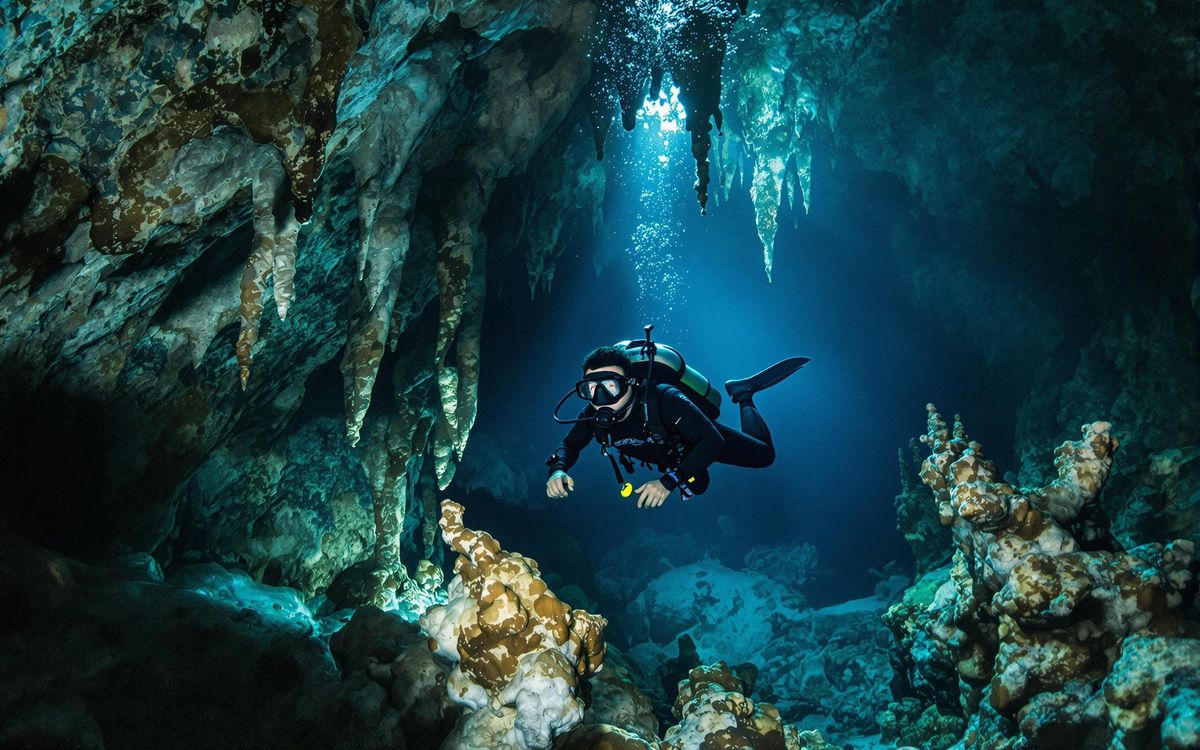
Imagine a world shrouded in perpetual darkness, where the only light comes from the beam of your dive lamp, revealing eathtaking geological formations sculpted over millennia. This is the realm of underwater cave diving, an adventure that pushes the boundaries of exploration and offers a glimpse into a hidden world few have ever seen.
A Submerged World Beckons: Unveiling the Allure of Underwater Caves
Underwater cave diving is not merely a sport; it's an odyssey into the unknown. It's a pursuit that combines the technical skill of scuba diving with the mental fortitude required to navigate complex, three-dimensional environments where the surface is not readily accessible. The allure lies in the discovery, the chance to witness pristine, untouched ecosystems and geological formations that have been hidden from the sun for eons. These submerged labyrinths, often filled with crystal-clear water, present a unique challenge and an unparalleled reward for those who dare to venture into their depths.
The environment within underwater caves is unlike any other. Sunlight, the lifeblood of most ecosystems, is absent, replaced by an eternal twilight that fosters unique adaptations in aquatic life. Stalactites and stalagmites, formed over centuries by the slow drip of mineral-rich water, adorn the ceilings and floors, creating surreal, otherworldly landscapes. Helictites, defying gravity with their twisting, anching forms, add an element of mystery and wonder. The water itself is often incredibly clear, allowing for visibility that stretches for hundreds of feet, revealing the intricate details of the cave's architecture.
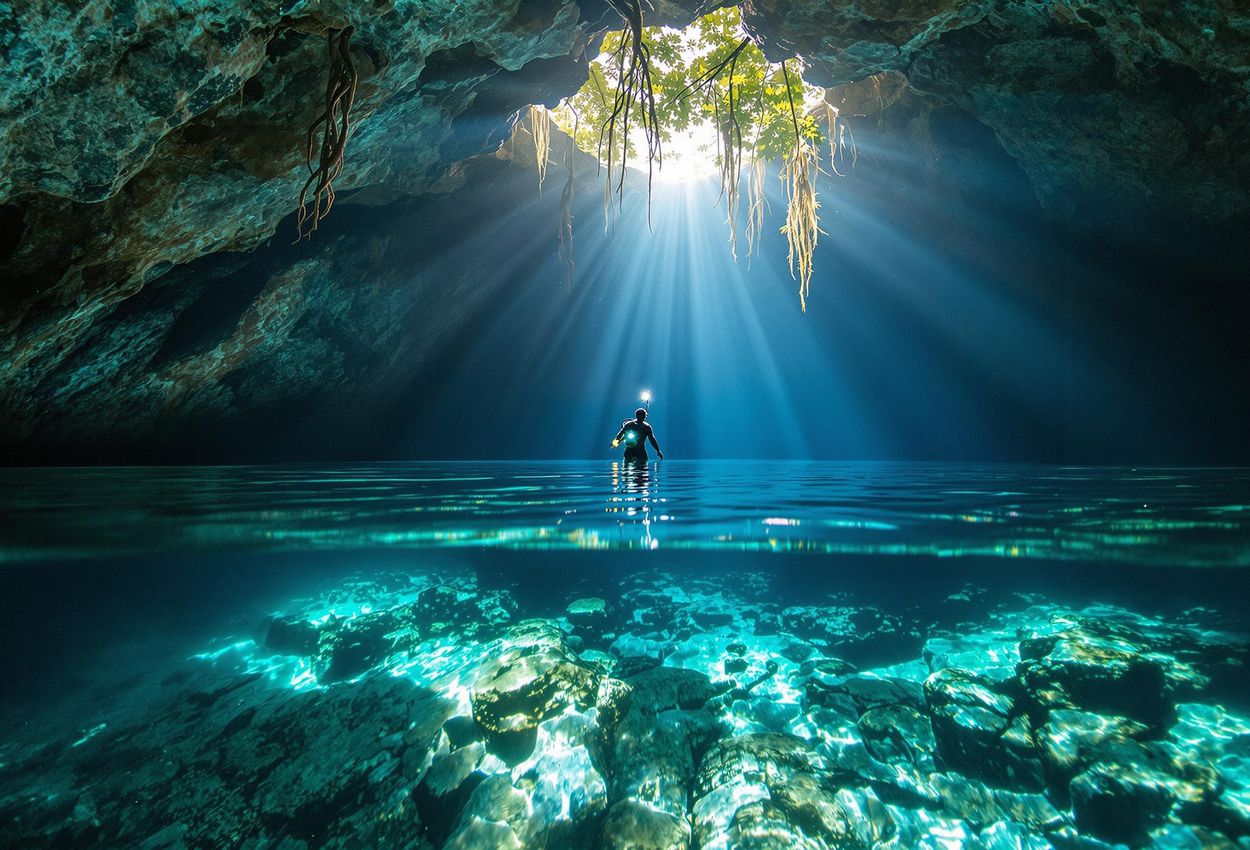
One of the most renowned cave diving destinations in the world is the Yucatan Peninsula in Mexico, home to a vast network of cenotes. These sinkholes, formed by the collapse of limestone bedrock, provide access to an extensive system of underwater caves and rivers. The cenotes, often surrounded by lush jungle, offer a stunning contrast between the viant world above and the silent world below. Divers from around the globe flock to the Yucatan to explore these mesmerizing underwater realms.
u201cThereu2019s a sense of peace and tranquility that you just donu2019t find anywhere else,u201d says Emily Carter, an experienced cave diver with over 500 cave dives under her belt. u201cItu2019s like entering another world, a world thatu2019s been untouched by time. The silence, the darkness, the sheer beauty of the formations u2013 itu2019s an experience thatu2019s both humbling and exhilarating. You feel like an explorer, a pioneer, venturing into places where few others have ever been.u201d
Gear Up for the Deep: Essential Equipment for Cave Diving
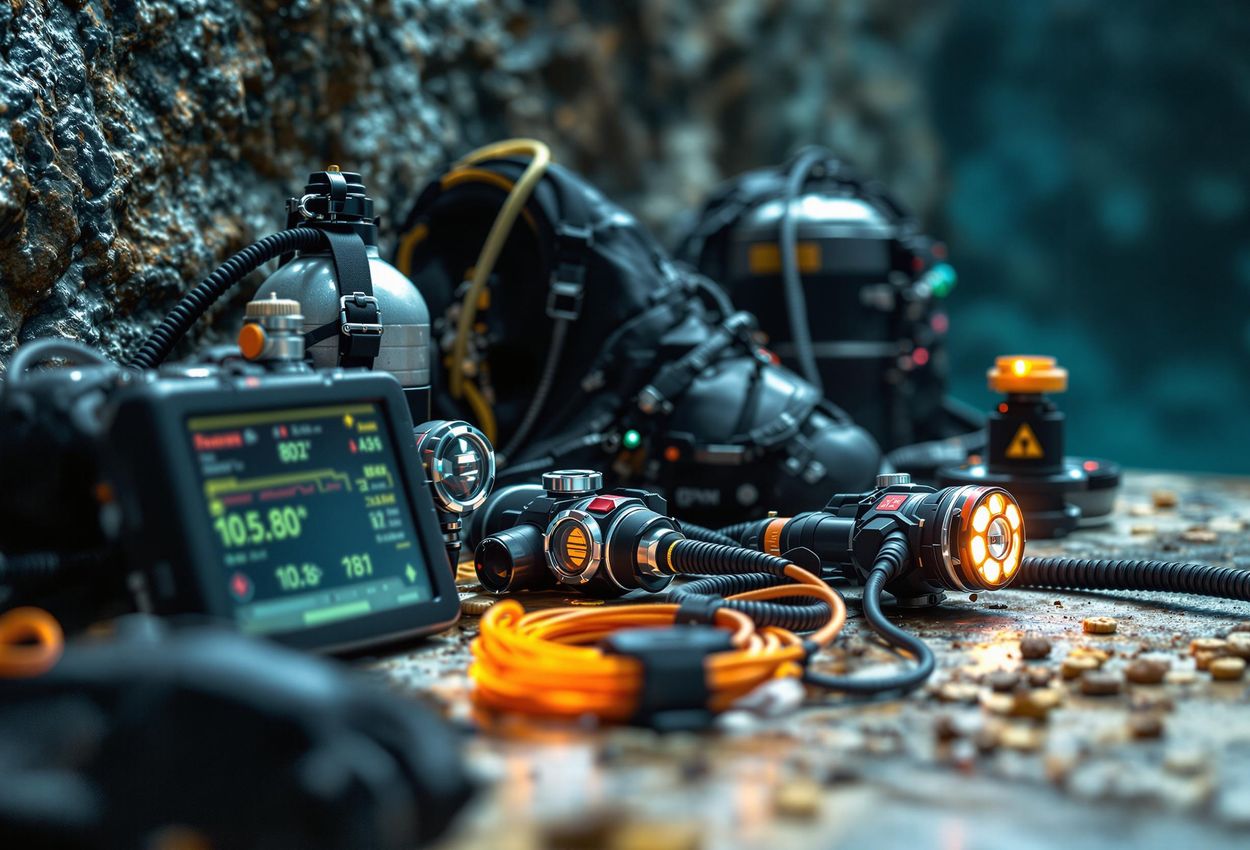
Cave diving demands specialized equipment, designed for reliability and redundancy. Unlike open water diving, where a quick ascent to the surface is usually an option, cave divers must be prepared for self-sufficiency in a confined environment. Every piece of gear is carefully selected and meticulously maintained to ensure optimal performance and safety.
Dive lights are paramount. A primary light, typically a high-powered HID or LED lamp, provides the main source of illumination. But relying on a single light source in a dark cave is a recipe for disaster. Therefore, cave divers carry at least two, and often three, backup lights. These backups are typically smaller, but still powerful enough to provide sufficient light for navigation in an emergency. ands like Light Monkey and Halcyon are known for their robust and reliable dive lights.
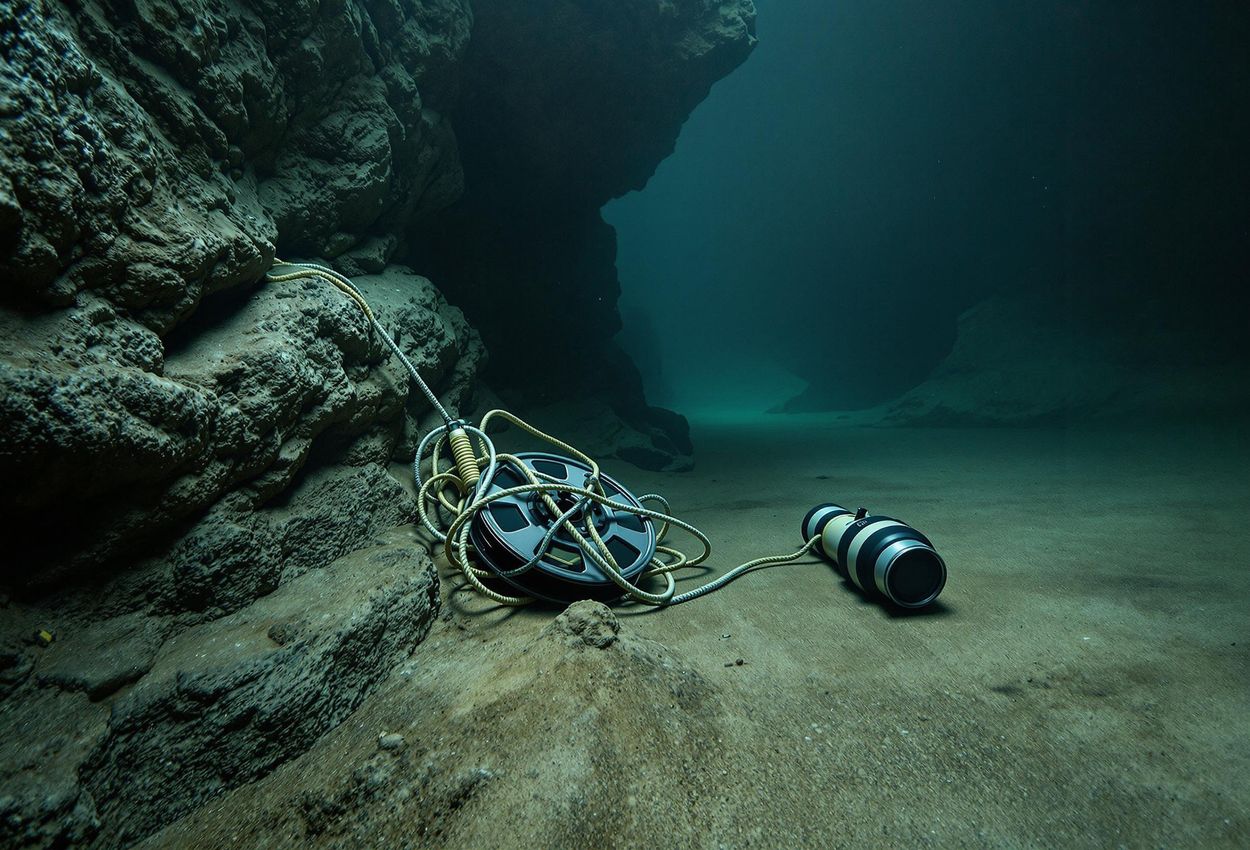
A guideline reel is another essential piece of equipment. This reel is spooled with hundreds of feet of strong line, which is laid as the diver penetrates the cave. The guideline serves as a physical connection to the entrance, allowing divers to safely navigate back to the exit, even in zero visibility. Different types of reels exist, including primary reels, safety reels, and jump reels, each serving a specific purpose in cave navigation.
Dive computers are crucial for monitoring depth, dive time, and decompression status. Cave dives often involve complex profiles with multiple depth changes, making it essential to have a reliable computer to track nitrogen absorption and plan for safe ascent. Models from Shearwater Research are popular among cave divers due to their durability and advanced features.
Appropriate exposure protection is vital, as cave water temperatures can be quite cold. Depending on the location and the length of the dive, divers may choose to wear a wetsuit or a drysuit. Drysuits offer superior thermal protection, allowing divers to stay comfortable for extended periods in cold water. ands like Fourth Element and Waterproof offer high-quality drysuits designed for demanding diving conditions.
A BCD (Buoyancy Control Device) or wing is used to control buoyancy and maintain neutral buoyancy in the water. Cave divers often prefer backplate and wing systems, which offer greater stability and allow for more efficient gas management.
Regulators are the lifeline of a diver, providing a constant supply of eathable gas. Cave divers typically use two regulators, one primary and one backup, connected to independent cylinders. The primary regulator is often equipped with a long hose (typically 7 feet), which allows for easy air sharing in an emergency. ands like Apeks and Scubapro are known for their reliable and high-performance regulators.
Fins should be stiff and powerful, providing efficient propulsion in the water. Cave divers often use fins with a rigid blade, which allows for precise maneuvering and minimizes silt disturbance. Jet Fins are a popular choice among cave divers.
Finally, cave divers typically use sidemount or backmount twinset configurations for their cylinders. Sidemount diving, where cylinders are mounted on the sides of the body, offers greater flexibility and allows divers to navigate tight restrictions. Backmount twinsets, where two cylinders are mounted on the back, provide a larger gas supply for longer dives. The choice between sidemount and backmount depends on the specific cave environment and the diver's preferences.
Mastering the Depths: Training and Skills for Safe Cave Exploration
Cave diving is not an activity to be undertaken lightly. It requires extensive training and certification from accredited cave diving organizations. Attempting to explore underwater caves without proper training is not only dangerous but also disrespectful to the environment and the legacy of those who have pioneered cave exploration.
Organizations like the National Speleological Society Cave Diving Section (NSS-CDS) and the Global Underwater Explorers (GUE) offer comprehensive cave diving courses that cover a wide range of essential skills and knowledge. These courses are designed to equip divers with the tools they need to safely navigate and explore underwater caves.
One of the most fundamental skills taught in cave diving courses is buoyancy control. Maintaining neutral buoyancy is crucial to avoid disturbing silt on the cave floor, which can quickly reduce visibility to zero. Divers learn to fine-tune their buoyancy using their BCD and eathing techniques, allowing them to hover effortlessly in the water column. Proper weighting is also essential for achieving optimal buoyancy control.
Line following is another critical skill. Divers learn to lay and follow a guideline, which serves as their lifeline to the exit. They learn to tie knots, use line markers (directional and non-directional), and navigate complex line systems. They also practice emergency procedures for dealing with a lost line, such as performing a controlled search and using a jump reel to reconnect to the main line.
Gas management is paramount in cave diving. Divers are taught the u201crule of thirds,u201d which dictates that they should only use one-third of their gas supply for the penetration, reserving the remaining two-thirds for the exit and emergencies. They learn to monitor their gas consumption, calculate their turn pressure, and plan their dives accordingly. They also practice air sharing techniques, such as donating gas to a buddy in an out-of-air situation.
Emergency procedures are a major focus of cave diving courses. Divers learn how to respond to various emergencies, such as light failure, equipment malfunction, and entanglement. They practice using backup lights, repairing equipment underwater, and cutting themselves free from obstructions. They also learn how to assist a distressed diver and perform a controlled ascent in an emergency.
Navigation in zero visibility is a skill that all cave divers must master. Silt-outs can occur suddenly, reducing visibility to near zero. In these situations, divers must rely on their line following skills and their sense of touch to navigate back to the exit. They practice communicating with their buddy using hand signals and maintaining contact with the guideline.
Cave diving certification is typically divided into different levels, starting with introductory courses that focus on basic skills and knowledge, and progressing to more advanced courses that cover complex navigation, decompression diving, and exploration techniques. Each level builds upon the previous one, providing divers with a solid foundation for safe and responsible cave exploration.
Navigating the Darkness: Cave Diving Techniques and Procedures
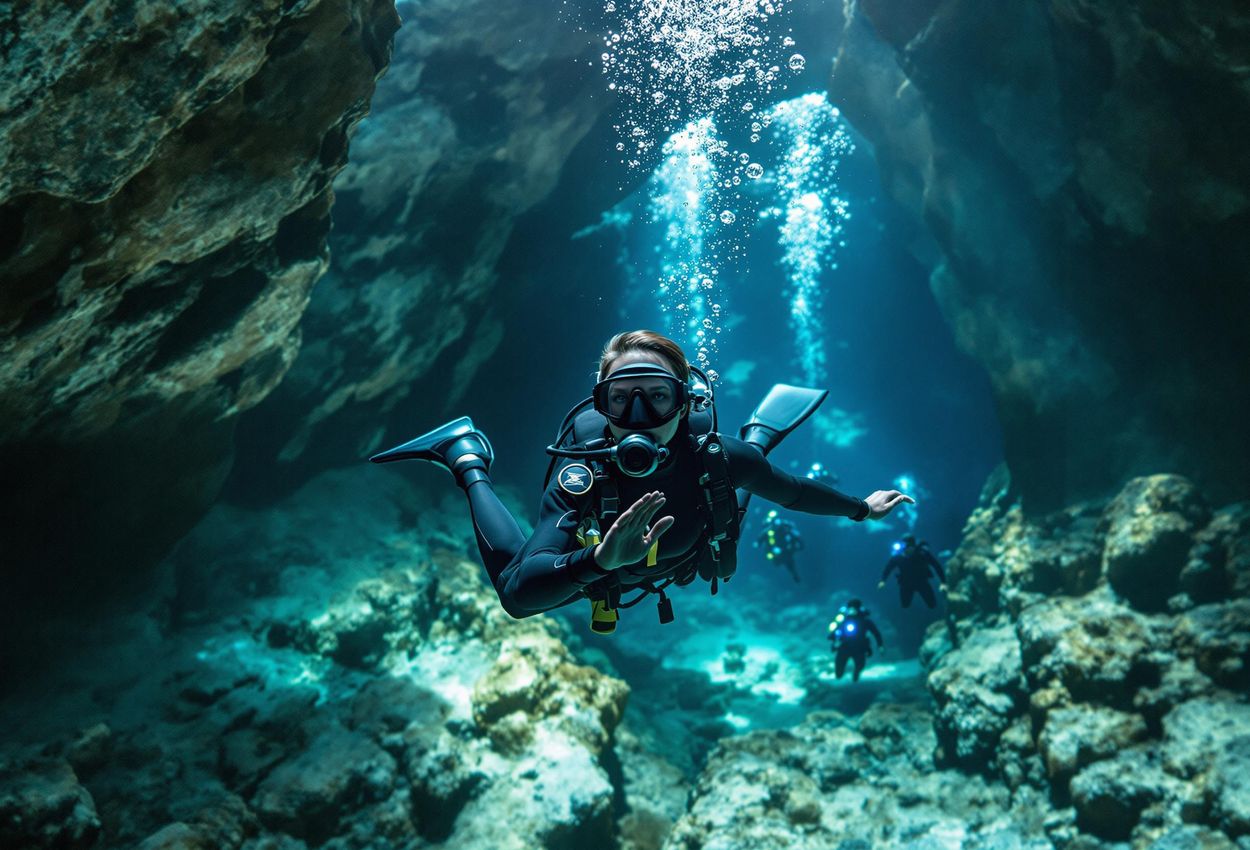
Navigating the intricate and often disorienting environment of underwater caves requires a mastery of specific techniques and procedures. These methods, honed over decades of cave exploration, are designed to minimize risk and maximize safety in a challenging environment.
The guideline is the cave diver's most essential navigational tool. Before penetrating a cave system, divers deploy a continuous line from the entrance, securely tying it off at regular intervals. This line serves as a tactile and visual reference, guiding divers back to the exit, even in conditions of zero visibility. Laying the line correctly is crucial; it must be taut, free of loops, and securely attached to prevent entanglement or accidental dislodgement.
Following the guideline requires a specific technique. Divers maintain contact with the line, using their hands to feel for directional markers and avoid getting lost. They learn to identify different types of knots that indicate junctions or changes in direction. They also practice using line markers, small plastic arrows that point towards the exit. Non-directional markers are used to indicate points of interest or potential hazards.
Gas planning is a critical aspect of cave diving. Divers adhere to the rule of thirds, reserving one-third of their gas supply for the inward journey, one-third for the outward journey, and one-third for emergencies. They carefully monitor their gas consumption throughout the dive, calculating their turn pressure based on their eathing rate and the distance to the exit. They also carry backup gas supplies, such as stage cylinders, to extend their range and provide additional safety.
Communication underwater relies on a system of hand signals. These signals, standardized within the cave diving community, allow divers to convey information about gas pressure, direction, and potential problems. In zero visibility, divers may also use tactile signals, such as tapping on their buddy's tank to get their attention. Clear and consistent communication is essential for maintaining team awareness and preventing misunderstandings.
Movement techniques are designed to minimize silt disturbance. Cave divers typically use a modified flutter kick or frog kick, which generates less turbulence than a traditional finning technique. They also avoid dragging their fins along the bottom or kicking up sediment. Maintaining neutral buoyancy is crucial for minimizing silt-outs and preserving visibility.
In tight restrictions, divers may need to use specialized techniques to navigate through narrow passages. They may need to remove their cylinders and push them ahead, or even squeeze through the restriction sideways. These maneuvers require careful planning and precise execution to avoid getting stuck or damaging the cave environment.

The Silent Sentinels: Unique Ecosystems of Underwater Caves
Beneath the surface, hidden from the sun's life-giving rays, lie unique ecosystems teeming with life adapted to the perpetual darkness. Underwater caves are not barren voids; they are complex habitats supporting a diverse array of organisms, each playing a vital role in the delicate balance of the cave environment.
In the absence of sunlight, chemosynthetic bacteria form the base of the food chain. These bacteria obtain energy from chemical compounds, such as hydrogen sulfide and methane, rather than from sunlight. They convert these compounds into organic matter, which serves as food for other organisms. Chemosynthetic bacteria are the primary producers in many underwater cave ecosystems, supporting a web of life that extends throughout the cave.
Crustaceans are among the most common inhabitants of underwater caves. These include shrimp, amphipods, and isopods, many of which have evolved unique adaptations to the cave environment. Some species have lost their pigmentation and eyes, relying on their sense of touch and smell to navigate and find food. Others have developed elongated appendages, which help them to explore crevices and forage for food in the dark.
Other cave-adapted species include fish, snails, and worms. These organisms often exhibit similar adaptations to crustaceans, such as reduced pigmentation and eyes. Some species are endemic to specific cave systems, meaning that they are found nowhere else on Earth. These endemic species are particularly vulnerable to extinction, making cave conservation even more important.
The discovery of new species in underwater caves is a regular occurrence. Scientists are constantly exploring these hidden environments, uncovering new forms of life that have never been seen before. These discoveries highlight the vastness of our planet's biodiversity and the importance of protecting these unique ecosystems.
Underwater caves also hold potential for scientific research. Scientists are studying cave-adapted organisms to learn more about their adaptations to extreme environments. They are also investigating the potential for these organisms to produce novel compounds with medicinal or industrial applications. For example, some cave bacteria have been found to produce antibiotics that are effective against drug-resistant bacteria. This research could lead to the development of new treatments for infectious diseases.
One example of a unique cave ecosystem is the Movile Cave in Romania. This cave, which was sealed off from the surface for 5.5 million years, is home to a completely isolated ecosystem based on chemosynthesis. The cave contains a unique mix of terrestrial and aquatic species, including spiders, insects, and crustaceans, all of which have evolved in complete darkness.

Geological Time Capsules: Unraveling the Formations of Underwater Caves
Underwater caves are not just biological havens; they are also geological time capsules, preserving a record of Earth's history in their intricate formations. These submerged labyrinths offer a unique opportunity to study the processes that have shaped our planet over millions of years.
Most underwater caves are formed by the dissolution of limestone, a sedimentary rock composed primarily of calcium carbonate. Rainwater, slightly acidic due to dissolved carbon dioxide, seeps into cracks and fissures in the limestone bedrock. Over time, the acidic water dissolves the limestone, creating underground passages and chambers. This process is accelerated by the presence of organic acids, which are produced by decaying vegetation.
Stalactites and stalagmites are among the most iconic formations found in underwater caves. Stalactites are icicle-shaped formations that hang from the ceiling of the cave, while stalagmites are cone-shaped formations that rise from the floor. They are formed by the slow drip of mineral-rich water. As the water evaporates, it leaves behind a tiny deposit of calcium carbonate. Over thousands of years, these deposits accumulate, forming the intricate and beautiful formations that we see today.
Other common cave formations include flowstone, draperies, and columns. Flowstone is a sheet-like deposit of calcium carbonate that forms on the walls and floors of the cave. Draperies are thin, wavy sheets of calcium carbonate that hang from the ceiling, resembling curtains. Columns are formed when a stalactite and a stalagmite meet, creating a continuous pillar from the ceiling to the floor.
Water flow plays a crucial role in shaping cave systems. The direction and velocity of water flow determine the location and size of cave passages. Fast-flowing water can erode rock more quickly, creating larger and more complex cave systems. Slow-flowing water allows for the deposition of minerals, creating intricate formations.
Sea-level changes have also played a significant role in the formation of underwater caves. During periods of low sea level, caves that were once submerged become exposed to the air. This allows for the formation of air-filled chambers and the deposition of terrestrial sediments. When sea levels rise again, these caves become submerged, preserving a record of past environmental conditions.
Underwater caves often contain fossilized remains of extinct animals and ancient human artifacts. These finds provide valuable insights into the past, allowing scientists to reconstruct ancient ecosystems and learn more about human history. For example, the discovery of fossilized skeletons of giant ground sloths in underwater caves in the Yucatan Peninsula has provided evidence that these animals once roamed the region.

Facing the Abyss: Challenges and Risks of Cave Diving
The allure of underwater cave diving is undeniable, but it's crucial to acknowledge the inherent challenges and risks associated with this extreme activity. Cave diving demands meticulous planning, rigorous training, and unwavering adherence to safety protocols. The consequences of error or negligence can be severe, even fatal.
Limited visibility is a constant threat in underwater caves. Silt-outs can occur suddenly, reducing visibility to near zero. These silt-outs can be caused by diver error, equipment malfunction, or even natural events, such as earthquakes or floods. In zero visibility, divers must rely on their line following skills and their sense of touch to navigate back to the exit.
Navigational complexity is another significant challenge. Underwater caves are often complex labyrinths with multiple passages, junctions, and dead ends. Getting lost in a cave can be a terrifying experience, especially in zero visibility. Divers must be proficient in line following, gas management, and emergency procedures to navigate these complex environments safely.
Equipment failure is a constant concern. Cave divers rely on their equipment to stay alive, so any malfunction can have serious consequences. Regulators can fail, lights can go out, and cylinders can leak. Divers must be prepared to deal with these emergencies, carrying backup equipment and practicing emergency procedures regularly.
Tight restrictions can pose a significant risk. In some caves, divers must squeeze through narrow passages, which can be claustrophobic and disorienting. Getting stuck in a restriction can be fatal, especially if the diver is running low on gas. Divers must carefully assess the risks before entering a restriction and be prepared to turn back if necessary.
Strong currents can also be a hazard. Some caves are subject to strong currents, which can make it difficult to navigate and maintain buoyancy. Divers must be aware of the current conditions before entering a cave and be prepared to adjust their dive plan accordingly.
Falling rocks are a risk in some caves. The ceilings of caves can be unstable, and rocks can fall without warning. Divers should be aware of this risk and avoid swimming under unstable areas.
Changing conditions can also pose a challenge. Water levels, temperature, and visibility can change rapidly in caves, especially during periods of heavy rain or flooding. Divers must be aware of these potential changes and be prepared to adjust their dive plan accordingly.
Numerous cave diving accidents have occurred over the years, often with tragic consequences. These accidents serve as a reminder of the inherent risks of cave diving and the importance of safety. Common causes of cave diving accidents include: lack of training, equipment failure, navigational errors, and poor gas management.
Ethical Exploration: Conservation and Preservation of Underwater Caves
As we venture into the depths of underwater caves, it's crucial to recognize our responsibility to protect these fragile and unique environments. Cave conservation is not just an ethical imperative; it's essential for preserving the biodiversity and geological heritage of our planet.
Underwater cave ecosystems are particularly vulnerable to human activity. Divers can inadvertently damage cave formations by touching them, kicking up silt, or eaking off pieces of rock. Pollution from the surface can contaminate cave water, harming the delicate balance of the ecosystem. Over-diving can also stress cave ecosystems, disrupting the natural behavior of cave-adapted organisms.
Ethical diving practices are essential for minimizing our impact on underwater caves. Divers should avoid touching cave formations, maintaining neutral buoyancy to prevent silt-outs, and respecting marine life. They should also avoid using flash photography, which can disturb cave-adapted organisms.
It's also important to minimize disturbance to the environment. Divers should avoid entering caves during periods of heavy rain or flooding, which can increase the risk of silt-outs and damage to cave formations. They should also avoid leaving trash or equipment in the cave.
Several organizations are dedicated to cave conservation. The National Speleological Society (NSS) and the Cave Conservancy Foundation (CCF) are two examples of organizations that work to protect caves and educate the public about cave conservation. These organizations conduct research, manage cave resources, and promote responsible cave exploration.
These organizations work to protect caves through a variety of means, including: purchasing and managing cave properties, conducting research on cave ecosystems, educating the public about cave conservation, and advocating for policies that protect caves.
Ultimately, the future of underwater caves depends on our collective commitment to conservation. By adopting ethical diving practices, supporting cave conservation organizations, and educating others about the importance of cave preservation, we can ensure that these unique and fragile environments are protected for future generations.