London does not present its art behind a single threshold; it spills it into grand porticos and terraced squares, along railway arches and restaurant walls, across centuries and communities, inviting you to wander, linger and look again.Museum Mile: A Royal Beginning
Begin in the heart of scholarly Bloomsbury, where the pale stone façade of the British Museum rises like a secular temple to human curiosity. On a cool March morning, the steps are slick with recent rain and the air smells faintly of wet stone and coffee drifting from nearby cafés. Passing between the neo‑Classical columns, you emerge into the soaring Great Court, its glass roof clouded with London’s silver light, the hum of voices echoing softly beneath a sky of steel and glass.
It is here, in the labyrinth of galleries radiating from the Great Court, that London’s story as a global art capital first unfurls. Stand before the Rosetta Stone and you feel the weight of empires and the exhilaration of deciphered worlds. The dark, dense granodiorite, carved with bands of hieroglyphic, Demotic and Greek script, is smaller than myth suggests, but no less electrifying. Visitors cluster around it in reverent semicircles, the low murmur of audio guides mingling with the shuffle of feet, as if everyone senses that this single fragment of stone once unlocked the mute grandeur of ancient Egypt.
A short walk away, in the cool half‑light of the Duveen Galleries, the Parthenon sculptures stretch in an austere procession of marble. Horses rear and strain, cloaks swirl in frozen stone, and the faces of gods and warriors bear the erosion of two and a half millennia. Here the air feels cooler, dusted with the chalky scent of aged marble. Even the most casual visitor lowers their voice. However you position yourself in the debate around these works, there is no denying the visceral impact of seeing such sculptural mastery at eye level, their once‑brilliant pigments long faded but their muscular forms still vigorous and alive.
Descend a level and the atmosphere shifts from Olympian calm to something more intimate and uncanny. In the Egyptian galleries, ranks of sarcophagi and coffins occupy the shadowed halls, their painted eyes staring back across 3,000 years. The air is dry and faintly powdery, carrying the scent of aged wood and linen. It is here that the museum’s legendary collection of mummies resides: human and animal bodies preserved with astonishing care. You trace the delicate patterning of bead shrouds, the tight spiral of wrapped limbs, the painted gods hovering on coffin lids. It is eerily compelling, an encounter that brings home both the strangeness and the continuity of human attempts to defy time.
This spring, the museum’s gaze turns eastward in a different way. In the Sainsbury Exhibitions Gallery, the blockbuster Samurai exhibition delves into a millennium of history behind Japan’s warrior class. Stepping inside, you move through dimly lit rooms where lacquered armour glows like embers under spotlights. Helmets bloom with antlers and horns, face masks curl into snarls or calm smiles, and silk cords gleam in deep crimsons and indigos. The muffled thud of your footsteps is overlaid by the soft swish of other visitors and the whispering soundtrack of shakuhachi flute and taiko drum. It feels almost theatrical, yet the exhibition troubles easy myths, juxtaposing cinematic visions of the samurai with rare documents, paintings and everyday objects that reveal lives of bureaucracy, poetry and politics alongside the battlefield legends.

Outside again, Bloomsbury retains the scholarly charm that has lured writers and thinkers for generations. Plane trees stand bare but dignified along Great Russell Street, their branches sketching filigree patterns against the low sky. A short walk leads you along quiet Georgian terraces to The Bloomsbury Hotel, a sanctuary that feels like a love letter to the neighbourhood’s literary past. Inside, parquet floors creak softly, and the lobby smells of polished wood and citrus. Velvet armchairs in jewel tones cluster beside book‑lined alcoves; portraits and modern prints share wall space like old and new friends.
Guest rooms are layered with pattern and texture in a way that feels both theatrical and deeply comfortable: wool throws over crisp linen, botanical prints above the bed, perhaps a slim volume of Woolf or Forster placed invitingly on the bedside table. Downstairs, the bar glows with the golden light of cut‑glass decanters and low lamps, a place where, late at night, you can imagine overhearing the ghosts of Bloomsbury’s literati debating art and politics over martinis. Staying here turns a museum visit into a narrative: you wake, draw back the curtains on the quiet squares and chimney pots of old London, and step out into a neighbourhood where scholarship, art and hospitality have always intertwined.
Local tip for this royal beginning to your London art journey: book timed tickets for major exhibitions like Samurai in advance, then allow yourself to wander serendipitously through the permanent collections. Some of the most affecting encounters will be unplanned – a small Cycladic figurine in a quiet corner, a Mesopotamian relief of a winged lion seen suddenly alone.
Tate Modern: A Contemporary Revolution
Follow the curve of the Thames eastward, and London’s artistic timeline catapults forward centuries. On the Bankside riverfront, the brick hulk of the former Bankside Power Station has metamorphosed into Tate Modern, its chimney now a beacon for contemporary art. Approaching from the Millennium Bridge, you feel the scale of the building in your bones: the dark bricks loom overhead, gulls wheel in the river‑cooled air, and the gust of wind funnelling along the embankment carries the tang of river water and roasted coffee from pop‑up carts.
Step inside and the Turbine Hall swallows you whole. This vast, cathedral‑like space, once home to generators, has hosted some of the most audacious installations of the twenty‑first century, and its concrete floor still bears the faint scuffs and ghosts of earlier works. Today, perhaps, a monumental light sculpture hovers above you, or a forest of suspended textiles ripples in the drafts, visitors silhouetted as they move through like curious ghosts. Children’s laughter echoes as they race down the sloping ramp; clusters of students sprawl on the ground, sketchbooks open, eyes tilted to the cavernous ceiling. It is a hall that demands not just looking but bodily presence, a place where art asserts its scale against the human figure.
From here, elevators whisk you up into the permanent collections, where Cubist canvases rub shoulders with abstract expressionist giants and video installations flicker in darkened rooms. Yet in 2026, much of the art world’s attention focuses on a single, deeply personal retrospective: Tracey Emin’s A Second Life. Spanning four decades of practice, the exhibition feels less like a chronology and more like a beating heart exposed. Neon phrases pulse against night‑black walls; rough, urgent paintings bleed pinks, scarlets and bruised blues; vitrines hold manuscripts and sketches that read like visual diaries.
Here, intimacy is the medium. In one room, you might encounter a familiar installation of a rumpled bed, strewn with cigarette butts and empty bottles, its linens still carrying the faint suggestion of human heat and despair. In another, a series of small, stitched works draw you almost nose‑to‑cloth, their jagged lines spelling out confessions and pleas. The air is thick with the rustle of visitors and the soft click of heels; occasionally, someone exhales sharply, almost a gasp, as if the work has hit too close. London’s art scene can meaningfully be charted through figures like Emin, who rose with the Young British Artists in the 1990s and never stopped insisting that autobiography and vulnerability have a place in public culture.

Sharing the limelight this season is another titan of personal narrative art: Frida Kahlo. In Frida Kahlo: The Making of an Icon, Tate Modern excavates the process behind the myth, moving beyond the ubiquitous unibrow self‑portraits on tote bags to reveal the woman and artist with a fierce intelligence behind the gaze. Archival photographs show her at home in Coyoacán, jewelled necklaces resting on embroidered blouses; preparatory drawings lie beside finished paintings, mapping the transformation of pain into symbol. Rooms glow with saturated colour – carmine reds, jungle greens, the particular turquoise of Mexican skies – set against the cool rawness of Tate’s concrete surfaces.
To understand London’s role in global art, it is enough to stand here, between Emin’s scarred vulnerability and Kahlo’s steely, symbolic self‑fashioning, in a museum carved out of industrial infrastructure on the banks of a historic river. This city is not simply hosting art; it is constantly renegotiating what art can be, whose stories it tells, and where it is housed.
After hours in the galleries, cross back east into Shoreditch, where art seeps into everyday life. A short taxi ride deposits you at art'otel London Hoxton, an unapologetically art‑obsessed hotel that feels like a curated exhibition in its own right. The lobby hums with low music and conversation, its walls splashed with graphic works by D*Face, the hotel’s signature artist. Sculptural light fixtures cast playful shadows over terrazzo floors; behind the bar, bottles are arranged like a chromatic installation.
Rooms here are airy and high‑ceilinged, with views that sweep across railway lines and rooftops, the geometry of glass towers and Victorian brick chimneys sharing the skyline. Head to the hotel’s dedicated gallery spaces, where rotating exhibitions showcase emerging artists; one month might feature layered collages, another a multimedia exploration of diaspora identities. Over breakfast in the on‑site café, conversations drift from NFT markets to last night’s performance art piece down the street. Staying here situates you within the living, breathing network of London’s contemporary scene, where art is not something you visit once a trip, but an atmosphere you inhabit.
National Gallery: A Trafalgar Square Treasure
From Shoreditch’s neon‑cut nights, travel back to the luminous calm of nineteenth‑century stone. In the heart of Westminster, the National Gallery presides over Trafalgar Square like a civic guardian, its columned portico framed by the ever‑watchful gaze of Nelson’s Column and the splash of fountains. Pigeons wheel above the crowds, the scent of roasted nuts from street vendors mingles with diesel from passing buses, and the building’s creamy portland stone seems to sip the pearly daylight.
Inside, the atmosphere shifts. Thick carpets hush your steps; the air is cool and faintly laced with the scent of varnish and old wood. Sunlight filters through high windows, catching the gilded rims of picture frames like halos. Though this is one of the world’s great art collections, entry remains free – a quiet but radical statement that the canon of Western painting belongs as much to curious schoolchildren and jet‑lagged tourists as to academics.
Make a beeline for the room where Van Gogh’s Sunflowers radiate from the wall like captured daylight. The painting’s thick impasto so often flattened in reproduction becomes almost sculptural up close; you can trace the ridges of yellow and ochre with your eyes, following the flick of Van Gogh’s wrist across the canvas. March light in London can be terse and grey, but standing here, bathed in the glow of those impossible blooms, you feel momentarily transported to a hotter, dustier room in Arles, where the scent of linseed oil and cut stems hangs in the air.
Nearby, Leonardo da Vinci’s Virgin of the Rocks offers a deliberately cooler solace. In the subdued blues and greens of its grotto setting, the figures emerge with uncanny softness. The Virgin’s hand hovers protectively, the angel’s gaze meets yours with quiet complicity, and every fold of drapery and curl of hair is rendered with microscopic care. The panel seems almost to breathe. Around these masterworks, the National Gallery offers a kaleidoscope of European art history: the jewel‑like precision of Jan van Eyck’s Arnolfini Portrait, the fleshy drama of Titian and Rubens, the hushed, smoky spaces of Rembrandt, the shimmering haze of Turner’s sea and sky.

In such company, it is worth surrendering to the slow act of looking. Choose a single painting – perhaps a quiet Vermeer of a woman reading a letter, light pooling across her table – and sit with it for ten minutes. Let the ambient soundscape of the gallery wash over you: children being gently shushed, the soft shuffle of audio guide users turning in unison, the occasional whisper of excitement as someone recognises a postcard‑famous work in the flesh. This, too, is part of London’s art experience, an everyday democracy of attention.
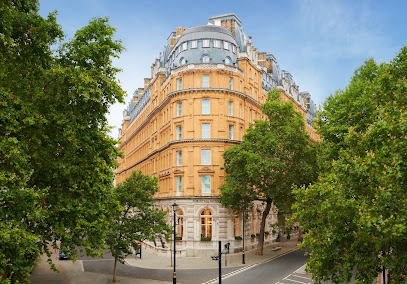
While permanent collections are free, special exhibitions and timed entry slots for popular shows can book out, particularly on weekends and evenings. Pre‑booking tickets online is wise, not only for the National Gallery but across London’s major museums; this city has long since outgrown the idea of art as a niche interest. For a suitably elegant base within easy reach, check into Corinthia London, a short stroll away near Whitehall and the Embankment.
The Corinthia occupies a grand Victorian building whose marble‑floored lobby exudes a hushed opulence. Fresh flowers spill fragrance into the air, and the central chandelier scatters shards of light across mirrored walls. Rooms are dressed in a palette of creams and soft greys, with deep baths carved from veined stone and floor‑to‑ceiling windows that frame the city like a series of paintings – the London Eye tipped in soft blue at dusk, perhaps, or the gilded spires of Whitehall glowing at sunset. The hotel’s spa, all candlelit corridors and warm stone, offers a different kind of aesthetic experience: a choreography of touch, scent and sound designed to smooth the edges of a day spent on your feet in galleries.
Evenings here can be delightfully circular. After a late gallery opening on Trafalgar Square, you wander back past the illuminated fountains and street performers, cross into the golden‑lit corridors of the Corinthia, and end the night in the bar with a drink that nods to the masters – a saffron‑hued cocktail inspired by Turner’s seascapes, perhaps, or something emerald and sharp in honour of Manet.
Hidden Gems: Beyond the Big Three
London’s art story, though, is not written solely in blockbuster institutions. To grasp the city’s full creative texture, you must slip sideways into quieter streets, where smaller museums tuck themselves into townhouses and civic buildings, each with its own particular magic. In Kensington, on a leafy road of red‑brick mansions, the Leighton House Museum offers one of the city’s most transporting surprises.
Once the home of Victorian painter Frederic Leighton, the house looks unassuming from outside, but stepping over the threshold is like moving through a portal. The Arab Hall, its tiled surfaces shimmering with Iznik and Damascus ceramics, rises around a central fountain whose trickling water whispers through the space. Gold mosaics catch and fracture the filtered light; carved latticework in rich dark wood frames glimpses of adjoining rooms. You inhale the cool, faintly mineral scent of tiles and stone, and feel how deeply nineteenth‑century Londoners were enchanted by visions of the Middle East. Upstairs, studios are flooded with soft northern light, canvases and sketches revealing Leighton’s working process and the genteel social world that rotated through these rooms.
Across town in Holborn, the Sir John Soane's Museum is a different kind of wonder. The former home of the architect behind the Bank of England, it is an eccentric maze of narrow corridors, skylit chambers and unexpected vistas. Soane hoarded antiquities with the passion of a magpie: fragments of Greek friezes, Egyptian sarcophagi, rococo mirrors, architectural models. In the famous Picture Room, hinged walls open to reveal tier upon tier of paintings, a miniature theatre of art history that transforms with each repositioning. Descend into the sepulchral basement and you encounter the alabaster sarcophagus of Seti I glowing in the half‑light, its incised hieroglyphs as crisp as if carved yesterday. The entire house smells faintly of dust and old paper, with the occasional gust of cool air from a concealed window.

In the historic heart of the City, near the financial district’s glass towers, Guildhall Art Gallery provides yet another lens on London’s artistic heritage. Here, beneath high ceilings and clerestory windows, hang paintings that chart the city’s own image over time – romantic scenes of the Thames wreathed in mist, Victorian genre scenes filled with bustling markets and top‑hatted gentlemen, Pre‑Raphaelite visions luminous with colour and symbolism. Below ground, the remains of a Roman amphitheatre nestle under glass floors, reminding visitors that London has always been a stage for spectacle.
Just outside, an intricate mosaic sprawls along the riverside walkway at Queenhithe, a lesser‑known treasure that rewards those who wander. The Queenhithe Mosaic, set into the embankment wall, is a dazzling timeline of London’s history rendered in tile: Roman soldiers and medieval merchants, plagues and fires, bridges and ships, all tessellated into a narrative band that curls beside the tidal Thames. On a low‑tide afternoon in March, the river smells of brine and silt, and the mosaic’s colours stand out crisply in the washed light. Stand here long enough and you will hear the city flow past in layers: joggers’ footsteps, the gallop of buses on Upper Thames Street, the slap of water against ancient quays.
Hidden gem tip: Many of these smaller institutions keep more idiosyncratic opening hours and sometimes require advance, timed tickets. Check details before you set out, then plan a day that strings them together like beads on a necklace – perhaps Leighton House in the morning, a stroll through nearby Holland Park, Sir John Soane’s Museum in the late afternoon, and a twilight detour to Queenhithe as the city lights glitter on the water.
Street Art Scene: Shoreditch's Open-Air Gallery
If the British Museum and National Gallery are London’s marble‑columned memory palaces, Shoreditch is its sketchbook – messy, vivid, endlessly revised. Here, art does not politely stay indoors; it erupts on railway bridges, curls around shuttered shopfronts, and clings to brick walls above noodle bars and barbershops. Strolling along Shoreditch High Street on a brisk March afternoon, your breath fogs in the air as you pass a riot of colour: a snarling fox rendered in spray paint, its fur teased out into flame‑bright strokes; a portrait of a local elder whose eyes seem to follow you down the pavement; abstract lettering that twists itself into hieroglyphs of the present day.
Much of this work is ephemeral, painted over as quickly as it appears. That is part of its electricity. The ghosts of previous pieces peek through where new artists have layered their visions: a flash of turquoise feather, a fragment of slogan, a hand reaching from an older mural into a new composition. Around you, the soundtrack is an urban collage: the rattle of Overground trains passing on elevated tracks, the hiss of espresso machines from third‑wave coffee shops, the syncopated multilingual chatter of locals, tech workers and visitors.
On side streets like Brick Lane, Redchurch Street and the warren of lanes around Boxpark, you can trace the signatures of internationally renowned street artists alongside rising local talents. There might be a stark black‑and‑white stencil that recalls the razor‑sharp wit of Banksy; nearby, a piece alive with swirling characters and ornate lettering in a style rooted in South Asian calligraphy. Another wall may host a collaborative mural where Latin American motifs – jaguars, folk saints, sugar skulls – dance beside West African patterns and Caribbean colour palettes. Each layer testifies to Shoreditch’s status as a multicultural crossroads where global visual languages collide and recombine.

Guided street art tours can help decode the dense semiotics of tags and throw‑ups, but part of the pleasure is in drifting and discovering. Turn down an alley and find a tiny paste‑up tucked into a doorway: a delicate line drawing of a girl releasing paper planes into the air, or a miniature protest poster calling attention to climate change or housing rights. Even shop signs and café interiors participate in this visual dialogue, commissioning local artists to create bespoke pieces that blur the line between commerce and creativity.
To sleep in the middle of this open‑air gallery, return to Boundary Shoreditch, a stylish boutique hotel woven into a converted Victorian warehouse just off Shoreditch High Street. Its exterior retains the robust brickwork and tall windows of its industrial past; inside, the rooms riff on iconic design movements, each floor dedicated to a different mid‑century aesthetic. Think Eames chairs and Saarinen tables, Bauhaus‑inflected geometry on the rugs underfoot, crisp white bedding against warm wood panelling. Art photography and graphic prints line the corridors, while downstairs, the café is abuzz with laptop‑tapping creatives sipping flat whites.
On clear evenings, head up to the rooftop bar, where heaters ward off the March chill and blankets are draped over the backs of chairs. From here, the city spreads out around you in luminous tiers: the red‑brick terraces of east London, the serrated skyline of the financial district, the slow pulse of traffic along Shoreditch High Street below. It is an ideal vantage point from which to reflect on the day’s visual glut, toasting the city’s audacity with a drink as the sky fades from blue to charcoal.
Local tip: Street art changes fast. Revisit the same lanes at different times of your trip – and on future visits to London – and you will find a new city each time, layered atop the old like palimpsest.
Cultural Crossroads: South Asian Art in Southall
To understand London as a truly timeless art capital, you must ride its local trains beyond the postcard‑familiar centre, into neighbourhoods where diaspora communities have long been shaping the city’s creative pulse. Westward on the rail lines of West London lies Southall, often affectionately dubbed Little India, where the air on the high street is thick with the scent of frying pakoras, incense and freshly ground spices. Shop windows blaze with saris in jewel‑bright colours – magenta, marigold, peacock blue – beaded borders catching the light like constellations.
Here, art is woven into daily life. Step into a small gallery space above a textile shop and you might find an exhibition of contemporary South Asian‑British painters, their canvases exploring themes of migration, memory and hybridity. Abstract forms borrowed from traditional block‑printing morph into digital glitches; mythological figures from the Mahabharata emerge in spray‑painted murals; family photographs from 1960s immigration archives are overlaid with translucent patterns in henna hues. Down the road, a community arts centre prepares for a weekend programme of classical dance recitals and experimental theatre, rehearsals echoing with the metallic rhythm of ghungroo ankle bells and the drone of harmoniums.
Local temples and gurdwaras, too, are living galleries. Relief carvings on façades depict deities and saints; interior walls bloom with frescoes and framed prints that narrate sacred stories. In some spaces, young artists collaborate with elders to create new murals – a Sikh warrior on horseback rendered in neon outlines, for instance, or an image of a Hindu goddess wielding not traditional weapons but contemporary symbols of resilience, such as stethoscopes and laptops, a tribute to healthcare workers and students.

A short journey away in Neasden, the BAPS Shri Swaminarayan Mandir stands as one of Europe’s most magnificent expressions of Hindu temple architecture. As you approach along a residential street, the mandir seems to rise almost surreally from suburban London: domes and shikhars in creamy limestone and marble, each surface carved with filigree patterns of vines, deities and geometric motifs. In the soft, chalky light of an overcast March day, the stone glows with a muted radiance.
Before entering, you leave shoes in a bustling foyer and step barefoot onto cool marble. Inside, the atmosphere is hushed, perfumed with sandalwood and incense. Pillars soar upward, their every inch carved with miniature figures and floral patterns, while the ceiling’s lotus designs seem to unfurl eternally. Devotees move quietly through the space, pausing to bow or light lamps before the murtis – luminous images of deities dressed in silk and garlands. The soundscape is gentle: the soft chime of bells, the murmur of Sanskrit mantras, the distant echo of children’s voices from the cultural centre.
The adjoining exhibition spaces trace the history and philosophy of the Swaminarayan tradition through multimedia displays and carefully curated artefacts: ceremonial objects, photographs from the temple’s construction, models showing how its pieces were carved and assembled without the use of structural steel. The story is as much about community as devotion – thousands of volunteers, many of them British‑born, contributing labour and skill to bring a traditional mandir into the heart of London. It is an extraordinary example of how religious architecture here functions as both spiritual hub and cultural anchor, shaping the visual landscape as surely as any museum.
Back in Southall, as twilight falls and the neon signs above sweet shops and jewellery stores flicker on, the streets become an impromptu gallery of light. Shop windows filled with gold bangles and intricately worked bridal sets gleam like miniature installations. Sweet shops display pyramids of barfi and jalebi whose colours and textures – pistachio green, saffron orange, silver leaf catching the light – rival any still‑life painting. Overhead, festive lights left from Diwali or Eid add their own geometry of stars and arches against the darkening sky.
Insider tip: Seek out community‑run cultural centres and small galleries, whose exhibitions might not yet have made it to glossy guidebooks but offer some of the most incisive contemporary work on identity, race and belonging. Many host artist talks, open studios and workshops that welcome visitors; check local listings and posters in shop windows for details.
West End Wonders: Theatrical Artistry
No guide to London’s artistic soul would be complete without a night bathed in stage lights. The West End, with its dense cluster of theatres around Shaftesbury Avenue, Covent Garden and Leicester Square, is where storytelling is rendered in voices, bodies and orchestras. As dusk settles, façades flare into life: gilt‑edged theatre names gleam above doorways, and billboards pulse with images of shows both venerable and new‑minted.
Here, you might join the line snaking into the Royal Opera House, where ballet dancers will soon arc across the stage like brushstrokes, or step under the marquee of the Palace Theatre or Lyceum Theatre for a long‑running musical that has become part of London’s shared mythology. Around the corner, a smaller playhouse such as the Donmar Warehouse or Wyndham's Theatre might be unveiling a taut new drama or a reinvented classic, its lobby buzzing with critics, students and theatre‑goers comparing notes on directors and casting choices.
Inside, the theatres themselves are masterpieces. Plush red velvet seats curve toward proscenium arches trimmed in gilt; ceiling frescoes swirl above crystal chandeliers that dim with the rising of the curtain. The air is thick with perfume and anticipation, the dry scent of old theatre dust rising as coats are shrugged off and programmes rustle. When the orchestra strikes its first chord or an actor steps into a spotlight, the experience is as much about visual and sonic design as narrative: sets that slide and transform with cinematic fluidity, costumes that paint the stage in period‑precise or fantastically imagined palettes, lighting that carves faces and spaces from darkness.

One of the delights of London theatre is its breadth. In a single evening, you might choose between a Shakespearean tragedy rendered with minimalist staging and contemporary costuming, a political satire bristling with present‑day references, a jukebox musical that turns familiar pop songs into narrative scaffolding, or an experimental piece that merges spoken word with projection mapping and live music. The West End is not a museum of theatrical relics but a constantly evolving organism, in conversation with the city’s other art forms – choreographers collaborating with visual artists, composers drawing inspiration from gallery exhibitions, playwrights mining the same social issues examined in Southall’s studios or Shoreditch’s murals.
To stay within strolling distance of curtain calls and stage door sightings, check into The Soho Hotel, tucked on a quiet street a few blocks from the bustle of Oxford Street. From the outside, it is modest; inside, it unfurls into a riot of carefully curated design. Public spaces pair bold patterned wallpapers with oversized artworks, sculptural lamps with deep, sink‑in sofas. Each guest room feels individually composed, combining tactile fabrics, statement headboards and whimsical details – a ceramic bulldog here, a vintage trunk repurposed as a coffee table there.
The hotel’s screening room hosts regular film events, drawing a crowd of cinephiles and industry insiders, while the bar and restaurant fill with a lively mix of theatre folk and fashion editors after evening shows. Over late‑night cocktails, you might overhear an actor dissecting a performance, a director pitching a new project, or a group of friends debating the relative merits of two competing productions. Staying here situates you at the intersection of visual art, performance and design, in a neighbourhood where creative professions bleed into each other as naturally as streets do.
Local tip: Same‑day discount tickets for West End productions are often available at reputable booths around Leicester Square or directly from box offices for mid‑week performances. Planning ahead for the biggest shows is wise, but leaving one evening unbooked can lead to serendipitous discoveries.
Art Fairs and Festivals: A Year-Round Celebration
Beyond bricks‑and‑mortar institutions and neighbourhood scenes, London’s status as a timeless art capital is cemented by its calendar – a year‑round procession of fairs and festivals that transforms the city into an ever‑shifting bazaar of creativity. In January, when the air along the Regent's Canal bites with frost and early darkness falls by late afternoon, collectors, curators and curious onlookers converge on the Business Design Centre in Islington for the London Art Fair.
Inside the repurposed nineteenth‑century exhibition hall, white‑walled booths bloom along balconies and beneath the vaulted ironwork roof, each a temporary gallery representing a different dealer or institution. Underfoot, the soft carpeting muffles footsteps; above, conversations form a low, constant murmur in which you occasionally catch the glint of a familiar name – Hepworth, Hockney, Riley – or the excitement around a newly discovered painter. Here, post‑war British masters share space with cutting‑edge contemporary work. You might move in minutes from a delicate modernist sculpture in polished bronze to a mixed‑media installation that incorporates VR headsets and soundscapes.

London Art Fair embodies the city’s dual identity as both steward of an established art market and incubator for new voices. Satellite programmes focus on emerging galleries, curated thematic shows or regional highlights, drawing art‑lovers who might never bid at auction but relish the chance to encounter work at close range, to talk directly with gallerists and, sometimes, the artists themselves. Even if you are not shopping for a canvas, strolling the aisles offers a survey of current preoccupations: abstraction versus figuration, climate anxiety, questions of identity, the resurgence of craft disciplines like ceramics and textiles.
As the year unfurls, other events punctuate the city’s cultural rhythm. In late spring and summer, courtyard spaces and parks host sculpture trails; in autumn, major fairs and biennials draw global crowds, turning hotel lobbies and restaurants into ad hoc salons where deals are whispered over espresso and art students eavesdrop for clues about what comes next. Specialist festivals dedicate themselves to photography, design, performance art or digital culture, each one another lens through which to view London’s restless creativity.
London’s artists are also deeply plugged into the wider European circuit. By 2026, conversations in studios and galleries reverberate with anticipation around the Venice Biennale 2026, that grand, watery stage where national pavilions and curated exhibitions propose new directions for global art. Curators in London debate which themes will dominate – ecological crisis, post‑colonial reckoning, AI and authorship – and which artists from their city might be tapped to represent Britain or appear in the main exhibition.
In this way, planning a London art trip in 2026 is not just about what you will see within the city limits. It becomes part of a broader itinerary of looking, one that might begin with Samurai armour in Bloomsbury and end months later with a video installation in a Venetian palazzo, a thread tracing how ideas migrate between institutions and across borders. London is both a destination and a node in a network, amplifying and reshaping the work that passes through it.
As your days here draw to a close, it is worth returning, one last time, to the river. Stand on the South Bank at blue hour, Tate Modern’s tower glowing amber behind you, the dome of St Paul’s silhouetted upstream, the London Eye’s slow rotation lighting up the downstream sky. You will have moved, over the course of your stay, from a shard of inscribed stone that cracked an ancient code to ephemeral spray‑painted messages that might vanish overnight; from Renaissance altarpieces to VR performances; from marble‑cool temples of art to noisy, neon‑bright streets.
What lingers is not a single image, but a sensation: that in London, art is not an extracurricular activity but a way of life, embedded in its architecture and its arguments, its rituals of worship and entertainment, its diaspora communities and river‑edge mosaics. It is a city that asks you to keep your eyes open – on the Tube, in hotel lobbies, in side streets and squares – because anywhere, at any moment, you might stumble on the next work that will stay with you for years.