Marrakech is no longer just a dream of rose‑tinted walls and desert light; it is a city in the midst of an artistic reawakening, where the past leans in close to whisper to the future, and where the most compelling voices in contemporary African art now find a magnetic stage.Unveiling Marrakech: A Cultural Crossroads
The first sensation on arriving in Marrakech is not visual but tactile. The air itself seems to press gently against your skin, warm and dry, scented with dust, orange blossom and woodsmoke. As you step through one of the ochre gates into the old medina, the city closes around you in a rush of texture and sound: clay walls that hold the day’s heat, shadow‑stitched alleys, the muffled clatter of motorcycles slipping through impossible gaps. This is not a backdrop to art; it is its raw material. For centuries, traders from sub‑Saharan Africa, the Maghreb and the Mediterranean have met here, their caravans converging on this oasis city at the foot of the Atlas Mountains. Today, that history of exchange is written anew on gallery walls and in experimental artist studios, but its pulse is still most vivid in the streets.
In the maze of the medina, history is never far away. The city’s rise as a trading hub in the 11th and 12th centuries turned Marrakech into a kind of open‑air archive of movement and migration, where Berber, Arab, Andalusian and Jewish communities shaped a complex, shared visual language. You see it in the geometry of the zellige tiles that flash from fountain basins and palace courtyards, in the carved cedar ceilings that float above cool riad patios, in the rhythm of arches along the alleys of Ben Youssef Madrasa. These are not simply architectural flourishes; they are the structural DNA of a city that has always understood how to absorb and remix influences. Contemporary artists, whether working in digital installations or conceptual photography, still draw on this legacy of pattern and repetition, of calligraphy and abstraction, even when their work tackles subjects as urgent as migration, climate change or decolonisation.

As afternoon stretches towards evening, all paths seem to spill inevitably into Jemaa el-Fna, the great public square that is the city’s living theatre. At sunset, the transformation is almost cinematic. The last light catches the minaret of the Koutoubia Mosque, turning its sandstone skin to molten copper, while shadows pool on the cobbles below. Smoke begins to rise from the food stalls along the square’s edge, curling into the sky in slow grey ribbons scented with grilling lamb, cumin, paprika and the sweetness of caramelising onions. Somewhere to your left, a troupe of Gnawa musicians begins to play, their metal qraqeb castanets clacking out a hypnotic rhythm over the low boom of a guembri bass lute. To your right, a storyteller gathers a circle of listeners, his voice carrying in a melodic swell, punctuated by the delighted gasps of children. The air hums with snatches of Darija, French, English, Spanish and languages from far further south on the continent, a polyphony that feels like a map of the trade routes that once converged here.
It is in this charged, liminal hour that you understand why so many artists speak of Marrakech less as a destination than as an encounter. The square itself behaves like a living installation, constantly rearranged by the gestures of performers and the flows of locals and visitors. Brass‑plated orange juice vendors polish their stacked glasses until they catch the fading light. Henna artists lean over outstretched hands, drawing temporary filigree across skin with the concentration of manuscript illuminators. Young men thread through the crowds carrying trays of mint tea, the glasses chiming softly together. Every surface becomes a canvas: the glowing pyramids of dates and figs, the towers of vermilion, turmeric and indigo pigments in nearby stalls, the silhouette of a snake charmer’s cobra briefly rising above the crowd. It is an exuberant chaos that, for many contemporary African artists, captures something essential about the continent’s urban life at this moment – improvisational, layered, defiantly alive.
Walk away from Jemaa el-Fna into the tighter lanes and you notice how quickly the volume drops. Here, inspiration takes on quieter forms. Behind heavy wooden doors studded with metal bosses, reimagined riads host residencies and small project spaces where painters from Dakar or installation artists from Lagos trade ideas with Moroccan counterparts late into the night. In courtyards scented with orange trees and wet stone, curators debate the ethics of collecting, photographers swap notes on working with local craftspeople, and musicians improvise with traditional instruments and synthesizers alike. This interplay between the city’s intoxicating public spectacle and its more intimate, reflective interiors is at the heart of why Marrakech feels, today, like a genuine cultural crossroads: not a static meeting point, but a zone of continuous, creative negotiation.
For visitors attuned to this energy, the city can feel like an extended studio visit. The patterns woven into a simple wool rug in the Souk des Tapis echo motifs you might later recognise in a video work at a contemporary gallery. The ochre tones of the walls at El Badi Palace reappear in the colour palette of a large‑scale abstract painting, while the call to prayer, floating above rooftops in waves of sound, is sampled into experimental sound pieces. Artists come here not just to show work, but to listen – to the stories told over mint tea, to the oral histories preserved in neighbourhood cafes, to the hum of a city that has always negotiated between caravan and metropolis, tradition and reinvention. In this sense, Marrakech is not simply hosting an art scene; it is, and has long been, an artwork in progress.
MACAAL's Renaissance: A Beacon of Contemporary African Art
On the south‑eastern edge of the city, beyond the dense weave of the medina, the Museum of African Contemporary Art Al Maaden – known simply as MACAAL – rises from the landscaped grounds of the Al Maaden neighbourhood like a series of sand‑coloured planes. Its architecture, all clean lines and carefully carved voids, mirrors the surrounding atlas of golf greens and desert scrub, yet its purpose is anything but leisurely. Since reopening in February 2025 after an ambitious programme of renovations, MACAAL has asserted itself as one of the most vital platforms for contemporary African art anywhere on the continent, a place where the visual languages evolving from Casablanca to Kinshasa, Bamako to Cape Town, meet under one roof.
Approaching the building, you are struck by how deftly it marries local vernacular forms with an almost meditative minimalism. The museum’s sand‑hued facades reference the pisé walls of traditional Moroccan architecture, but here they are sculpted into crisp, geometric blocks punctuated by slim vertical windows. A broad staircase leads you up to the entrance, flanked by low planters where native grasses and succulents sway in the light breeze. Inside, the palette shifts to luminous white and softened concrete, with shafts of daylight cutting dramatically through skylights and clerestory windows. The galleries unfold as a sequence of generous rooms, some intimate, others cavernous, which guide visitors through the permanent exhibition Seven Contours, One Collection – a renewed showcase of more than 150 works drawn from one of the continent’s most significant private holdings.

The exhibition’s title is more than poetic flourish. Each of the seven themed sections acts like a lens trained on a different fault line of modern African experience: decolonisation and contested memory, environmental fragility, migration and diaspora, spiritual resilience, urban transformation, the politics of the gaze, the reimagining of tradition. In one room, the cool hush is punctuated by the black‑and‑white photographs of Malick Sidibé, whose joyous images of post‑independence Bamako capture young Malians posing in sharply tailored suits, their bodies angled with quiet swagger against painted studio backdrops. Nearby, the saturated, pop‑inflected portraits of Hassan Hajjaj – the Moroccan artist often dubbed the Andy Warhol of the Arab world – thrum with colour and attitude. His subjects stare down the viewer from within frames constructed of branded food cans and patterned textiles, joyfully collapsing the distance between high art and street culture.
Across the hall, a canvas by Chéri Samba from Kinshasa mixes text, cartoonish figures and biting social commentary, inviting viewers into a dense conversation about power, corruption and the seductions of globalisation. There are sculptural works that grapple with the material residue of colonial economies – rusted metal, salvaged wood, fragments of machinery – repurposed into totems of both critique and survival. Textile‑based pieces shimmer on the walls, stitched and appliquéd with patterns that evoke everything from West African wax prints to Amazigh weaving traditions. Flickering video installations immerse you in soundscapes of protest marches, ocean waves slapping against the hulls of migrant boats, whispered prayers recorded in languages from across the continent.
What distinguishes MACAAL is not simply the breadth of its collection but the way it insists on placing African artists at the centre of their own narratives. The curators have woven in archival materials, artists’ notebooks and short documentary clips that allow you to hear creators speak directly about their work, their cities, their influences. A gallery dedicated to the ecological theme, for example, pairs photographs of drought‑scarred landscapes with speculative installations imagining future forms of resilience: solar‑powered structures, seed libraries, community‑based water rituals. In another room, works by Moroccan modernists such as Farid Belkahia and Mohamed Melehi converse with pieces by younger artists from Dakar or Nairobi, tracing lineages that are usually sidelined in global art histories still dominated by Euro‑American narratives.
This renewed chapter for MACAAL is also profoundly outward‑looking. The reopening introduced a media library devoted to African art, a research room where students flip through monographs and exhibition catalogues, and an Artist Room hosting rotating solo projects that often bring together contemporary practice with traditional craft. In one such show, a Moroccan artist collaborates with local weavers and potters to reinterpret ancestral motifs in bold, new forms, the resulting works displayed alongside audio recordings of conversations held in workshops across the Atlas foothills. Throughout the year, the museum runs workshops for schoolchildren from Marrakech’s diverse neighbourhoods, organises open days for families, and offers training for emerging curators and cultural mediators from across Africa. On busy weekends, animated groups of teenagers cluster in front of a particularly striking video projection, debating its meaning, while, in a quiet corner, an older couple studies a delicate ink drawing, their whispered discussion a reminder that accessibility here is not an afterthought but a mission.
Out on the museum’s terrace café, shaded by pergolas and overlooking a sculptural garden where large‑scale works rise from gravel beds and reflecting pools, the atmosphere shifts again. Artists linger over tiny glasses of Moroccan coffee, discussing the latest biennales in Dakar or Sharjah. Curators from London and Johannesburg compare notes on acquisitions, while a group of local art students sketches the silhouettes of visitors moving among the outdoor sculptures. The hum of conversation swells and ebbs, a reminder that MACAAL is not a mausoleum but a meeting place. In the evening, when events spill into the garden and projections spill across the museum’s facades, the institution feels less like a building and more like a beacon – a lit signal broadcast across Africa and beyond, announcing that the continent’s artistic futures are being shaped here, in Marrakech, with ambition and care.
Galleries of Gueliz: Exploring Marrakech's Art District
If the medina is the city’s ancient heart, the neighbourhood of Gueliz is its modern pulse. Laid out during the French Protectorate in the early 20th century, this district west of the old walls unfurls in wide boulevards and gridded streets lined with palm trees, cafes and mid‑century apartment blocks. Yet look a little closer and you begin to see the traces of its earliest chapter: art deco facades with zigzag cornices, rounded balconies that float like ship prows above the pavement, geometric ironwork guarding stairwells. Over the last decade, these architectural bones have been quietly reclaimed and repurposed by a wave of gallerists and artists, transforming Gueliz into the city’s contemporary art district, an open‑air salon where the future of Moroccan and African art is argued, bought, and sold.
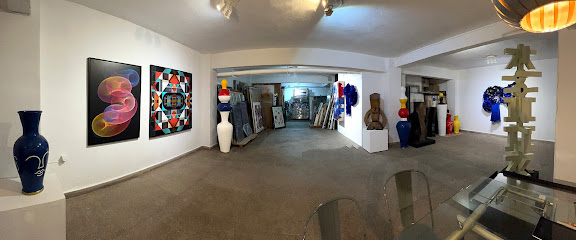
At the forefront of this movement stands Comptoir des Mines Galerie, housed in a 1930s building that once served as the headquarters of a mining company. From the street, the structure commands attention with its streamlined symmetry: tall windows segment the facade into vertical bands, while inside, sweeping staircases curl upward in sculptural arcs, their railings adorned with finely worked metal. The terrazzo floors, polished to a soft sheen, reflect the changing exhibitions above them. Here, over 1,200 square metres of space are divided into luminous white cubes and atmospheric annexes where large‑scale installations stretch to the rafters. On one floor, a show might explore the legacy of Moroccan modernism, with canvases by artists who wrestled abstraction into conversation with North African light. On another, the energy shifts to bold experiments: neon‑lit sculptures, immersive sound pieces, or works that fuse new media with ancestral craft.

Just a short walk away, the discreet entrance of the David Bloch Gallery opens onto a sanctuary for urban‑influenced contemporary art. Inside, the white walls are punctuated by canvases that bear the gestural marks of graffiti, abstract calligraphy and graphic design. The gallery has made a name for itself by championing artists who blur boundaries between street and gallery, between the raw surfaces of city walls and the controlled environment of the white cube. On any given visit, you might find large‑scale pieces that echo the patterns of Arabic script without ever forming legible words, or carefully layered works that incorporate spray paint, ink and collage. The hum of the city filters in from outside – the revving of scooters, the clink of coffee cups on saucers – reminding you that these works are in dialogue not only with global art movements but with the immediate streetscapes of Marrakech.
Further along, Galerie 127 stakes out its own distinctive territory: dedicated almost entirely to photography, it has become a reference point for lens‑based artists across North Africa and beyond. Its pared‑back interior, with long walls and high ceilings, allows images to breathe. Here, a series may document the quiet rituals of life in rural Moroccan villages; there, a set of portraits examines gender and identity in the megacities of West Africa. In the half‑light, you might linger before a black‑and‑white composition of a solitary figure framed by an archway in the medina, then turn to a vivid colour print of a neon‑lit street in Casablanca, the two together tracing a subtle conversation about memory and modernity. Opening nights are crowded, the air thick with French, Arabic and English, as young photographers trade thoughts with seasoned curators and collectors.
Alongside these established heavyweights, the district’s ecology has grown richer. The MCC Gallery, for instance, has emerged as a nimble player committed to showing both Moroccan and international voices in a space that feels part white cube, part salon. A show here might juxtapose a Moroccan painter’s exploration of Sufi mysticism with an installation by a West African artist working with found plastics and e‑waste, drawing unexpected lines of connection between spiritual inheritance and ecological crisis. Floor‑to‑ceiling windows open the gallery up to the street, turning passers‑by into potential viewers. On sunny afternoons, the light that pours in over the artworks reminds you that contemporary art in Marrakech is not made to be hidden away; it is meant to be seen, argued over, lived with.
Yet some of the most intriguing encounters in Gueliz happen in spaces that do not call themselves galleries at all. On a side street just off Avenue Mohammed V, look for an unassuming doorway marked only by a small brass plaque: behind it lies a modest, loft‑like space run by a collective of young Moroccan artists. Here, emerging painters and multimedia experimenters from Marrakech, Agadir and the Rif gather to mount short‑run, self‑curated exhibitions that would struggle to find room in more commercial venues. On the night you visit, the white‑washed room thrums with conversation. A series of canvases, some still smelling faintly of oil and turpentine, line the walls; a video piece flickers in a corner, projected against the exposed brick. The work is raw, questioning, sometimes uneven, but charged with urgency – precisely the kind of energy that keeps a scene from ossifying into mere brand.
Outside, in the cooling evening, streetlights strike gold from the facades of Gueliz, and the district begins to hum with a different kind of life. Diners spill out of bistros and rooftop bars, their tables crowded with small plates of zaalouk and marinated olives, while on the pavements below, you pass graphic designers, architects, fashion stylists, writers – the wider creative class that nourishes and is nourished by the galleries. For visitors willing to wander beyond the postcard‑perfect lanes of the medina, Gueliz offers something rarer: an immersion in how Marrakech’s artistic community actually lives, works and dreams today.
The Marrakech Biennale: A Stage for Global Dialogue
Long before its galleries and museums reached their current momentum, Marrakech announced its contemporary ambitions through an event that, for more than a decade, turned the city into a crossroads for artists, writers and filmmakers: the Marrakech Biennale. Launched in 2005 by cultural entrepreneur Vanessa Branson and her partner Abel Damoussi, the Biennale grew out of an experiment known as Arts in Marrakech, a festival that tested what might happen if you invited artists from across Africa, the Middle East and Europe to respond to a city already layered with histories. What emerged over six editions was a platform that refused easy spectacle in favour of dialogue – a trilingual, cross‑disciplinary conversation held in English, Arabic and French, and staged everywhere from crumbling palaces to bustling squares.
At its height, the Marrakech Biennale operated less like a conventional, fenced‑off art event and more like an unfolding narrative that threaded throughout the city. Major exhibitions occupied historic sites such as El Badi Palace and the Bahia Palace, where contemporary interventions played against backdrops of carved stucco and sun‑blasted courtyards. Installations appeared in the medina’s forgotten corners: a sound work echoing down a narrow alley, a projection silently transforming the wall of a caravanserai after dark. Alongside the visual art, there were programmes dedicated to literature, film and performance, with readings tucked into gardens and late‑night screenings that stretched well past midnight. Each edition was curated around themes that refused to shy away from the urgent: migration, post‑colonial identity, the politics of public space.

The Biennale’s final edition, held in 2016 under the title Not New Now, distilled these concerns into a potent, if now elegiac, chapter. Curated by Reem Fadda, it drew artists primarily from Africa, the Arab world and their diasporas, foregrounding practices often marginalised in the global circuit. Sculptural works fashioned from everyday materials interrogated how value is assigned in both art and life; video installations traced the afterlives of colonial borders; participatory projects invited local residents to co‑create pieces that bridged generational divides. For many visitors, the experience of encountering such works in the open courtyards and semi‑ruined chambers of Marrakech’s historic architecture was transformative, collapsing the distance between the city’s layered past and its contested present.
Central to the Biennale’s ethos was an insistence on education and exchange. Internships brought in young curators and arts administrators from across North Africa and the Middle East, pairing them with international mentors and giving them hands‑on experience in organising complex, site‑specific projects. Workshops in schools and community centres introduced children from Marrakech’s diverse neighbourhoods to contemporary art practices, inviting them to make their own work in response to themes explored by the Biennale. Public talks and panel discussions gathered philosophers, activists, and artists to debate subjects ranging from the ethics of representation to the role of art in revolutionary times. For a city often read by outsiders primarily through the lens of tourism, these conversations helped reposition Marrakech as a place where the politics and poetics of the wider region could be thought through with nuance.
Although the Biennale has been dormant since that 2016 edition, its impact reverberates throughout the city’s cultural landscape. Many of the curators and artists who cut their teeth there now shape programmes at institutions like MACAAL or run independent project spaces in Gueliz and the medina. The event’s insistence on trilingualism anticipated today’s more robust conversations about linguistic equity in the art world; its commitment to staging work in public and historically charged sites paved the way for a broader embrace of site‑specific practice across Marrakech. Perhaps most importantly, the Biennale shifted local and international perceptions. It helped the city move beyond the exoticising gaze of orientalism, presenting it instead as a site of critical thinking and experimentation, where artists from Lagos, Beirut, Johannesburg or Paris might meet on something like equal footing.
When you speak to those who participated, there is often a note of wistfulness, but also of continuity. They point out that its spirit can be felt in the annual rhythms of other events, in the density of openings during art weeks, in the collaborations that sprout between galleries and institutions, and in the confidence with which local artists now position themselves within continental and global conversations. In this sense, the Biennale’s legacy is less a closed chapter than an undercurrent, an invisible infrastructure of relationships and ideas that continues to nourish Marrakech’s claim to being an emerging art capital of Africa.
Art in Unexpected Places: Medinas and Souks as Galleries
To understand how deeply art runs through Marrakech, you have to leave behind the white cubes and curated captions and step back into the medina, where creativity happens in full view, woven into daily life. Here, the city itself behaves like a sprawling, open‑air exhibition, with the souks and side streets as its endlessly shifting galleries. In some alleyways, this is visible in the most literal sense: on the rough plaster of passage walls, stencilled portraits and calligraphic flourishes reveal the hand of street artists who have quietly claimed the medina as their canvas. Among them is the celebrated French artist C215, whose intricate stencil works – often portraits of local residents rendered in a lacework of cut lines – appear unexpectedly on doorways or electrical boxes. Encountered at a corner where a spice seller’s stall spills over with pyramids of saffron, paprika and cumin, his images briefly arrest the flow, inviting you to consider the individuality of the faces that might otherwise blur into the crowd.
More often, though, the artistry of the medina reveals itself not in singular pieces but in accumulations. In the Souk Semmarine, wooden beams criss‑cross overhead, filtering the sunlight into striped bands that fall onto displays of hand‑tooled leather, hammered brass and burnished copper. Shopkeepers arrange their wares with an instinctive sense of composition: belts aligned in graduated shades of brown and ochre, babouche slippers stacked into candy‑coloured towers, tea glasses marching in shimmering ranks. Textiles cascade from rafters in a waterfall of texture – thick Middle Atlas rugs with bold, geometric Berber motifs; flat‑woven kilims in dusty pinks and saffron yellows; gauzy scarves dyed in gradients that recall sunset over the Palmeraie. Stand still for a moment and the scene resolves into something like an installation on colour and repetition, animated by the murmured negotiations between buyers and sellers.

In the spice market, the experience becomes almost synaesthetic. Cones of powdered turmeric, paprika and indigo form a chromatic landscape, their crystalline grains catching the light. Open baskets spill over with star anise, cardamom pods, dried rosebuds and curls of cinnamon bark. The air is thick with competing aromas: sharp eucalyptus from jars of herbal remedies, the smoky sweetness of ras el hanout blends, the citrus burst of dried orange peel. Here, art is not only something you look at but something you inhale, touch and taste. Herbalists in white coats stand behind scales and rows of glass jars, dispensing cures for everything from insomnia to heartbreak. Their shelves, stacked with vials and wax‑sealed bottles, resemble conceptual sculptures, each object a node in a web of traditional knowledge.
Wander deeper and the medina’s architecture reveals its own artistry. Narrow lanes suddenly open onto hidden caravanserais where merchants once stabled camels and stored goods; today, some of these spaces have been reclaimed as design boutiques or concept stores selling limited‑edition ceramics and textiles created in collaboration with local artisans. Look up and you notice the carved cedar lintels above doorways, worn smooth by time yet still bearing intricate patterns of stars and interlacing vines. Door knockers are cast in shapes that recall khamsa hands or stylised geometries, their patina a record of decades of daily use. Glazed zellige tiles, set into thresholds or around fountains, shiver in shades of deep cobalt, emerald and milk‑white, the irregularities of their hand‑cut edges catching the light in ways no machine‑made surface could replicate.
Hidden among the more tourist‑oriented stalls are workshops where contemporary design quietly takes root. Step through a low doorway off a lane near the Souk Haddadine, the traditional metalworkers’ quarter, and you might find a small atelier where a young artisan is reimagining classic Moroccan lanterns. On his workbench, sheets of brass lie scored with patterns that mix centuries‑old motifs with stark, modern geometry; nearby, finished pieces glow with a subdued, champagne‑coloured sheen. Instead of the familiar filigree, their perforations form constellations of precise, minimalist dots, casting delicate patterns of light when lit. In another corner, apprentices polish experimental door handles and sculptural wall hooks destined for boutique hotels and design‑driven riads across the city. The conversation here is as much about ergonomics and line as it is about heritage – proof that tradition, in Marrakech, is not a static inheritance but a living practice open to reinvention.
One of the medina’s true hidden gems lies behind an almost anonymous wooden door down a quiet side street: a family‑run weaving workshop where a third‑generation artisan has embraced collaboration with contemporary artists. Inside, the low room is crowded with vertical looms, their wooden frames worn smooth by years of use. Skeins of wool, dyed in natural pigments from pomegranate skin, indigo and madder root, hang from the rafters in a soft tangle of colour. On the day of your visit, a young painter from Rabat is sitting cross‑legged on the floor beside the master weaver, translating his sketched abstractions into a new kind of rug design. As they discuss how to render a particular gradient or curve within the binary language of warp and weft, it becomes clear that this is a collaboration of equals, not a simple commissioning of craft. The finished pieces, sold through a small network of galleries and concept stores, carry the names of both artists on their labels – a quiet act of recognition that reflects a broader shift in how contemporary practice in Marrakech values the contributions of artisans.
As night settles over the medina, lanterns bloom in the darkness, their pierced metal skins scattering patterns of light across the walls. Somewhere, a metalworker hammers the last seams of a tray; elsewhere, a calligrapher rinses excess ink from his brushes; in a side street, new graffiti slowly emerges on a plaster wall, its colours vivid against the dimly lit alley. The city’s official art spaces may be closing their doors for the day, but here, in the medina’s arteries, the creative work continues almost unnoticed. For the traveller alert to these rhythms, Marrakech becomes an ever‑renewed exhibition in which the line between art and life has all but dissolved – a city that earns its place among Africa’s emerging art capitals not through declarations, but through the quiet, constant labour of making.