Have you ever felt a chill run down your spine, convinced you're not alone in a room? Or perhaps caught a fleeting glimpse of a shadowy figure out of the corner of your eye? Ghost sightings have captivated human imagination for centuries, weaving their way into folklore, literature, and personal anecdotes. But what if these eerie encounters aren't supernatural at all? What if science, rather than the spectral, holds the key to understanding these phenomena?
Delving into the science behind ghost sightings reveals a fascinating interplay of perception, illusion, and environmental factors. By examining how our brains interpret sensory information, how certain neurological phenomena can create false perceptions, and how environmental conditions can influence our senses, we can begin to understand the psychological and physical roots of these ghostly experiences. Let's embark on a journey to explore the science that demystifies the whispers of the mind and unveils the reality behind the illusion of the paranormal.

Whispers of the Mind How Perception Shapes Our Ghostly Encounters
Human perception is a complex and subjective process, highly susceptible to suggestion, expectation, and cognitive biases. These factors can significantly influence how we interpret events, often leading us to perceive the ordinary as paranormal. The power of suggestion, for instance, can prime our minds to expect ghostly encounters, making us more likely to interpret ambiguous stimuli as evidence of the supernatural.
Consider a creaky old house. Under normal circumstances, the sound of floorboards settling might be dismissed as a typical characteristic of aging architecture. However, if you're told the house is haunted, that same creak can transform into the sound of ghostly footsteps. Similarly, shadows dancing on the wall, easily explained by passing headlights, might be perceived as fleeting apparitions.
Cognitive biases, such as confirmation bias, further reinforce paranormal beliefs. Confirmation bias leads us to selectively focus on information that confirms our existing beliefs while ignoring contradictory evidence. If you believe in ghosts, you're more likely to remember and emphasize instances that seem to support your belief, while downplaying rational explanations. This can create a self-fulfilling prophecy, where our expectations shape our perceptions, leading us to interpret ambiguous experiences as proof of the paranormal.
In essence, our minds are powerful interpreters, capable of transforming mundane events into ghostly encounters based on suggestion, expectation, and pre-existing beliefs. Understanding these perceptual biases is crucial to critically evaluating claims of paranormal activity.

Brain's Eye Tricks Pareidolia, Sleep Paralysis, and the Ghostly Hallucinations
Neurological phenomena can also play a significant role in creating the illusion of ghost sightings. Pareidolia, the tendency to perceive familiar patterns in random stimuli, is one such phenomenon. This is why we might see faces in clouds, animals in the stars, or ghostly figures in shadowy corners. Our brains are wired to seek out patterns, and in ambiguous situations, they may create connections where none exist.
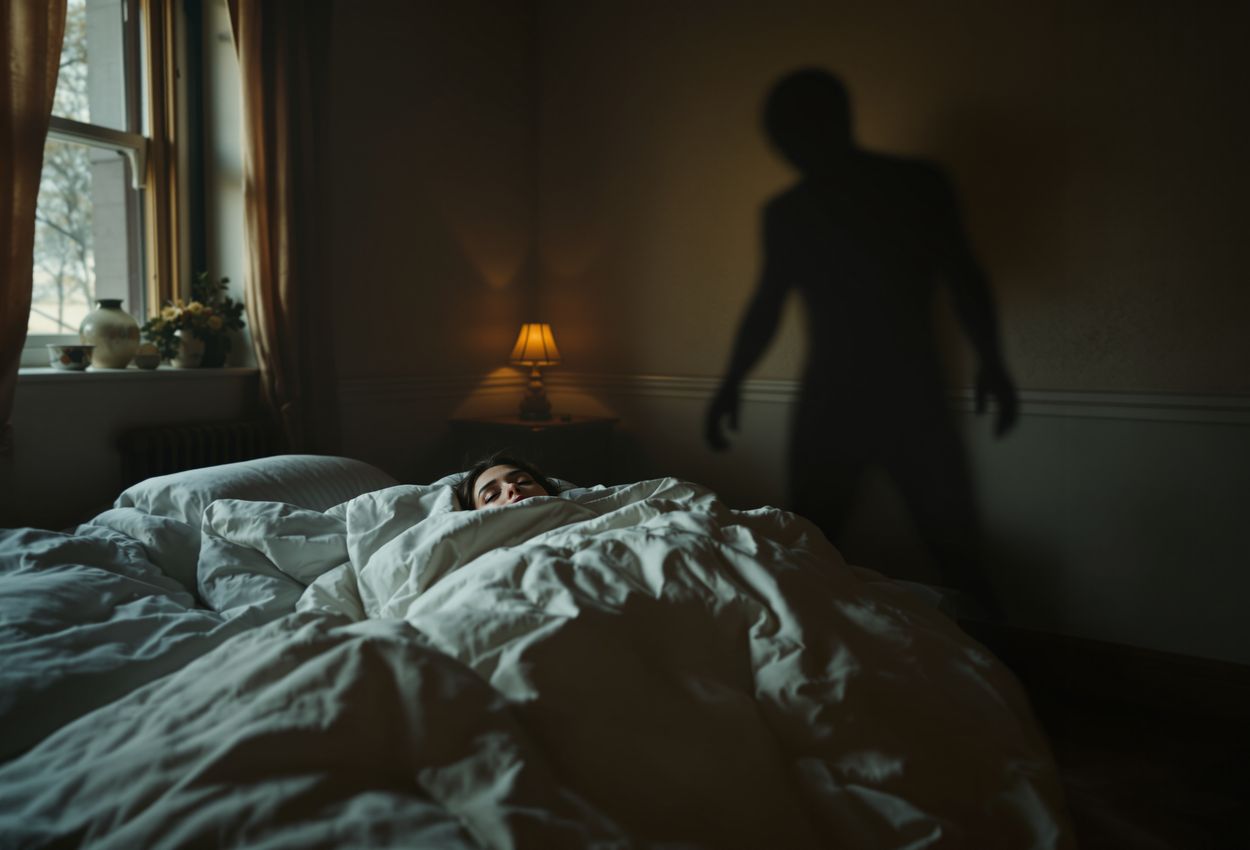
Sleep paralysis, a state where one is conscious but unable to move, offers another neurological explanation for ghostly encounters. During sleep paralysis, the brain's sleep-wake cycle becomes disrupted, leading to a temporary disconnect between mind and body. This can result in vivid hallucinations, often of a terrifying nature. People experiencing sleep paralysis may sense a menacing presence in the room, feel pressure on their chest, or even see shadowy figures lurking nearby. These hallucinations, coupled with the inability to move, can create a deeply unsettling experience that is easily interpreted as a ghostly encounter.
Neurologists explain that the brain can create vivid but false perceptions. These neurological processes can lead to hallucinations and misinterpretations of sensory input as ghostly apparitions.
Environmental Echoes EMFs, Infrasound, and the Haunted Atmosphere
Beyond perception and neurological phenomena, environmental factors can also contribute to the sensation of a haunted atmosphere. Electromagnetic fields (EMFs) and infrasound (low-frequency sound waves) have been implicated in inducing feelings of unease, anxiety, and even hallucinations.
Dr. Michael Persinger's research on EMFs suggests that exposure to weak magnetic stimulation can induce a sense of an unexplained presence. He found that a high percentage of test subjects reported feeling an eerie presence in a room when exposed to weak magnetic stimulation. Infrasound, sound waves below the range of human hearing, can also create unsettling sensations. Studies have shown that infrasound can induce feelings of anxiety, extreme sorrow, and being watched. These sensations may be misinterpreted as a ghostly presence, especially in locations with a pre-existing reputation for being haunted.
Changes in air pressure, humidity, and lighting can also create illusions or misinterpretations. Doors slamming shut due to air pressure changes, boards creaking from humidity fluctuations, and reflections from passing cars can all be mistaken for paranormal activity.

Cultural Spirits How Folklore and Beliefs Color Our Ghostly Visions
Cultural background and folklore significantly shape the perception and interpretation of ghost sightings. Different cultures have varying interpretations of spirits and their signs, influencing both personal beliefs and reports of sightings. Ancestral stories, traditional practices, and societal perceptions of the supernatural all play a role in shaping our understanding of ghostly phenomena.
For example, in some cultures, ghosts are viewed as restless spirits seeking vengeance for past wrongs. In others, they are seen as benevolent entities watching over their living descendants. These cultural narratives influence how people interpret ambiguous experiences, leading them to perceive certain events as evidence of specific types of ghostly activity.
The meme of 'ghosts as spirits' survives despite the lack of any obvious supporting evidence. For many people this is because their only experience of ghosts is second-hand. Even those who do see ghosts themselves are influenced unconsciously in the way they interpret their experiences.
The influence of folklore and cultural beliefs highlights the subjective nature of ghost sightings, demonstrating how our pre-existing beliefs can shape our perceptions of the world around us.

The Skeptic's Lens Debunking Myths and Seeking Rational Explanations
While the allure of the paranormal is undeniable, a balanced and objective perspective requires exploring rational explanations for seemingly ghostly events. Skeptics and scientists emphasize the importance of critical thinking and evidence-based analysis when evaluating claims of paranormal activity. By examining the physical and psychological factors that can contribute to ghost sightings, we can gain a more realistic understanding of these phenomena.
Limitations of human perception and ordinary physical explanations can account for ghost sightings; for example, air pressure changes in a home causing doors to slam, humidity changes causing boards to creak, condensation in electrical connections causing intermittent behavior, or lights from a passing car reflected through a window at night.
Ultimately, understanding the science behind ghost sightings allows us to appreciate the power of the human mind and the complexities of our sensory experiences. While the mysteries of the universe may continue to fascinate us, it's important to approach claims of the paranormal with a healthy dose of skepticism and a commitment to evidence-based reasoning.
By embracing a scientific approach, we can transform ghostly encounters from supernatural mysteries into opportunities for understanding the intricacies of human perception, the workings of the brain, and the influence of our environment.
Local Tip: When exploring historical sites known for paranormal activity, try to focus on the historical context and architectural features rather than solely on the ghost stories. This can provide a richer and more grounded experience.
Hidden Gem: Visit a science museum or attend a lecture on perception and illusion to deepen your understanding of how our brains interpret sensory information. This can provide valuable insights into the science behind ghost sightings.