In a world that constantly demands our attention, the simple act of savoring a glass of wine can become a profound exercise in mindfulness, transforming an ordinary experience into an extraordinary journey of the senses.
Mindful wine tasting is about more than just swirling, sniffing, and sipping; it’s about fully immersing yourself in the present moment, engaging all your senses, and appreciating the subtle nuances of the wine. It’s an invitation to slow down, quiet the mental chatter, and connect with the wine on a deeper level, unlocking a richer, more rewarding experience. By focusing on the present, you break free from ruminating about the past or worrying about the future, reducing stress and anxiety.
The present moment is the only time over which we have dominion, as mindfulness experts say, highlighting the importance of being fully present to enhance our experiences and overall well-being. Mindfulness is the energy of being aware and awake to the present moment. It is the continuous practice of touching life deeply in every moment of daily life.
Mindful wine tasting offers a unique opportunity to cultivate this presence, transforming a simple pleasure into a powerful tool for stress reduction and enhanced sensory awareness.
Setting the Stage: Crafting Your Mindful Tasting Environment
To fully embrace the practice of mindful wine tasting, it's essential to create an environment that promotes relaxation, focus, and sensory awareness. This involves carefully curating your surroundings to minimize distractions and enhance your ability to connect with the wine.
Start by selecting a quiet, comfortable space where you can relax and unwind. Soft lighting can create a calming ambiance, while comfortable seating encourages you to settle in and fully appreciate the moment. Consider playing calming music or nature sounds to further enhance the atmosphere, creating a sanctuary for your senses.
Minimize distractions by turning off your phone, silencing notifications, and informing others that you need some uninterrupted time. This allows you to fully focus on the wine and your sensory experience, without external interruptions.
Hidden Gem: Incorporate natural elements like flowers, plants, or a small water feature to further enhance the sensory experience. The presence of nature can create a sense of tranquility and connection, deepening your appreciation for the wine and the moment.
“Wherever you are, be there totally,” - Eckhart Tolle.
The Senses Awakened: A Step-by-Step Guide to Mindful Tasting
Mindful wine tasting is a multi-sensory experience that involves engaging all your senses to fully appreciate the wine's nuances. By slowing down and paying attention to each sensation, you can unlock a deeper understanding and appreciation of the wine.
Begin by observing the wine's appearance. Hold the glass up to the light and notice the color, clarity, and viscosity. Swirl the wine gently and observe the legs or tears that form on the side of the glass, which can indicate the wine's alcohol content and body.
Next, bring the glass to your nose and inhale deeply, identifying the aromas that emerge. Pay attention to the different layers of scents, from fruity and floral to spicy and earthy. Consider using a wine aroma wheel to help you identify and categorize the different scents.
Take a small sip of wine and let it coat your palate, noticing the different flavors that unfold. Pay attention to the wine's sweetness, acidity, tannins, and body, as well as any lingering flavors that remain after you swallow.
Finally, consider the wine's texture and mouthfeel. Notice how it feels on your tongue and in your mouth, paying attention to its smoothness, astringency, and overall balance.
Culturally Specific Detail: Certain cultures traditionally use specific glassware to enhance the wine's aroma and flavor. For example, in some European countries, delicate, thin-stemmed glasses are preferred for sparkling wines to preserve their effervescence and showcase their aromas.
“Mindfulness means being awake,” mindfulness reminds us.
Aromatic Journey: Diving Deep into Wine's Fragrant Layers
The aroma of wine is a complex tapestry woven from different layers of scents, each contributing to the overall sensory experience. Understanding these layers can deepen your appreciation for the wine's complexity and character.
Primary aromas are derived from the grape itself, reflecting the varietal's inherent characteristics. These aromas can include fruity notes like berries, citrus, or stone fruits, as well as floral notes like rose, violet, or jasmine.
Secondary aromas are created during the fermentation process, as yeast converts sugars into alcohol and other compounds. These aromas can include yeasty, bready, or nutty notes, as well as dairy-like aromas like butter or cream.
Tertiary aromas develop during aging, as the wine undergoes chemical reactions and interacts with oak barrels or other aging vessels. These aromas can include earthy, spicy, or woody notes, as well as dried fruit, tobacco, or leather.
Insider Tip: Use a wine aroma wheel to help identify and categorize different scents. This tool organizes aromas into categories and subcategories, making it easier to pinpoint specific scents and expand your aroma vocabulary.
“Our life is shaped by our mind, for we become what we think,” - Buddha.
Palate's Playground: Unlocking the Nuances of Wine Flavors
The flavors present in wine are just as complex and nuanced as its aromas, offering a wide range of sensations that can be explored and appreciated. Understanding the different flavor components can enhance your ability to discern and describe the wine's character.
Sweetness refers to the level of residual sugar in the wine, ranging from bone dry to intensely sweet. Acidity is the tartness or sourness of the wine, which provides structure and balance. Tannins are compounds found in grape skins, seeds, and stems that create a drying or astringent sensation in the mouth. Body refers to the wine's weight or fullness on the palate, ranging from light-bodied to full-bodied.
Specific examples of wines that showcase particular flavor profiles include Sauvignon Blanc, known for its high acidity and grassy notes; Pinot Noir, prized for its delicate fruit and earthy flavors; and Cabernet Sauvignon, celebrated for its bold tannins and dark fruit character.
Hidden Gem: Try a 'blind taste test' to eliminate visual bias and focus solely on flavor. This involves tasting wines without knowing their identity, allowing you to evaluate them objectively and discover new favorites.
“Mindfulness is a way of being present, paying attention to and accepting what is happening in our lives,” mindfulness experts explain.
Mindful Pairings: Elevating the Experience with Food
Pairing wine with food is an art that can elevate both the wine and the meal, creating a symphony of flavors and textures that enhance the overall sensory experience. Mindful pairings involve carefully considering the characteristics of both the wine and the food, seeking combinations that complement and enhance each other.
For example, a crisp, acidic white wine like Sauvignon Blanc can be a refreshing counterpoint to rich, creamy dishes like seafood or salads with vinaigrette. A fruity, light-bodied red wine like Pinot Noir can be a versatile pairing for earthy dishes like mushrooms or roasted vegetables. A bold, tannic red wine like Cabernet Sauvignon can stand up to hearty, flavorful dishes like grilled steak or aged cheese.
Culturally Specific Detail: In Italy, the tradition of pairing wine with food is deeply ingrained in the culture, with each region boasting its own unique pairings. For example, in Tuscany, it's common to pair Chianti Classico with hearty meat dishes like bistecca alla fiorentina, while in Sicily, it's traditional to pair Nero d'Avola with seafood dishes like grilled swordfish.
“Wherever you are, you are one with the clouds and one with the sun and the stars you see. You are one with everything. That is more true than I can say, and more true than you can hear,” a mindfulness quote reminds us.
The Symphony of Senses: Composing Your Own Tasting Notes
Documenting your mindful wine tasting experiences by creating tasting notes can enhance your appreciation and understanding of wine. Tasting notes provide a way to capture the sensory details and emotional responses to the wine, allowing you to revisit and reflect on your experiences.
Start by noting the wine's appearance, including its color, clarity, and viscosity. Then, describe the aromas that you detect, using specific and evocative language. Next, describe the flavors that you experience, paying attention to the wine's sweetness, acidity, tannins, and body. Finally, note your overall impressions of the wine, including its balance, complexity, and finish.
Insider Tip: Use a specific app or online tool for organizing and sharing tasting notes. These tools often provide templates, aroma wheels, and other resources to help you write descriptive and evocative notes.
“Mindfulness is the aware, balanced acceptance of the present experience. It isn't more complicated than that. It is opening to or receiving the present moment, pleasant or unpleasant, just as it is, without either clinging to it or rejecting it,” mindfulness experts explain.
Beyond the Glass: Mindfulness as a Lifestyle
The principles of mindful wine tasting can be applied to other areas of life, leading to increased well-being and a deeper appreciation for everyday moments. By slowing down, paying attention, and engaging the senses, you can cultivate a more mindful approach to all aspects of your life.
Practice mindful eating by savoring each bite, paying attention to the flavors, textures, and aromas of your food. Engage in mindful movement by focusing on the sensations in your body as you walk, stretch, or exercise. Cultivate mindful communication by listening attentively to others, without interrupting or judging.
Mindfulness means being awake,” mindfulness experts remind us. “The present moment is the only time over which we have dominion”.
By integrating mindfulness into your daily life, you can experience increased joy, reduced stress, and a deeper connection to yourself and the world around you.
The Social Sip: Sharing Mindful Moments with Others
Wine tasting can be a social activity, providing an opportunity to connect with friends and loved ones while sharing a sensory experience. By hosting mindful wine tasting gatherings, you can encourage connection, conversation, and shared sensory exploration.
Create a relaxed and inviting atmosphere by setting the stage with soft lighting, comfortable seating, and calming music. Select a variety of wines to sample, providing tasting notes and information about each wine's origin and characteristics. Encourage guests to share their own sensory impressions and emotional responses to the wines, fostering open and engaging conversation.
Culturally Specific Detail: In Georgia, wine is often shared during traditional feasts called supras, where a designated toastmaster leads a series of elaborate toasts that can last for hours. These toasts are often poetic, philosophical, and sometimes comedic, creating a vibrant and engaging social experience.
“The most precious gift we can offer others is our presence,” mindfulness experts explain.
Serenity in a Sip: Wine as a Tool for Stress Reduction
Mindful wine tasting can be a powerful tool for stress reduction and relaxation, helping to calm the mind and body. The act of slowing down, focusing on the senses, and savoring the moment can help to quiet the mental chatter and promote a sense of inner peace.
Engage all your senses by observing the wine's appearance, inhaling its aromas, and tasting its flavors. Focus on the present moment, letting go of any worries or distractions. Savor each sip, noticing the sensations in your mouth and body.
It is important to consume wine in moderation and responsibly, as excessive alcohol consumption can have negative effects on your health and well-being.
“If you want to conquer the anxiety of life, live in the moment, live in the breath,” - Amit Ray.
From Grape to Gratitude: Appreciating the Journey of Wine
Considering the journey of wine from grape to glass can foster a sense of gratitude for the people, processes, and natural elements that contribute to its creation. By researching the origins of a particular wine and learning about the winemaking process, you can develop a deeper appreciation for the artistry and craftsmanship involved.
Learn about the grape varietals used to make the wine, as well as the region where the grapes were grown. Research the winemaking techniques used, from harvesting and fermentation to aging and bottling. Consider the impact of climate, soil, and other environmental factors on the wine's character.
Hidden Gem: Visit a local vineyard to experience the winemaking process firsthand and connect with the land. This can provide a unique and immersive perspective on the journey of wine, deepening your appreciation for its origins.
“Whenever you interact with people, don't be there primarily as a function or a role, but as the field of conscious Presence. You can only lose something that you have, but you cannot lose something that you are,”- Eckhart Tolle.
Cultivating Your Inner Connoisseur: Continuous Learning and Exploration
Continuing your journey of mindful wine tasting by encouraging continuous learning and exploration can greatly enhance your experience. The world of wine is vast and ever-evolving, offering endless opportunities for discovery and personal growth.
Read books and articles about wine, exploring different regions, varietals, and winemaking techniques. Attend wine tasting events and classes, learning from experts and expanding your palate. Visit wineries and vineyards, experiencing the winemaking process firsthand and connecting with the land.
Remember that the most important aspect of wine tasting is personal enjoyment and discovery. Embrace your own preferences and develop your own unique palate.
“Time isn't precious at all, because it is an illusion. What you perceive as precious is not time but the one point that is out of time: the Now. That is precious indeed. The more you are focused on time—past and future—the more you miss the Now, the most precious thing there is,” mindfulness experts remind us.
Mindful Musings: Quotes to Savor the Moment
Sprinkling quotes about mindfulness and wine throughout your tasting experience can add depth and inspiration, encouraging you to savor each moment and appreciate the sensory journey.
“Breathing in, I calm body and mind. Breathing out, I smile. Dwelling in the present moment I know this is the only moment,” - Thich Nhat Hanh.
“Mindfulness is the aware, balanced acceptance of the present experience,” - Jon Kabat-Zinn.
“Ultimately, I've come to see mindfulness is really a love affair with life,” mindfulness experts explain.
“Realize deeply that the present moment is all you have. Make the NOW the primary focus of your life,” mindfulness experts remind us.
Tasting Room Tranquility: Designing Your Wine Sanctuary
Creating a home wine tasting space that promotes relaxation and mindfulness can enhance your sensory experience and foster a deeper connection with wine. Focus on creating a calming atmosphere with comfortable furniture, soft lighting, and natural elements.
Choose a quiet, secluded area where you can escape from distractions and fully immerse yourself in the tasting experience. Select comfortable seating that encourages relaxation and allows you to linger over each sip. Use soft, warm lighting to create a calming ambiance, avoiding harsh or fluorescent lights.
Incorporate personal touches that reflect your individual tastes and preferences, such as artwork, candles, or plants. This will help to create a space that feels inviting and conducive to mindful exploration.
“Within you, there is a stillness and sanctuary to which you can retreat at any time and be yourself,” mindfulness experts explain.
Sensory Awareness: Exercises to Sharpen Your Palate
Enhancing your sensory awareness and improving your wine tasting skills requires practice and patience. By engaging in specific exercises, you can sharpen your palate and develop a more refined appreciation for the nuances of wine.
Engage in blind taste tests, comparing different wines without knowing their identity. Play aroma identification games, using a wine aroma wheel to help you identify specific scents. Practice mindful breathing exercises, focusing on your breath to calm your mind and enhance your sensory perception.
Remember that developing a refined palate takes time and effort. Be patient with yourself, and enjoy the process of learning and discovery.
“The body benefits from movement, and the mind benefits from stillness,” mindfulness experts explain.

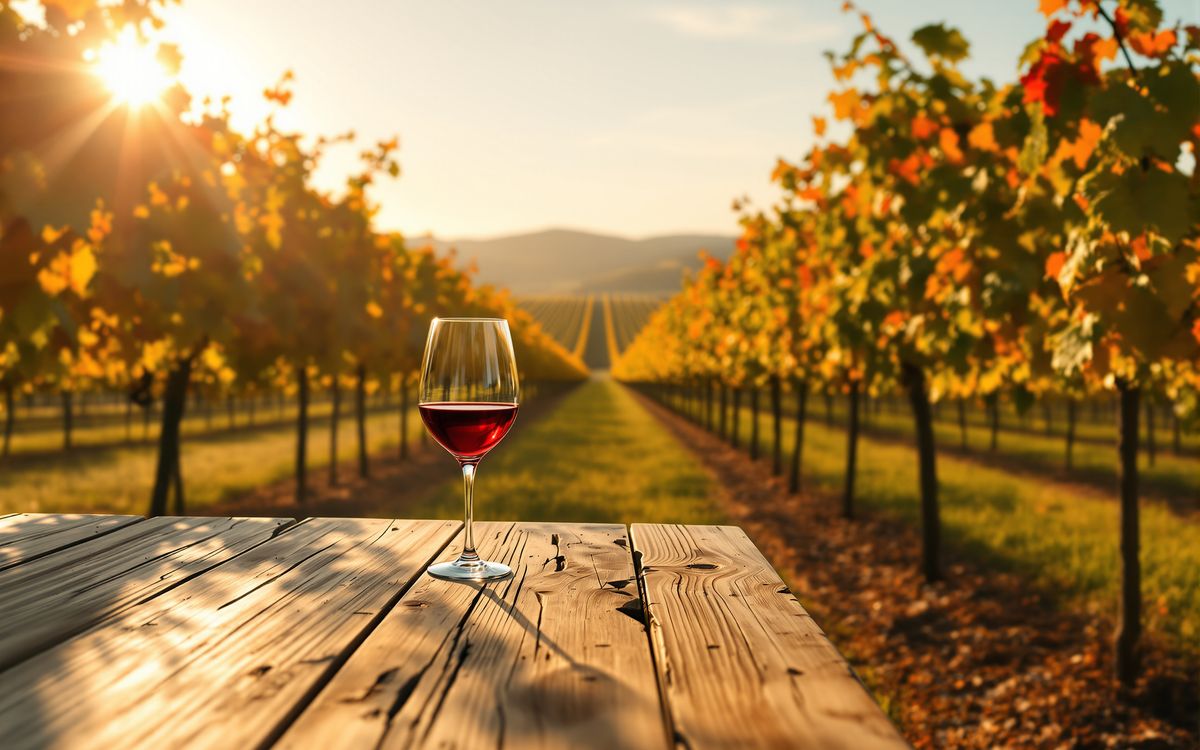
Image Description: A serene, sun-drenched vineyard in the late afternoon. The focus is on a person sitting at a rustic wooden table, mindfully swirling a glass of red wine. The background features rows of grapevines with leaves turning golden and red in the autumn light. The overall mood is peaceful and contemplative. The purpose of the image is to visually represent the concept of mindful wine tasting in a tranquil setting. The angle is a medium shot, capturing both the person and the surrounding vineyard. The objects include a wine glass, a bottle of wine, the wooden table, and the grapevines. The subject is a person dressed in comfortable, neutral clothing, symbolizing relaxation and connection with nature.
Style Instructions: Landscape. The photo should be taken with a shallow depth of field to blur the background and emphasize the person and the wine glass. Use a warm color palette to enhance the feeling of serenity and autumn. The lighting should be soft and natural, with the sun providing a gentle glow. The date the photo is taken is September 1, 2025.
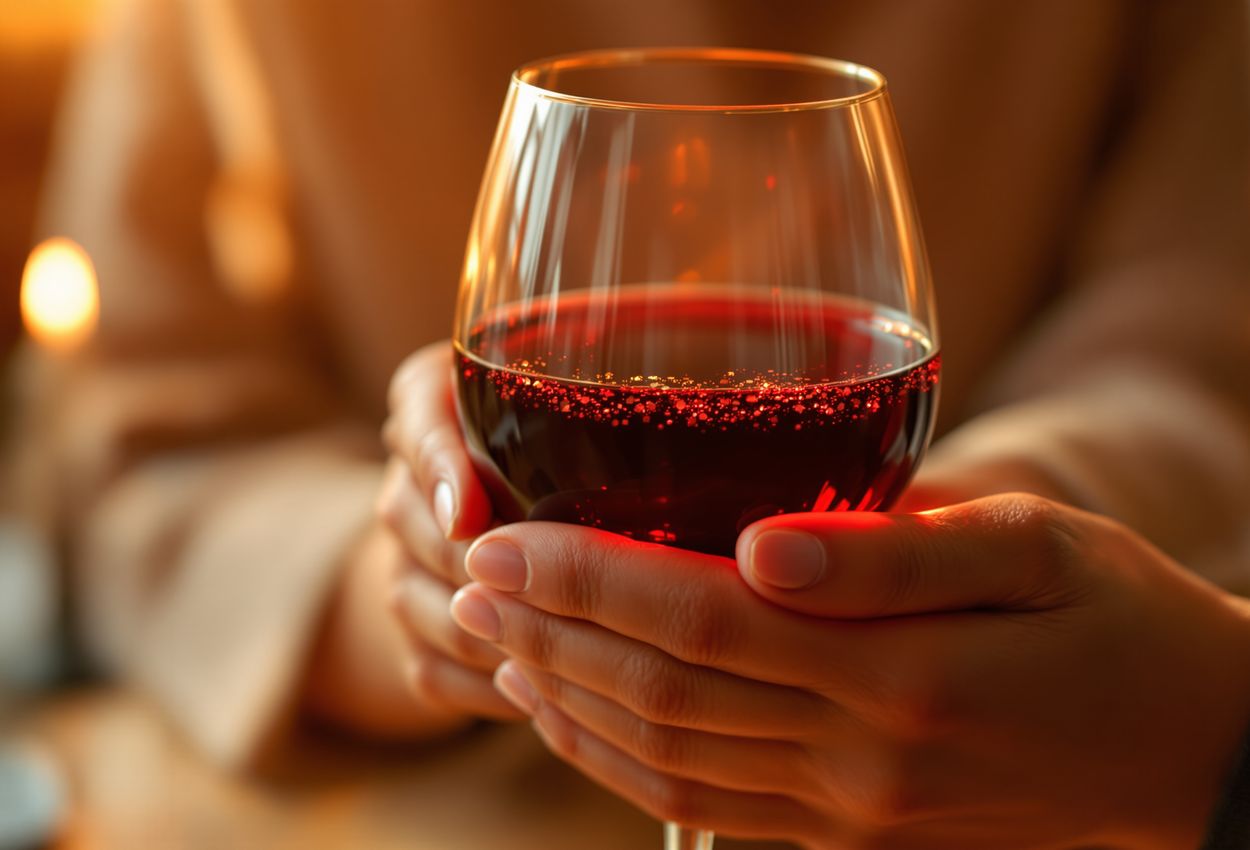
Image Description: A close-up shot of a person's hands gently holding a wine glass, with the light shining through the glass, illuminating the wine's color and clarity. The background is blurred, with soft, warm colors suggesting a cozy indoor setting. The purpose of the image is to highlight the visual aspect of mindful wine tasting, emphasizing the appreciation of the wine's appearance. The angle is a close-up, focusing on the hands and the wine glass. The objects include the wine glass and the wine itself. The subject is a person's hands, conveying a sense of care and attention.
Style Instructions: Macro. The photo should be taken with a shallow depth of field to blur the background and emphasize the wine glass. Use a warm color palette to enhance the feeling of coziness and relaxation. The lighting should be soft and diffused, with the light source behind the glass to illuminate the wine. The date the photo is taken is September 1, 2025.
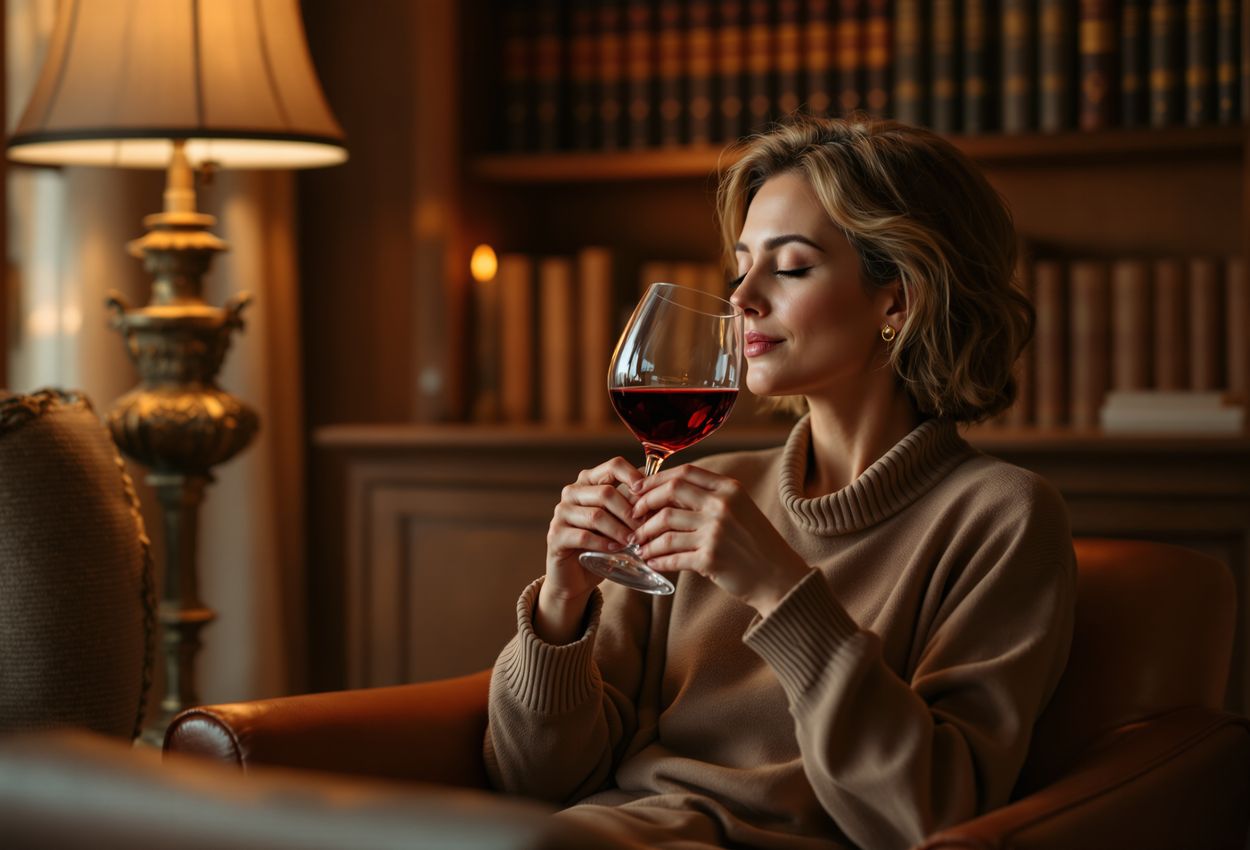
Image Description: A person sitting in a comfortable chair in a dimly lit room, with soft music playing in the background. The person is mindfully smelling a glass of wine, with their eyes closed and a peaceful expression on their face. The background features a bookshelf with wine-related books and a dimly lit lamp. The purpose of the image is to illustrate the creation of a relaxing environment for mindful wine tasting. The angle is a medium shot, capturing the person and the surrounding environment. The objects include the wine glass, the chair, the bookshelf, and the lamp. The subject is a person, dressed in comfortable clothing, symbolizing relaxation and contemplation.
Style Instructions: Serene. The photo should be taken with a wide aperture to create a shallow depth of field and blur the background. Use a warm color palette to enhance the feeling of coziness and relaxation. The lighting should be soft and diffused, with the lamp providing a gentle glow. The date the photo is taken is September 1, 2025.
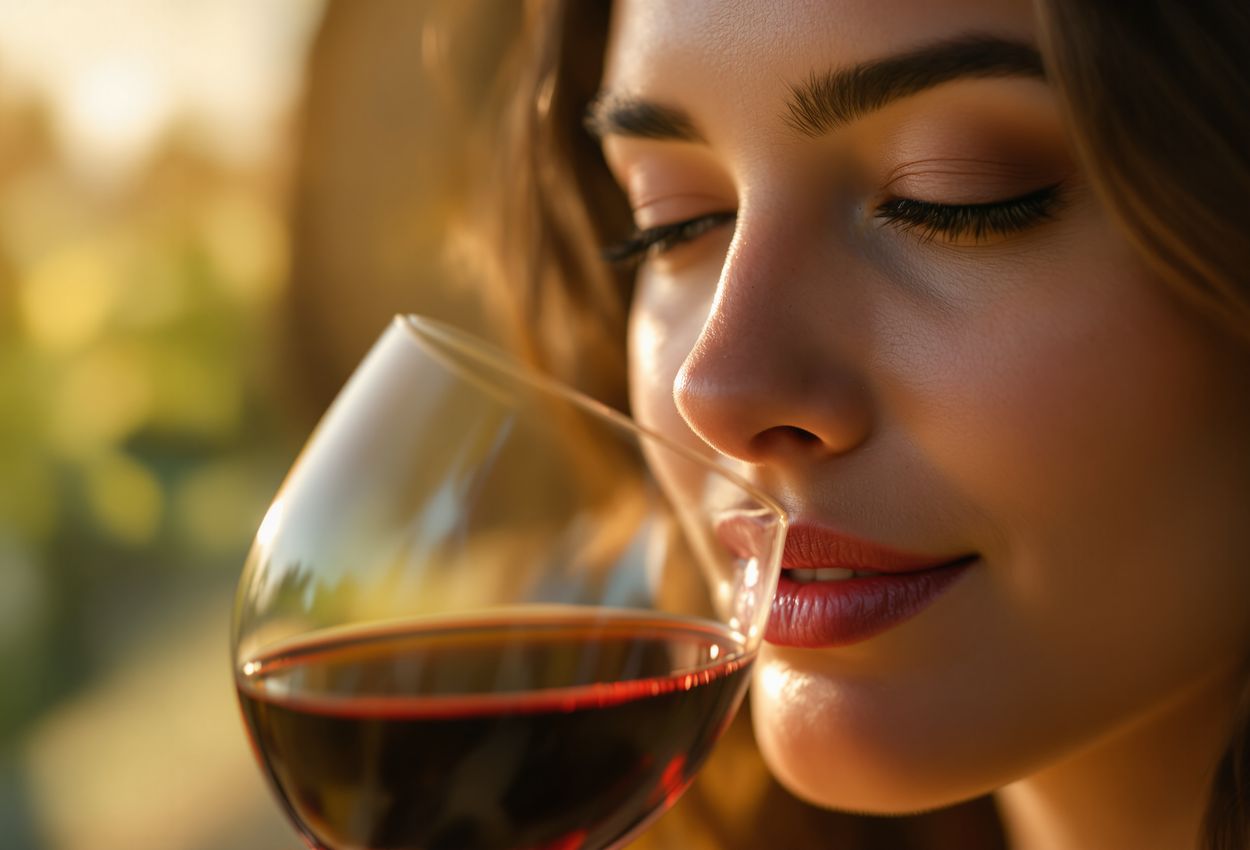
Image Description: A person's face in close-up, expressing a moment of pure sensory enjoyment while tasting wine. The background is softly blurred, suggesting a vineyard or wine cellar setting. The purpose of the image is to capture the emotional connection and sensory pleasure experienced during mindful wine tasting. The angle is a tight close-up, focusing on the person's facial expression. The objects include the wine glass (partially visible) and the person's face. The subject is a person, expressing a range of emotions, from curiosity to delight.
Style Instructions: Portrait. The photo should be taken with a shallow depth of field to blur the background and emphasize the person's face. Use natural lighting to capture the authenticity of the moment. The color palette should be warm and inviting, reflecting the richness of the wine and the environment. The date the photo is taken is September 1, 2025.
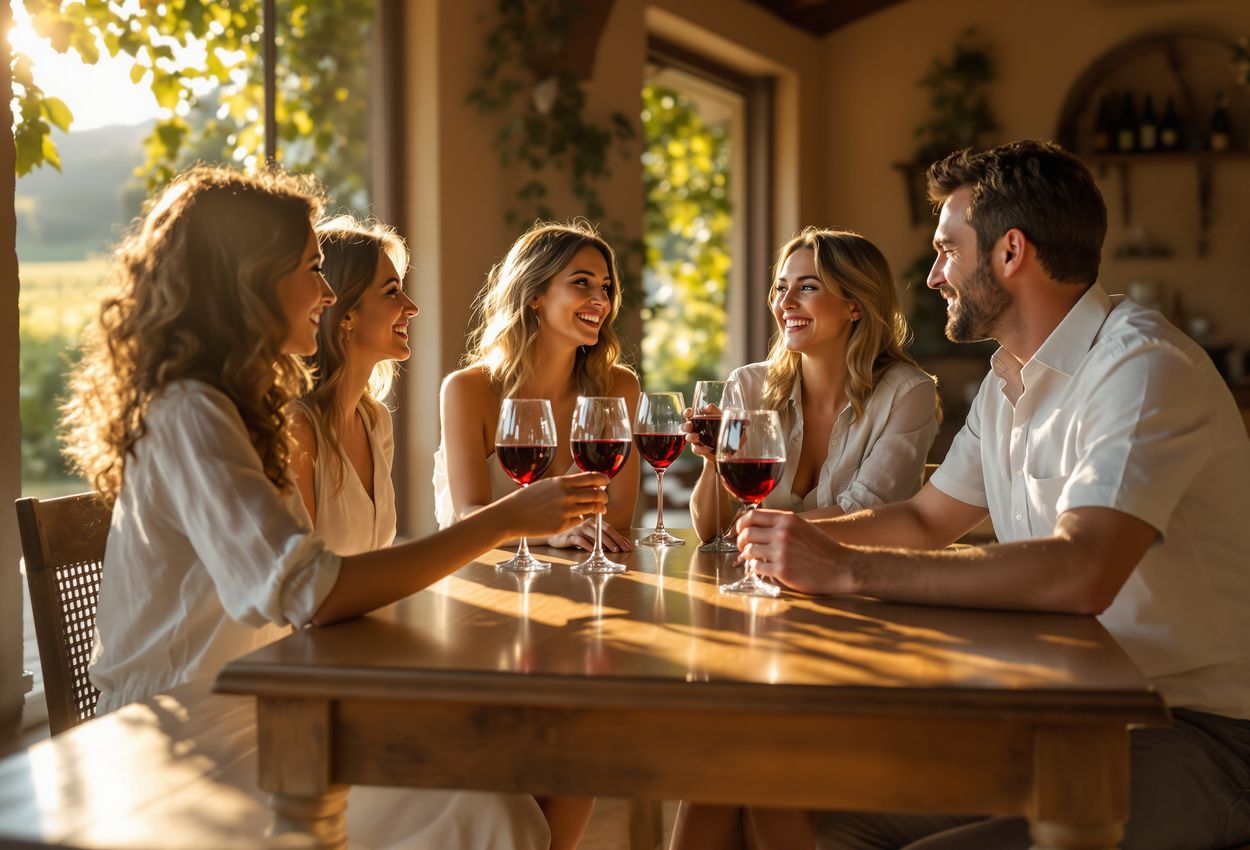
Image Description: A group of friends gathered around a table, sharing wine and conversation. The atmosphere is relaxed and convivial, with soft lighting and comfortable seating. The background features a vineyard or wine cellar, suggesting a connection to the wine's origins. The purpose of the image is to illustrate the social aspect of mindful wine tasting, emphasizing the connection and shared experience. The angle is a medium shot, capturing the group of friends and the surrounding environment. The objects include wine glasses, a bottle of wine, the table, and the chairs. The subjects are a group of friends, dressed in casual clothing, symbolizing relaxation and connection.
Style Instructions: Lifestyle. The photo should be taken with a wide aperture to create a shallow depth of field and blur the background. Use natural lighting to capture the authenticity of the moment. The color palette should be warm and inviting, reflecting the richness of the wine and the environment. The date the photo is taken is September 1, 2025.