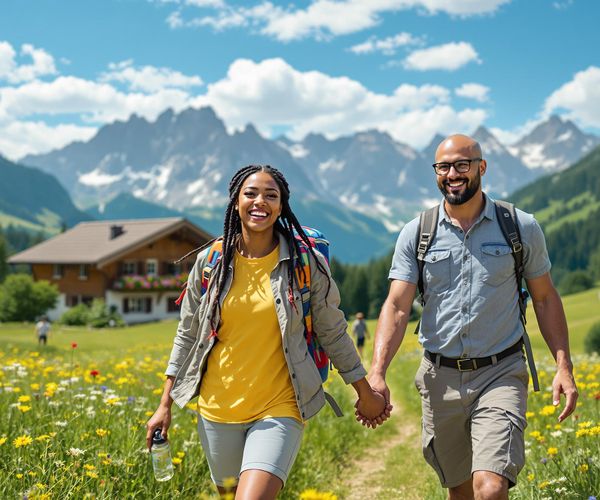
As a translator and cultural consultant, my travels aren't just about seeing new places; they're about connecting with people. And the key to connection? Language. Join me as I share my insights on how learning a new language can transform your travel experiences.
Why Learn a Language for Travel?
There's a profound difference between being a tourist and being a traveler. As a tourist, you observe; as a traveler, you engage. Learning even a few phrases in the local language opens doors to deeper cultural immersion. It's about showing respect and a genuine interest in the people and their way of life. When you make an effort to speak their language, even imperfectly, locals are more likely to welcome you, share their stories, and offer insights you wouldn't get from a guidebook. {image1}
Beyond cultural immersion, language skills offer practical advantages. Navigating unfamiliar streets becomes easier when you can ask for directions. Ordering food is more enjoyable when you can understand the menu and chat with the waiter. And in emergencies, being able to communicate can be crucial. These interactions, big and small, create richer, more meaningful connections and memories that last a lifetime.
Setting Realistic Language Goals
One of the biggest mistakes travelers make is trying to become fluent before their trip. Fluency takes time and dedication. Instead, focus on setting realistic, achievable goals. How long will you be traveling? How much time can you realistically dedicate to language learning before you go? Start there.
Prioritize essential phrases and vocabulary related to common travel situations. Greetings like Hello, Goodbye, and Thank you are essential. Learn how to ask for directions, order food, and inquire about prices. Even knowing a few basic phrases can make a world of difference. Remember, the goal isn't perfection; it's communication. Locals appreciate the effort, even if your grammar isn't perfect. {image2}
Effective Language Learning Methods for Travelers
Fortunately, there's no shortage of language learning methods available to travelers. Language learning apps like Duolingo and Babbel are popular for their gamified approach and accessibility. Phrasebooks offer a convenient way to learn essential phrases and vocabulary. Online courses provide structured lessons and personalized feedback.
Consider your learning style and budget when choosing a method. Apps are great for on-the-go learning, while online courses offer a more in-depth approach. Phrasebooks are inexpensive and easy to carry. Each method has its pros and cons, so experiment to find what works best for you. Regardless of the method you choose, focus on practical communication skills over grammar rules. The ability to speak and understand is more important than perfect grammar. {image3}
Essential Phrases for Travel
Every traveler should know a few essential phrases in the local language. These phrases can help you navigate everyday situations and connect with locals on a basic level.
- Greetings: Hello, Goodbye, Good morning, Good evening
- Polite expressions: Please, Thank you, You're welcome, Excuse me
- Basic questions: How much does it cost? Where is the restroom? Can you help me?
- Ordering food: I would like to order... What do you recommend? The bill, please.
- Asking for directions: Where is...? How do I get to...? Is it far?
Practice pronunciation and intonation to improve communication effectiveness. Listen to native speakers and try to mimic their accent. Don't be afraid to make mistakes; it's part of the learning process. {image4}
Leveraging Technology for Language Learning
Technology has revolutionized language learning, making it more accessible and convenient than ever before. Language learning apps like Duolingo, Babbel, and Memrise offer interactive lessons and personalized feedback. Online dictionaries provide instant access to definitions and translations. Translation tools like Google Translate can help you communicate in real-time.
For travelers, these tools are invaluable. Language learning apps allow you to practice on the go, while online dictionaries can help you decipher unfamiliar words. Translation tools can bridge communication gaps in situations where you don't know the local language. However, it's important to use these tools responsibly. Relying too heavily on translation tools can hinder your language learning progress and limit your ability to connect with locals. {image5}
Immersing Yourself in the Culture
Language learning is about more than just memorizing words and grammar rules; it's about immersing yourself in the culture. Engage with local communities and customs to deepen your understanding of the language and its context. Attend cultural events, visit local markets, and try traditional cuisine. These experiences will not only enhance your language skills but also enrich your travel experience.
Cultural understanding can enhance language acquisition and communication skills. When you understand the cultural norms and values of a society, you're better able to interpret nonverbal cues and communicate effectively. This can lead to more meaningful interactions and a deeper appreciation for the culture. {image6}
Practicing with Native Speakers
One of the most effective ways to improve your language skills is to practice speaking with native speakers. Even if your language skills are limited, don't be afraid to strike up a conversation. Most locals are happy to help you practice and will appreciate your efforts to speak their language.
There are many ways to find language partners. Language exchange apps like HelloTalk and Tandem connect you with native speakers from around the world. Online forums and local meetups offer opportunities to practice in person. Receiving feedback from native speakers on pronunciation, grammar, and cultural nuances can significantly improve your language skills. Don't be afraid to ask for corrections and advice. {image7}
Overcoming Language Learning Challenges
Language learning can be challenging, but it's also incredibly rewarding. Many learners face common obstacles, such as fear of making mistakes, lack of motivation, and difficulty with pronunciation. The key is to stay persistent and find strategies to overcome these challenges.
Focus on progress rather than perfection. Don't be discouraged by mistakes; they're a natural part of the learning process. Set realistic goals and celebrate your achievements along the way. Find a supportive learning community where you can share your experiences and receive encouragement. Remember that language learning is a journey, and setbacks are a normal part of the process. Embrace the challenges and enjoy the ride. {image8}
Learn how language learning can transform your travel experiences. Discover strategies for learning new languages to enhance your travel experiences and connect with locals.