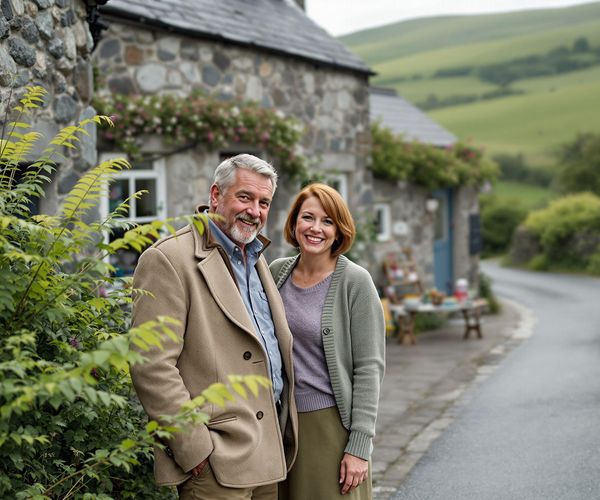
There's something magical about travel, isn't there? It's not just about seeing famous landmarks or ticking off items on a bucket list. For me, and my wife Aoife, it's about truly connecting with a place, understanding its soul. And what better way to do that than through its music? I'm talking about folk music – the heart and soul of a culture, expressed in melodies and rhythms that have been passed down through generations.
The Allure of Folk Music on the Road
I've always believed that experiencing local music is far more enriching than sticking to the usual tourist trails. Don't get me wrong, I appreciate a good museum or historical site as much as the next person, but there's something about folk music that resonates on a deeper level. It's a direct line to the history, the values, and the very spirit of a community.
I remember my first profound folk music experience vividly. It was years ago, long before I met Aoife and moved to Ireland. I was backpacking through Spain, and I stumbled upon a small, unassuming bar in Seville. A group of local musicians were playing flamenco – raw, passionate, and utterly captivating. I didn't understand the words, but I understood the emotion. The music spoke of love, loss, and the enduring spirit of the Andalusian people. That night, I realized that music could be a powerful bridge between cultures, a way to connect with people on a human level, regardless of language or background.
Unearthing Authentic Music Venues
Finding genuine folk music venues can be a bit of a challenge, especially in touristy areas. The key is to venture beyond the obvious and seek out places where locals gather. One of the best strategies is to do a little research before you go. Look for local music listings in newspapers or online. Check out community bulletin boards or ask at local libraries or cultural centers. Often, the best venues are the ones that aren't heavily advertised.
Aoife and I have discovered some incredible hidden musical gems over the years. In County Clare, we found a tiny pub tucked away in a remote village where traditional Irish music sessions were held every Sunday afternoon. In Prague, we stumbled upon a cellar bar where a group of Roma musicians played hauntingly beautiful melodies. These experiences were all the more special because they felt authentic and unscripted.
The most important tip I can offer is to talk to locals. Ask your hotel staff, your taxi driver, or the person sitting next to you at the cafe. They'll often be able to point you in the direction of some truly special music venues that you wouldn't find on your own. Don't be afraid to strike up a conversation – most people are happy to share their local knowledge.
Understanding the Cultural Significance
Folk music is more than just entertainment; it's a reflection of a region's history, values, and traditions. The songs often tell stories of important events, legendary figures, or everyday life. The musical styles themselves can be influenced by the landscape, the climate, and the cultural interactions of a region.
Take, for example, the sean-nós singing tradition in Ireland. These unaccompanied songs, often sung in Gaelic, are deeply rooted in Irish history and mythology. They tell tales of love, loss, emigration, and rebellion, and they are a powerful reminder of the resilience of the Irish people. Similarly, the blues music of the American South reflects the struggles and triumphs of African Americans during the Jim Crow era. The lyrics often speak of hardship, discrimination, and the search for freedom and equality.
Music plays a crucial role in preserving cultural identity, especially in the face of globalization and cultural homogenization. By singing and playing traditional songs, people keep their heritage alive and pass it on to future generations. It's a way of connecting with the past and celebrating the unique cultural tapestry of a region.
I remember once sitting in a pub in Dingle, listening to a local musician sing a traditional Irish ballad. The song was about a young woman who had lost her lover at sea. As he sang, I noticed an elderly woman in the corner wiping away tears. After the song, I asked her about it, and she told me that her own grandfather had been lost at sea many years ago. The song, she said, reminded her of him and of the enduring power of love and loss. That moment, I understood the profound connection between music and memory, and the way in which folk songs can keep the stories of our ancestors alive.
Engaging with Local Musicians
When attending a folk music session, it's important to be respectful of the musicians and the traditions they represent. Listen attentively, avoid talking during the performances, and refrain from making requests unless you're specifically invited to do so. If you're not familiar with the local customs, observe what others are doing and follow their lead.
The etiquette of attending a folk music session varies from place to place. In some cultures, it's customary to clap after each song. In others, it's more appropriate to simply nod your head or offer a quiet word of appreciation. In some pubs in Ireland, it's considered good form to buy the musicians a round of drinks. A little bit of research beforehand can go a long way in ensuring that you don't inadvertently offend anyone.
There are many ways to show appreciation for the music and the musicians. You can offer a sincere compliment after the performance, purchase a CD or other merchandise, or simply leave a generous tip. Remember that these musicians are often working for little or no pay, and your support can make a big difference.
I've had some wonderful experiences connecting with local musicians over the years. In a small town in Italy, I met a group of elderly men who played traditional mandolin music in the town square every evening. They were delighted to share their music with me, and they even taught me a few simple chords. In Scotland, I spent an evening chatting with a fiddler who told me stories about his family's musical heritage. These encounters were not only enriching but also gave me a deeper understanding of the cultures I was visiting.
Folk Music Highlights Around the World
Ireland, of course, holds a special place in my heart when it comes to folk music. The traditional sessions in cozy pubs are legendary, and the stories behind the songs are often just as captivating as the music itself. From lively jigs and reels to haunting ballads of love and loss, Irish folk music is a rich and diverse tapestry that reflects the country's long and turbulent history.
But the world is full of amazing folk music traditions. In Argentina, the passionate rhythms of tango tell stories of love, betrayal, and the urban landscape of Buenos Aires. In Cape Breton, Nova Scotia, the lively fiddle music reflects the island's Scottish heritage. And in the mountains of Peru, the haunting melodies of Andean panpipes evoke the spirit of the ancient Inca civilization.
No matter where you go in the world, you're sure to find folk music that will touch your heart and soul. It's a reminder that, despite our differences, we all share a common human experience. Whether we're singing about love, loss, joy, or sorrow, music has the power to connect us to each other and to the world around us.
Discover how folk music can transform your travels, offering deep cultural insights and unforgettable experiences.