As Lena and I navigate the cobblestone streets of a new city, or hike through remote mountain trails, I'm often struck by how much richer our experiences are because we've made an effort to learn the local language. It's more than just ordering food or asking for directions; it's about connecting with people, understanding their stories, and truly immersing ourselves in a different culture.
A Gateway to Authentic Experiences
Knowing a language transforms travel from a superficial sightseeing tour into a profound cultural immersion. Instead of being confined to tourist traps, you gain access to hidden gems and authentic experiences. I recall a trip to a small village in the Czech Republic, my homeland. While Lena's Russian wasn't directly helpful, her understanding of Slavic languages allowed us to communicate with some elderly villagers who didn't speak English or German. We learned about their traditional crafts, shared stories over homemade plum brandy, and experienced a side of Czech culture that most tourists never see.
These moments of genuine connection are what make travel truly meaningful. It’s about venturing beyond the well-trodden tourist paths and discovering the heart and soul of a place. Language is the key that unlocks these doors, allowing you to engage with locals on their terms and gain a deeper understanding of their way of life.
Unlocking Local Connections
Language skills foster genuine connections with the people you meet. When you make an effort to speak their language, you show respect for their culture and open the door to meaningful interactions. Lena and I have countless stories of connecting with locals through language.
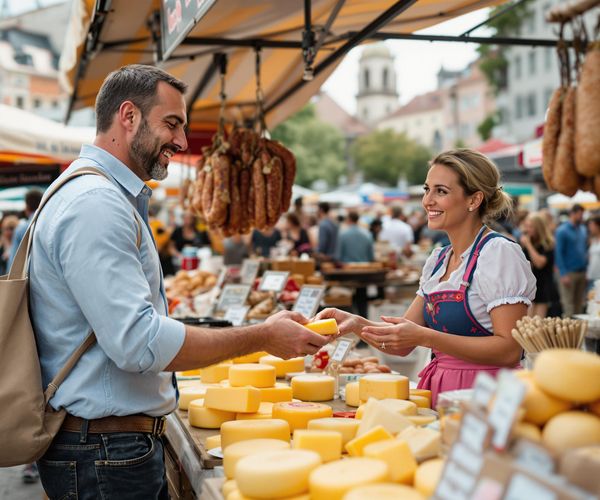
For example, during a trip to a local market in Munich, Lena struck up a conversation with a vendor selling handmade cheeses. Her attempts at speaking German, though far from perfect, were met with smiles and encouragement. The vendor shared stories about her family's cheese-making tradition, offered us samples of her best products, and even gave us tips on local restaurants to try. These small interactions enrich our travels and create lasting memories.
It’s these personal connections that transform a trip from a mere vacation into a journey of discovery and understanding. By learning a few basic phrases, you can break down barriers, build bridges, and create meaningful relationships with people from all walks of life.
Navigating with Ease and Confidence
Beyond cultural immersion, language skills make travel easier and safer. Being able to read signs, ask for directions, and understand basic instructions can significantly reduce stress and increase your confidence when navigating unfamiliar places.
I remember a time when Lena and I were hiking in the Swiss Alps. We took a wrong turn and ended up on a less-traveled path. Fortunately, Lena knew enough German to ask a local farmer for directions. He not only pointed us in the right direction but also shared some fascinating information about the local flora and fauna. Without Lena’s language skills, we might have been lost for hours, missing out on a valuable learning opportunity.
Having some language skills can be invaluable in unexpected situations. Whether it’s dealing with a medical emergency, understanding public transportation schedules, or simply ordering a meal at a restaurant, knowing the local language empowers you to handle challenges with greater ease and confidence.
Practical Tips for Language Learning on the Go
Learning a new language doesn't have to be daunting. There are many resources available that are perfect for travelers. Language learning apps like Duolingo, Babbel, and Memrise offer interactive lessons that can be completed in short bursts, making them ideal for busy travelers.
Duolingo is great for building vocabulary and grammar skills through gamified lessons. Babbel focuses on practical conversations and real-life scenarios, while Memrise uses mnemonic techniques to help you memorize words and phrases more effectively. I find that using a combination of these apps keeps my learning experience fresh and engaging.
Travel-specific phrasebooks and audio courses are also valuable tools. Lonely Planet and Berlitz offer phrasebooks that cover essential phrases for various travel situations. Audio courses, like those from Pimsleur, are excellent for improving your listening comprehension and pronunciation.
Effective Language Learning Techniques for Busy Travelers
Even with a busy travel schedule, it’s possible to incorporate language learning into your daily routine. One of my favorite techniques is to listen to language learning podcasts while hiking or commuting. Coffee Break Languages and Innovative Language Learning offer a wide range of podcasts for different languages and skill levels.
Another effective technique is to label household items with their names in the target language. This helps you to associate words with objects and reinforces your vocabulary. Setting realistic goals and celebrating your progress is also crucial. Don’t try to learn everything at once. Focus on mastering a few key phrases each week and reward yourself when you reach your milestones.
The Sustainable Side of Language Learning
Learning a new language can also contribute to sustainable travel. When you speak the local language, you’re more likely to engage with local communities, support local businesses, and understand local environmental challenges. This fosters a sense of respect and responsibility, encouraging you to make more mindful travel choices.
For example, by speaking German, I've been able to learn about the efforts of local breweries in Munich to reduce their environmental impact. I've also discovered farmers' markets that prioritize sustainable agriculture and support local farmers. These experiences have inspired me to adopt more eco-friendly practices in my own life and to encourage others to do the same.
Ultimately, learning a new language is an investment in yourself and in the world around you. It enriches your travel experiences, fosters meaningful connections, and promotes sustainable practices. So, the next time you plan a trip, consider adding language learning to your itinerary. You might be surprised at how much it transforms your journey.
Learning a new language transforms travel from a superficial sightseeing tour into a profound cultural immersion. It's about venturing beyond the tourist paths and discovering the heart and soul of a place.