
Why Learn a New Language Before Traveling?
Imagine strolling through a bustling market in a foreign land, not just as an observer, but as someone who can truly connect with the vendors. Learning a new language before you travel unlocks a world of richer, more authentic experiences. It's more than just being able to read signs; it's about forging connections.
For me, knowing some German has been invaluable in my daily life in Leipzig. It's made everything from grocery shopping to navigating public transport smoother and more enjoyable. When Hans and I travel within Germany, even to small villages, being able to communicate in German allows us to delve deeper into the local culture and history.
Even mastering basic phrases shows respect and genuine interest in the local culture. A simple Guten Tag or Dyakuyu can go a long way in building rapport and opening doors to unexpected encounters. It signals that you're not just another tourist, but someone who cares about understanding and connecting with the people you're visiting.
Essential Phrases for Every Traveler
Before any trip, I always make sure to learn a few essential phrases. These are your bread and butter for navigating everyday situations. Think of greetings, asking for directions, ordering food, and knowing basic emergency phrases. These aren't just words; they're your keys to unlocking basic communication.
Here are a few examples:
- German: Hallo (Hello), Bitte (Please), Danke (Thank you), Wo ist...? (Where is...?)
- Ukrainian: Привіт (Pryvit - Hello), Будь ласка (Bud' laska - Please), Дякую (Dyakuyu - Thank you), Де знаходиться...? (De znakhodyt'sya...? - Where is...?)
- Spanish: Hola (Hello), Por favor (Please), Gracias (Thank you), ¿Dónde está...? (Where is...?)
Pronunciation is key! Don't be afraid to use online tools like Forvo to hear how native speakers pronounce words. Mimicking the sounds will help you be understood and show that you've put in the effort.
Effective Language Learning Techniques
Everyone learns differently, so it's important to find language-learning methods that suit your style. There's a whole world of options out there, from apps and phrasebooks to immersive experiences and formal classes. The trick is to experiment and see what clicks for you.
Personally, I've found a combination of methods to be most effective. I love using language exchange partners to practice speaking and learn about different cultures firsthand. Watching foreign films with subtitles is another great way to pick up new vocabulary and get a feel for the rhythm of the language. And of course, reading books in the target language, even if it's just children's books, can be incredibly helpful.
I also recommend exploring language learning apps. Duolingo is fantastic for building a basic vocabulary and grammar foundation. Babbel offers more in-depth courses with a focus on practical conversation skills. And Memrise uses flashcards and spaced repetition to help you memorize words and phrases effectively.
Embracing Cultural Immersion
Language learning isn't just about memorizing words and grammar rules; it's deeply intertwined with culture. Immersing yourself in the local culture is one of the most effective ways to enhance your language skills and gain a deeper understanding of the people and their way of life.
When you travel, make a conscious effort to engage with local customs and traditions. Attend local festivals, try new foods, visit historical sites, and strike up conversations with locals. The more you immerse yourself in the culture, the more natural and intuitive the language will become.
Don't be afraid to step outside your comfort zone and embrace new experiences. It's through these interactions that you'll truly begin to understand the nuances of the language and culture.
Overcoming Language Barriers and Mistakes
Let's be honest: learning a new language can be intimidating. We all face challenges, whether it's the fear of making mistakes or the difficulty of understanding native speakers. But don't let these barriers hold you back!
The most important thing is to be patient with yourself and to practice consistently. Don't be afraid to make mistakes – they're a natural part of the learning process. Ask for clarification when you don't understand something, and use non-verbal cues like gestures and facial expressions to help you communicate.
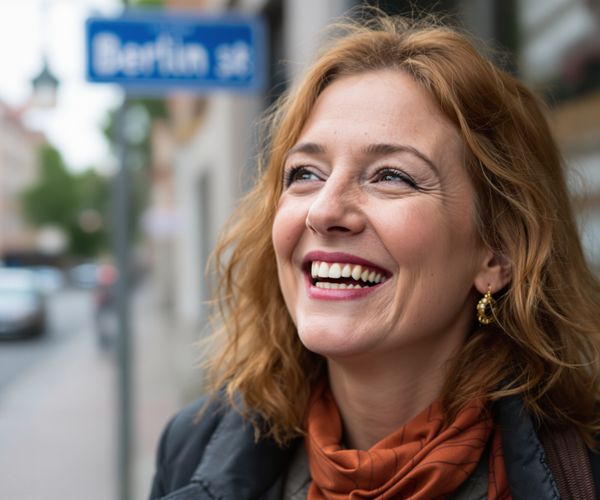
I remember one time in Berlin, I accidentally ordered a plate of pickled herring instead of the apple strudel I was craving. I mispronounced Apfelstrudel and the waiter, bless his heart, thought I said Bismarckhering. We both had a good laugh, and I ended up trying something new! These little mishaps often lead to the most memorable and meaningful interactions.
So, embrace the journey, celebrate your progress, and remember that every conversation, every mistake, and every new word learned brings you one step closer to becoming a confident and culturally aware traveler. щасливої дороги (Schastlyvoyi dorohy - Happy travels)!
Explore language-learning techniques to enhance your travel interactions. Tetiana shares tips for travelers to connect with locals through language.