Claire's Historical Journey to Luxor
Day 3: Unveiling Luxor's Treasures: A Day of Discovery
Immerse yourself in Luxor's rich history with a visit to the Luxor Museum and a stroll down the Avenue of the Rams. A journey back in time!
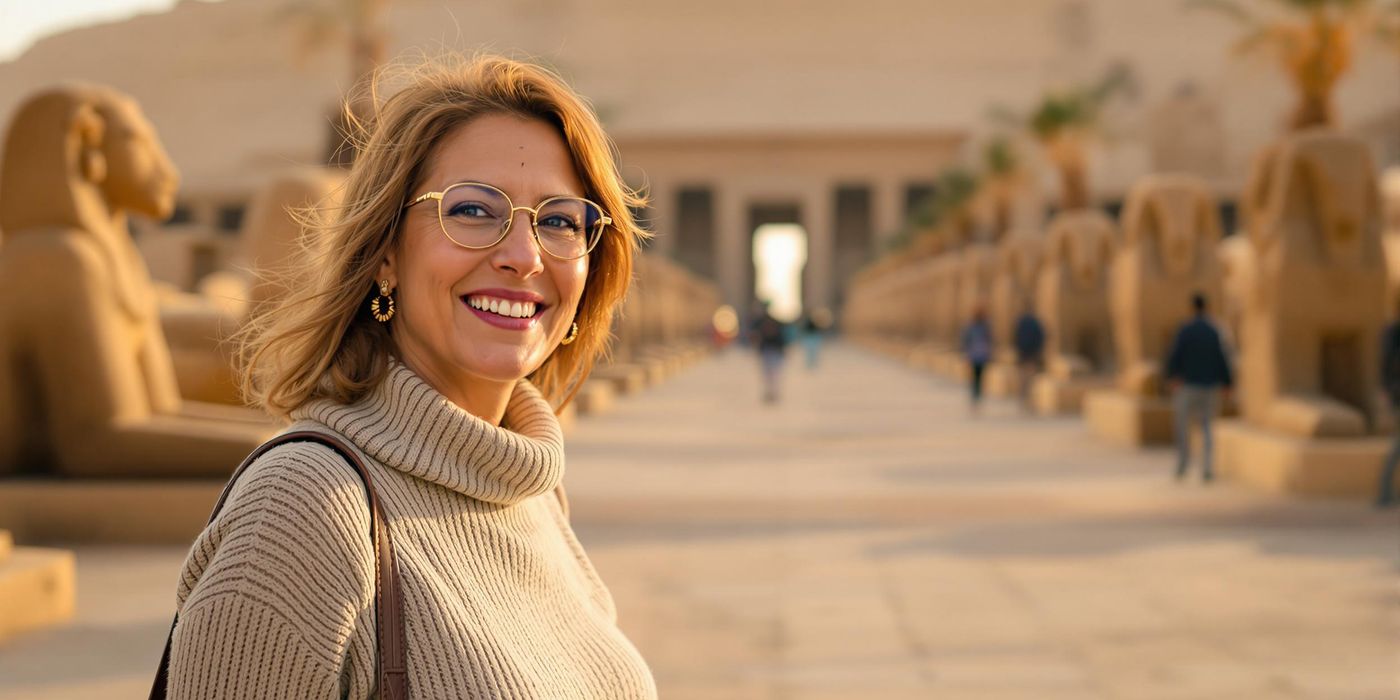
A Day Amongst Gods and Kings
Today was a day dedicated to delving deeper into the heart of ancient Thebes, now known as Luxor. It was a journey that combined the curated brilliance of the Luxor Museum with the grandeur of the Avenue of the Rams, offering a tangible connection to the pharaohs and their world. It’s days like these that remind me why I traded the predictable comfort of Berlin for the unpredictable allure of travel.
My day began, as most good days do, with a hearty breakfast. I ventured out to Gerda's Garden, a place recommended by several locals. The cozy atmosphere and the mix of Egyptian and German dishes were certainly intriguing. Opting for a traditional Egyptian breakfast, I savored the flavors while planning my day. It’s fascinating how food can be such a bridge between cultures; a simple meal can tell you so much about a place and its people.
With a full stomach and a thirst for history, I made my way to the Luxor Museum.

Discover the treasures of ancient Egypt at the Luxor Museum, a premier destination for history lovers in Luxor.
This museum isn't vast like the Egyptian Museum in Cairo, but what it lacks in size, it more than makes up for in the quality and presentation of its artifacts. It's a carefully curated collection that tells a clear and compelling story of ancient Thebes. The multilingual labeling is a boon, allowing visitors from all corners of the globe to fully appreciate the significance of each piece.
The museum is a two-story building, and I started my exploration on the ground floor. One of the first things that caught my eye was the majestic head of a cow goddess, made of resin and gilded wood. The craftsmanship was simply stunning. Then there was the alabaster figure of Amenhotep III protected by the crocodile god Sobek. The detail was incredible, and it was easy to imagine the power and reverence these figures once commanded. There was also a well-preserved limestone relief of Tuthmosis III. It's amazing how these pieces have survived for thousands of years, offering us a glimpse into a world long gone.
To walk through the Luxor Museum is to walk through the heart of ancient Thebes, surrounded by the echoes of pharaohs and gods.
Moving to the upper floor, I was particularly drawn to the Wall of Akhenaten. These small sandstone blocks, known as talatat, were part of Amenhotep IV's temple at Karnak before he changed his name to Akhenaten and moved to Tell Al Amarna. The images on the wall depicting Akhenaten, his wife Nefertiti, and scenes from temple life are a unique example of Aten temple decoration. It's a testament to a period of radical change in Egyptian history.
The museum also houses treasures from Tutankhamun's tomb, including shabti figurines, model boats, sandals, and arrows. These items offer a personal connection to the boy king, giving a sense of the life he might have led. The royal mummies of Ahmose I and Ramesses I are also on display in a new extension to the museum. Seeing these mummies up close is a sobering experience, a reminder of the passage of time and the enduring legacy of these ancient rulers.
Leaving the museum, I felt a profound sense of connection to the past. It was time to experience another facet of Luxor's history: the Avenue of the Rams.

Explore the Avenue of the Rams in Luxor, a historical landmark lined with majestic sphinxes leading to the grand Karnak Temple, rich in ancient Egyptian culture.
This ancient road, also known as the Sphinx Avenue, once connected the Karnak Temple in the north with the Luxor Temple in the south. It was used for processions during the annual Opet Festival, as well as for royal celebrations and coronations.
As I walked along the avenue, I tried to imagine what it must have been like thousands of years ago, with priests and pharaohs parading between the temples, the air filled with music and incense. The avenue is lined with statues of sphinxes, some with human heads and others with ram heads, the ram symbolizing the deity Amun. It’s believed that around 1,300 sphinxes once lined this avenue, but only about 300 remain today. The rest were destroyed in the eras that followed the Pharaonic period.
The Avenue of the Rams is divided into three main parts. The first part starts from the tenth edifice of Karnak Temple and heads south to the gate of the Temple of Mut. This section dates back to the era of King Tutankhamun. The second part includes statues of whole rams in front of the Temple of Khonsu. These statues date back to the reign of Amenhotep III. The third part extends from the Temple of Mut towards the Nile.
Zakaria Ghoneim was the first to discover rams in 1949, unveiling eight statues. Later, Dr. Mohamed Abdel-Qader and Dr. Mohamed Abdel Razek uncovered more statues. Dr. Muhammad al-Sagheer continued the excavation until 2002, uncovering the road extending from the tenth edifice to the Temple of Mut. Mansour Brik resumed the work in 2006, continuing to uncover the rest of the road.
It's incredible to think that this road remained hidden under the sand for thousands of years, only to be rediscovered in recent times. Walking along the Avenue of the Rams, I couldn't help but feel a sense of awe and wonder. It's a tangible link to the past, a reminder of the grandeur and sophistication of ancient Egyptian civilization. I thought of Hans-Peter and how much he would have enjoyed seeing this. Perhaps one day I can bring him here to experience this with me.
As the sun began to set, casting a golden glow over Luxor, I decided to find a place for dinner. I chose Jamboree Restaurant, a British-run establishment offering a mix of international and Egyptian cuisine. I opted for a traditional English meal, a filled jacket potato, which was surprisingly satisfying after a day of exploring ancient wonders. I finished the evening with a visit to Murphys Irish Bar.

Immerse yourself in the authentic charm of Murphys Irish Bar, a cozy Irish pub in Luxor offering great drinks, food, and friendly vibes.
I enjoyed a quiet beer, reflecting on the day's experiences. The bar had a cozy atmosphere. It was a welcome respite after a long day of sightseeing. I thought of Emily and how she would have enjoyed the lively atmosphere. Perhaps one day I can bring her here to experience this with me.
Tomorrow, I plan to explore Deir el-Medina and the Tombs of the Nobles. Deir el-Medina was the village of the workers who built the royal tombs in the Valley of the Kings, and the Tombs of the Nobles are the final resting places of high-ranking officials and their families. I am looking forward to see what those sites have to offer.
Luxor continues to surprise and enchant me. It's a city where the past and present coexist, where ancient monuments stand alongside modern life. It's a place that ignites the imagination and nourishes the soul. As I drift off to sleep tonight, I am filled with gratitude for the opportunity to experience this incredible place.


Embark on a solo adventure to Luxor, exploring Egypt's ancient wonders and enjoying a luxurious stay at the Sonesta St George Hotel.
Meet this Featured Explorer

-
 Occupation:
Freelance English Teacher
Occupation:
Freelance English Teacher
-
 Country:
Germany
Country:
Germany
-
 Age:
55
Age:
55
Hello, fellow travelers! I'm Claire Taylor, a British expat living in Berlin with a passion for exploring the world, one historical site at a time. After years of teaching English, I decided to share my travel experiences and insights with you. Join me as I uncover the hidden gems of Europe and beyond, offering practical tips, personal anecdotes, and a touch of historical context to inspire your next adventure. Together with my husband, Hans-Peter, I embark on slow travel journeys, immersing ourselves in local cultures and savoring every moment. Welcome to my blog, where every trip is a story waiting to be told!
Find Similar Travel Diaries
Explore locations from this diary
-
Sonesta St George Hotel Luxor
Experience luxury and comfort at the Sonesta St George Hotel in Luxor, with stunning Nile views, exquisite dining, and top-tier amenities for an unforgettable stay.
-
Luxor Museum
Discover the treasures of ancient Egypt at the Luxor Museum, a premier destination for history lovers in Luxor.
-
Avenue of the Rams
Explore the Avenue of the Rams in Luxor, a historical landmark lined with majestic sphinxes leading to the grand Karnak Temple, rich in ancient Egyptian culture.
-
Gerda's Garden
Discover Gerda's Garden in Luxor – where fast food meets local charm and flavor in a vibrant dining experience.
-
Jamboree Restaurant
Experience authentic Egyptian cuisine at Jamboree Restaurant in Luxor – where flavor meets affordability.
-
Aboudi Coffee Break
Experience authentic Egyptian flavors at Aboudi Coffee Break in Luxor—where great food meets warm hospitality.
-
ميرفيس الأيرلندية بار Murphys Irish Bar
Immerse yourself in the authentic charm of Murphys Irish Bar, a cozy Irish pub in Luxor offering great drinks, food, and friendly vibes.