
Background

Al Hakim At-Termizi Mausoleum: A Spiritual Oasis

Explore the spiritual legacy of a Sufi saint at this historical mausoleum complex in Termez, a serene pilgrimage and cultural landmark.

4.8

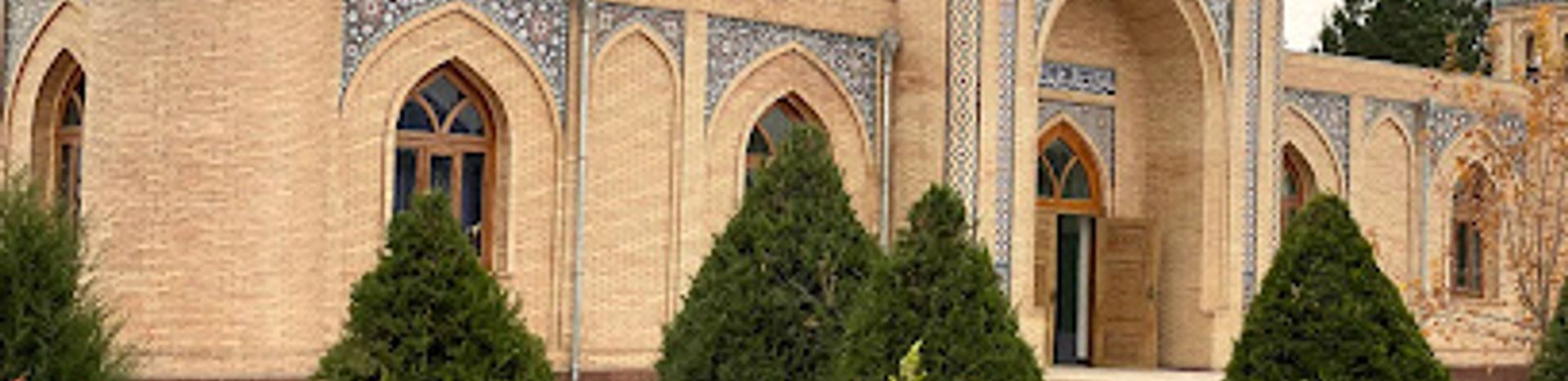
The Al Hakim At-Termizi Mausoleum in Termez is a revered complex dedicated to the Sufi theologian Abu Abdullah al-Hakim at-Termizi [3]. Built from the 11th to the 15th centuries, the site has evolved into a significant pilgrimage destination, reflecting the rich spiritual and architectural heritage of Islamic culture [3, 5].

A brief summary to Al Hakim At-Termizi Mausoleum

  • 758Q+8PR, Kaftarkhana, Surxondaryo Region, UZ

Local tips

  • Dress respectfully when visiting the mausoleum, as it is a religious site. Shoulders and knees should be covered.
  • Visit on a Wednesday to witness locals preparing communal meals for pilgrims [14].
  • Explore the underground meditation chambers for a sense of the site's spiritual history [9, 14].
widget icon

Getting There

  • Taxi

    From Termez city center, a taxi is the most convenient way to reach the Al Hakim At-Termizi Mausoleum. Taxis are readily available and the ride takes approximately 15-20 minutes. A typical fare should cost around 35,000 UZS [9].

  • Public Transport

    From Yubileyny Bazaar, take marshrutka 15 heading north on Al-Termizi [13]. Negotiate with the driver to continue to the main gates. The marshrutka ride should cost around 800 UZS [13].

Unlock the Best of Al Hakim At-Termizi Mausoleum

Buy tickets

    No tickets available

Book tours with entry

    No tours available

Book tours without entry

    No tours available

Discover more about Al Hakim At-Termizi Mausoleum

The Al Hakim At-Termizi Mausoleum is a memorial complex honoring Abu Abdullah al-Hakim at-Termizi, a distinguished Sufi theologian and one of the most influential thinkers in Islamic history [3, 4]. Born in Termez, Al-Hakim at-Termizi was a scholar and the founder of the Hakimia dervish order, one of the twelve sects of mysticism [2, 7]. He died at the age of 115 in 932 and was buried near the medieval citadel of Termez [2]. The mausoleum complex has been built over centuries. The initial, modest tomb was constructed in the 11th century from baked brick [3, 4]. In 1389-1390, a new mausoleum was erected to the east of the original tomb [2, 4]. During the reign of Amir Temur in the 14th century, another mausoleum was added, and a white marble gravestone was placed over the saint's grave [2, 4, 5]. From 1405-1409, under Khalil Sultan, a grandson of Amir Temur, the largest building complex was constructed on the east-west side of the mausoleum [2, 4]. The heart of the complex features the tomb of Hakim al-Termizi, marked by a grand entrance and a spherical dome [3]. The main chamber is painted white and adorned with calligraphy and geometric motifs [3]. The white marble gravestone is considered a masterpiece of decorative stone carving art [2, 4]. The complex includes a mosque dating back to the 11th-12th centuries, a 14th-century khanaqa (a building for Sufi gatherings), and a kari-khana (a room for Quranic recitation) [3]. There is also a necropolis with graves of Sufi figures from the 12th to 19th centuries and chilla-khana rooms, secluded underground chambers used by pilgrims for prayer [3, 9]. Today, the Al Hakim At-Termizi Mausoleum is a revered pilgrimage site for Muslims and a historical treasure for visitors from around the world [3, 5, 7, 14]. The complex is set within a lush garden landscape with wide alleys, manicured lawns, and trees [3].

Popular Experiences near Al Hakim At-Termizi Mausoleum

Popular Hotels near Al Hakim At-Termizi Mausoleum

Select Currency