

Ghazi Stadium Travel Guide
Free Guide: Experience Afghan sports and history at Ghazi Stadium in Kabul, a symbol of resilience and national pride, where echoes of the past meet the hopes for the future.


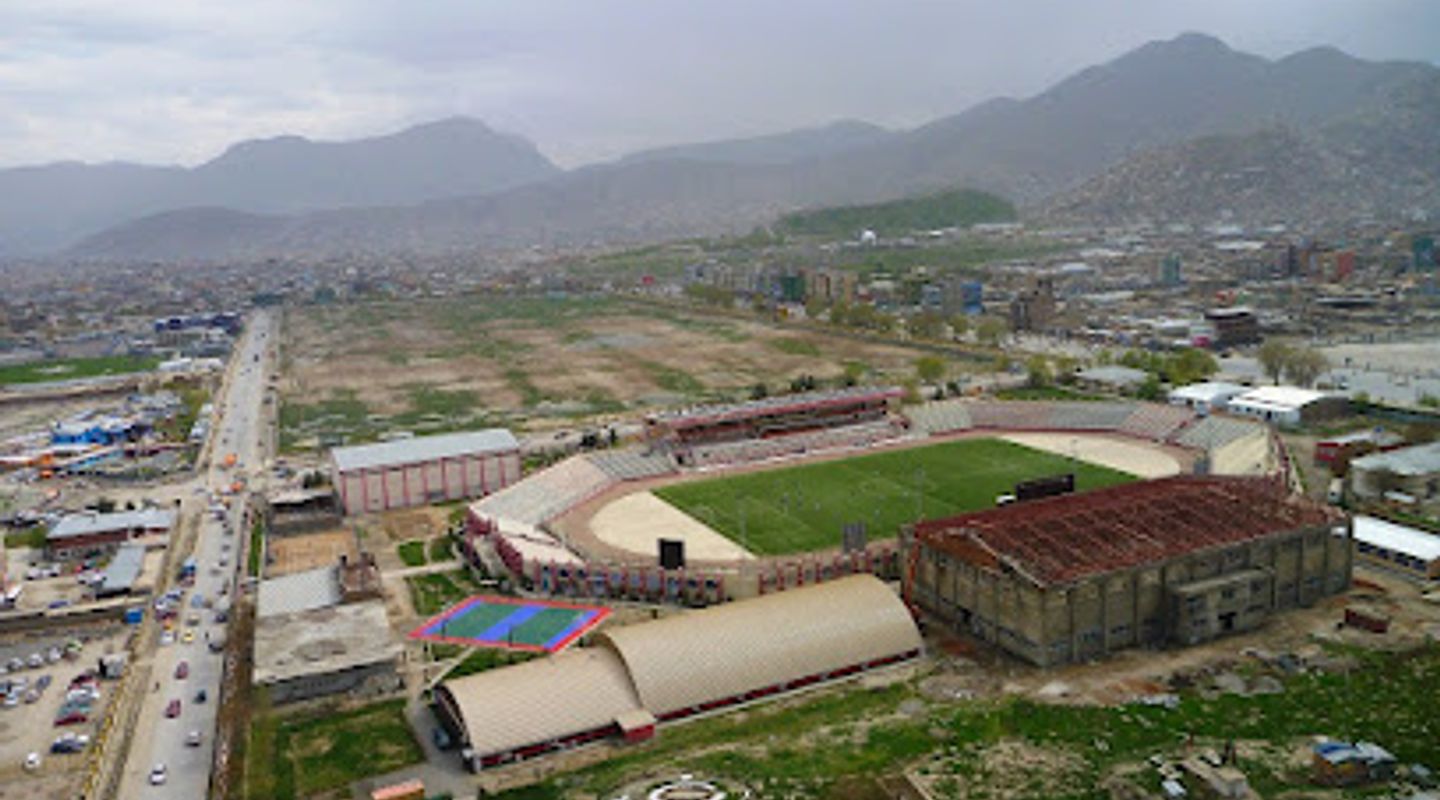
A brief summary of Ghazi Stadium
Experience Afghan sports and history at Ghazi Stadium in Kabul, a symbol of resilience and national pride, where echoes of the past meet the hopes for the future.
Ghazi Stadium in Kabul is a multi-purpose stadium with a rich and turbulent history, reflecting Afghanistan's journey through conflict and resilience. Built in 1923 by King Amanullah Khan, it has served as a symbol of national pride, a venue for sports, and, during the Taliban regime, a site for public executions. Renovated in 2011, it now hosts local and international football matches, embodying the enduring spirit of Afghanistan [2, 3].
- Address
- G59V+CF5, Kabol, Afghanistan
Getting there
Walking
Taxi/Ride-Share
Public Transport
Discover more about Ghazi Stadium
Overview
Ghazi Stadium, located southeast of the Shahr-e Naw neighborhood in Kabul, stands as a testament to Afghanistan's complex history and unwavering spirit [2]. Constructed in 1923 during the reign of King Amanullah Khan, who earned the title 'Ghazi' (Hero) for securing Afghanistan's independence, the stadium was envisioned as a symbol of national pride and a place to foster unity through sports [2, 3].Originally a simple field for wrestling and local sports, Ghazi Stadium evolved over time, with walls gradually erected to accommodate growing crowds [2]. A significant renovation in 1973 expanded the spectator area and added new facilities [2]. However, the stadium also bears witness to darker chapters in Afghanistan's history. During the Taliban regime in the late 1990s, it was used as a site for public executions, a grim reminder of a brutal era [2, 5, 10]. This period left a deep scar, but also fueled a determination to reclaim it as a place of hope and unity [2].In 2011, a major renovation, funded by NATO forces, breathed new life into Ghazi Stadium [2]. The ground was replaced with fresh soil and artificial turf, transforming it into a modern sporting venue [2]. Today, Ghazi Stadium primarily hosts local football training and matches, uniting communities from different provinces [2, 4]. It also hosts international matches, providing a platform for Afghan athletes to showcase their talents and inspire national pride [2, 4]. The stadium has also been home to the country's national women's boxing team, highlighting progress in promoting gender equality in sports [2].Located near the Afghanistan National Olympic Committee, the Afghanistan Football Federation Stadium, and the Kabul International Cricket Stadium, Ghazi Stadium is surrounded by a vibrant and energetic atmosphere [2, 3]. Visiting Ghazi Stadium offers a unique opportunity to reflect on Afghanistan's journey through triumph and adversity [2, 4]. It is a place where you can witness the passion and resilience of the Afghan people and gain a deeper understanding of the nation's complex narrative [2, 4].
Evendo Review Centre
 Google
Guest reviews
Explore Ghazi Stadium on the map
A handpicked selection of must-see spots near Ghazi Stadium, mapped for you.
Get your free copy of our complete guide to Ghazi Stadium, delivered straight to you.
Everything on this page, from opening hours and how to get there to Eve’s tips and the best time to go, in one PDF you can read offline, print or share.
Already have an account? Sign in
Your Ghazi Stadium guide is ready.
We'll send it to · Not you? Sign out

Getting your guide ready…
We are putting together a fresh copy of the Ghazi Stadium guide. This can take up to a minute.
This can take a few moments. If your browser asks, choose Allow so the download can start. You'll find the guide in your Downloads folder.
Nothing happened? Download it again
Sorry, the guide is taking longer than usual. Please try again in a minute, or get it by email instead.
Other nearby places you may find interesting
The closest places of the same kind, if this one is not quite what you had in mind.
-
-
-
-
-


Swipe for more places
More to explore near Ghazi Stadium

 Best experiences near Ghazi Stadium
 Best hotels near Ghazi Stadium
 Best landmarks near Ghazi Stadium
 Best attractions near Ghazi Stadium
 Best shops near Ghazi Stadium
 Best restaurants near Ghazi Stadium
 Best bars near Ghazi Stadium
Do you manage this location?
Take control to get all the benefits, like improved information, better appearance, and stronger visibility across AI-powered discovery.
Explore more

Explore more of Paktia
Discover Paktia: A hidden gem in Afghanistan, known for its breathtaking landscapes, rich culture, and historical treasures.
Explore Paktia
Explore more of Afghanistan
Discover Afghanistan's rich history, stunning landscapes, and diverse cultures. From ancient cities to breathtaking nature, this Central Asian gem offers a unique travel experience.
Explore Afghanistan
