Durrës Amphitheatre, Kavaje Travel Guide
Discover the ancient Roman Amphitheatre of Durrës, the largest in the Balkans, featuring stunning mosaics and a rich history dating back to the 2nd century AD.
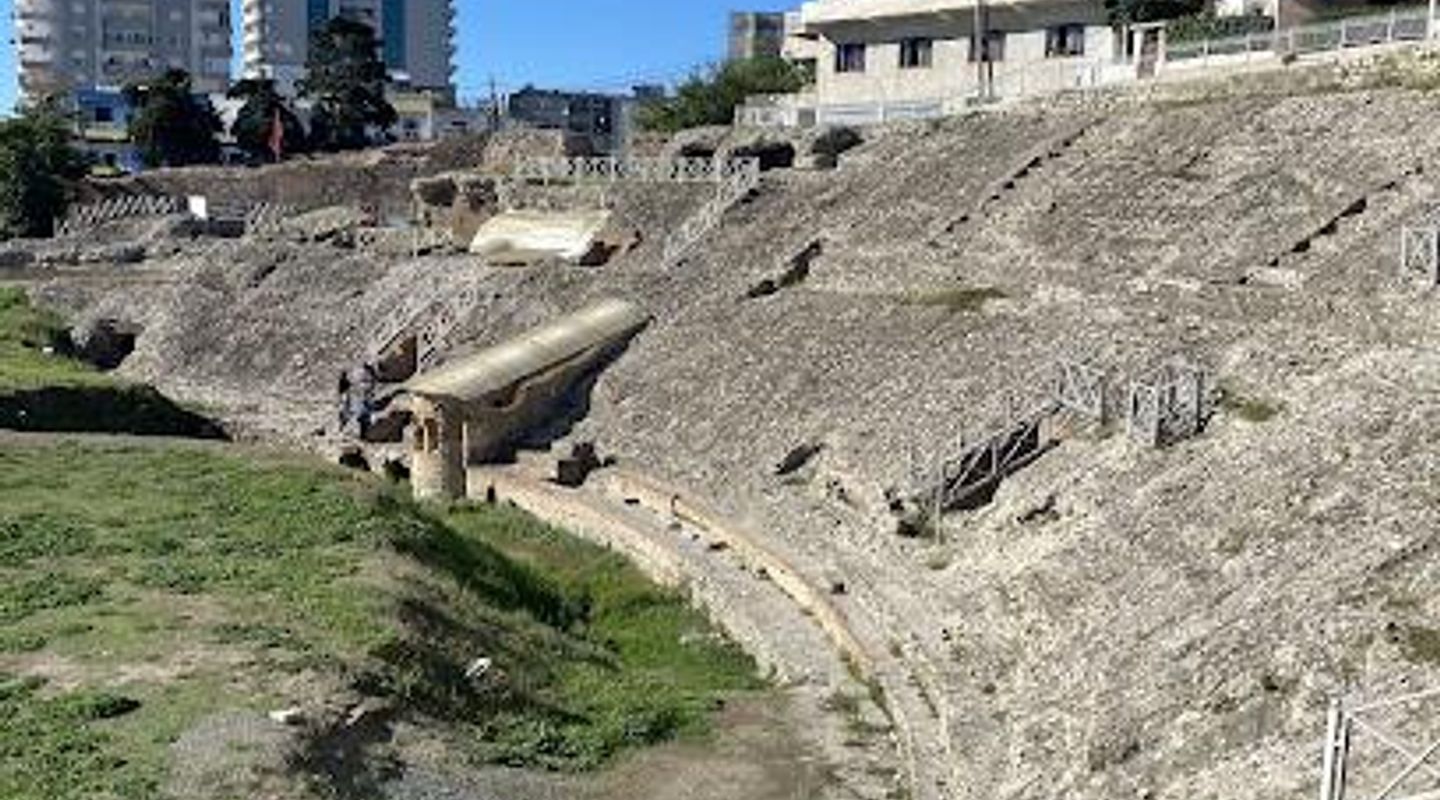
The Durrës Amphitheatre, dating back to the 2nd century AD, stands as the largest Roman amphitheater in the Balkans. Once capable of hosting up to 20,000 spectators for gladiatorial contests and public spectacles, it offers a glimpse into the Roman Empire's influence in the region. Unearthed in 1966 after centuries of being buried, the site also features the remains of an early Christian chapel with stunning mosaics, showcasing the area's historical transitions.
A brief summary to Durrës Amphitheatre
- 8C6W+V2M, Rruga Kalase, Durrës, AL
- Click to display
- Click to display
- Monday 9 am-7 pm
- Tuesday 9 am-7 pm
- Wednesday 9 am-7 pm
- Thursday 9 am-7 pm
- Friday 9 am-7 pm
- Saturday 9 am-7 pm
- Sunday 9 am-7 pm

Know before you go
Hi, I'm Eve. Here are a few practical things to know before exploring Durrës Amphitheatre.
- Visit early in the morning or late in the afternoon to avoid crowds and enjoy cooler temperatures.
- Wear comfortable shoes, as the amphitheater's terrain can be uneven and slippery, especially near the underground tunnels and mosaics.
- Combine your visit with other nearby attractions such as the Byzantine Forum, Venetian Tower, and Archaeological Museum, all within walking distance.
- English-speaking guides are often available on-site until 3 pm; their services operate on a tipping basis.
Do you manage this location?
Take control to get all the benefits, like improved information, better appearance, and stronger visibility across AI-powered discovery. Learn more about listing your business on Evendo
Activate your presenceOther nearby places you may find interesting
The closest places of the same kind, if this one is not quite what you had in mind.


Explore Durrës Amphitheatre on the Map
A handpicked selection of must-see spots near Durrës Amphitheatre, mapped for you.
Unlock the Best of Durrës Amphitheatre
Buy tickets
-
No tickets available
Book tours with entry


Getting There
-
Walking
The Durrës Amphitheatre is located in the city center, a short walk from many central landmarks. From the Venetian Tower, walk along Rruga Anastas Durrsaku for about five minutes. The amphitheater will be on your left. No costs are involved.
-
Public Transport
Durrës has an extensive bus system. From the main bus station, the amphitheater is approximately a 15-minute walk. Follow signs for 'Qendra Historike' (Historical Center) and head towards Rruga Kalase. A single bus fare costs around 40 lek (approximately $0.32 USD).
-
Taxi
Taxis are readily available in Durrës. A short taxi ride from the Durrës city center to the Amphitheatre will typically cost between 250 to 1250 ALL, depending on the distance and time of day. Confirm the fare with the driver before starting your trip.
Discover more about Durrës Amphitheatre













Your all‑in‑one travel companion app
Explore expert travel guides, compare and book tours, experiences, hotels, and more—all from the palm of your hand. Download now for seamless trip planning wherever your wanderlust takes you.


Explore More of Kavaje
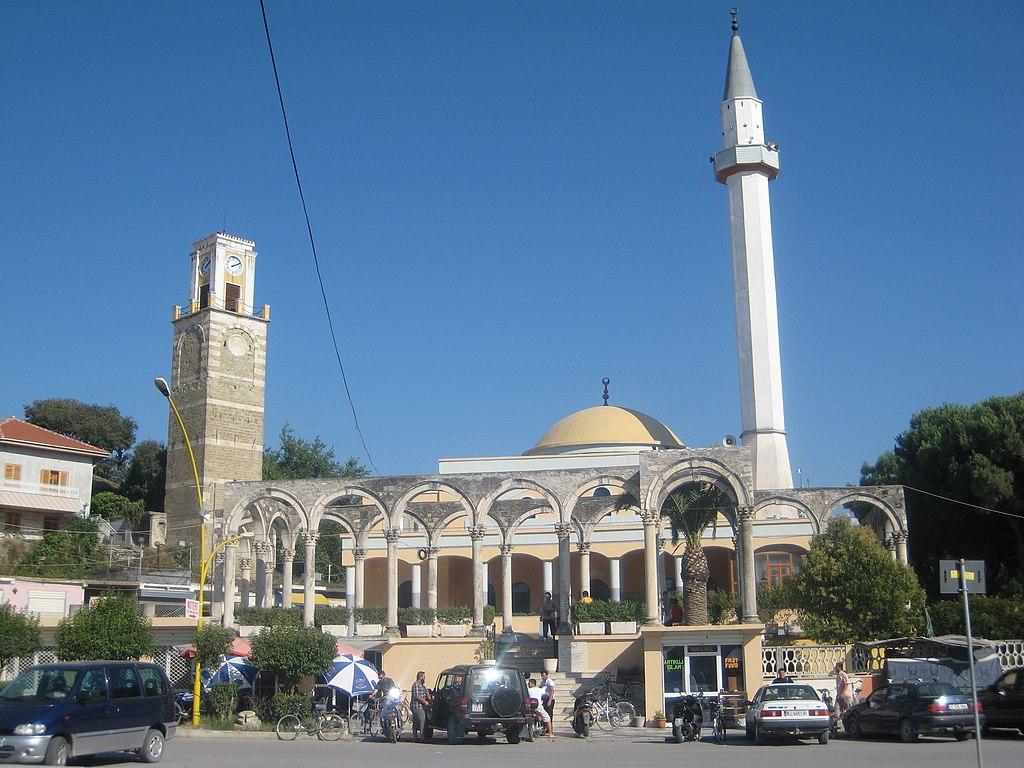
Looking beyond Durrës Amphitheatre? Discover Kavaje for broader travel guides, local hot-spots, and regional highlights.
Explore Kavaje