

Tassili n'Ajjer, Chelif Plain Travel Guide
Explore Tassili n'Ajjer's ancient rock art and otherworldly landscapes: a journey through time in the heart of the Sahara Desert.
Tassili n'Ajjer, a UNESCO World Heritage Site in southeastern Algeria, is a mountain range in the Sahara Desert famed for its stunning geological formations and prehistoric cave art. Over 15,000 drawings and engravings chronicle climate changes, animal migrations, and the evolution of human life on the edge of the Sahara from 6000 BC to the early centuries AD.
A brief summary to Tassili n'Ajjer
- Illizi, DZ

Know before you go
Hi, I'm Eve. Here are a few practical things to know before exploring Tassili n'Ajjer.
- The best time to visit Tassili n'Ajjer is between October and April to avoid the intense summer heat.
- Bring both EUR or USD in cash, as credit card facilities are almost non-existent in the region.
- Dress modestly, especially female tourists, to respect local customs.
- Obtain necessary permits through government-approved tour agencies or a Tassili National Park conservationist.
- Be prepared for basic accommodations, often involving camping with limited facilities.
Do you manage this location?
Take control to get all the benefits, like improved information, better appearance, and stronger visibility across AI-powered discovery. Learn more about listing your business on Evendo
Activate your presenceOther nearby places you may find interesting
The closest places of the same kind, if this one is not quite what you had in mind.
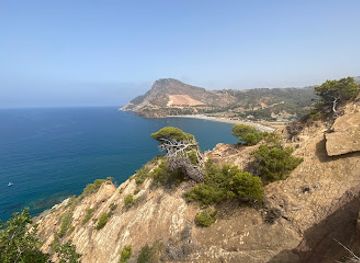

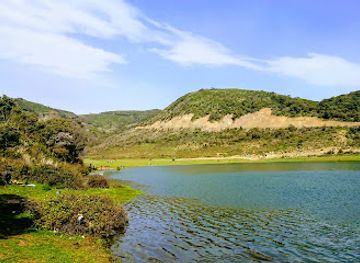
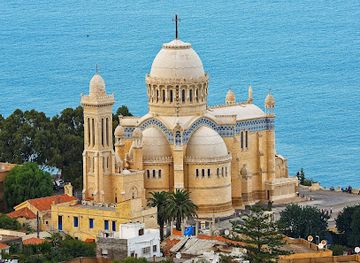
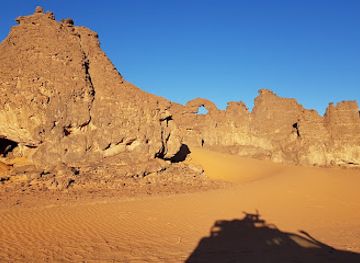
Explore Tassili n'Ajjer on the Map
A handpicked selection of must-see spots near Tassili n'Ajjer, mapped for you.
Getting There
-
Flying
Most trips to Tassili n'Ajjer begin by flying into Djanet Airport (DJG). From Algiers, there are evening flights to Djanet. From the airport, you will need to arrange transportation with a tour operator to reach the park.
-
Tour
The most practical way to visit Tassili n'Ajjer is through a guided tour. Several tour operators offer excursions from Djanet, which typically include transportation, accommodations (often camping), meals, and a local guide. These tours handle the necessary permits and logistics for entering the park. Prices vary depending on the length and level of service, but budget between $150-$300 USD per day.
Discover more about Tassili n'Ajjer













Your all‑in‑one travel companion app
Explore expert travel guides, compare and book tours, experiences, hotels, and more—all from the palm of your hand. Download now for seamless trip planning wherever your wanderlust takes you.


Explore More of Chelif Plain
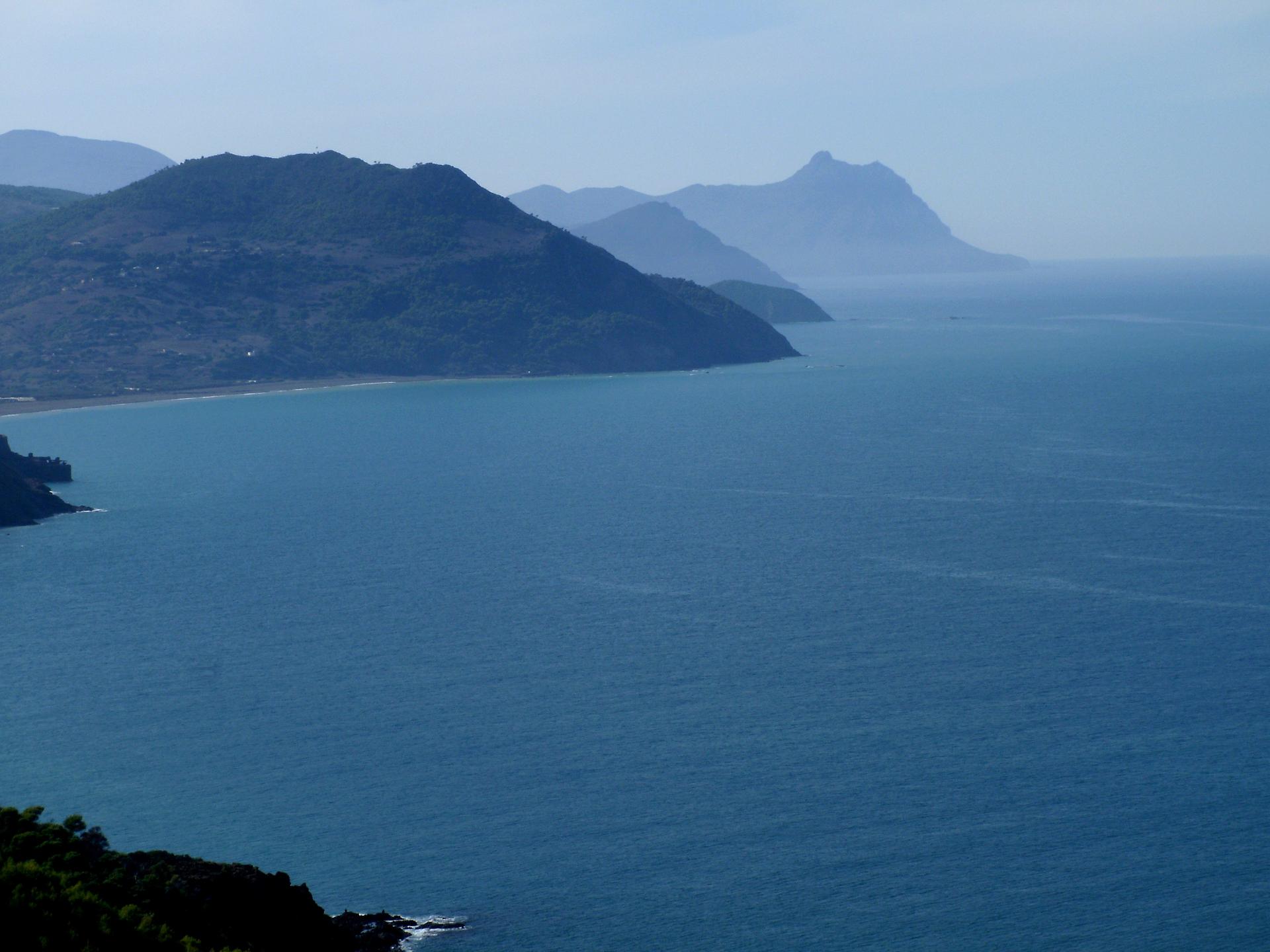
Looking beyond Tassili n'Ajjer? Discover Chelif Plain for broader travel guides, local hot-spots, and regional highlights.
Explore Chelif Plain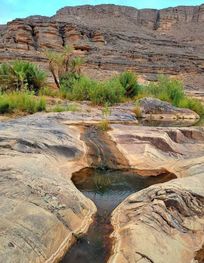
Discover Oued Ihrir, a tranquil Saharan oasis near Bordj El Haouas, Algeria, offering lush landscapes, hiking, and a unique cultural experience.
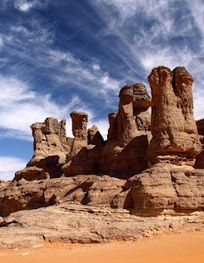
Explore ancient rock art and otherworldly landscapes in Algeria's Tassili n'Ajjer, a UNESCO World Heritage Site in the heart of the Sahara.
