

Los Troncos (Mar del Plata) Travel Guide - Free
Explore Los Troncos in Mar del Plata with Evendo's free guide. Find the best shops, historic streets, restaurants, and gems on web or mobile.


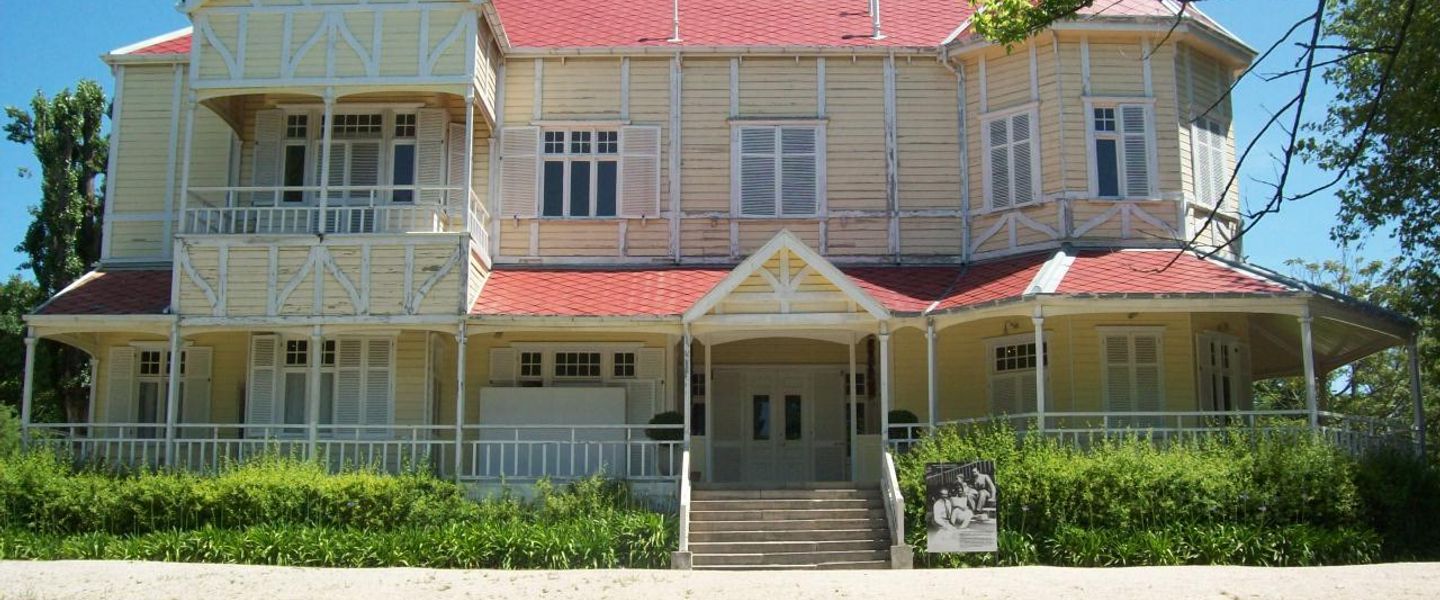


Los Troncos in Mar del Plata pairs elegant summer chalets, Villa Victoria, the Castagnino Museum, leafy streets, Güemes shopping and refined dining.
Chalets, Gardens and a Distinctive Address
Los Troncos occupies a leafy, largely residential part of Mar del Plata, just inland from the city’s central coastline. Its streets are associated with the city’s tradition of summer architecture: detached villas, pitched roofs, timber details, stonework and generous gardens built for affluent holidaymakers during the first half of the twentieth century. The area takes its name from the former Los Troncos property, and its identity remains closely tied to these spacious plots and quiet, tree-lined blocks.Read more about Los Troncos
Architecture and Cultural Memory
From Residential Streets to Güemes
Best attractions in Los Troncos
Los Troncos is best explored through a sequence of cultural houses, architectural details and leafy streets rather than a single concentrated monument. Villa Victoria, the former Mar del Plata residence associated with Victoria Ocampo, offers insight into the literary and social life of Argentina’s summer elite through its preserved setting and cultural programming. Villa Ortiz Basualdo, home to the Museo Municipal de Arte Juan Carlos Castagnino, combines a historic residence with changing art exhibitions. Avenida Güemes provides the neighbourhood’s livelier public face, with cafés, restaurants, boutiques and people-watching along its commercial stretch. Torre Tanque adds a distinctive civic landmark, while the surrounding residential blocks reward slow walking for their stone façades, pitched roofs, balconies and mature gardens. The relief is largely gentle, although broad avenues and uneven pavements call for ordinary urban care.
-
Historical landmark
Casco Chalet Los Troncos
Discover the architectural charm of Mar del Plata's historic Los Troncos neighborhood, featuring unique early 20th-century chalets and mansions.
8 min walk · 0.7 km from neighbourhood centre

Best landmarks in Los Troncos
Los Troncos’s landmarks express the history of Mar del Plata as a resort built around private summer life, civic improvement and cultural ambition. Villa Ortiz Basualdo is the neighbourhood’s most important architectural and artistic reference, a historic early-twentieth-century residence now occupied by the Museo Municipal de Arte Juan Carlos Castagnino. Villa Victoria carries a different significance: its association with Victoria Ocampo connects the district to Argentine literary culture and to the international outlook of the Ocampo family. Torre Tanque, a prominent water-supply structure from the twentieth century, represents the municipal infrastructure required by a rapidly growing resort city. Around these buildings, the villas, garden walls, pitched roofs and stone-and-timber façades of the residential streets form a dispersed architectural landscape. Avenida Güemes is the principal contemporary landmark, marking the shift from quiet houses to commerce and public life.
-
Historical landmark
Casco Chalet Los Troncos
Experience the architectural beauty and serene gardens of Casco Chalet Los Troncos, a historical gem in Mar del Plata, Buenos Aires Province.
8 min walk · 0.7 km from neighbourhood centre
-
Holiday apartment rental
Los Troncos Quiet House
Experience the perfect blend of tranquility and coastal charm at Los Troncos Quiet House in Mar del Plata, Buenos Aires Province.
2 min walk · 0.1 km from neighbourhood centre


Explore Los Troncos on the map
A handpicked selection of must-see spots in Los Troncos, mapped for you.
Best hotels in Los Troncos
Best restaurants in Los Troncos
Dining in Los Troncos centres on the contrast between the polished commercial atmosphere of Avenida Güemes and the quieter residential streets behind it. The area offers cafés for breakfast and merienda, restaurants serving Argentine staples, grills, pasta and seafood, and contemporary venues shaped by Mar del Plata’s coastal identity. Seasonal visitors create a particularly active eating scene, while local residents support bakeries, ice-cream shops and informal cafés beyond the main restaurant hours. Güemes is the most convenient area for browsing menus and combining dinner with shopping, although the choice changes with the season and individual businesses. Argentine customs are useful to remember: dinner tends to begin later than in many countries, shared dishes are common, and a service charge should be checked before adding a discretionary tip. The neighbourhood’s food culture is commercial and varied rather than centred on one singular local speciality.
-
Restaurant
Torombolo
Discover Torombolo in Mar del Plata - where American burgers meet authentic Mexican flavors in a vibrant seaside setting.
12 min walk · 0.9 km from neighbourhood centre
-
Argentinian
Parrilla Huija
Discover the authentic taste of Argentina at Parrilla Huija in Mar del Plata - where every bite tells a story.
12 min walk · 0.9 km from neighbourhood centre
-
Italian
Tisiano Restaurant
Experience authentic Italian cuisine at Tisiano Restaurant in Mar del Plata - where every dish tells a story.
5 min walk · 0.4 km from neighbourhood centre
-
Grill
Parrilla La Mulita
Experience authentic Argentine flavors at Parrilla La Mulita in Mar del Plata - where every bite tells a story.
11 min walk · 0.9 km from neighbourhood centre


Best bars in Los Troncos
Los Troncos is more associated with restaurants, cafés and evening promenades than with a dense nightclub district. After dark, Avenida Güemes becomes the main focus, with bars, dessert cafés and restaurants accommodating both residents and seasonal visitors, while the surrounding streets remain comparatively quiet and residential. The area suits a leisurely drink, late meal or walk between venues rather than an all-night club circuit. Some establishments combine dining with cocktails or music, but programmes and opening arrangements can change, particularly outside the summer season. Visitors should keep noise down when leaving busy venues and remember that the transition from the commercial avenue to the residential blocks is quick. For larger club nights or major performances, other parts of Mar del Plata may offer a broader programme than Los Troncos itself.
-
Brewpub
Glück Cervecería
Discover the vibrant flavors of craft beer at Glück Cervecería in Mar del Plata, where local ingredients meet exceptional brews.
7 min walk · 0.6 km from neighbourhood centre
-
Beer Garden
La Paloma Brewing Company (Beer Garden)
Experience the lively atmosphere and exquisite craft beers at La Paloma Brewing Company, the ultimate beer garden in Mar del Plata.
7 min walk · 0.6 km from neighbourhood centre
-
Bar
Tiki Bar MDQ
Experience the vibrant nightlife at Tiki Bar MDQ, a tropical haven in Mar del Plata with exquisite cocktails and a lively atmosphere.
12 min walk · 0.9 km from neighbourhood centre
-
Brewpub
Baum Playa Grande
Discover the essence of Mar del Plata at Baum Playa Grande, a brewpub offering craft beers and a lively atmosphere for unforgettable evenings.
11 min walk · 0.9 km from neighbourhood centre


Best shops in Los Troncos
Avenida Güemes is Los Troncos’s principal shopping address and one of the most convenient places in Mar del Plata for browsing independent boutiques, fashion retailers, gift shops, cafés and specialist businesses. Its appeal lies in the combination of pedestrian-scaled storefronts and the surrounding residential architecture, rather than in a traditional produce market or a single historic arcade. Stock and individual businesses vary, with seasonal changes particularly noticeable during the summer influx, so the area is best approached as a lively retail promenade rather than a fixed catalogue of shops. Visitors can look for Argentine fashion, leather goods, design-led gifts, books, sweets and seaside holiday essentials, while the side streets offer a calmer contrast. Larger department stores and shopping centres are available elsewhere in Mar del Plata, but Güemes is the neighbourhood’s clearest expression of local, street-based retail culture.
-
 Clothing store
Stone - Crowned
Explore the latest trends and stylish collections at Stone - Crowned, the premier clothing store in Mar del Plata, Buenos Aires.
7 min walk · 0.5 km from neighbourhood centre
-
Gift shop
Humus mar del plata
Discover unique souvenirs and local crafts in Mar del Plata's charming gift shop, Humus, where every item tells a story.
5 min walk · 0.4 km from neighbourhood centre
-
Shopping mall
Plaza Del Arco
Discover the vibrant Plaza Del Arco, a shopping and dining haven in Mar del Plata, showcasing the best of local culture and cuisine.
6 min walk · 0.5 km from neighbourhood centre
-
Women's clothing store
Dharma
Discover unique women's fashion at Dharma in Mar del Plata, where style meets quality in an inviting boutique setting.
4 min walk · 0.3 km from neighbourhood centre

Los Troncos essentials
Getting There
Getting Around
Safety
Emergency Situations
Do's and Don'ts
Local Tips
History of Los Troncos
From Rural Estate to Resort Quarter
The name Los Troncos derives from the former Los Troncos estate, part of the semi-rural landscape surrounding Mar del Plata before the area was absorbed into the expanding resort city. As the railway, roads and tourist infrastructure strengthened Mar del Plata’s appeal in the late nineteenth and early twentieth centuries, land inland from the shore became attractive for large summer residences. The neighbourhood did not develop as a dense commercial centre; instead, its identity formed through spacious plots, gardens and villas intended for seasonal occupation. That low-density pattern still distinguishes Los Troncos from the more compact central areas nearer the port and the city’s principal beaches.
The Age of Summer Villas
During the early twentieth century, prosperous families built elaborate holiday houses in and around Los Troncos, helping establish Mar del Plata as Argentina’s leading seaside resort. Villa Ortiz Basualdo, begun in 1909 and associated with the city’s elite summer culture, is one of the clearest surviving expressions of that period and now contains the Museo Municipal de Arte Juan Carlos Castagnino. Villa Victoria, built in 1912 for the Ocampo family and later linked to Victoria Ocampo, gave the neighbourhood an important literary dimension. These residences were not simply private retreats: they embodied the architecture, social rituals and cultural ambitions of Argentina’s resort society.
Civic Infrastructure and Urban Consolidation
As Mar del Plata grew into a permanent city as well as a seasonal destination, Los Troncos acquired infrastructure that supported a larger year-round population. Torre Tanque, constructed in the 1940s as part of the city’s water-supply system, became a prominent landmark in the neighbourhood’s skyline and a reminder that the district’s elegant villas existed within an expanding urban service network. Streets were progressively consolidated, surrounding plots were subdivided and commercial activity gathered along routes such as Avenida Güemes. The result was a mixed landscape of detached houses, institutional buildings and increasingly active retail edges rather than a uniformly preserved historic enclave.
Heritage, Culture and Change
In the later twentieth century and into the present, Los Troncos retained its reputation as one of Mar del Plata’s established residential quarters while the survival and reuse of its villas gave the area wider cultural importance. Villa Ortiz Basualdo became a municipal art museum, and Villa Victoria developed as a cultural centre, allowing buildings once associated with private seasonal life to enter public cultural use. At the same time, Avenida Güemes became a prominent shopping and dining corridor, bringing contemporary commerce into a neighbourhood still defined by historic houses and mature streetscapes. Preservation, residential redevelopment and commercial pressure now coexist within the area’s evolving identity.
Los Troncos in Photos
Browse through our photo collection highlighting the charm and character of the destination.
Neighbourhoods near Los Troncos
The closest neighbourhoods to Los Troncos, if you have time for more than one stop.
-

-

-

-


Swipe for more neighbourhoods
Explore more

Explore more of Mar del Plata
Mar del Plata combines Atlantic beaches, Belle Époque landmarks, seafood, theatre and lively coastal culture for memorable Argentina sightseeing.
Explore Mar del Plata