
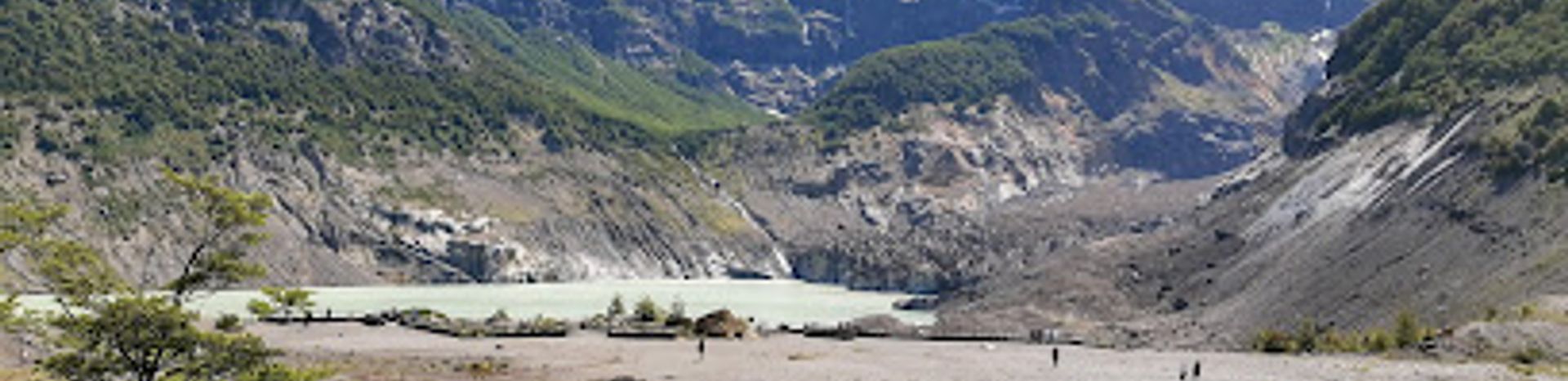
Ventisquero Negro: Patagonia's Black Glacier
Discover the unique Ventisquero Negro glacier in Bariloche: a Patagonian wonder with dark ice, stunning views, and captivating hiking trails.
Ventisquero Negro is a striking black glacier in Argentina's Nahuel Huapi National Park, near Cerro Tronador. Its dark color comes from volcanic ash and sediment, creating a unique and captivating landscape of ice formations and pristine surroundings. Visitors can explore hiking trails, witness ice calving, and immerse themselves in Patagonia's natural beauty.
A brief summary to Ventisquero Negro
- Tronador, San Carlos de Bariloche, Río Negro Province, AR
Local tips
- Wear sturdy hiking boots as the trails can be rocky and uneven.
- Bring plenty of water and snacks, as there are limited facilities available.
- Check the weather forecast before your visit, as conditions can change rapidly.
- Consider visiting during the warmer months for optimal hiking conditions.
- Arrive early, as the glacier is typically accessible only during specific hours (8 AM to 3 PM).

Getting There
-
Public Transport
From San Carlos de Bariloche, take a bus towards Pampa Linda. Buses depart from the main terminal, and the journey takes approximately 2-3 hours. From Pampa Linda, Ventisquero Negro is about 8 km away. You can either drive along a dirt road (6km) or hike to the Ventisquero Negro lookout. Bus fare is around ARS 800, but check the schedule ahead of time as it may vary.
-
Car
From San Carlos de Bariloche, drive southwest on Avenida Exequiel Bustillo toward Ruta 82. Continue on Ruta 82 for about 30 km until you reach the junction with Ruta 40. Take Route 40 south for 35 kilometers until you reach the fork with provincial route 81, where the gravel road begins. After driving for a few kilometers along route 81 the road splits in two: To the right you reach the base of Tronador mount after about 40 kilometers of gravel road. From Pampa Linda, it's a 6km drive along a severely potholed dirt road to the Ventisquero Negro lookout. Be aware that a four-wheel drive is essential for tackling the rough roads safely. There is an entrance fee of 6,500 pesos for this special part of the Cerro Tronador National Park.
-
Hiking
From Pampa Linda, follow the marked trail toward Ventisquero Negro. The hike is moderate and takes about 2-3 hours depending on your pace. The path is well-defined, but be prepared for uneven terrain. Alternatively, from the parking area in Pampa Linda, it's a 6km hike along a severely potholed dirt road to the Ventisquero Negro lookout.


