

Obelisco Travel Guide
Free Guide: Iconic Buenos Aires landmark commemorating the city's 400th anniversary, located at the heart of the city on Avenida 9 de Julio.


A brief summary of Obelisco
Iconic Buenos Aires landmark commemorating the city's 400th anniversary, located at the heart of the city on Avenida 9 de Julio.
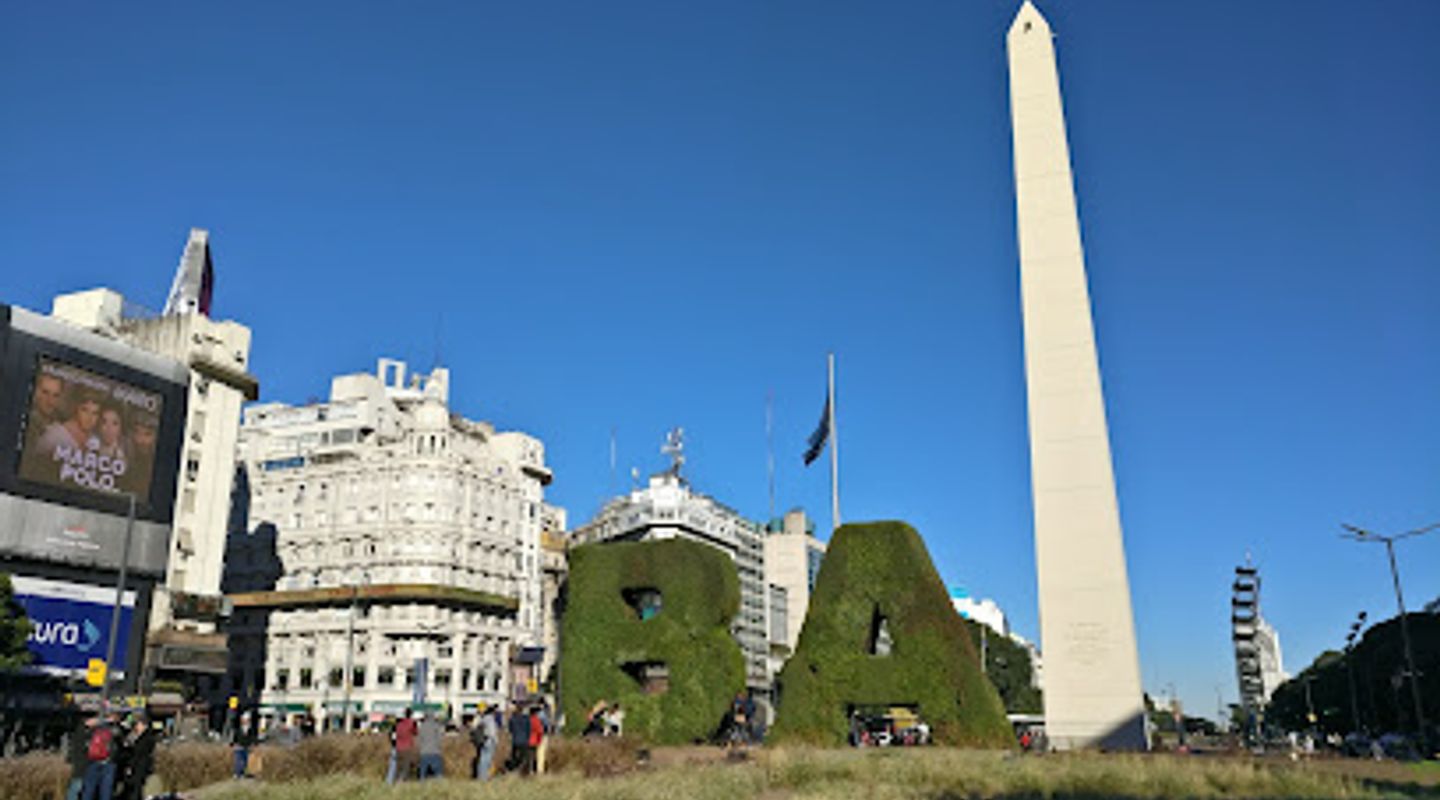
The Obelisco, a towering monument in the heart of Buenos Aires, stands as a symbol of the city. Erected in 1936 to commemorate the 400th anniversary of the city's first founding, it marks the spot where the Argentine flag was first raised in Buenos Aires. Located at the intersection of Avenida 9 de Julio and Avenida Corrientes, it's a focal point for celebrations and a landmark for tourists.
- Address
- Av. 9 de Julio s/n, C1043 Cdad. Autónoma de Buenos Aires
- Website
Getting there
Public Transport
Walking
Taxi
Discover more about Obelisco
Overview
The Obelisco de Buenos Aires is a national historic monument and an iconic symbol of the city. Situated in the Plaza de la República, at the intersection of Avenida 9 de Julio and Avenida Corrientes, it was built in 1936 to celebrate the quadricentennial of the first foundation of Buenos Aires. The obelisk marks the spot where the Argentine flag was first raised in the city.The Obelisco was designed by Alberto Prebisch, a prominent figure in Argentine modernism. Construction began on March 20, 1936, and was completed in just 31 days, opening on May 23, 1936. The rapid construction was made possible by the use of quick-drying cement and a design that allowed for sectional construction. The structure is 67.5 meters (221 feet) tall.Throughout its history, the Obelisco has been a gathering place for celebrations, political demonstrations, and cultural events. It has also been the subject of controversy and vandalism. In 1938, pieces of the stone covering detached, leading to its replacement with polished cement in 1943. In the 1980s, a fence was erected around the base to prevent graffiti.The Obelisco remains a central point in Buenos Aires, with three subway lines converging beneath it and the Metrobus transit system passing alongside. Recent work started in October 2024 to install a lift and internal panoramic viewing platform, which is expected to open to visitors by Spring 2025.
Evendo Review Centre
 Google
Guest reviews
Explore Obelisco on the map
A handpicked selection of must-see spots near Obelisco, mapped for you.
Get your free copy of our complete guide to Obelisco, delivered straight to you.
Everything on this page, from opening hours and how to get there to Eve’s tips and the best time to go, in one PDF you can read offline, print or share.
Already have an account? Sign in
Your Obelisco guide is ready.
We'll send it to · Not you? Sign out

Getting your guide ready…
We are putting together a fresh copy of the Obelisco guide. This can take up to a minute.
This can take a few moments. If your browser asks, choose Allow so the download can start. You'll find the guide in your Downloads folder.
Nothing happened? Download it again
Sorry, the guide is taking longer than usual. Please try again in a minute, or get it by email instead.
Unlock the best of Obelisco
Skip-the-line tickets, guided tours with entry, and walking tours of the area, booked in a few clicks.


Other nearby places you may find interesting
The closest places of the same kind, if this one is not quite what you had in mind.
-
-
-
-
-


Swipe for more places
More to explore near Obelisco

 Best experiences near Obelisco
 Best hotels near Obelisco
 Best landmarks near Obelisco
 Best attractions near Obelisco
 Best shops near Obelisco
 Best restaurants near Obelisco
 Best bars near Obelisco
Do you manage this location?
Take control to get all the benefits, like improved information, better appearance, and stronger visibility across AI-powered discovery.
Explore more

Explore more of Western Argentina
Discover Western Argentina: From the towering Andes to the vibrant vineyards, explore a region rich in natural beauty, cultural heritage, and adventure.
Explore Western Argentina
Explore more of Argentina
Discover Argentina: From the lively streets of Buenos Aires to the breathtaking landscapes of Patagonia, experience the vibrant culture and diverse natural wonders of this South American gem.
Explore Argentina
