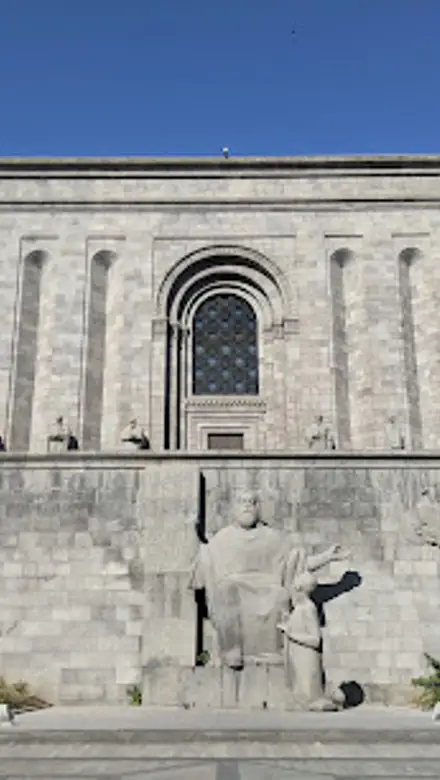
Matenadaran, Yerevan Travel Guide
Free Guide: Explore Armenia's rich literary heritage at the Matenadaran, home to a vast collection of ancient manuscripts and historical documents.


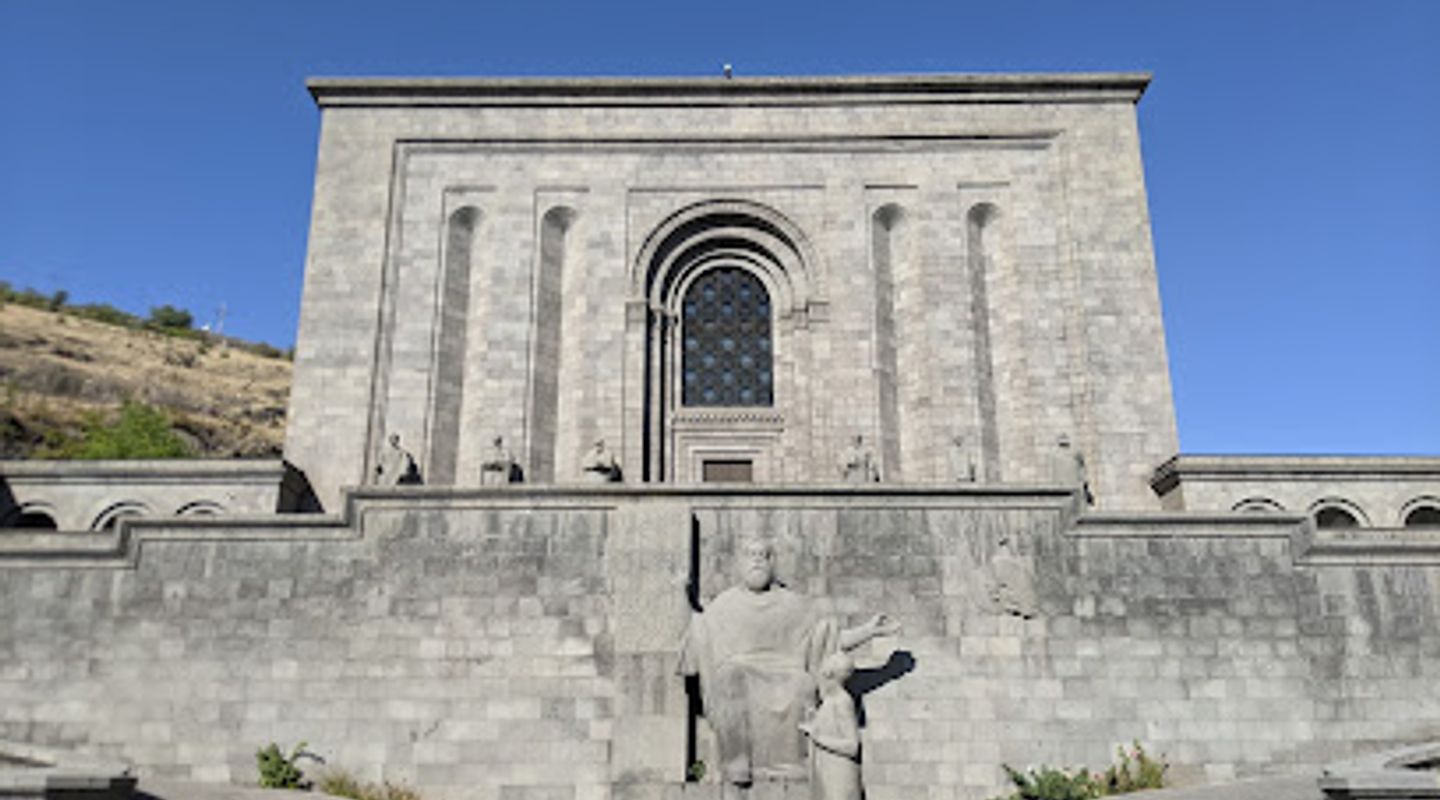
A brief summary of Matenadaran
Explore Armenia's rich literary heritage at the Matenadaran, home to a vast collection of ancient manuscripts and historical documents.
The Matenadaran, officially the Mesrop Mashtots Institute of Ancient Manuscripts, in Yerevan, is one of the world's most important repositories of ancient Armenian manuscripts and books. Housing a vast collection spanning centuries, it's a testament to Armenia's rich cultural and literary heritage.
Opening hours
- MonClosed
- Tue10 am–5:50 pm
- Wed10 am–5:50 pm
- Thu10 am–5:50 pm
- Fri10 am–5:50 pm
- Sat10 am–5:50 pm
- SunClosed
Opening hours as listed on the venue’s Google Business Profile. Hours can change for services and special events, so check with the venue before you go.
- Address
- 53 Mesrop Mashtots Ave, Yerevan 0009
- Phone
- Website
Getting there
Walking
Public Transport
Taxi
Discover more about Matenadaran
Overview
The Matenadaran, formally known as the Mesrop Mashtots Institute of Ancient Manuscripts, stands as a beacon of Armenian culture and historical significance in Yerevan. It is not only a museum but also a research institute and a repository of invaluable manuscripts. The collection, comprising around 23,000 manuscripts and scrolls, along with over 500,000 archival documents, makes it the largest collection of Armenian manuscripts globally.The Matenadaran's collection covers a wide array of subjects, including history, philosophy, medicine, literature, art history, and cosmography, primarily in Armenian but also in other languages. Among its treasures are works by ancient classical authors and rare manuscripts that have survived only in Armenian translation. Visitors can view the smallest book, the 15th-century Church Calendar weighing only 19 grams, and the largest, the 12th-century Msho Charentir, weighing 27.5 kg. The oldest manuscript fragments date back to the 5th-6th centuries, found within the Echmiadzin Gospel.The institute's history dates back to the Etchmiadzin Manuscript Library in 1921, later moving to Yerevan in 1939. The current building, designed by Mark Grigoryan, was completed in 1957. In 2011, a new museum complex was constructed to accommodate the expanding collection and scientific activities. The Matenadaran was named after Mesrop Mashtots, the creator of the Armenian alphabet, in 1962.The Matenadaran is more than just a museum; it's a symbol of national pride and a repository of Armenian identity. Its collection was inscribed into UNESCO's Memory of the World Register in 1997. The complex features fifteen halls showcasing manuscripts, fragments, documents, old printed books, and precious bindings. Monuments to prominent figures of Armenian culture, including Movses Khorenatsi and Anania Shirakatsi, stand in the courtyard.
Evendo Review Centre
 Google
Guest reviews
Explore Matenadaran on the map
A handpicked selection of must-see spots near Matenadaran, mapped for you.
Get your free copy of our complete guide to Matenadaran, delivered straight to you.
Everything on this page, from opening hours and how to get there to Eve’s tips and the best time to go, in one PDF you can read offline, print or share.
Already have an account? Sign in
Your Matenadaran guide is ready.
We'll send it to · Not you? Sign out

Getting your guide ready…
We are putting together a fresh copy of the Matenadaran guide. This can take up to a minute.
This can take a few moments. If your browser asks, choose Allow so the download can start. You'll find the guide in your Downloads folder.
Nothing happened? Download it again
Sorry, the guide is taking longer than usual. Please try again in a minute, or get it by email instead.
Unlock the best of Matenadaran
Skip-the-line tickets, guided tours with entry, and walking tours of the area, booked in a few clicks.
 Tour with entry
Yerevan Card Including Free 30+ Museums, 5+ Tours & Discounts
from $38.00 Tour with entry
Yerevan tour in a retro Lada with drinks (Yerevan city tour)
from $66.50 Tour with entry
Yerevan Sightseeing Tour on Segways: Historical Center & Views
from $73.64 Tour with entry
Private City Tour of Yerevan
from $304.00


Other nearby places you may find interesting
The closest places of the same kind, if this one is not quite what you had in mind.
-
-
-
-
-


Swipe for more places
More to explore near Matenadaran

 Best experiences near Matenadaran
 Best hotels near Matenadaran
 Best landmarks near Matenadaran
 Best attractions near Matenadaran
 Best shops near Matenadaran
 Best restaurants near Matenadaran
 Best bars near Matenadaran
Do you manage this location?
Take control to get all the benefits, like improved information, better appearance, and stronger visibility across AI-powered discovery.
Explore more

Explore more of Yerevan
Discover Yerevan, the vibrant capital of Armenia, where history, culture, and modernity converge in a city known for its pink volcanic stone buildings and rich heritage.
Explore Yerevan
Explore more of Armenia
Explore Armenia's ancient wonders, vibrant cities, and breathtaking landscapes. From historic monasteries to delicious cuisine, there's something for every traveler.
Explore Armenia