

Dhaka Gate Travel Guide
Free Guide: Discover Dhaka Gate, a historical landmark blending Mughal and European architecture, offering a glimpse into Dhaka's rich past and cultural heritage, now renovated for visitors to explore and appreciate.


A brief summary of Dhaka Gate
Discover Dhaka Gate, a historical landmark blending Mughal and European architecture, offering a glimpse into Dhaka's rich past and cultural heritage, now renovated for visitors to explore and appreciate.
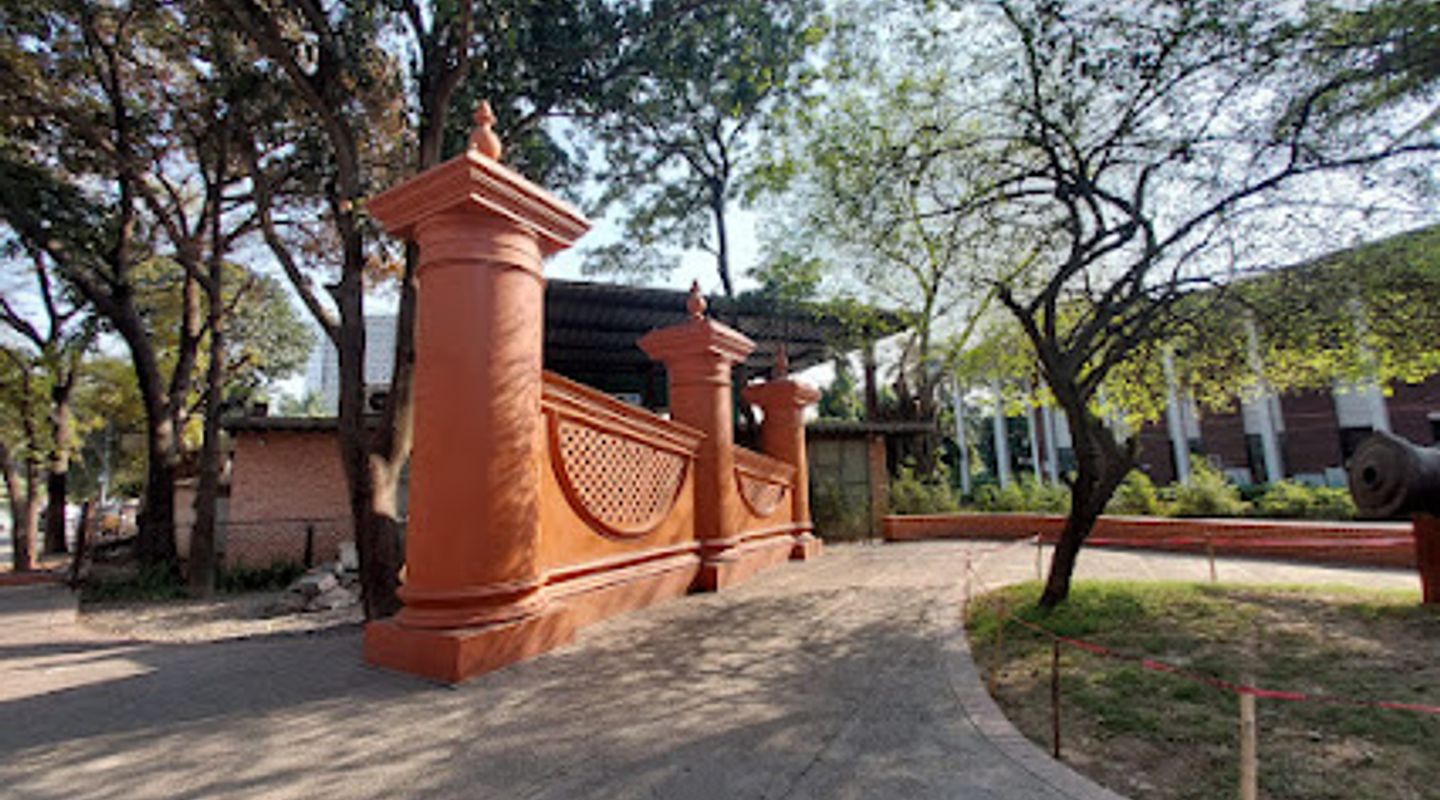
Dhaka Gate, also known as Mir Jumla's Gate or Ramna Gate, stands as a testament to Dhaka's rich history. Believed to have been built by Mir Jumla II during the Mughal era, it once served as the northern entrance to the city, guarding against pirate attacks. Though debated among historians, its architectural style blends Mughal and European influences. Severely damaged and rebuilt over time, most recently in 2024, it now resides near Curzon Hall and Shishu Academy on the University of Dhaka campus. A popular spot for photos, the gate offers a glimpse into Dhaka's past and architectural heritage, now enhanced with granite seating and the relocated Bibi Mariam Cannon.
- Address
- Dhaka
Getting there
Walking
Public Transport
Taxi/Ride-Share
Discover more about Dhaka Gate
Overview
Dhaka Gate, steeped in history and local lore, is a monument that has witnessed the evolution of Dhaka for centuries. Also known as Mir Jumla's Gate or Ramna Gate, its origins are shrouded in some mystery, with popular belief attributing its construction to Mir Jumla II, a governor during the Mughal Emperor Aurangzeb's reign, sometime between 1660 and 1663. The gate was purportedly erected to demarcate Dhaka's northern boundary and protect the city from Magh pirates who frequently raided the region. It served as a grand entrance for those arriving from the Buriganga River, marking the northern edge of the expanding Mughal capital. However, this narrative is not without its detractors. Some historians and archaeologists argue that the current structure bears a distinctly European architectural style, suggesting a later construction date during the British colonial period. Notably, Dr. Ahmad Hasan Dani, a renowned historian, posited that the gate was built in the 1820s by Charles Dawes, a British magistrate. This theory aligns with the gate's architectural features, which differ from typical Mughal designs found elsewhere in Dhaka. Regardless of its precise origins, Dhaka Gate has undergone numerous transformations throughout its existence. Originally, the gate was a yellow-colored structure comprising two walls and a central pillar. The walls, designed with unique square holes, supported a wide cornice. The pillar, standing approximately 15 feet tall, added to the gate's imposing presence. Over time, the gate suffered significant damage, necessitating several reconstruction efforts. In 1825, Magistrate Charles Dawes rebuilt the gate, leaving his mark on its architectural style. Further modifications occurred in the late 1950s when the roads were widened, leading to the demolition of a portion of the gate. In recent years, Dhaka South City Corporation initiated a comprehensive renovation project to restore Dhaka Gate to its former glory. Completed in January 2024, the renovation aimed to preserve the gate's historical integrity while creating a welcoming public space for visitors. The project involved meticulous restoration work by skilled craftsmen, using traditional building materials and techniques. The renovated gate now features granite seating for visitors and the relocated Bibi Mariam Cannon, adding to its appeal as a historical landmark. Today, Dhaka Gate stands on the University of Dhaka campus, near Curzon Hall and Shishu Academy. While only remnants of the original structure remain, the gate continues to evoke a sense of history and architectural grandeur. Its location within the university grounds makes it a popular spot for students and visitors alike. The gate's proximity to other historical landmarks, such as Ramna Park and Suhrawardy Udyan, further enhances its significance as a cultural and historical site. Visiting Dhaka Gate offers a glimpse into the city's past and its evolution through different periods. The gate's architectural style, a blend of Mughal and European influences, reflects the diverse cultural influences that have shaped Dhaka's identity. Exploring the surrounding area allows visitors to appreciate the historical context and discover other nearby landmarks. Dhaka Gate serves as a reminder of Dhaka's rich heritage and its enduring legacy as a vibrant and historically significant city. The gate is open 24 hours and is free to visit. While visiting, take time to explore the surrounding area to fully appreciate the historical context and other nearby landmarks. Bring a camera to capture the historical architecture and urban landscape. As a historical landmark, be respectful of the site and avoid any behavior that might damage or disturb the area. Be aware of any local guidelines or restrictions that might apply to visiting historical sites in Dhaka. Dhaka Gate is more than just a historical monument; it is a symbol of Dhaka's resilience and its ability to adapt and evolve while preserving its cultural heritage. Whether you are a history enthusiast, an architecture lover, or simply a curious traveler, Dhaka Gate offers a unique and enriching experience that will leave you with a deeper appreciation for the city's past and its vibrant present.
Evendo Review Centre
 Google
Guest reviews
Explore Dhaka Gate on the map
A handpicked selection of must-see spots near Dhaka Gate, mapped for you.
Get your free copy of our complete guide to Dhaka Gate, delivered straight to you.
Everything on this page, from opening hours and how to get there to Eve’s tips and the best time to go, in one PDF you can read offline, print or share.
Already have an account? Sign in
Your Dhaka Gate guide is ready.
We'll send it to · Not you? Sign out

Getting your guide ready…
We are putting together a fresh copy of the Dhaka Gate guide. This can take up to a minute.
This can take a few moments. If your browser asks, choose Allow so the download can start. You'll find the guide in your Downloads folder.
Nothing happened? Download it again
Sorry, the guide is taking longer than usual. Please try again in a minute, or get it by email instead.
Other nearby places you may find interesting
The closest places of the same kind, if this one is not quite what you had in mind.
-
-
-
-
-


Swipe for more places
More to explore near Dhaka Gate

 Best experiences near Dhaka Gate
 Best hotels near Dhaka Gate
 Best landmarks near Dhaka Gate
 Best attractions near Dhaka Gate
 Best shops near Dhaka Gate
 Best restaurants near Dhaka Gate
 Best bars near Dhaka Gate
Do you manage this location?
Take control to get all the benefits, like improved information, better appearance, and stronger visibility across AI-powered discovery.
Explore more

Explore more of Dhaka Division
Explore Dhaka Division, the bustling heart of Bangladesh, featuring historical sites, cultural landmarks, and natural beauty that captivates every traveler.
Explore Dhaka Division
Explore more of Bangladesh
Discover Bangladesh: A land of rivers, rich culture, and breathtaking landscapes. Explore ancient sites, vibrant cities, and the unique flavors of this South Asian gem.
Explore Bangladesh
