Background

The Black Tower: A Medieval Relic in Brussels

Discover the Black Tower in Brussels, a captivating medieval relic amidst modern architecture, offering a glimpse into the city's rich history and enduring charm on Place Sainte-Catherine.

★★★★★4 (307)

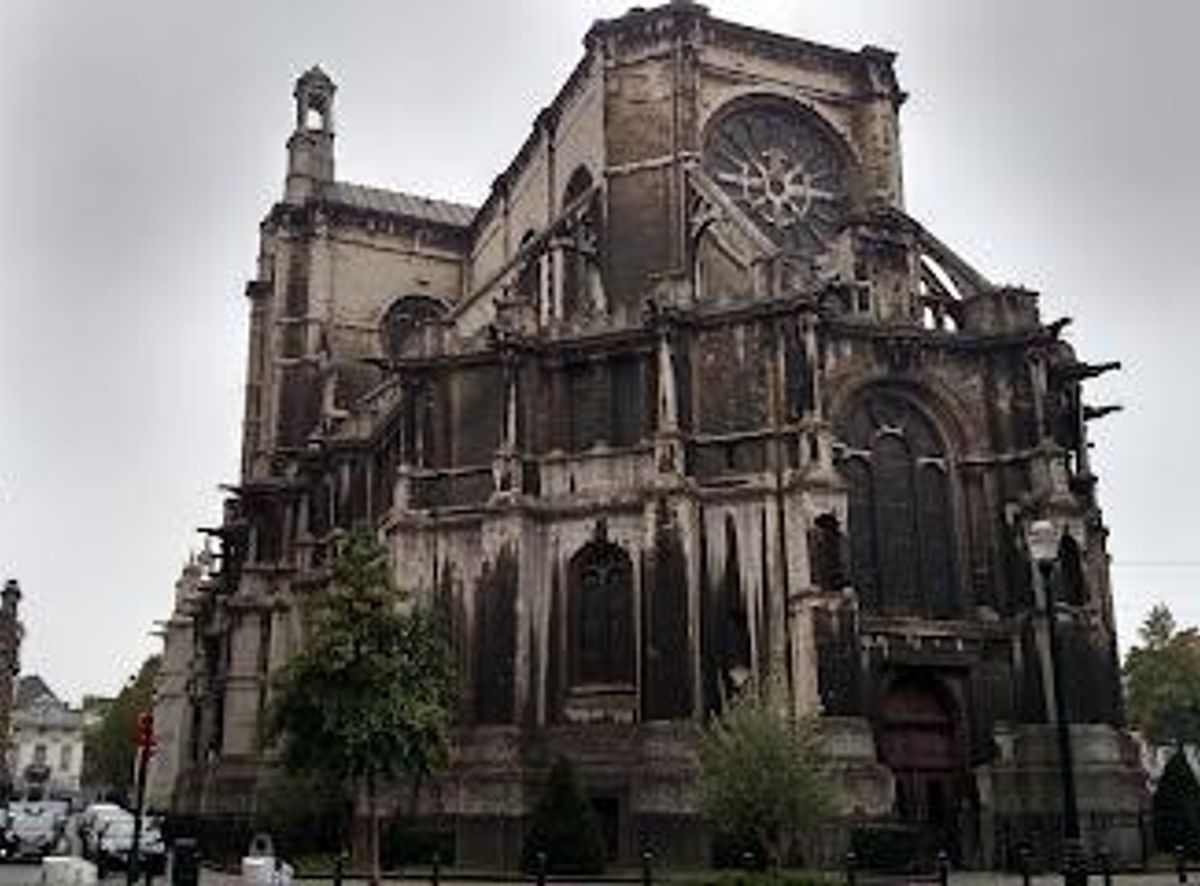
The Black Tower (Tour Noire/Zwarte Toren) is a captivating vestige of Brussels' medieval past, dating back to the early 13th century. Once part of the city's first fortifications, it now stands in stark contrast to the modern architecture surrounding it on Place Sainte-Catherine. This well-preserved tower offers a glimpse into Brussels' rich history and resilience. While you can't enter the tower, its unique appearance, with dark, pointed turrets and rounded walls often covered in foliage, makes it a popular spot for photos and reflection. Its location near the Grand-Place and other attractions makes it an easy and worthwhile stop for any visitor exploring the heart of Brussels. The tower is a reminder of the city's evolution, having survived centuries of urban development and even served as a tavern in the 16th century. Today, a plaque commemorates its historical significance, ensuring its story continues to be told.

Plan your visit

A brief summary to Black Tower

Opening times, essentials, and a few local tips gathered into one calmer, easier-to-scan planning section.

Plan your visit

📍
Pl. Sainte-Catherine 29, Brussels, Brussel, 1000, BE

Explore places near Black Tower

    See all →

    Unlock the Best of Black Tower

    Find tickets, tours with entry, and experiences available for this location.

    Buy tickets

    No tickets available

    Book tours with entry

    No tours with entry available

    Book tours without entry

    No tours without entry available

    Getting There

    Public Transport

    The Black Tower is easily accessible via public transport. From Brussels Central Station, take metro lines 1 or 5 to Sainte-Catherine/Sint-Katelijne station, which is less than a 5-minute walk to the tower. Alternatively, from De Brouckère station, it's also a short walk. A single metro fare is approximately €2.10.

    Walking

    If you are already in the city center, such as near the Grand-Place, the Black Tower is a pleasant 5-10 minute walk. Head north towards Place Sainte-Catherine, passing by the Bourse (Brussels Stock Exchange) and following the pedestrian area. The tower is located behind the Sainte-Catherine Church.

    Taxi/Ride-Share

    A taxi or ride-share from Brussels Central Station to the Black Tower will typically cost between €8-€12, depending on traffic. The journey usually takes around 5-10 minutes. Be sure to specify Place Sainte-Catherine as your destination.

    Driving

    Driving directly to the Black Tower is not recommended due to limited parking and pedestrianized zones. However, if driving is necessary, the Brucity car park is located less than 50 meters from Place Sainte-Catherine. Parking fees at Brucity are approximately €3.50 per hour.

    Local tips

    Visit during the autumn or winter for a particularly atmospheric experience, as the tower's stone facade takes on a unique charm under the crisp light or soft snow.
    Combine your visit with a stroll through the Sainte-Catherine neighborhood, known for its seafood restaurants, vibrant markets, and the beautiful Sainte-Catherine Church.
    Take a moment to appreciate the contrast between the medieval tower and the modern hotel that surrounds it, a visual representation of Brussels' blend of old and new.

    Discover more about Black Tower

    The Black Tower, known in French as Tour Noire and in Dutch as Zwarte Toren, is a remarkable survivor from Brussels' medieval era. Constructed in the early 13th century, it formed part of the city's initial defensive fortifications. These walls, stretching approximately 4 kilometers, were crucial for protecting the burgeoning city. Today, the Black Tower stands as one of the best-preserved remnants of this original structure, offering a tangible link to Brussels' past. Over the centuries, the Black Tower has witnessed significant transformations in Brussels. By the end of the 14th century, the original fortifications became obsolete due to the construction of a larger, second set of walls. Unlike many other sections of the original fortifications, the Black Tower survived, possibly because it transitioned into private ownership. This may explain its preservation through the ages, escaping the demolition and redevelopment that reshaped much of the city. In the 16th century, the tower remarkably withstood the creation of a new dock for the inland port of Brussels, which now houses the Church of St. Catherine. Around this time, the tower was repurposed into a tavern known as 'In the Tower,' offering refreshment and respite to locals and travelers alike. This adaptation highlights the tower's enduring presence and its ability to adapt to the changing needs of the city. The 19th century brought further changes, with the tower becoming integrated into a clothing store. In 1888, then-mayor Charles Buls intervened to save the tower from demolition during a street sanitation project. Architect Victor Jamaer undertook a restoration, reconstructing the gable, roof, and bent radius, ensuring the tower's structural integrity and historical character were maintained. On February 1, 1937, the Black Tower was officially recognized as a state building and classified as a historical monument. This designation provided crucial protection amidst the rapid modernization of Brussels. Today, the tower is juxtaposed against modern buildings, including a hotel, creating a striking contrast between the medieval structure and its contemporary surroundings. A plaque near the tower serves as a reminder of its historical importance, educating passersby about its rich past. The Black Tower's cultural significance extends beyond its physical presence. It is featured in 'The Adventures of Nero,' a popular Belgian comic series by Marc Sleen, further embedding it in the cultural fabric of Brussels. This appearance has helped to solidify its status as a beloved landmark, recognized and appreciated by locals and tourists alike. Visiting the Black Tower offers a unique experience. While the interior is not accessible to the public, visitors can walk around the tower, admiring its dark, pointed turret and rounded walls, often cloaked in foliage. The tower's fairytale-like charm and central location make it an easily accessible and worthwhile attraction. It is located on Place Sainte-Catherine, behind St. Catherine's Church, and is within walking distance of other major attractions such as the Grand-Place, Manneken Pis, and the Bourse. The area surrounding the Black Tower is pedestrian-friendly, making it suitable for visitors with mobility issues. Comfortable walking shoes are recommended due to the cobblestone streets. The Sainte-Catherine/Sint-Katelijne and De Brouckère metro stations, served by lines 1 and 5, provide convenient access to the tower. Additionally, numerous bus and tram lines serve the area, making it easily reachable from various parts of the city. The Black Tower stands as a symbol of Brussels' resilience and its ability to blend the old with the new. Its survival through centuries of change, its various transformations, and its cultural significance make it a must-see for anyone interested in the history and heritage of Brussels. Whether you are a history enthusiast, an architecture lover, or simply a curious traveler, the Black Tower offers a captivating glimpse into the heart of Brussels' medieval past.

    A brief summary to Black Tower

    Use Tower Bridge as your starting point for nearby food, family ideas, nightlife, and more local discoveries.

    Mobile App
    Get the app

    Your all‑in‑one travel companion app

    Explore expert travel guides, compare and book tours, experiences, hotels, and more—all from the palm of your hand. Download now for seamless trip planning wherever your wanderlust takes you.
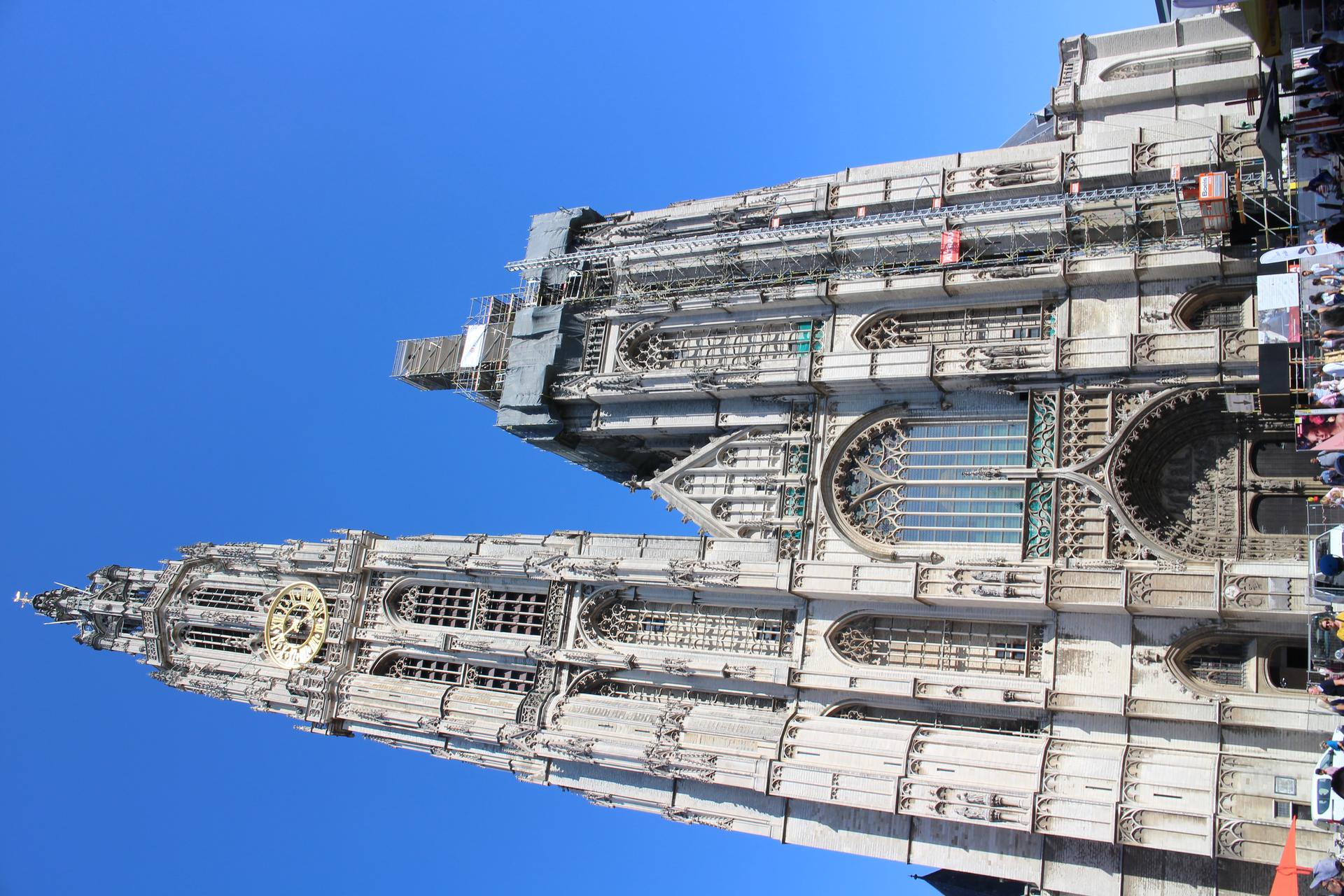
    File:Exterior of Onze-Lieve-Vrouwekathedraal (Antwerp) 20180629-1.jpg -  Wikipedia

    More about Antwerp

    Discover Antwerp, Belgium's diamond capital, where history meets modernity in a vibrant cityscape, offering rich culture, world-class art, and culinary delights.

    Tell me more about Antwerp
    Select Currency

    Choose the currency you want prices to display in.