Discover more about Remember Them
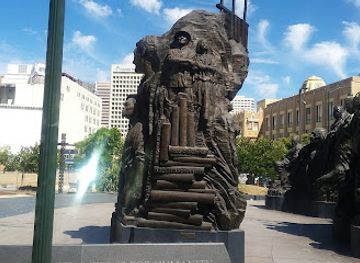
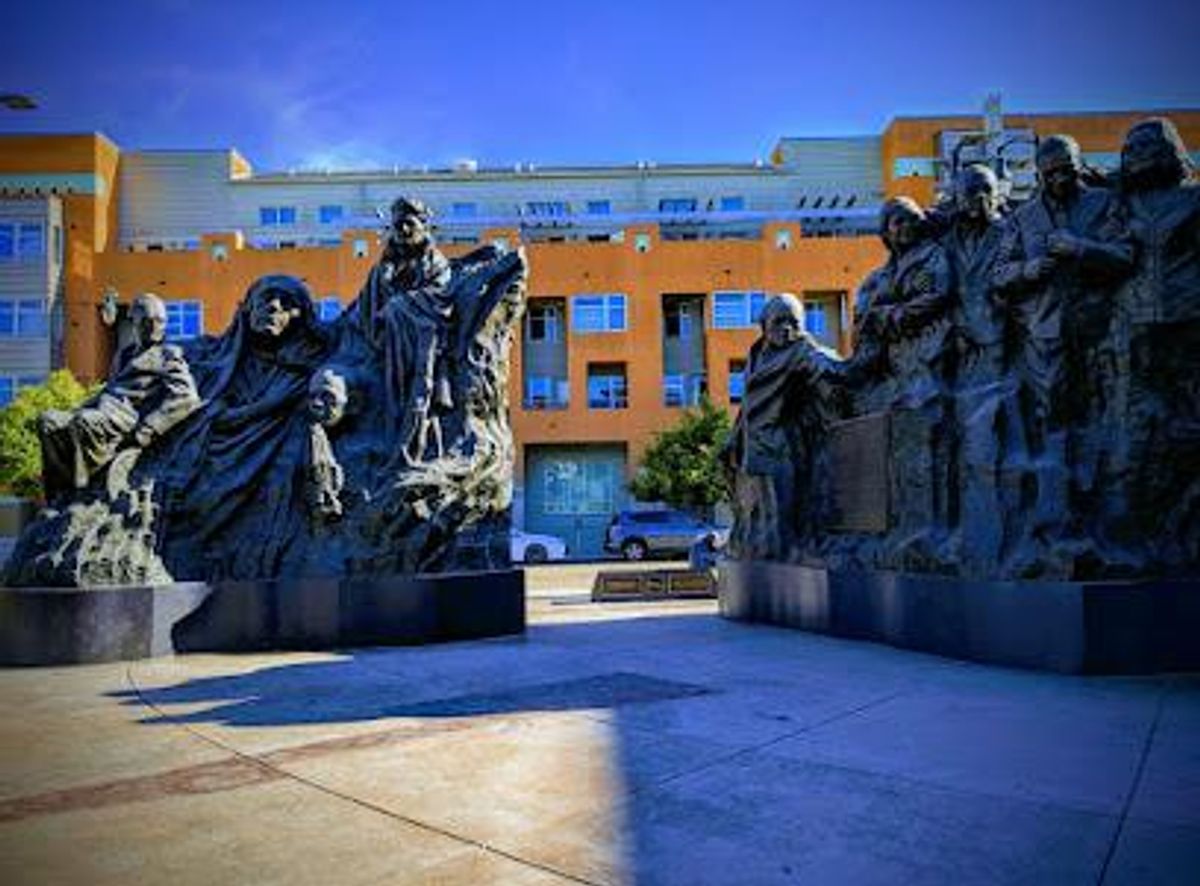
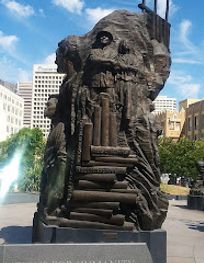
Remember Them stands as a solemn and evocative tribute to the Black Panther Party, an organization that indelibly shaped the landscape of American civil rights and social justice. Located in West Oakland, the very neighborhood where the Black Panther Party was founded in 1966, the monument serves as a vital reminder of the party's complex history, its profound impact on the community, and its enduring legacy in the fight for equality. The monument's design is both powerful and thought-provoking. Bronze busts of eight key figures from the Black Panther Party—Huey P. Newton, Bobby Seale, Ericka Huggins, Elaine Brown, Fred Hampton, Mark Clark, Bunchy Carter, and John Huggins—are the centerpiece, each sculpted with a remarkable attention to detail that captures their individual personalities and the collective spirit of the movement. These busts are not merely static representations; they are imbued with a sense of purpose and determination, reflecting the unwavering commitment of these individuals to their cause. The setting of the monument is equally significant. Situated at the intersection of 19th Street and Rashida Muhammad Street, in the heart of West Oakland, Remember Them is deeply embedded in the community it honors. The surrounding neighborhood, with its rich history and vibrant culture, provides a poignant backdrop for reflection on the Black Panthers' work and the challenges they faced. The monument is easily accessible to the public, inviting visitors to engage with its message and to learn more about the Black Panther Party's story. Beyond its physical presence, Remember Them serves as a dynamic space for community engagement and education. The monument hosts a variety of events throughout the year, including commemorative gatherings, educational workshops, and community dialogues. These events provide opportunities for people of all backgrounds to come together, share their experiences, and learn from the past. The monument also serves as a valuable resource for students and researchers interested in the history of the Black Panther Party and the broader Civil Rights Movement. The Black Panther Party emerged in the mid-1960s as a response to the systemic racism and police brutality that plagued African American communities across the United States. Founded by Huey P. Newton and Bobby Seale, the party advocated for self-determination, community empowerment, and an end to racial discrimination. The Black Panthers gained national attention for their armed patrols of Oakland neighborhoods, which were intended to deter police misconduct and protect residents from harm. However, the party's work extended far beyond self-defense. The Black Panthers also established a range of community programs, including free breakfast programs for children, health clinics, and legal aid services. These programs were designed to address the immediate needs of the community and to promote long-term social and economic development. The Black Panther Party's legacy is complex and multifaceted. While the party achieved significant successes in raising awareness about racial injustice and empowering African American communities, it also faced criticism for its confrontational tactics and its association with violence. The party was the target of intense government surveillance and repression, and many of its leaders were imprisoned or killed. Despite these challenges, the Black Panther Party left an indelible mark on American society. The party's activism helped to pave the way for the Civil Rights Movement, and its community programs served as a model for future social justice initiatives. Visiting Remember Them offers a unique opportunity to connect with this pivotal chapter in American history. The monument invites visitors to reflect on the Black Panther Party's contributions to the struggle for equality and to consider the ongoing challenges that remain. It is a place to honor the individuals who fought for change and to recommit to the pursuit of a more just and equitable world. To fully appreciate the significance of Remember Them, it is essential to understand the historical context in which the Black Panther Party emerged. The mid-1960s were a time of great social and political upheaval in the United States. The Civil Rights Movement was gaining momentum, but African Americans continued to face widespread discrimination and violence. In many cities, police brutality was rampant, and African American communities were often underserved by government agencies. It was against this backdrop that Huey P. Newton and Bobby Seale founded the Black Panther Party in Oakland, California. The Black Panthers' initial focus was on protecting African American communities from police brutality. The party's members began conducting armed patrols of Oakland neighborhoods, monitoring police activity and intervening when they believed that officers were engaging in misconduct. These patrols quickly gained attention, both positive and negative. Many African Americans saw the Black Panthers as heroes who were standing up to injustice, while others viewed them as dangerous radicals who were threatening the social order. As the Black Panther Party grew, it expanded its focus beyond self-defense. The party established a range of community programs, including free breakfast programs for children, health clinics, and legal aid services. These programs were designed to address the immediate needs of the community and to promote long-term social and economic development. The Black Panthers also advocated for political reforms, such as increased representation for African Americans in government and an end to discriminatory housing practices. The Black Panther Party's activism had a profound impact on American society. The party helped to raise awareness about racial injustice and to empower African American communities. The Black Panthers' community programs served as a model for future social justice initiatives, and their political activism helped to pave the way for the Civil Rights Movement. However, the Black Panther Party also faced significant challenges. The party was the target of intense government surveillance and repression, and many of its leaders were imprisoned or killed. Despite these challenges, the Black Panther Party left an indelible mark on American history.