

Free San Francisco Travel Guide & Mobile App
Plan your San Francisco trip with Evendo. Get free guides to top attractions, restaurants, hotels, and bars. Web access or download the mobile app.


San Francisco pairs Golden Gate views, Victorian architecture, Pacific coast culture, historic neighbourhoods, museums and inventive food in California.
Hills, Bay and Neighbourhoods
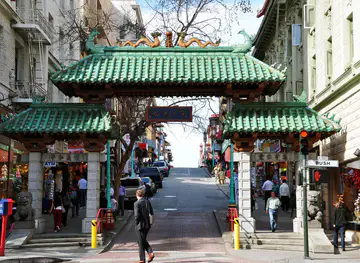
San Francisco occupies a compact peninsula between San Francisco Bay and the Pacific Ocean, a setting that gives the city its distinctive mixture of steep streets, open water and shifting light. Its neighbourhoods each have a strong identity: Chinatown’s busy alleys and traditional shops contrast with the colourful houses of the Mission District, the grand avenues of Pacific Heights and the windswept promenades of the Marina. Cable cars still climb the historic hills, while buses, trams and ferries connect the city’s varied districts.Read more about San Francisco
Architecture and Cultural Life
Food, Nature and the Pacific Edge
When is the best time to visit San Francisco?
Best: July–September · 18–19°C| Month | High (°C) | Rainfall (mm) |
|---|---|---|
| January | 13 | 100 |
| February | 14 | 96 |
| March | 15 | 76 |
| April | 16 | 31 |
| May | 17 | 14 |
| June | 18 | 4 |
| July (best) | 18 | 0 |
| August (best) | 19 | 3 |
| September (best) | 19 | 8 |
| October | 18 | 34 |
| November | 16 | 64 |
| December | 14 | 91 |
Getting to and around San Francisco
How to get there
Transportation
Best attractions in San Francisco
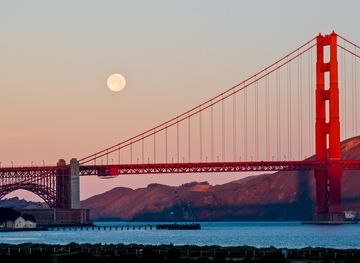
San Francisco’s principal attractions range from the Golden Gate Bridge, whose pedestrian walkway gives expansive views across the strait, to Alcatraz Island, where former prison buildings and layered histories are presented through organised visits. Golden Gate Park contains the de Young Museum, California Academy of Sciences, Japanese Tea Garden and Conservatory of Flowers, making it a substantial cultural and landscape destination rather than a simple green space. The lively streets of Chinatown lead towards North Beach and Washington Square, while the Mission District combines murals, cafés and the historic Mission Dolores. Along the waterfront, the Ferry Building, Pier 39 and the Aquarium of the Bay offer different perspectives on the bay, with the Embarcadero providing a broad route between them. The Presidio and Lands End add woodland and coastal trails, while SFMOMA and the Asian Art Museum provide major indoor attractions for art and design.
-
Tourist information center
Barbary Coast Trail
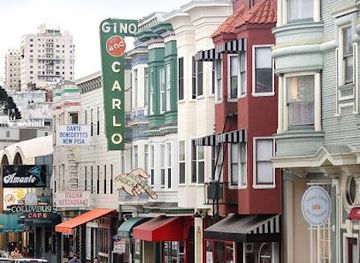
Discover the Barbary Coast Trail, a historic walking route in San Francisco showcasing the city's vibrant past and stunning bay views.
9 min drive · 3.0 km from city centre
Explore San Francisco on the map
Plan your San Francisco trip on one map. See where the top attractions, landmarks, restaurants, bars and hotels are, find what's near where you're staying, and book hotels and experiences in a few clicks.
Neighbourhoods in San Francisco
-
-

-

-

-


Swipe for more neighbourhoods
Best hotels in San Francisco
Get your free copy of our complete guide to San Francisco, delivered straight to you.
Everything on this page, from attractions and restaurants to essentials and local phrases, in one PDF you can read offline, print or share.
Already have an account? Sign in
Your San Francisco guide is ready.
We'll send it to · Not you? Sign out

Getting your guide ready…
We are putting together a fresh copy of the San Francisco guide. This can take up to a minute.
This can take a few moments. If your browser asks, choose Allow so the download can start. You'll find the guide in your Downloads folder.
Nothing happened? Download it again
Sorry, the guide is taking longer than usual. Please try again in a minute, or get it by email instead.
San Francisco essentials
Currency and Payment
Safety
Emergency Situations
Do's and Don'ts
Local Tips
From Eve
Local phrases worth knowing
You don't need to get them perfect. A few words go a long way, and locals appreciate the effort.
Basics
| English | Local | Say it |
|---|---|---|
| Hello | Hey there | [Hey thair] |
| Goodbye | See ya | [See yah] |
| Yes | Yeah | [Yeh] |
| No | Nah | [Nah] |
| Please/You're welcome | Sure thing | [Shur thing] |
| Thank you | Thanks a lot | [Thangs uh lot] |
| Excuse me/Sorry | My bad | [Mai bad] |
| How are you? | What's up? | [Wats up?] |
| Fine. And you? | Good. How about you? | [Gud. How uhbout yah?] |
| Do you speak English? | You speak English? | [Yuh speak Inglish?] |
| I don't understand | I'm lost | [Am lost] |
Eating & Drinking
| English | Local | Say it |
|---|---|---|
| I'd like to see the menu, please | Let me check out the menu | [Let mi chek out the menu] |
| I don't eat meat | I'm vegetarian | [Am ve-ji-tear-ee-un] |
| Cheers! | Bottoms up! | [Baw-tums up!] |
| I would like to pay, please | Check, please | [Chek, please] |
Emergencies
| English | Local | Say it |
|---|---|---|
| Help! | I need help! | [I need help!] |
| Go away! | Get lost! | [Get lost!] |
| Call the Police! | Call the cops! | [Call the cops!] |
| Call a doctor! | I need a doctor! | [I need uh doctor!] |
| I'm lost | I'm confused | [Am con-fewzd] |
| I'm ill | I'm sick | [Am sik] |
Shopping
| English | Local | Say it |
|---|---|---|
| I'd like to buy... | I want to get... | [I wawnt to get...] |
| I'm just looking | Just browsing | [Just brow-zing] |
| How much is it? | What's the damage? | [Whats the dam-ij?] |
| That's too expensive | That's a rip-off | [Thats a rip-off] |
| Can you lower the price? | Can you cut me a deal? | [Can yah cut mee a deal?] |
Time & Numbers
| English | Local | Say it |
|---|---|---|
| What time is it? | What's the time? | [Whats the time?] |
| It's one o'clock | It's one | [Its wun] |
| Half past (10) | Ten thirty | [Ten thur-tee] |
| Morning | AM | [A-M] |
| Afternoon | PM | [P-M] |
| Evening | Night time | [Nite time] |
| Yesterday | Yesterday | [Yes-ter-day] |
| Today | Today | [To-day] |
| Tomorrow | Tomorrow | [To-mor-row] |
| 1 | One | [Wun] |
| 2 | Two | [Too] |
| 3 | Three | [Three] |
| 4 | Four | [For] |
| 5 | Five | [Fiv] |
| 6 | Six | [Six] |
| 7 | Seven | [Sev-en] |
| 8 | Eight | [Ayt] |
| 9 | Nine | [Nine] |
| 10 | Ten | [Ten] |
Transport & Directions
| English | Local | Say it |
|---|---|---|
| Where's a/the...? | Where can I find...? | [Where can ai find...?] |
| What's the address? | What's the location? | [Whats the lo-cay-shun?] |
| Can you show me (on the map)? | Can you point it out (on the map)? | [Can yah point it out (on the map)?] |
| When's the next (bus)? | When's the next one coming? | [Whens the next wun cum-ing?] |
| A ticket (to ....) | One ticket (to ....) | [Wun tik-it (to ....)] |
History of San Francisco
Ohlone Lands and Spanish Settlement
The San Francisco peninsula lies within the traditional homeland of the Ohlone peoples, whose communities lived around the bay and managed its resources long before European settlement. Spanish expeditions reached the region in the eighteenth century, and Mission San Francisco de Asís, commonly called Mission Dolores, was founded in 1776. A military presidio was established near the Golden Gate in the same year. Spanish and later Mexican authority reshaped the landscape through mission and ranching systems, bringing profound disruption, forced conversion and population loss to Indigenous communities. Mission Dolores and the Presidio remain the clearest surviving reminders of this early colonial period, although both sites must be understood within the broader history of Indigenous displacement.
Mexican Yerba Buena
After Mexico gained independence from Spain in 1821, the settlement developed under Mexican rule and was known as Yerba Buena. Its sheltered cove supported a modest harbour and attracted traders, sailors and settlers, while the surrounding peninsula remained comparatively rural. The locality changed hands during the Mexican-American War in 1846, when United States forces occupied the settlement. In 1847, Yerba Buena was renamed San Francisco, linking the growing town to the bay and the wider Pacific world. Streets laid out during this period established parts of the urban pattern still visible around Portsmouth Square and the financial district, although later land reclamation extended the shoreline considerably.
Gold Rush and Pacific Port
The discovery of gold in California in 1848 transformed San Francisco from a small port into the principal commercial centre of the Gold Rush. Tens of thousands of newcomers arrived through the harbour, and the settlement expanded rapidly with hotels, warehouses, banks, saloons and shipping businesses. The population surge brought wealth and opportunity, but also severe inequality, violence and the marginalisation of Indigenous people and established communities. Chinese immigrants became central to the city’s labour force and commercial life despite discriminatory laws and racial violence. The waterfront and streets around Portsmouth Square preserve fragments of this formative era, while the city’s multicultural character owes much to the migration set in motion during the Gold Rush.
Rebuilding After the 1906 Earthquake
On 18 April 1906, a major earthquake struck San Francisco, rupturing the San Andreas Fault and damaging buildings across the city. Fires that followed burned for several days, destroying much of the commercial centre and large residential areas. More than 200,000 people were displaced, and the disaster prompted extensive rebuilding rather than abandonment. New streets, offices, civic buildings and homes emerged in the following years, alongside stricter approaches to construction and urban planning. The 1915 Panama-Pacific International Exposition symbolised San Francisco’s recovery and global ambitions, although most of its temporary structures later disappeared; the Palace of Fine Arts is the best-known surviving remnant.
Migration, Industry and Social Change
During the twentieth century, San Francisco’s neighbourhoods were shaped by migration, maritime trade, manufacturing and changing ideas about social identity. Chinatown expanded despite exclusionary immigration laws, while Japanese Americans built communities that were devastated by wartime incarceration during the Second World War. The waterfront remained an industrial and shipping centre before containerisation and deindustrialisation altered its role. After the war, the North Beach and Haight-Ashbury districts became associated with literary, artistic and countercultural movements. The city also became a major centre of LGBTQ+ life and activism, especially around the Castro, where the struggle for civil rights and the devastating AIDS crisis left an enduring mark on local history.
A Global City in Transition
Late twentieth- and early twenty-first-century San Francisco developed as a centre for finance, technology, design, higher education and international culture. The redevelopment of the Embarcadero after the 1989 Loma Prieta earthquake reopened the waterfront to public life, while the former Presidio military site became part of the Golden Gate National Recreation Area. Technology wealth has brought investment and employment but also intense housing pressure, displacement and debate over the city’s social future. Today, San Francisco’s identity rests on layers that remain visible together: Ohlone history, Spanish and Mexican foundations, Gold Rush commerce, immigrant communities, post-earthquake architecture, progressive movements and a changing Pacific economy.
San Francisco in Photos
Browse through our photo collection highlighting the charm and character of the destination.
Cities near San Francisco
The closest cities to San Francisco, if you have time for more than one stop.
-

-

-

-

-


Swipe for more cities
Explore more
Explore more of California
Discover California: A land of diverse landscapes, iconic cities, and endless adventures, from sun-soaked beaches to towering redwoods and vibrant cultural experiences.
Explore California