Background

The Westerfeld House: A Victorian Enigma

4.7 (67)

Explore San Francisco's iconic Westerfeld House, a Victorian mansion with a colorful past, from Czarist nightclub to counterculture haven, standing proudly near Alamo Square.

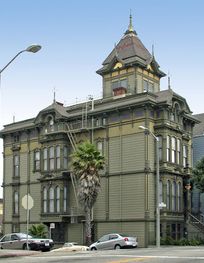
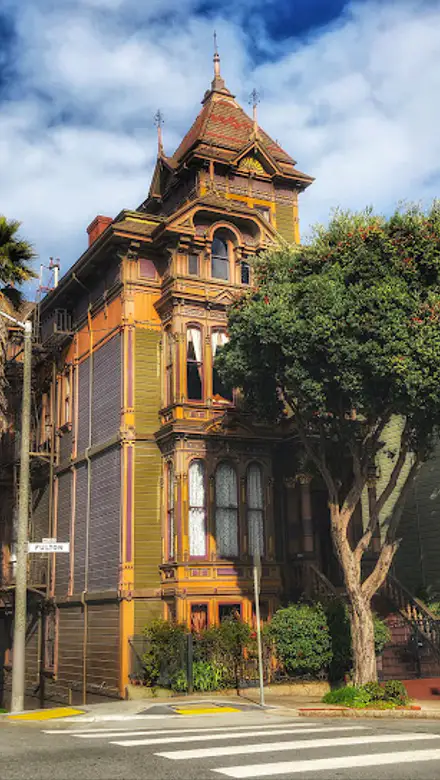
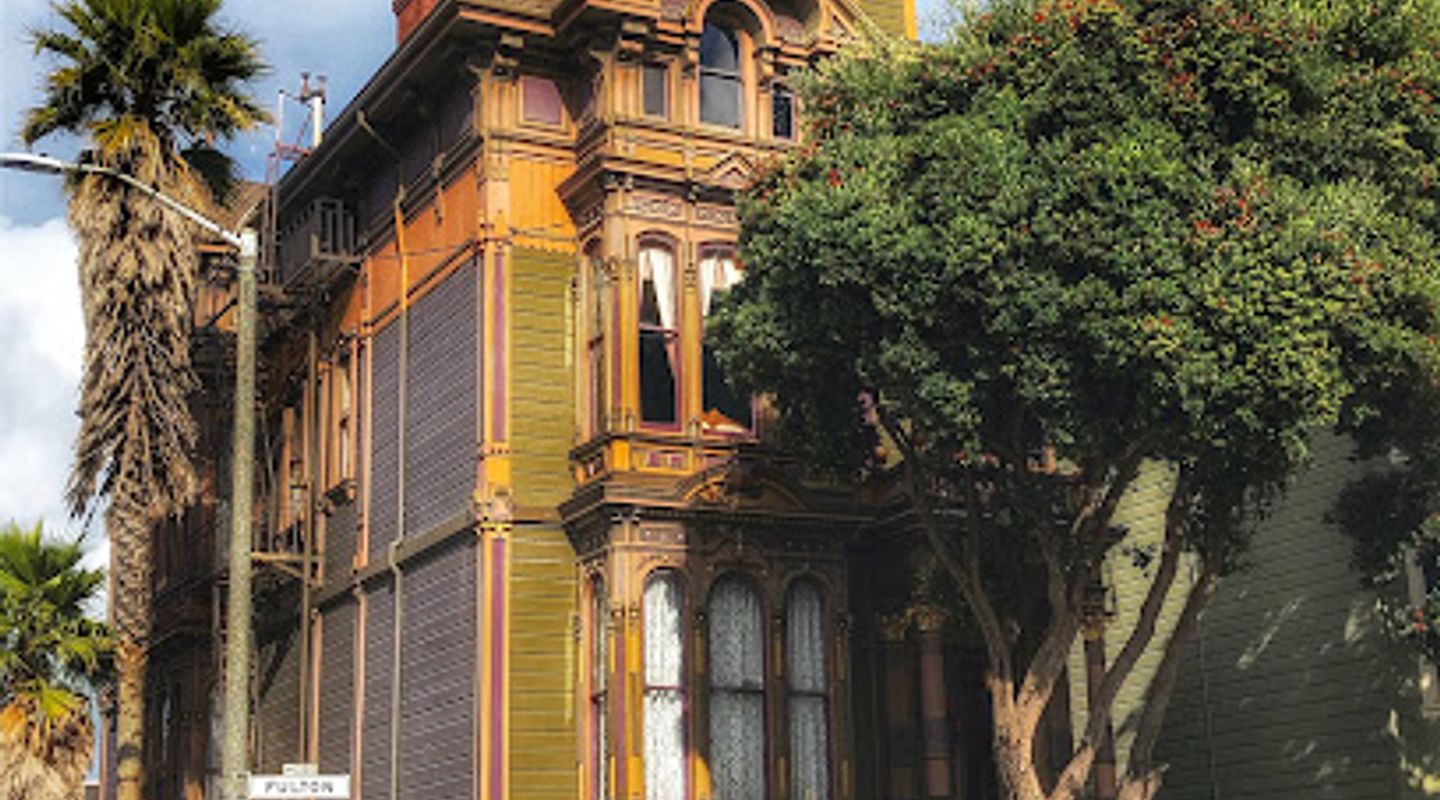
The William Westerfeld House, a striking Victorian mansion in San Francisco's Alamo Square neighborhood, is more than just a pretty facade. Built in 1889 for a wealthy confectioner, it has since been home to Czarist Russians, jazz musicians, and even underground filmmakers. Known as the "Russian Embassy" during its nightclub days, the house has a colorful and sometimes scandalous history, attracting bohemians, occultists, and artists. Today, it stands as a testament to San Francisco's counterculture past, a beautifully restored reminder of a bygone era filled with music, mystery, and a touch of the bizarre. While tours are not regularly available, its imposing presence across from Alamo Square Park makes it a must-see landmark for those seeking a glimpse into the city's unique and storied past.

A brief summary to William Westerfeld House

  • 1198 Fulton St, San Francisco, Fillmore District, California, 94117, US

Local tips

  • View the house from Alamo Square Park for the best perspective and photo opportunities, especially during sunset.
  • Check online for occasional open house events or film shoots that may offer a rare glimpse inside.
  • Explore the surrounding Alamo Square neighborhood, known for its other well-preserved Victorian architecture.
  • Learn about the house's history before visiting to fully appreciate its cultural significance and former residents.
widget icon

Do you manage this location?

Take control to get all the benefits, like improved information, better appearance, and stronger visibility across AI-powered discovery. Learn more

Activate your presence

Unlock the Best of William Westerfeld House

Buy tickets

    No tickets available

Book tours with entry

    No tours available

Book tours without entry

    No tours available

Getting There

  • Public Transport

    From downtown San Francisco, the Westerfeld House is easily accessible by public transport. Several Muni bus lines, including the 5, 21, and 38, stop near Alamo Square Park. From the park's northwest corner, the house is directly across Fulton Street. A single ride on Muni costs $3.00, or $2.50 if you use a Clipper card or the MuniMobile app. A day pass, allowing unlimited rides on Muni (excluding cable cars), is available for $5.00 via the MuniMobile app.

  • Taxi/Ride-Share

    A taxi or ride-share service (Uber/Lyft) from downtown San Francisco to the Westerfeld House typically costs between $15 and $25, depending on traffic and demand. The journey usually takes 15-20 minutes. Be sure to specify the address, 1198 Fulton Street, as your destination.

  • Walking

    If you are already in the Alamo Square or Fillmore District, the Westerfeld House is easily reachable on foot. From the Painted Ladies on Steiner Street, walk one block north on Steiner to Fulton Street, then one block west on Fulton. The house is on the north side of Fulton Street, between Steiner and Scott Streets. The walk is relatively flat and takes about 5-10 minutes.

  • Driving

    Driving to the Westerfeld House is possible, but parking in the Alamo Square area can be challenging, especially on weekends. Street parking is available, but it is often limited to 2 hours and requires feeding the meter. Parking garages are available in the nearby Fillmore District, with hourly rates typically ranging from $4 to $8. Be aware of street cleaning schedules and parking restrictions to avoid tickets.

Discover more about William Westerfeld House

The William Westerfeld House, standing proudly at 1198 Fulton Street, is a captivating landmark that embodies the spirit of San Francisco's rich and often eccentric history. Built in 1889 for German-born confectioner William Westerfeld, this imposing Stick-Eastlake style Victorian mansion has witnessed a century of transformations, serving as a home, a nightclub, an apartment building, and a haven for the city's counterculture. Westerfeld, a successful baker, commissioned architect Henry Geilfuss to design a grand residence for his family. The resulting 28-room mansion, complete with a rose garden and carriage house, was a testament to Westerfeld's prosperity. However, his time in the house was short-lived, as he passed away just six years after its completion. The house was then sold to John Mahony, a contractor known for his work on iconic San Francisco hotels like the St. Francis and the Palace Hotel. Mahony's ownership marked a shift in the Westerfeld House's destiny. He replaced the rose garden with flats to address the city's growing housing needs, foreshadowing the building's future as an apartment complex. However, it was the subsequent owners who truly shaped the house's unique identity. In 1928, a group of Czarist Russians purchased the property, transforming the ground-floor ballroom into a vibrant nightclub called "Dark Eyes." The upper floors became meeting rooms, and the house unofficially became known as the "Russian Embassy," a hub for the city's Russian émigré community. The sounds of jazz and revelry filled the air, adding a new layer to the house's already intriguing story. After World War II, the Westerfeld House transitioned into a 14-unit apartment building, attracting a diverse group of residents, including African-American musicians who played in the neighborhood's jazz clubs. For two decades, the house resonated with the soulful sounds of jazz, becoming a haven for artists and creatives. The 1960s ushered in an era of counterculture and experimentation, and the Westerfeld House became a focal point for San Francisco's burgeoning underground scene. The Calliope Company, a 50-member collective, took up residence, followed by underground filmmaker Kenneth Anger, who filmed "Invocation of My Demon Brother" within its walls, featuring members of the Manson Family and Church of Satan founder Anton LaVey. The house became a magnet for artists, musicians, and those seeking alternative lifestyles. During this period, members of the Grateful Dead and Big Brother and the Holding Company were frequent visitors, further solidifying the house's reputation as a hub for the city's psychedelic music scene. The Westerfeld House became synonymous with the era's experimentation, artistic expression, and social upheaval. By the late 1960s, the house had fallen into disrepair, reflecting the tumultuous times. In 1969, two men purchased the property for a mere $45,000, embarking on a series of haphazard renovations that further altered its character. However, their efforts were ultimately unsuccessful, and the house continued to decline. In 1986, Jim Siegel, a San Francisco businessman with a passion for historic preservation, purchased the Westerfeld House at a foreclosure auction for $750,000. Recognizing its architectural significance and cultural legacy, Siegel embarked on an ambitious restoration project, meticulously repairing the foundation, removing dropped ceilings, rewiring and replumbing the entire structure, and restoring the interior and exterior woodwork. Siegel's dedication to preserving the Westerfeld House's history is evident in every detail. He painstakingly restored the ground-floor ballroom, adorning its 25-foot ceiling with period wallpaper crafted by Bradbury & Bradbury. He also worked to uncover and preserve the house's many hidden architectural treasures, ensuring that its unique character would endure for generations to come. Today, the William Westerfeld House stands as a beautifully restored testament to San Francisco's vibrant past. While it is currently used as apartments and is not regularly open for public tours, its imposing presence across from Alamo Square Park makes it a must-see landmark for those seeking a glimpse into the city's unique and storied past. Its colorful history, filled with music, mystery, and a touch of the bizarre, continues to captivate and inspire, reminding us of the enduring power of architecture to reflect the spirit of a place and its people. Visitors can admire the house's intricate Stick-Eastlake detailing, its towering presence, and its undeniable aura of history. Imagine the sounds of jazz echoing through its halls, the scent of incense lingering in its rooms, and the vibrant energy of the city's counterculture swirling within its walls. The Westerfeld House is more than just a building; it is a living embodiment of San Francisco's unique and unforgettable story.
Mobile App

Your all‑in‑one travel companion app

Explore expert travel guides, compare and book tours, experiences, hotels, and more—all from the palm of your hand. Download now for seamless trip planning wherever your wanderlust takes you.


More about San Francisco

File:Panorama of Golden Gate Bridge.jpg - Wikimedia Commons

Explore San Francisco: A captivating mix of iconic landmarks, diverse neighborhoods, and vibrant culture, making it a must-visit destination on the West Coast.

Tell me more about San Francisco

Select Currency