

Tsubasa Bridge Travel Guide
Free Guide: Cambodia's longest bridge, offering stunning Mekong River views and a vital link for trade and travel, connecting Cambodia and beyond.


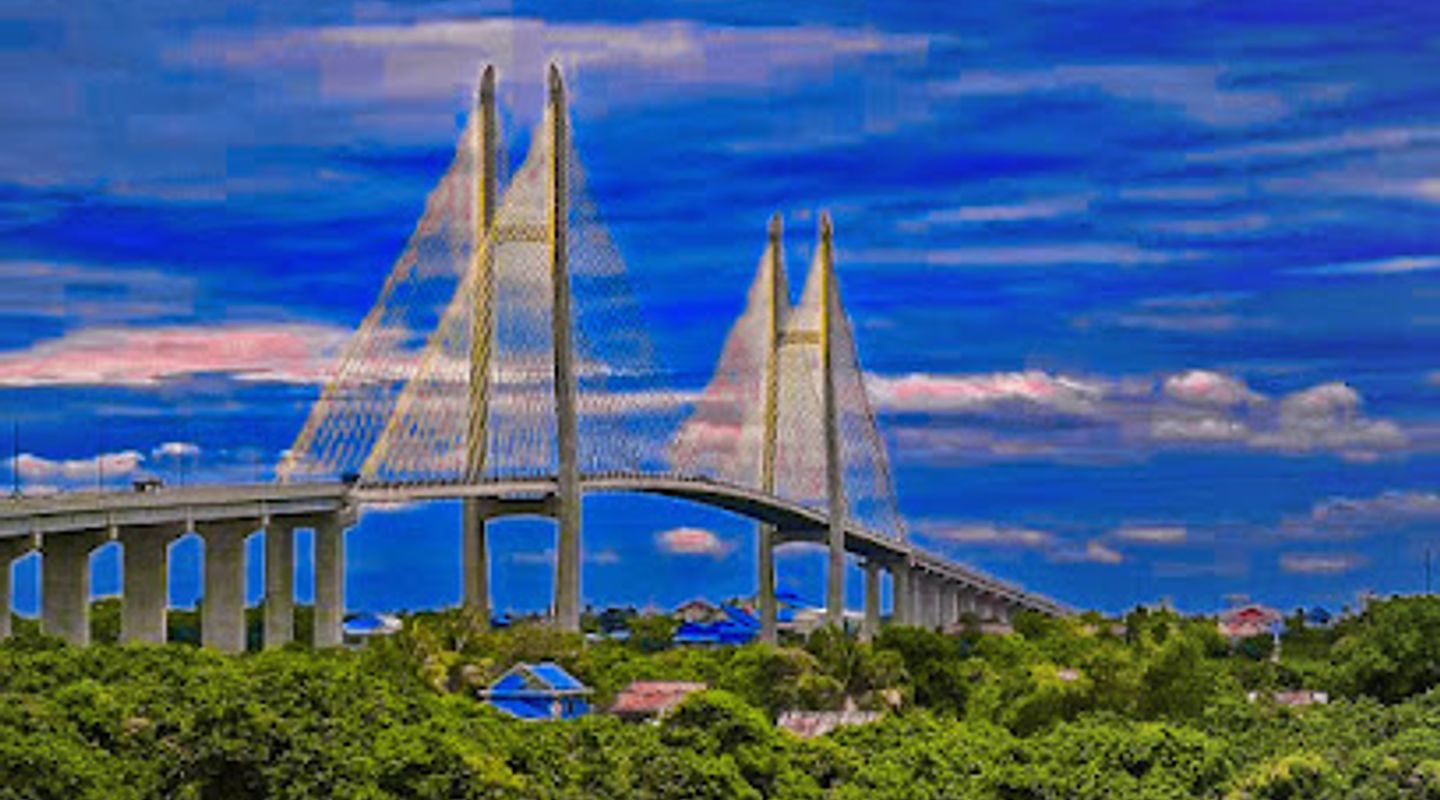
A brief summary of Tsubasa Bridge
Cambodia's longest bridge, offering stunning Mekong River views and a vital link for trade and travel, connecting Cambodia and beyond.
Spanning the Mekong River in Kandal Province, the Tsubasa Bridge is Cambodia's longest bridge and a testament to modern engineering. A vital transportation link and scenic landmark, it offers stunning views and embodies the friendship between Cambodia and Japan.
Opening hours
- Every dayOpen 24 hours
Opening hours as listed on the venue’s Google Business Profile. Hours can change for services and special events, so check with the venue before you go.
- Address
- Neak Loeung, Kilometer 60, Kandal Province,
- Phone
Getting there
Public Transport
Taxi/Tuk-Tuk
Discover more about Tsubasa Bridge
Overview
The Tsubasa Bridge, also known as the Neak Loeung Bridge, gracefully stretches across the Mekong River, approximately 60 kilometers southeast of Phnom Penh in Kandal Province. This impressive structure, officially opened on April 6, 2015, stands as a symbol of progress and connectivity for Cambodia.Before the bridge's construction, crossing the Mekong at this point relied on ferries, which were slow and often congested, with wait times stretching to several hours. The Tsubasa Bridge eliminated this bottleneck, providing a seamless and efficient transportation route that significantly reduces travel times and costs. It plays a crucial role in the local economy, facilitating trade and travel between Phnom Penh, Prey Veng Province, and onward to Ho Chi Minh City in Vietnam.The bridge itself is a marvel of engineering, featuring a cable-stayed design with a total length of 2,215 meters. Its main span measures 640 meters, supported by two 121-meter-high pylons. The bridge's name, "Tsubasa," meaning "wings" in Japanese, reflects its design, which resembles two birds taking flight, and symbolizes the strong relationship between Cambodia and Japan, the primary funding source for the project. The Tsubasa Bridge isn't just a functional piece of infrastructure; it's also a popular spot for tourists and locals alike. Many visitors come to capture the breathtaking views of the Mekong River, especially during sunrise and sunset. The surrounding area offers a glimpse into the daily lives of Cambodians, with local vendors and small shops adding to the vibrant atmosphere.
Evendo Review Centre
 Google
Guest reviews
Explore Tsubasa Bridge on the map
A handpicked selection of must-see spots near Tsubasa Bridge, mapped for you.
Get your free copy of our complete guide to Tsubasa Bridge, delivered straight to you.
Everything on this page, from opening hours and how to get there to Eve’s tips and the best time to go, in one PDF you can read offline, print or share.
Already have an account? Sign in
Your Tsubasa Bridge guide is ready.
We'll send it to · Not you? Sign out

Getting your guide ready…
We are putting together a fresh copy of the Tsubasa Bridge guide. This can take up to a minute.
This can take a few moments. If your browser asks, choose Allow so the download can start. You'll find the guide in your Downloads folder.
Nothing happened? Download it again
Sorry, the guide is taking longer than usual. Please try again in a minute, or get it by email instead.
Other nearby places you may find interesting
The closest places of the same kind, if this one is not quite what you had in mind.
-

-
-
-
-


Swipe for more places
More to explore near Tsubasa Bridge

 Best experiences near Tsubasa Bridge
 Best hotels near Tsubasa Bridge
 Best landmarks near Tsubasa Bridge
 Best attractions near Tsubasa Bridge
 Best shops near Tsubasa Bridge
 Best restaurants near Tsubasa Bridge
 Best bars near Tsubasa Bridge
Do you manage this location?
Take control to get all the benefits, like improved information, better appearance, and stronger visibility across AI-powered discovery.
Explore more

Explore more of Prey Veng
Discover Prey Veng, Cambodia's hidden gem, where ancient temples, sacred mountains, and serene river landscapes promise an unforgettable journey.
Explore Prey Veng
Explore more of Cambodia
Discover Cambodia: From the ancient wonders of Angkor Wat to the vibrant streets of Phnom Penh, immerse yourself in a land of history, culture, and natural beauty.
Explore Cambodia
