

Coral Bay (Paphos) Travel Guide - Free
Explore Coral Bay in Paphos with Evendo's free guide. Find the best shops, historic streets, restaurants, and gems on web or mobile.


Coral Bay in Paphos pairs a sandy Mediterranean beach with Maa-Palaeokastro archaeology, coastal walks, family resorts and easy access to Peyia.
A Resort Coast near Paphos
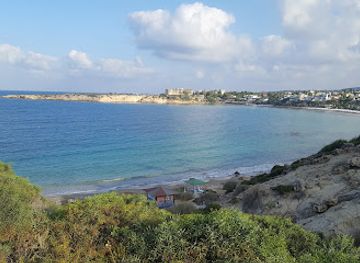
Coral Bay is a compact seaside resort on the western coast of Cyprus, commonly visited as part of the wider Peyia area and reached by road or bus from Paphos. Its identity is defined by a broad, gently shelving sandy beach, a small concentration of hotels and holiday apartments, and a coastal landscape of pale limestone, low scrub and clear Mediterranean water. Although it is often described in connection with Paphos, Coral Bay is outside the historic core of the city and has a distinctly resort-oriented character.Read more about Coral Bay
Beach Life and Coastal Scenery
Archaeology beside the Sea
Best attractions in Coral Bay
Coral Bay's principal attraction is its wide sandy beach, a sheltered-looking crescent that draws swimmers and families to the coast, although conditions should always be checked before entering the water. Nearby Laourou Beach offers another sandy shoreline and a quieter change of scene within the broader resort area. The most distinctive cultural sight is Maa-Palaeokastro, where excavated Late Bronze Age remains occupy a headland beside the sea, accompanied by a small museum explaining the settlement and its links with Mycenaean Cyprus. Beyond the formal sights, the coast itself provides an accessible landscape of limestone shelves, low vegetation and open views towards the Mediterranean. Visitors with a car or local transport can continue towards Peyia village and the rugged coast farther north, but these should be treated as nearby excursions rather than attractions within Coral Bay proper.
-
Tourist attraction
Coral Bay
Discover Coral Bay, Cyprus: a stunning beach resort with crystal-clear waters, golden sands, and a vibrant Mediterranean atmosphere.
2 min walk · 0.1 km from neighbourhood centre

Best landmarks in Coral Bay
Maa-Palaeokastro is Coral Bay's defining historic landmark, occupying a low coastal headland above the water and preserving traces of a Late Bronze Age settlement associated with Mycenaean Greek communities in Cyprus. Its archaeological remains and museum give the modern resort an unusually direct link to the island's prehistoric past. The main Coral Bay beach is a landmark of a different kind: its broad sandy curve has become the visual centre of the resort and the basis of its modern identity. Laourou Beach adds another recognisable coastal setting, while the limestone shoreline beyond the developed area provides natural reference points rather than formal monuments. Peyia village and the sea caves farther along the coast are nearby landmarks in the wider district, but they are geographically distinct from Coral Bay.
-
Beach
Coral Bay
Discover the serene beauty of Coral Bay in Cyprus, where golden sands meet crystal-clear waters for an unforgettable beach getaway.
2 min walk · 0.2 km from neighbourhood centre
-
Historical landmark
Archaeological Site of Maa - Palaeokastro
Discover the rich history of the Archaeological Site of Maa - Palaeokastro, a captivating glimpse into ancient Cypriot civilization amidst stunning landscapes.
5 min walk · 0.4 km from neighbourhood centre

Explore Coral Bay on the map
A handpicked selection of must-see spots in Coral Bay, mapped for you.
Best hotels in Coral Bay
Best restaurants in Coral Bay
Dining in Coral Bay is shaped by the needs of a beach resort, with restaurants, cafés and informal eateries concentrated around the main accommodation areas and road serving the shore. Menus commonly combine Cypriot dishes with familiar Mediterranean food and international holiday fare, allowing visitors to try grilled meats, salads, halloumi and other local flavours alongside simpler meals suited to families and day-trippers. Breakfast cafés, ice-cream stops and casual lunch venues are particularly easy to find near the beach, while evening dining tends to spread along the resort strip. The area does not have the dense historic food culture of central Paphos or the village-based character of Peyia, but its location makes it convenient for combining a meal with a beach visit. For a more distinctly local setting, visitors can look towards Peyia village, clearly recognising that it is outside Coral Bay.
-
Restaurant
Coral Oasis Tavern
Discover the flavors of Cyprus at Coral Oasis Tavern in Coral Bay—where every meal is a celebration of local cuisine and hospitality.
4 min walk · 0.4 km from neighbourhood centre

Best bars in Coral Bay
Coral Bay's evening scene is modest and resort-oriented rather than built around a large club district. Bars attached to or close to hotels and restaurants provide places for drinks, televised sport, music and relaxed socialising after the beach, with activity tending to follow the seasonal holiday calendar. The main resort road is the area most likely to remain active after dinner, while quieter residential sections become subdued. Entertainment may include occasional live music or themed evenings, but schedules and availability change, so they should be checked locally rather than assumed. Visitors seeking a broader choice of nightlife can travel towards Paphos, while Peyia village offers a more local evening atmosphere; neither should be presented as part of Coral Bay itself.
-
Bar
The Frog and Toad
Discover The Frog and Toad, a vibrant bar in Coral Bay, Cyprus, where local charm meets a lively atmosphere for a perfect night out.
5 min walk · 0.4 km from neighbourhood centre
-
Bar
Breeze Lounge Bar
Experience the vibrant atmosphere and stunning coastal views at Breeze Lounge Bar in Coral Bay, Cyprus, where relaxation meets Mediterranean charm.
5 min walk · 0.4 km from neighbourhood centre


Best shops in Coral Bay
Shopping in Coral Bay is concentrated on practical resort retail rather than a historic market or specialist commercial quarter. Small shops and convenience outlets serve beach visitors with drinks, snacks, toiletries, clothing, swimwear, souvenirs and holiday essentials, while cafés and restaurants form part of the same visitor-focused strip. The area is not known for a dense collection of independent boutiques, bookshops or traditional craft markets, so expectations should remain realistic. Visitors looking for a broader selection of Cypriot food products, household goods or village-oriented shopping can continue to Peyia or travel into Paphos, where larger commercial areas offer more choice. Local products such as olive oil, wine, sweets and handmade items may appear in shops aimed at visitors, but stock and provenance vary, so specialist shopping is better treated as an excursion beyond the immediate resort.
-
Supermarket
Kyrgeli Supermarket & Souvenir Shop
Discover local flavors and unique souvenirs at Kyrgeli Supermarket & Souvenir Shop in Coral Bay, Cyprus - a must-visit for every traveler.
6 min walk · 0.5 km from neighbourhood centre

Coral Bay essentials
Getting There
Getting Around
Safety
Emergency Situations
Do's and Don'ts
Local Tips

From Eve
Local phrases worth knowing
You don't need to get them perfect. A few words go a long way, and locals appreciate the effort.
Basics
| English | Local | Say it |
|---|---|---|
| Hello | Γεια σας | [Yia sas] |
| Goodbye | Αντίο | [Adio] |
| Yes | Ναι | [Nai] |
| No | Όχι | [Ohi] |
| Please/You're welcome | Παρακαλώ | [Parakalo] |
| Thank you | Ευχαριστώ | [Efharisto] |
| Excuse me/Sorry | Συγνώμη | [Signomi] |
| How are you? | Πώς είσαι; | [Pos ise;] |
| Fine. And you? | Καλά. Εσύ; | [Kala. Esi;] |
| Do you speak English? | Μιλάτε Αγγλικά; | [Milate Agglika;] |
| I don't understand | Δεν καταλαβαίνω | [Den katalaveno] |
Eating & Drinking
| English | Local | Say it |
|---|---|---|
| I'd like to see the menu, please | Θα ήθελα να δω το μενού, παρακαλώ | [Tha ithela na do to menu, parakalo] |
| I don't eat meat | Δεν τρώω κρέας | [Den troo kreas] |
| Cheers! | Υγεία! | [Ygeia!] |
| I would like to pay, please | Θα ήθελα να πληρώσω, παρακαλώ | [Tha ithela na plirosso, parakalo] |
Emergencies
| English | Local | Say it |
|---|---|---|
| Help! | Βοήθεια! | [Voithia!] |
| Go away! | Φύγε! | [Fiye!] |
| Call the Police! | Καλέστε την Αστυνομία! | [Kaleste tin Astynomia!] |
| Call a doctor! | Καλέστε γιατρό! | [Kaleste giatro!] |
| I'm lost | Έχω χαθεί | [Eho hthi] |
| I'm ill | Είμαι άρρωστος | [Eimai arrostos] |
Shopping
| English | Local | Say it |
|---|---|---|
| I'd like to buy... | Θα ήθελα να αγοράσω... | [Tha ithela na agoraso...] |
| I'm just looking | Απλώς κοιτάω | [Aplws kitao] |
| How much is it? | Πόσο κοστίζει; | [Poso kostizi;] |
| That's too expensive | Αυτό είναι πολύ ακριβό | [Afto ine poli akribo] |
| Can you lower the price? | Μπορείτε να μειώσετε την τιμή; | [Boreite na miisete tin timi;] |
Time & Numbers
| English | Local | Say it |
|---|---|---|
| What time is it? | Τι ώρα είναι; | [Ti ora ine;] |
| It's one o'clock | Είναι μία ώρα | [Ine mia ora] |
| Half past (10) | Μισή (10) | [Misi (10)] |
| Morning | Πρωί | [Proi] |
| Afternoon | Απόγευμα | [Apoyevma] |
| Evening | Βράδυ | [Vradi] |
| Yesterday | Χθες | [Hthes] |
| Today | Σήμερα | [Simera] |
| Tomorrow | Αύριο | [Avrio] |
| 1 | Ένα | [Ena] |
| 2 | Δύο | [Dio] |
| 3 | Τρία | [Tria] |
| 4 | Τέσσερα | [Tessera] |
| 5 | Πέντε | [Pente] |
| 6 | Έξι | [Exi] |
| 7 | Επτά | [Epta] |
| 8 | Οκτώ | [Okto] |
| 9 | Εννιά | [Ennia] |
| 10 | Δέκα | [Deka] |
Transport & Directions
| English | Local | Say it |
|---|---|---|
| Where's a/the...? | Πού είναι ένα/το...; | [Pou ine ena/to...;] |
| What's the address? | Ποια είναι η διεύθυνση; | [Poia ine i diefthinsi;] |
| Can you show me (on the map)? | Μπορείτε να με δείξετε (στο χάρτη); | [Boreite na me dixete (sto charti);] |
| When's the next (bus)? | Πότε είναι το επόμενο (λεωφορείο); | [Pote ine to epomeno (leoforeio);] |
| A ticket (to ....) | Ένα εισιτήριο (για το...); | [Ena isitirio (gia to...);] |
History of Coral Bay
The Maa-Palaeokastro Settlement
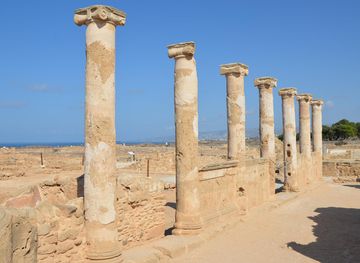
The most significant early history associated with Coral Bay is concentrated at Maa-Palaeokastro, a Late Bronze Age settlement on a promontory beside the present-day resort. Archaeological evidence connects the site with Mycenaean Greek communities who settled in Cyprus during the upheavals surrounding the end of the Bronze Age. Its position above the coast gave the settlement a defensible setting and access to maritime routes, while the surviving foundations show that the headland was once organised as a substantial community rather than an isolated lookout. The site is particularly important because it preserves evidence of the cultural changes that helped shape Cyprus after the collapse of older eastern Mediterranean political systems.
From Rural Coast to Peyia Resort
For much of the modern period, the Coral Bay coastline remained linked to the agricultural hinterland and village of Peyia rather than functioning as a separate urban centre. The area was shaped by dry farming, grazing and the practical rhythms of a rural coastal settlement, with access routes connecting the shore to the village and to Paphos. The absence of a large historic town explains why Coral Bay has few layers of traditional urban fabric: its visible identity is primarily archaeological, rural and coastal rather than medieval or mercantile.
Tourism and Coastal Transformation
The development of tourism in the second half of the twentieth century transformed Coral Bay from a sparsely settled stretch of coast into a purpose-built resort. Hotels, apartments, restaurants and visitor facilities grew around the beach, while improved roads connected the area more closely with Paphos and Peyia. This change brought a new seasonal economy based on accommodation, food, recreation and beach use, but did not erase the older landscape: the Maa-Palaeokastro remains beside the resort, and open land, rocky shore and agricultural areas survive in the wider surroundings.
A Contemporary Holiday Coast
Today Coral Bay is recognised less as a historic neighbourhood than as a coastal resort within the wider Peyia area. Its public identity rests on the relationship between the sandy bay, the archaeological headland and the surrounding limestone coast. Seasonal visitor activity is concentrated around the beach and resort services, while Peyia village supplies a broader local setting beyond the seafront. Ongoing pressure for development along the Paphos coast has made the coexistence of tourism, archaeological protection and the remaining rural landscape an important part of Coral Bay's contemporary character.
Coral Bay in Photos
Browse through our photo collection highlighting the charm and character of the destination.
Neighbourhoods near Coral Bay
The closest neighbourhoods to Coral Bay, if you have time for more than one stop.
-

-


Swipe for more neighbourhoods
Explore more
Explore more of Paphos
Discover Paphos, Cyprus: Where ancient history meets stunning beaches and vibrant culture. A perfect blend of archaeology, nature, and Mediterranean charm awaits.
Explore Paphos