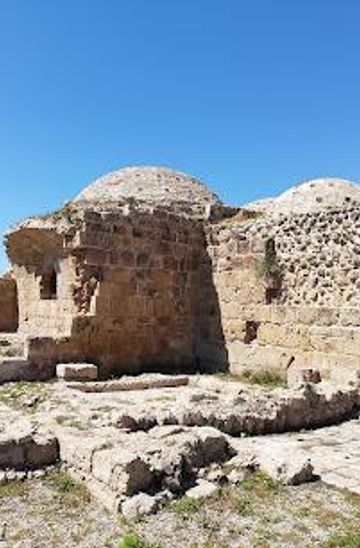
Ottoman Baths: A Journey Through Time
Explore the historical Ottoman Baths in Paphos, a cultural gem reflecting Cyprus' diverse heritage and Ottoman influence. A must-see landmark!
The Ottoman Baths in Paphos offer a glimpse into the city's past, reflecting the cultural influences that have shaped Cyprus over centuries. Constructed in 1592, these baths served as a social and hygienic hub for Turkish and Greek Cypriots alike. Today, visitors can explore the restored structure and gain insight into the daily lives of people in Paphos centuries ago.
A brief summary to Ottoman Baths
- Minoos, Paphos, CY

Know before you go
Hi, I'm Eve. Here are a few practical things to know before exploring Ottoman Baths.
- Visit during the morning to avoid crowds and have a more intimate experience with the historical site.
- Combine your visit with a stop at the nearby Paphos Municipal Market to experience local life and commerce.
- Check out other nearby attractions such as the Paphos Archaeological Museum to enrich your understanding of the area's history.
Do you manage this location?
Take control to get all the benefits, like improved information, better appearance, and stronger visibility across AI-powered discovery. Learn more
Activate your presence

Getting There
-
Walking
If you are in Paphos Old Town (Ktima), the Ottoman Baths are easily accessible on foot. From the main square, head towards the Paphos Municipal Market. The baths are located just below Petraki Miltiadou street, near the market. The walk is short and offers a chance to explore the charming streets of the old town. No costs are associated with walking.
-
Public Transport
From Kato Paphos, take bus number 610 towards Karavella (Paphos Old Town). Get off at the bus stop closest to the Paphos Municipal Market. From there, walk down Petraki Miltiadou street; the Ottoman Baths will be nearby. A single bus ticket costs €2 during the day or €3 at night. A 24-hour ticket is available for €6.50.
-
Driving
If driving, head towards Paphos Old Town (Ktima). Follow signs to the Paphos Municipal Market. There is a large parking area near the market where you can park your car. From the parking area, the Ottoman Baths are a short walk away. Parking fees vary, but expect to pay around €2-€4 for a few hours.
Discover more about Ottoman Baths
Explore the best of what Ottoman Baths has to offer













More about Paphos District

Discover Paphos District: Ancient ruins, stunning beaches, and charming villages await in this captivating region of Cyprus.
Tell me more about Paphos District
Discover Ta Mpania in Kato Paphos: a unique coastal hub blending relaxation, accessibility, and Cypriot charm near historical landmarks.

Explore Paphos and Cyprus on two wheels! Motorcycle, scooter, quad & buggy rentals for independent adventures and guided tours.