Ærøskøbing Bymuseum • Ærø Museum Travel Guide
Free Guide: Island history, seafaring tales and borderland politics unfold inside Ærøskøbing’s 18th‑century sheriff’s house and its tranquil historic garden.


A brief summary of Ærøskøbing Bymuseum • Ærø Museum
Island history, seafaring tales and borderland politics unfold inside Ærøskøbing’s 18th‑century sheriff’s house and its tranquil historic garden.
Set in Ærøskøbing’s former sheriff’s house from 1775, Ærøskøbing Bymuseum (Ærø Museum) offers a richly layered introduction to the island’s seafaring past, borderland politics and everyday life. Period rooms, maritime objects, local crafts and changing exhibitions unfold how Ærø’s position between the Baltic and the South Funen Archipelago shaped trade, language and architecture. A small historic garden beside the museum completes this atmospheric glimpse into island life around 1900.
On-site amenities
 Restrooms
 Seating areas
 Information boards
Opening hours
- Mon–Sat11 am–3 pm
- SunClosed
Opening hours as listed on the venue’s Google Business Profile. Hours can change for services and special events, so check with the venue before you go.
- Address
- Brogade 3, 5970 Ærøskøbing
- Phone
Getting there
Ferry and walk
Local bus within Ærø
Car and bicycle access
Discover more about Ærøskøbing Bymuseum • Ærø Museum
An island story in a sheriff’s house
Ærøskøbing Bymuseum is housed in an elegant former sheriff’s residence dating from 1775, set just off the cobbled streets of the town’s old centre. Crossing the threshold, you step into the administrative heart of Ærø as it looked when the island was governed from this very building. The creak of wooden floors, low ceilings and painted doors immediately evoke a time when officials, clerks and islanders passed through with petitions, disputes and news from the sea.The museum uses the house itself as its main artefact. Staircases, panelled rooms and original details tell a parallel story to the displays, revealing how a prosperous 18th‑century official family on a small Danish island chose to live and work.
Between duchy and kingdom
Exhibitions inside delve into Ærø’s unusual political and cultural history as a borderland between the Danish kingdom and the former Schleswig duchies. Maps, documents and coins trace shifting allegiances and complicated administrations that shaped local identity over centuries. You see how customs rules, taxes and changing rulers affected everything from shipping routes to schoolbooks.Language and habits differed from one end of the island to the other. Display panels and sound snippets highlight Western and Eastern Ærø dialects, showing ties to Als, Funen, Langeland and Lolland, and explaining how geography and politics left marks on the way people spoke and cooked.
Sea routes and everyday work
Maritime life runs like a thread through the museum. Models, navigation instruments and trade goods illustrate how Ærø’s sailors connected the island to harbours across the Baltic and beyond. Weights, measures and imported objects hint at the bustling small‑scale commerce that supported the island’s farms and workshops.Alongside seafaring, the museum pays close attention to everyday existence on shore. Tools, clothing and domestic utensils sketch out lives shaped by seasonal labour, church festivals and the rhythms of fishing and farming. Carefully staged interiors suggest how island homes were furnished around 1900, from painted chests to tiled stoves.
The protected building and its transformations
The house at Brogade 3–5 reflects its changing roles over time. After its first sheriff, Johan Heinrich Prehn, it hosted a succession of officials and functions, including periods as a post office and tax office. Around 1840 it was split into two separate units, explaining the presence of twin front doors and staircases.Protected as a historic building since 1919, it has framed the town museum’s exhibitions since the mid‑20th century. Walking from room to room you sense these layers: administrative hub, bourgeois home, and finally cultural institution interpreting the very history it once helped shape.
A town garden from another era
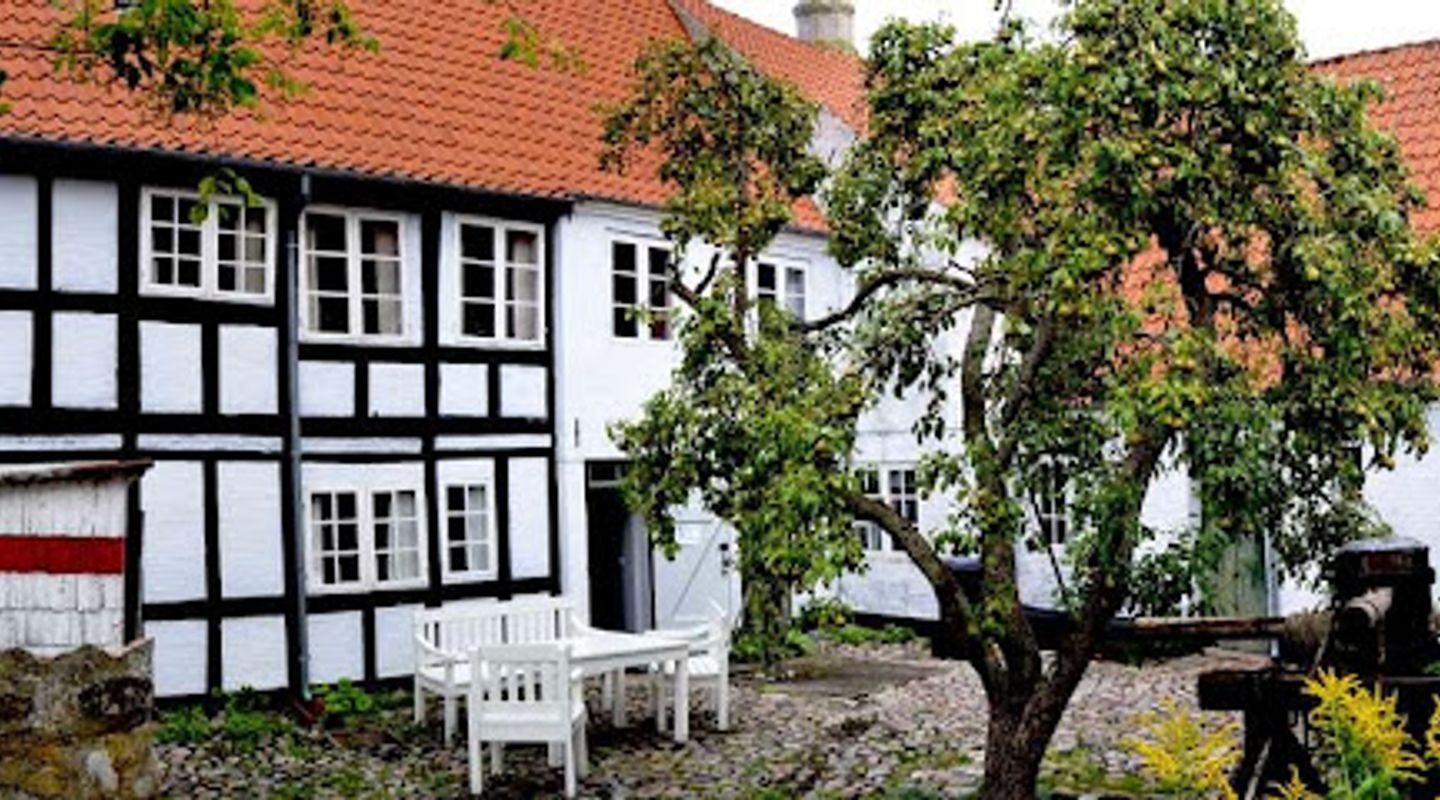
Outside, a small garden recalls how an urban plot on Ærø might have looked around the 1920s. Fruit trees, old‑fashioned perennials and simple paths create a gentle green pocket in the middle of town. It offers a chance to pause between exhibitions, listen to church bells in the distance and imagine a family tending vegetables, hanging laundry and storing apples for winter.In summer the garden becomes an extra open‑air gallery of textures and colours: whitewashed walls, red roofs, flowering shrubs and the faint scent of herbs carried on the sea breeze.
Exploring Ærøskøbing beyond the museum
Because the museum stands in the heart of Ærøskøbing, it works well as a starting point for exploring the town’s narrow lanes, merchants’ houses and harbour. Themes introduced in the displays—trade across the Baltic, mixed architectural influences, maritime traditions—come alive as you notice carved doorways, half‑timbered facades and views towards the water.Families can look out for occasional children’s activities that encourage younger visitors to engage with the stories on display, from simple treasure‑hunt style tasks to hands‑on interpretive materials. Even without these extras, the size of the house and the compact garden make the museum easy to explore at a relaxed pace, leaving time for further wandering in the old town.
Evendo Review Centre
 Google
Guest reviews
Best time to go
Quietest: Jan, Feb & Mar · before 9am or at 6pm
Busy times are Evendo estimates for a typical year, to help you plan. Actual crowds vary with events, school holidays and the weather.
Explore Ærøskøbing Bymuseum • Ærø Museum on the map
A handpicked selection of must-see spots near Ærøskøbing Bymuseum • Ærø Museum, mapped for you.
Get your free copy of our complete guide to Ærøskøbing Bymuseum • Ærø Museum, delivered straight to you.
Everything on this page, from opening hours and how to get there to Eve’s tips and the best time to go, in one PDF you can read offline, print or share.
Already have an account? Sign in
Your Ærøskøbing Bymuseum • Ærø Museum guide is ready.
We'll send it to · Not you? Sign out

Getting your guide ready…
We are putting together a fresh copy of the Ærøskøbing Bymuseum • Ærø Museum guide. This can take up to a minute.
This can take a few moments. If your browser asks, choose Allow so the download can start. You'll find the guide in your Downloads folder.
Nothing happened? Download it again
Sorry, the guide is taking longer than usual. Please try again in a minute, or get it by email instead.
Other nearby places you may find interesting
The closest places of the same kind, if this one is not quite what you had in mind.
-
-
-
-
-


Swipe for more places
More to explore near Ærøskøbing Bymuseum • Ærø Museum
-
 Best experiences near Ærøskøbing Bymuseum • Ærø Museum
-
 Best hotels near Ærøskøbing Bymuseum • Ærø Museum
-
 Best landmarks near Ærøskøbing Bymuseum • Ærø Museum
-
 Best attractions near Ærøskøbing Bymuseum • Ærø Museum
-
 Best shops near Ærøskøbing Bymuseum • Ærø Museum
-
 Best restaurants near Ærøskøbing Bymuseum • Ærø Museum
-
 Best bars near Ærøskøbing Bymuseum • Ærø Museum


Do you manage this location?
Take control to get all the benefits, like improved information, better appearance, and stronger visibility across AI-powered discovery.
Explore more
Explore more of Aero
Discover the tranquil beauty of Ærø, Denmark's charming island paradise with historic towns, scenic landscapes, and rich maritime heritage.
Explore Aero
Explore more of Denmark
Discover Denmark: A perfect blend of history, modern design, and the cozy concept of hygge. Explore vibrant cities, serene landscapes, and world-class cuisine.
Explore Denmark