Voderup Klint Travel Guide
Free Guide: Terraced Ice Age cliffs tumbling toward the Baltic Sea, Voderup Klint offers wide horizons, sculpted slopes and a tranquil slice of Ærø’s natural drama.


A brief summary of Voderup Klint
Terraced Ice Age cliffs tumbling toward the Baltic Sea, Voderup Klint offers wide horizons, sculpted slopes and a tranquil slice of Ærø’s natural drama.
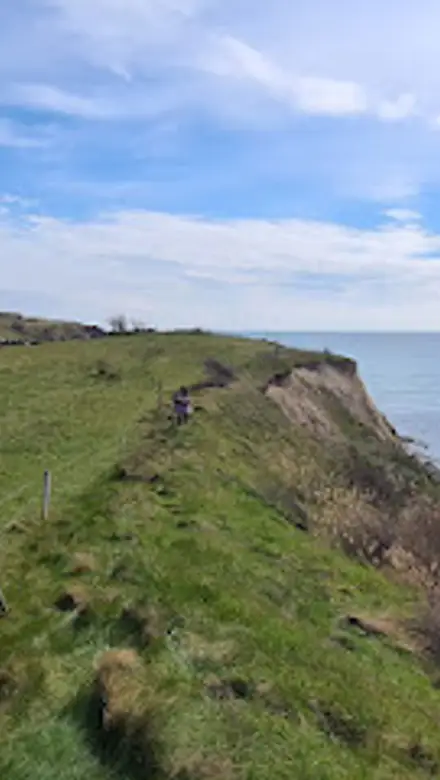
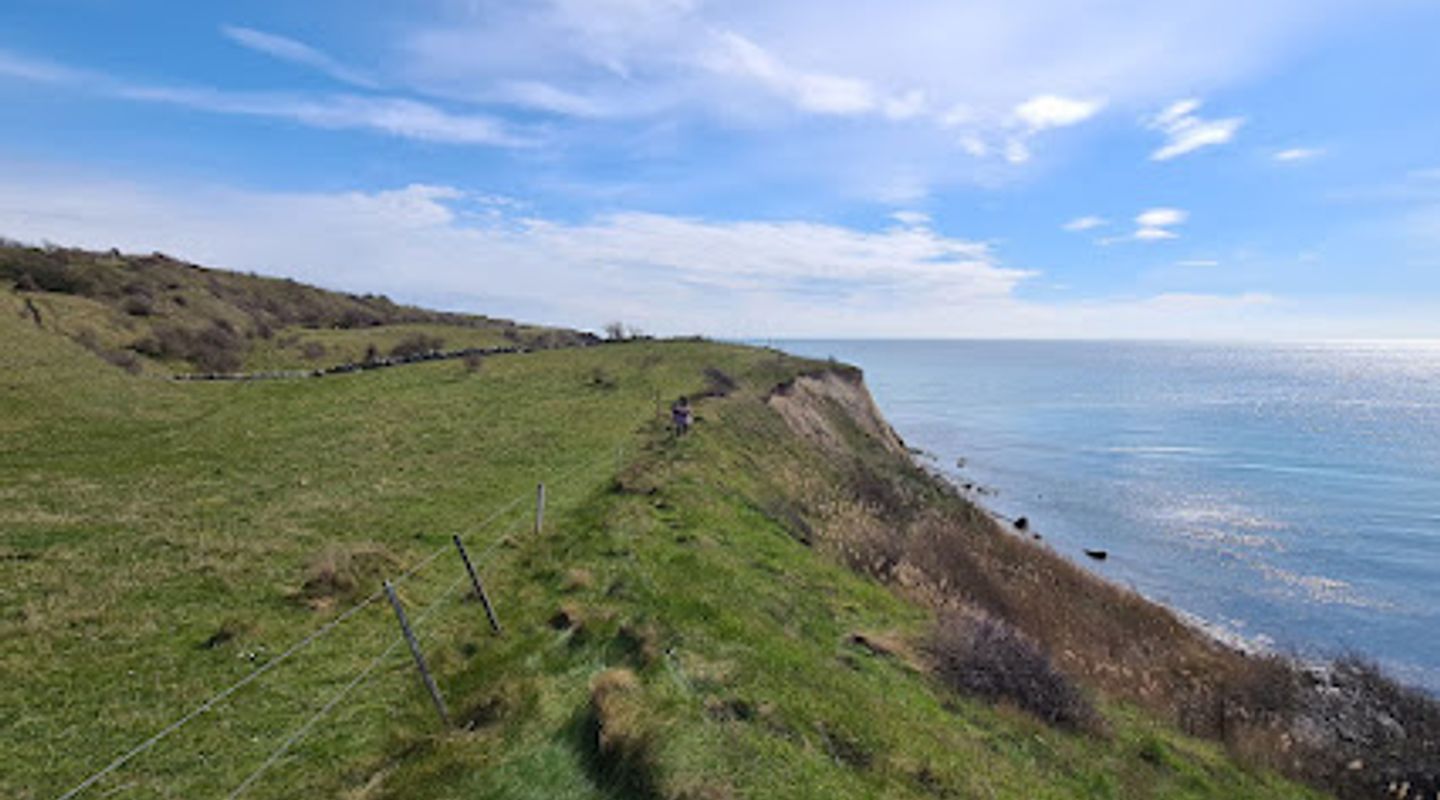
Voderup Klint is a striking stepped cliff on the south coast of Ærø, rising to around 33 m and stretching for roughly 3–3.5 km along the Baltic Sea. Here the island’s fertile fields drop abruptly toward the water in a series of natural terraces formed by ancient landslides, creating a dramatic green amphitheatre facing the sea. Marked paths lead across the protected area, offering sweeping coastal panoramas, birdlife, and quiet corners to sit, watch ships pass, and feel the wind off the archipelago.
On-site amenities
 Trash bins
 Information boards
 Picnic areas
 Seating areas
Opening hours
- Every dayOpen 24 hours
Opening hours as listed on the venue’s Google Business Profile. Hours can change for services and special events, so check with the venue before you go.
- Address
- Mølledamsvej 1, 5970 Ærøskøbing
- Website
Getting there
Car from Ærøskøbing
Bicycle from Ærøskøbing
Local bus from Ærøskøbing
Discover more about Voderup Klint
Terraced Cliffs Above the South Fyn Archipelago
Voderup Klint is one of Ærø’s most distinctive landscapes, a long, green cliff where the island suddenly falls away toward the Baltic Sea. The cliff runs for around three to three and a half kilometres along the south coast and rises to about 33 metres, high by local standards yet still intimate enough to feel close to the water. From above you see a wide horizon of sea and scattered islets, with ferries and yachts tracing slow lines across the view.What makes this place special is its terraced form. Instead of a single vertical drop, the land descends in giant grassy steps. Broad ledges run parallel to the sea, separated by steeper slopes, creating a kind of natural amphitheatre facing the waves. On a clear day the light plays beautifully across these levels, with shadows picking out each fold in the terrain.
Geological Story Written in Clay and Ice
The unusual stepped profile is the result of geology rather than human design. Voderup Klint sits in an area shaped by the last Ice Age, when glaciers pushed and folded layers of clay and till. Over time, sections of the cliff slowly slipped toward the sea in large landslides, but instead of collapsing completely, they settled into distinct terraces. This slow movement, repeated over thousands of years, produced the layered structure visible today.The cliff forms part of a wider belt of coastal bluffs around Ærø that help tell the story of the South Fyn Archipelago’s formation. Exposed faces of clay and soil reveal bands of different colours and textures, hinting at changing conditions as ice advanced and retreated. The site is recognised as a protected geological and landscape area, where natural processes are allowed to continue with minimal interference.
Walking the Stepped Landscape
A visit to Voderup Klint is largely about walking and pausing. Paths lead along the top edge of the cliff, across fields and meadows, with frequent spots to stop at benches or simply sit in the grass. From here, the eye sweeps over the Baltic, the sky often huge and open, with shifting clouds and the occasional sea eagle or flock of migrating birds overhead.From the upper path, smaller tracks descend to the intermediate terraces. These broad shelves feel sheltered and slightly removed, offering a different perspective as you look both up to the farmland and down toward the beach. The gradients can be uneven and occasionally muddy after rain, so footwear with some grip is useful, but the distances are modest and lend themselves to unhurried exploration.
Sea, Shore and Changing Light
At the foot of the cliff, a narrow shore of stones and patches of sand lines the water. Here the waves are usually gentle, lapping against rounded rocks, but wind can quickly roughen the surface, adding drama to the scene. Driftwood, seaweed and shells collect along the high-tide line, and in quieter corners you may spot wading birds picking through the shallows.The atmosphere changes throughout the day. Morning light can be soft and silvery, while late afternoon often warms the colour of the clay and grasses. On calm evenings, the sea may turn glassy, reflecting pastel skies as the sun lowers toward the horizon. Even in blustery weather the site has appeal, with the wind pushing across the open slopes and the sound of surf and rustling grass filling the air.
Protected Nature and Quiet Contemplation
Because Voderup Klint is a protected area, the management is light-handed. Cattle or sheep sometimes graze sections of the terraces, helping keep the slopes open and maintaining habitats for wildflowers and insects. Seasonal blooms dot the grass, and in summer butterflies move between patches of colour. Visitors are encouraged to stay on established paths and treat the area gently so that erosion and disturbance remain minimal.Despite its significance, the cliff retains a peaceful, low-key character. There are no large buildings on the edge to distract from the views, only a few simple amenities and signs. The setting invites slow wandering, quiet conversation or solitary reflection, whether you come for an hour’s walk or to sit with a thermos and watch the weather move across the Baltic. It is both a showcase of Ærø’s natural heritage and a place to experience the island’s understated coastal beauty at its most authentic.
Evendo Review Centre
 Google
Guest reviews
Best time to go
Quietest: Jan, Feb & Nov · before 7am or from 10pm
Busy times are Evendo estimates for a typical year, to help you plan. Actual crowds vary with events, school holidays and the weather.
Explore Voderup Klint on the map
A handpicked selection of must-see spots near Voderup Klint, mapped for you.
Get your free copy of our complete guide to Voderup Klint, delivered straight to you.
Everything on this page, from opening hours and how to get there to Eve’s tips and the best time to go, in one PDF you can read offline, print or share.
Already have an account? Sign in
Your Voderup Klint guide is ready.
We'll send it to · Not you? Sign out

Getting your guide ready…
We are putting together a fresh copy of the Voderup Klint guide. This can take up to a minute.
This can take a few moments. If your browser asks, choose Allow so the download can start. You'll find the guide in your Downloads folder.
Nothing happened? Download it again
Sorry, the guide is taking longer than usual. Please try again in a minute, or get it by email instead.
Other nearby places you may find interesting
The closest places of the same kind, if this one is not quite what you had in mind.
-
Ærøskøbing Bymuseum • Ærø Museum Island history, seafaring tales and borderland politics unfold inside Ærøskøbing’s 18th‑century sheriff’s house and its tranquil historic garden.
-
Hammerich House • Aero Museum A crooked red cottage of antiques and art where sculptor Gunnar Hammerich’s lovingly preserved rooms bring Ærøskøbing’s early 20th-century home life vividly to life.
-
Badehuse ved Vestre Strandvej Iconic, colour-washed beach huts lining Ærøskøbing’s Vesterstrand, where a century of island bath culture meets shallow emerald water and unforgettable sunsets.
-
Ærø Museum Step into Ærøskøbing’s 1775 bailiff’s house, where maritime tales, island traditions and a tranquil 1920s market garden bring Ærø’s history vividly to life.
-
Marstal Søfartsmuseum A harbour-side maze of ship models, full-scale interiors and sea stories tracing Marstal’s rise from island port to major Danish maritime town.
Swipe for more places
More to explore near Voderup Klint

 Best experiences near Voderup Klint
 Best hotels near Voderup Klint
 Best landmarks near Voderup Klint
 Best attractions near Voderup Klint
 Best shops near Voderup Klint
 Best restaurants near Voderup Klint
 Best bars near Voderup Klint
Do you manage this location?
Take control to get all the benefits, like improved information, better appearance, and stronger visibility across AI-powered discovery.
Explore more
Explore more of Aero
Discover the tranquil beauty of Ærø, Denmark's charming island paradise with historic towns, scenic landscapes, and rich maritime heritage.
Explore Aero
Explore more of Denmark
Discover Denmark: A perfect blend of history, modern design, and the cozy concept of hygge. Explore vibrant cities, serene landscapes, and world-class cuisine.
Explore Denmark