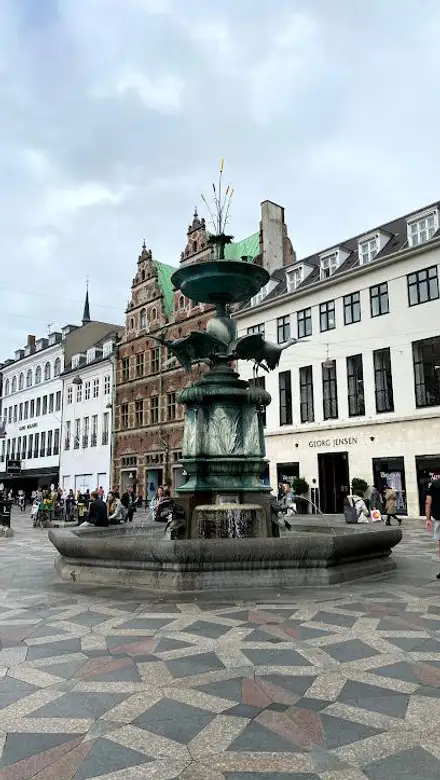
Stork Fountain, Copenhagen Travel Guide
Free Guide: Copenhagen’s beloved bronze storks rise above Amagertorv, where centuries of marketplace life meet modern design stores and a lively pedestrian crossroads.


A brief summary of Stork Fountain
Copenhagen’s beloved bronze storks rise above Amagertorv, where centuries of marketplace life meet modern design stores and a lively pedestrian crossroads.
Anchoring the bustling square of Amagertorv in central Copenhagen, the Stork Fountain is one of the city’s most recognizable meeting points and decorative landmarks. Inaugurated in 1894 as a silver‑wedding gift to Crown Prince Frederik (later Frederik VIII) and Crown Princess Louise, its three elegant storks and playful water jets bring a touch of poetry to the heart of the Strøget pedestrian district, surrounded by historic façades and high‑end Danish design stores.
On-site amenities
 Restrooms
 Drink options
 Drinking water
 Food options
 Seating areas
 Trash bins
 Information boards
 Visitor centre
 Sheltered areas
Opening hours
- Every dayOpen 24 hours
Opening hours as listed on the venue’s Google Business Profile. Hours can change for services and special events, so check with the venue before you go.
- Address
- Amagertorv 6, 1160 København
- Phone
- Website
Getting there
Metro from central Copenhagen
City bus connection
Cycling within the inner city
Walking from nearby central squares
Discover more about Stork Fountain
A royal gift in the heart of old Copenhagen
The Stork Fountain stands at the center of Amagertorv, one of Copenhagen’s oldest squares and the natural crossroads of the Strøget pedestrian shopping streets. Unveiled in 1894, the bronze fountain was commissioned as a silver‑wedding anniversary present for Crown Prince Frederik and Crown Princess Louise, underlining the square’s status as a prestigious civic space. Its sculptors, Edvard Petersen and Vilhelm Bissen, created a piece that was both decorative and symbolic, linked to ideas of renewal, family and good fortune.The square around the fountain has served as a marketplace since the Middle Ages, once filled with farmers from nearby Amager selling produce to city dwellers. Today, instead of carts and stalls, you are ringed by ornate gabled houses, polished shopfronts and flagships of Danish design, yet the fountain still acts as the square’s focal point, much as a well or market cross might have done centuries ago.
Graceful storks and playful details
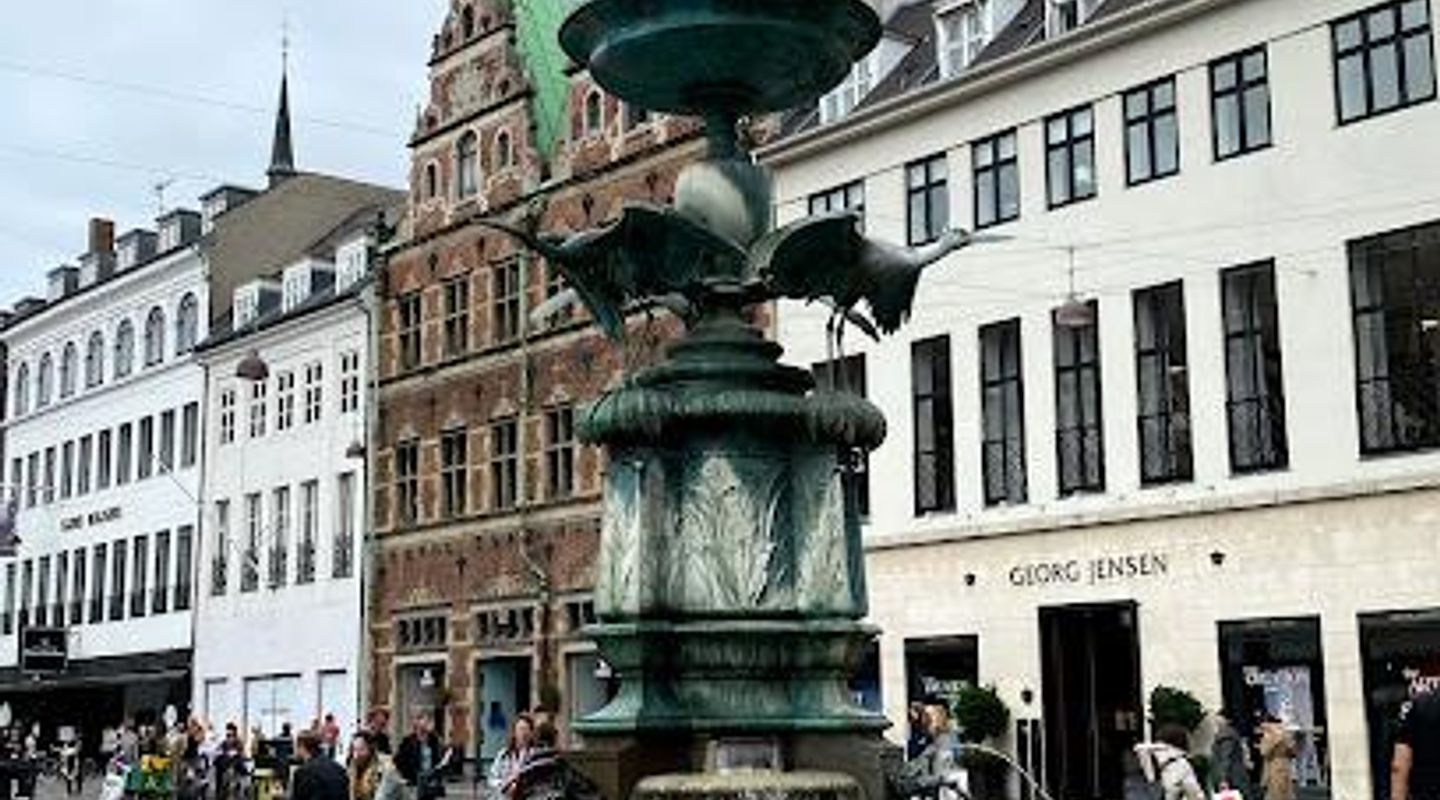
Look closely at the fountain and you notice how light and movement are built into the sculpture. Three long‑legged storks appear to pause on the rim of the upper basin, wings slightly raised as if about to lift into the air. Below them, frogs spit arcs of water into a lower pool, softening the bronze with ripples and reflections. Depending on the wind, you may feel a faint scatter of spray drift across the cobblestones.The choice of storks was not accidental. In Nordic tradition the bird is associated with happiness, fidelity and the arrival of new life. Water trickling over feathered bodies and webbed feet adds another layer of symbolism, tying the sculpture to ideas of fertility and flowing abundance. Around the basin, the stepped stone plinth doubles as an informal perch, where shoppers and sightseers pause with ice creams, coffees or shopping bags to watch the life of the square.
From marketplace to pedestrian showpiece
Amagertorv’s surroundings help explain why the Stork Fountain feels so central to Copenhagen’s identity. The square sits roughly midway along Strøget, which links the Town Hall Square with Kongens Nytorv and is often described as one of Europe’s longest pedestrian shopping streets. Historic townhouses and later 19th‑century façades have been carefully restored, giving the scene a layered, almost theatrical backdrop.Within a few steps of the fountain you find some of the city’s best‑known retail names, including the Royal Copenhagen porcelain flagship store and the Georg Jensen design house. Their elegant window displays, together with neighbouring cafés and department stores, mean the fountain is rarely isolated; it is framed by window‑shoppers, street musicians, tour groups and commuters cutting through the square on their daily routines.
Traditions, protests and midwives’ dances
Over more than a century the fountain has played many roles beyond decoration. In the early 20th century it became an occasional focus for demonstrations and youthful pranks, with the basins at times dyed bright colours or filled with unexpected contents. For Copenhageners, these episodes added an element of urban folklore and humour to an otherwise formal monument.Since 1950, the sculpture has been connected to a more joyful custom: newly graduated midwives gather here to dance around the fountain in celebration. The tradition ties the stork motif back to its association with childbirth, transforming the bronze birds from decorative figures into heralds of professional pride and new beginnings. Encountering such a celebration, you may find the usually composed square filled with laughter, flowers and the rustle of white uniforms.
Experiencing the fountain through the day
Your experience of the Stork Fountain shifts with the rhythm of the city. On bright mornings, the bronze catches the light and the water sparkles against the pale stone of surrounding buildings. By midday, the square is at its liveliest, a swirl of shoppers, buskers and bicycles threading the nearby streets. Later, as evening sets in, shop lights and nearby cafés lend the fountain a softer glow, making it a photogenic spot for twilight shots of the historic skyline.Because the fountain stands in an open public square, there are no barriers or tickets and you can approach from any direction. Benches and steps nearby invite you to linger, tracing the details of wings and beaks or simply watching how locals use the space: arranging meetings, crossing the square with grocery bags, or pausing to check their phones beside this enduring piece of civic sculpture.
Evendo Review Centre
 Google
Guest reviews
Best time to go
Quietest: Jan, Feb & Mar · before 7am
Busy times are Evendo estimates for a typical year, to help you plan. Actual crowds vary with events, school holidays and the weather.
Explore Stork Fountain on the map
A handpicked selection of must-see spots near Stork Fountain, mapped for you.
Get your free copy of our complete guide to Stork Fountain, delivered straight to you.
Everything on this page, from opening hours and how to get there to Eve’s tips and the best time to go, in one PDF you can read offline, print or share.
Already have an account? Sign in
Your Stork Fountain guide is ready.
We'll send it to · Not you? Sign out

Getting your guide ready…
We are putting together a fresh copy of the Stork Fountain guide. This can take up to a minute.
This can take a few moments. If your browser asks, choose Allow so the download can start. You'll find the guide in your Downloads folder.
Nothing happened? Download it again
Sorry, the guide is taking longer than usual. Please try again in a minute, or get it by email instead.
Unlock the best of Stork Fountain
Skip-the-line tickets, guided tours with entry, and walking tours of the area, booked in a few clicks.
 Tour with entry
Copenhagen Exploration Game and City Tour on your Phone
from $8.48 Tour with entry
Copenhagen: Little Mermaid Fairy Tale Quest
from $8.59 Tour with entry
Copenhagen History and Folklore Self Guided Audio Walking Tour
from $9.26 Tour with entry
Copenhagen Walking Tour with Audioguide on Your Smartphone
from $10.61


Other nearby places you may find interesting
The closest places of the same kind, if this one is not quite what you had in mind.
-
City Hall Square Copenhagen's grand civic plaza where history, culture, and urban life converge in one iconic square.
-
Amalienborg Palace The octagonal heart of Danish monarchy where history, art, and royal tradition converge in perfect Rococo harmony.
-
 The Little Mermaid
Copenhagen’s most famous bronze figure, a small mermaid with a grand story, gazing from Langelinie’s harbour rocks toward the meeting of fairy tale and sea.
The Little Mermaid
Copenhagen’s most famous bronze figure, a small mermaid with a grand story, gazing from Langelinie’s harbour rocks toward the meeting of fairy tale and sea.
-
Frederiksholms Kanal Historic waterway encircling Denmark's political heart, where regal grandeur meets relaxed Nordic charm.
-
Nyhavn Copenhagen's iconic 17th-century harbor where colorful townhouses, maritime history, and vibrant waterfront culture converge.
Swipe for more places
More to explore near Stork Fountain

 Best experiences near Stork Fountain
 Best hotels near Stork Fountain
 Best landmarks near Stork Fountain
 Best attractions near Stork Fountain
 Best shops near Stork Fountain
 Best restaurants near Stork Fountain
 Best bars near Stork Fountain
Do you manage this location?
Take control to get all the benefits, like improved information, better appearance, and stronger visibility across AI-powered discovery.
Explore more

Explore more of Copenhagen
Discover Copenhagen: A perfect blend of history, modernity, and vibrant culture, where picturesque canals, stunning architecture, and world-class dining await you.
Explore Copenhagen
Explore more of Denmark
Discover Denmark: A perfect blend of history, modern design, and the cozy concept of hygge. Explore vibrant cities, serene landscapes, and world-class cuisine.
Explore Denmark