Holmegaard Værk Travel Guide
Free Guide: Denmark's largest glass museum where 200 years of design history meets contemporary craftsmanship in a living industrial landscape.


A brief summary of Holmegaard Værk
Denmark's largest glass museum where 200 years of design history meets contemporary craftsmanship in a living industrial landscape.
Holmegaard Værk is a newly opened museum in South Zealand celebrating nearly 200 years of Danish glass and ceramic design. Housed in the preserved buildings of Denmark's most important glassworks, the museum features over 42,000 unique Holmegaard glass pieces, 6,000 Kähler ceramics, and live glassblowing demonstrations in a modern hotshop. Visitors can explore the history of iconic Danish designers, listen to personal stories from former glassworkers, and watch skilled artisans create contemporary glass art.
On-site amenities
 Restrooms
 Drink options
 Food options
 Seating areas
 Information boards
 Visitor centre
- Address
- Glasværksvej 55, 4684 Holmegaard
- Phone
- Website
Getting there
Train from Copenhagen
Car from Copenhagen
Guided tour from Copenhagen
Bicycle from Næstved
Discover more about Holmegaard Værk
A Living Monument to Danish Industrial Design
Holmegaard Værk stands as a testament to nearly two centuries of Danish craftsmanship and innovation. Founded in 1825 by Countess Henriette Danneskiold-Samsøe, the original glassworks transformed the small settlement of Fensmark into what is now known as the City of Glass. The factory operated continuously until 2008, employing up to 1,200 workers at its peak and establishing itself as Denmark's most significant glassworks. Today, the museum preserves this industrial heritage while breathing new life into the historic site, creating a bridge between the past and contemporary glass artistry.The location itself holds profound significance within the landscape of South Zealand. Built on the edge of Holmegaard Mose, the original factory ingeniously used peat from the surrounding moorland as fuel for its glass furnaces—a sustainable practice that connected the enterprise directly to its environment. This symbiotic relationship between industry and nature shaped not only the factory's operations but also the entire community that grew around it.
The Evolution from Utility to Artistic Expression
During its early decades, Holmegaard produced practical glassware—milk bottles, marmalade jars, and everyday vessels that served functional purposes in Danish households. The pivotal transformation came in the 1950s and 1960s, when the company enlisted renowned designers to elevate glass production beyond mere utility. Jacob E. Bang, considered Denmark's first industrial designer, spearheaded this creative renaissance, collaborating with other visionary artists to create iconic pieces that would define Danish design internationally. The Provence bowl, Ship's Glass range, Lotus candle holder, and Blixen vase emerged from this era, becoming cherished relics of Danish cultural history and establishing Holmegaard as a leader in Scandinavian modernism.
An Unparalleled Collection of Glass and Ceramics
The museum's most striking feature is its monumental display of 42,000 individual Holmegaard glass pieces—one example of every design ever produced by the factory. These pieces are arranged on towering shelves that rise seven meters high and stretch forty meters wide, creating an overwhelming visual testament to the factory's prolific output and design diversity. Complementing this collection is a permanent exhibition of 6,000 Kähler ceramic works, representing the largest collection of Kähler ceramics in the Nordic region. Together, these collections span two centuries of Danish domestic life, revealing how design shaped everyday experiences and aesthetic values across generations.The museum also houses the Hebsgaard Hall, a 960-square-metre installation dedicated to the work of famed glazier Per Steen Hebsgaard and his collaborations with major Danish artists including Bjørn Nørgaard, Per Kirkeby, and Erik A. Frandsen. These monumental glass art installations demonstrate the evolution of glass from functional object to fine art medium.
Contemporary Craftsmanship in the Modern Hotshop
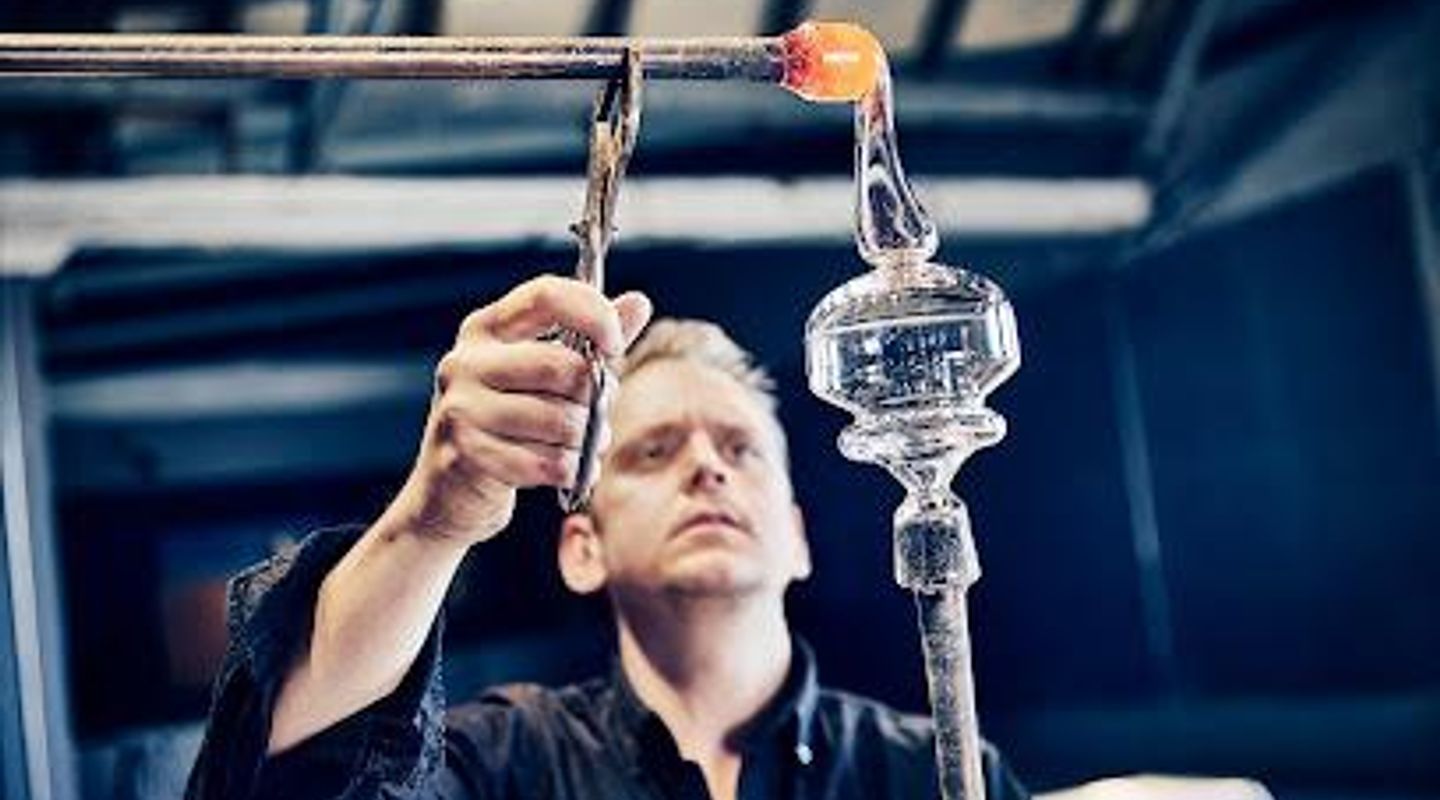
Beyond historical preservation, Holmegaard Værk functions as a living workshop where contemporary glass artists continue the traditions established over nearly two centuries. The newly constructed modern hotshop invites visitors to witness skilled glassmakers at work, transforming glowing lumps of molten glass into delicate champagne flutes, artistic vases, and elegant sculptural forms. Guest artists rotate through the facility, ensuring that the furnaces remain active centers of creativity rather than silent monuments. This integration of working artisans within the museum space creates an immersive experience where visitors can feel the heat of the furnaces and observe the demanding physical and artistic processes involved in glassblowing.
Stories of the Glassworkers
The museum enriches its narrative through personal testimony. An ongoing podcast series features intimate stories from former glassworkers who experienced the factory's golden age sixty years ago. As visitors move through the exhibitions, they can listen to these voices, connecting the objects on display to the human experiences that created them. This oral history approach transforms the collection from a static display into a dynamic dialogue between past and present, honoring the generations of workers whose skill and dedication built Holmegaard's international reputation.
Design Legacy and Contemporary Relevance
Although the original factory ceased operations in 2008, Holmegaard's design legacy endures through its acquisition by Danish ceramic giant Rosendahl, which continues to reproduce and reissue the company's most celebrated designs. This continuity ensures that iconic pieces remain accessible to new generations of collectors and design enthusiasts. The museum itself has become a focal point for art, creativity, and cultural preservation, recognized for its work in maintaining local heritage while establishing itself as a major destination for design tourism in Scandinavia.
Evendo Review Centre
 Google
Guest reviews
Best time to go
Quietest: Jan, Feb & Dec · before 9am or from 7pm
Busy times are Evendo estimates for a typical year, to help you plan. Actual crowds vary with events, school holidays and the weather.
Explore Holmegaard Værk on the map
A handpicked selection of must-see spots near Holmegaard Værk, mapped for you.
Get your free copy of our complete guide to Holmegaard Værk, delivered straight to you.
Everything on this page, from opening hours and how to get there to Eve’s tips and the best time to go, in one PDF you can read offline, print or share.
Already have an account? Sign in
Your Holmegaard Værk guide is ready.
We'll send it to · Not you? Sign out

Getting your guide ready…
We are putting together a fresh copy of the Holmegaard Værk guide. This can take up to a minute.
This can take a few moments. If your browser asks, choose Allow so the download can start. You'll find the guide in your Downloads folder.
Nothing happened? Download it again
Sorry, the guide is taking longer than usual. Please try again in a minute, or get it by email instead.
Unlock the best of Holmegaard Værk
Skip-the-line tickets, guided tours with entry, and walking tours of the area, booked in a few clicks.

Other nearby places you may find interesting
The closest places of the same kind, if this one is not quite what you had in mind.
-
-
-
-
-


Swipe for more places
More to explore near Holmegaard Værk

 Best experiences near Holmegaard Værk
 Best hotels near Holmegaard Værk
 Best landmarks near Holmegaard Værk
 Best attractions near Holmegaard Værk
 Best shops near Holmegaard Værk
 Best restaurants near Holmegaard Værk
 Best bars near Holmegaard Værk
Do you manage this location?
Take control to get all the benefits, like improved information, better appearance, and stronger visibility across AI-powered discovery.
Explore more

Explore more of Falster
Discover Falster: A blend of serene beaches, rich history, and lush landscapes in Denmark's southern island treasure.
Explore Falster
Explore more of Denmark
Discover Denmark: A perfect blend of history, modern design, and the cozy concept of hygge. Explore vibrant cities, serene landscapes, and world-class cuisine.
Explore Denmark