The Lady from the Sea, Sæby Harbour
A towering harbour figurehead where Ibsen’s sea‑bound heroine, medieval Mary and hundreds of children’s symbols merge into one evocative coastal landmark.
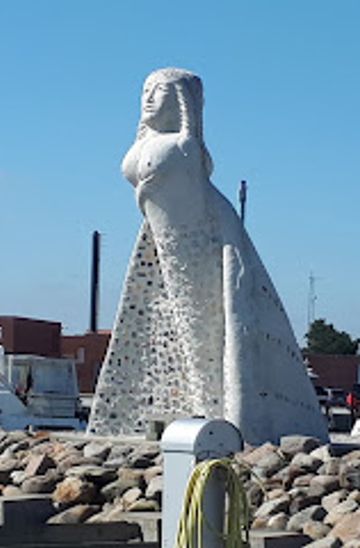
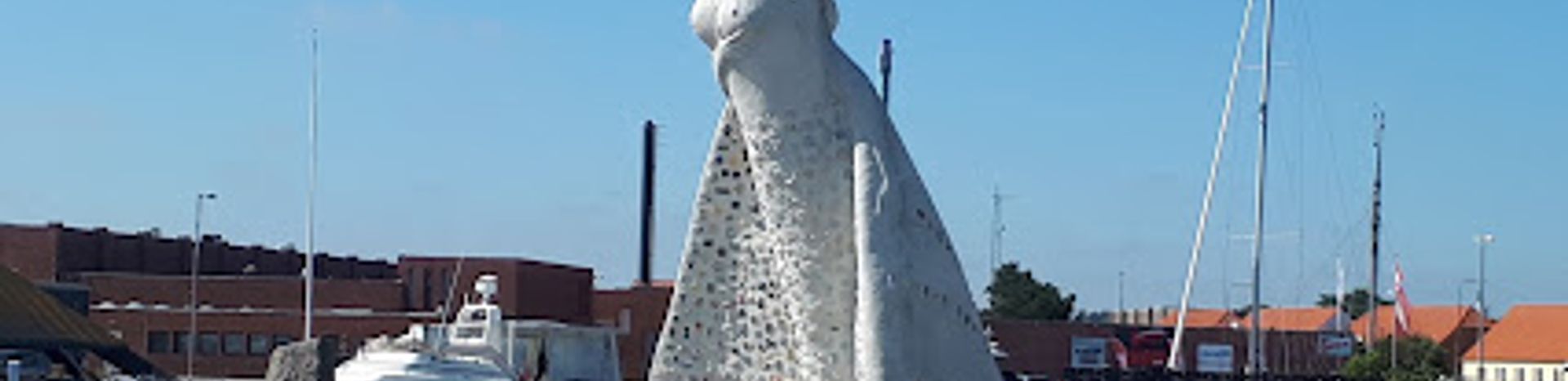
Rising almost seven metres above Sæby Harbour, The Lady from the Sea is a striking double‑sided concrete sculpture by Norwegian artist Marit Benthe Norheim. Created in 2001, it gazes both out to the Kattegat and back toward town, weaving together Henrik Ibsen’s play, medieval Marian imagery and hundreds of small ceramic “protection symbols” made by local children. Set at the end of the harbour’s breakwater, it combines coastal views, literary history and contemporary art in one evocative landmark.
A brief summary to The Lady From The Sea
- Harborgvej, Sæby, 9300, DK
- Duration: 0.5 to 1.5 hours
- Free
-
 Outdoor
- Mobile reception: 4 out of 5
- Monday 12 am-12 am
- Tuesday 12 am-12 am
- Wednesday 12 am-12 am
- Thursday 12 am-12 am
- Friday 12 am-12 am
- Saturday 12 am-12 am
- Sunday 12 am-12 am

Know before you go
Hi, I'm Eve. Here are a few practical things to know before exploring The Lady From The Sea.
- Walk a full circle around the sculpture to see both faces and to get close to the mosaic cloak; many of the small protection symbols are easy to miss at first glance.
- Aim for early morning or late evening in clear weather to enjoy the most atmospheric light on the concrete surface and sweeping sea views from the breakwater.
- Bring a windproof layer even in summer; the exposed harbour mouth can feel much cooler and breezier than the sheltered streets further inland.
- If visiting with children, turn the cloak into a game: ask them to find their favourite symbol and invent a story about the protection it offers.
- Combine your stop here with a leisurely stroll along Sæby Harbour’s quays and nearby beach to appreciate how the sculpture relates to the wider coastline.
Do you manage this location?
Take control to get all the benefits, like improved information, better appearance, and stronger visibility across AI-powered discovery. Learn more
Activate your presenceOther nearby places you may find interesting
Getting There
-
Regional train and local walk from Frederikshavn
From Frederikshavn, take a regional train to Sæby’s nearest rail stop or connecting bus hub; combined rail and onward bus to central Sæby typically takes 25–40 minutes and costs around 40–70 DKK one way in total, depending on ticket type and time of day. From the town centre, allow 15–20 minutes on foot along mostly flat pavements and harbour paths to reach the sculpture at the outer part of the harbour. Surfaces are generally suitable for prams, but the final breakwater section can feel exposed in strong winds.
-
Car or rental vehicle within North Jutland
Travelling by car from Frederikshavn or nearby coastal towns in North Jutland, expect journey times of roughly 15–30 minutes on main roads to Sæby, depending on your starting point. There is usually free or low-cost public parking available near Sæby Harbour; from typical parking areas it is a 5–10 minute level walk to the sculpture. In peak summer, spaces closest to the waterfront can fill up, so allow extra time to park slightly further back and walk in.
-
Local bus connection within the Frederikshavn municipality
Local buses within the Frederikshavn–Sæby area offer a practical option if you are staying in nearby villages or in Frederikshavn itself. Typical travel times to Sæby centre range from 20–40 minutes, with fares commonly around 20–35 DKK for a single adult ticket within the local zone system. From the bus stop in central Sæby, plan a 15–20 minute walk to the harbour and out along the jetties. Services run more frequently on weekdays than late evenings or Sundays, so check timetables in advance, especially outside the summer season.
For the on-the-go comforts that matter to you
-
 Restrooms
-
 Drink Options
-
 Drinking Water
-
 Food Options
-
 Seating Areas
-
 Sheltered Areas
-
 Trash Bins
-
 Information Boards
Discover more about The Lady From The Sea
A coastal guardian at the edge of Sæby
The Lady from the Sea stands at the mouth of Sæby Harbour, a pale figurehead in concrete poised between land and water. Almost seven metres tall, she feels part lighthouse, part mythic guardian, her silhouette visible from the jetties and sandy shoreline. Up close, the sculpture’s mass is softened by her flowing cape and calm, watchful posture, making her seem both monumental and strangely intimate.The work anchors the harbour promenade, drawing you along the quayside to its exposed tip. On windy days, waves slap the stone and seabirds circle her head; in calmer weather the surface of the Kattegat mirrors her reflection. The sculpture turns this functional harbour into an outdoor gallery, inviting you to pause, walk around her and read the landscape as part of the artwork.From Ibsen’s heroine to a modern figurehead
Norwegian artist Marit Benthe Norheim created the sculpture in 2001, inspired by Henrik Ibsen’s play The Lady from the Sea, which he wrote after a stay in Sæby in 1887. In the drama, the sea symbolises powerful inner forces and the pull of freedom, and the sculpture channels that same tension between security on shore and the unknown beyond the horizon.Norheim conceived the figure as a double‑sided figurehead, echoing the carved forms that once rode the bows of ships as talismans against danger. One face looks resolutely out to sea, embodying Ibsen’s restless, sea‑bound heroine. The other turns toward town, recalling the Virgin Mary from medieval church frescos in Sæby, a protective mother figure associated with the town’s historic name, Mariested – “the place of Maria”. Together they fuse literary character, maritime tradition and religious symbolism into a single, layered presence.A communal cloak of protection symbols
What makes The Lady from the Sea particularly distinctive is the mosaic cloak that wraps around her body. Hundreds of children and young people from Sæby were invited to imagine a dangerous situation and then create their own small protection symbols in ceramic and glass. Their contributions range from angels and devils to pizzas, mobile phones, game consoles and portraits of pets and parents, revealing a playful mix of fears and comforts.These tiny reliefs are cast into the sculpture’s cape, forming a textured patchwork that repays slow looking. The cloak works as a time capsule of early‑2000s childhood, a record of the town’s younger generation, and a reminder that ideas of safety evolve. It also roots this large harbour sculpture firmly in local hands, transforming it from a solitary artwork into a collective project that literally carries the community.Harbour light, changing weather and sea views
The experience of visiting shifts with the North Jutland weather and light. On clear days, the pale concrete glows against a sharp blue sky, and you can trace the coastline and open sea in every direction. Mist or low cloud give the figure a more spectral presence, emerging and receding as visibility changes. At sunrise and sunset, the low angle of the light brings out the reliefs in the cloak and throws long shadows across the harbour wall.Because the sculpture is fully outdoors, you are always aware of wind, salt air and the creak of moored boats. This setting underlines the sculpture’s role as a threshold marker – you stand alongside her at the point where town life ends and the maritime world begins. Many visitors linger on the breakwater, letting the piece frame their own quiet moment of looking out to sea.Art, storytelling and a small town’s identity
Beyond its visual impact, The Lady from the Sea has become a kind of emblem for Sæby. It links the town to an internationally known playwright, honours its maritime past and acknowledges its church history, all while using the language of contemporary sculpture. The choice of durable light concrete reflects local ship and harbour structures, but the fine modelling and cloak of symbols add a delicate, human scale.Spending time here offers a compact introduction to North Jutland’s coastal character: open skies, practical harbour engineering and a quietly experimental approach to public art. Whether you arrive already knowing Ibsen’s play or encounter the story for the first time beside the water, the sculpture invites you to reflect on where you stand in relation to the sea – protected on shore, or half tempted to follow her gaze toward the horizon.Explore the best of what The Lady From The Sea has to offer















More about North Jutland

Discover North Jutland: Denmark's northernmost region, renowned for its stunning coastlines, rich Viking history, vibrant culture, and outdoor adventures.
Tell me more about North Jutland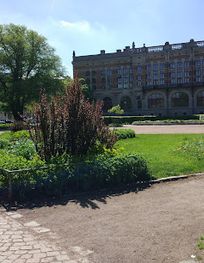
Discover the tranquil charm of Haga Kyrkoplan, a beautiful park in Gothenburg blending history, nature, and local culture, perfect for relaxation and exploration.
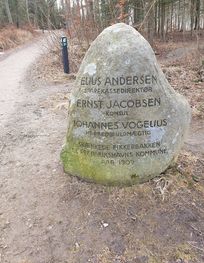
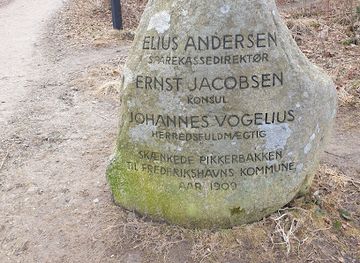
A modest stone memorial in Frederikshavn, quietly honouring three wartime lives and adding a reflective note to this busy North Jutland harbour town.