Anne Hvide's House Travel Guide
Free Guide: The oldest private house in Svendborg, a beautifully preserved ochre‑yellow Renaissance townhouse that quietly condenses 450 years of local history into one facade.


A brief summary of Anne Hvide's House
The oldest private house in Svendborg, a beautifully preserved ochre‑yellow Renaissance townhouse that quietly condenses 450 years of local history into one facade.
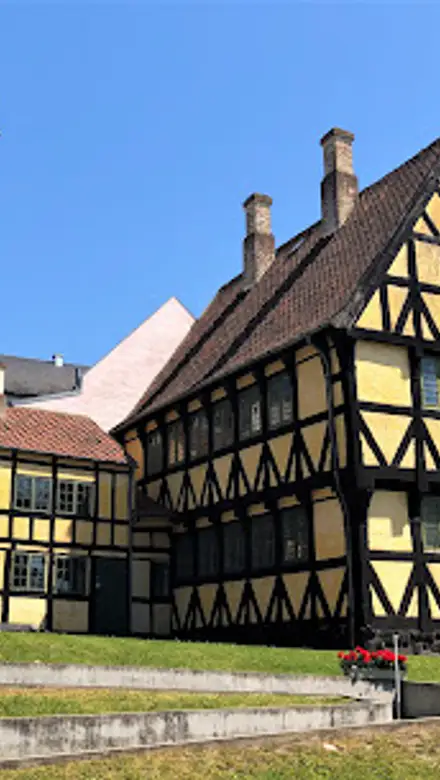
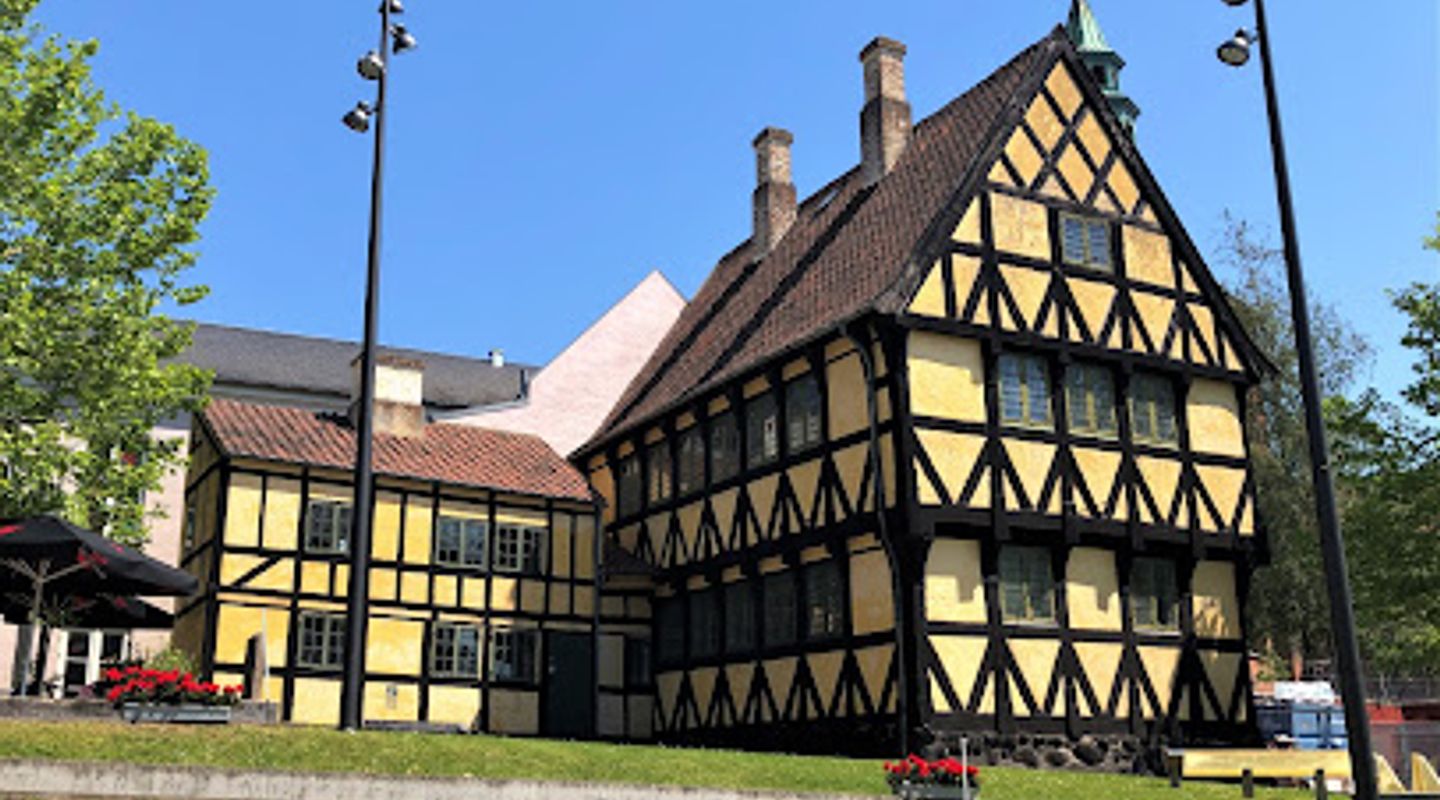
Set on a quiet street in central Svendborg, Anne Hvide’s House is a beautifully preserved, ochre‑yellow, half‑timbered townhouse dating from around 1560. Built for noblewoman Anne Hvide, it is the oldest private dwelling in the city and a rare Renaissance survivor on Funen. Once an inn, later a municipal office and museum, today it stands as a compact but atmospheric window into Svendborg’s past, easily admired from the street and occasionally used for local exhibitions.
On-site amenities
 Restrooms
 Food options
 Drink options
 Seating areas
 Trash bins
 Information boards
- Address
- Fruestræde 3, 5700 Svendborg
- Phone
Getting there
Train and short walk from Odense
Regional bus within Funen
Car from Odense and central Funen
Discover more about Anne Hvide's House
A noblewoman’s townhouse in Renaissance Svendborg
Anne Hvide’s House, or Anne Hvides Gård, dates to around 1558–1560, when noblewoman Anne Hvide commissioned a town residence in Svendborg on the island of Funen. At the time, Svendborg was a busy harbour town, and having a solid, fashionable house here signalled status and security. Anne belonged to the influential Hvide family, a lineage that had shaped Danish politics and landowning for centuries, and her new home brought aristocratic style into a modest merchant street.The house was unusual in that it was built not as a manor or farm but as a private urban dwelling. It offered Anne a base close to trade, church life and regional power, complementing the rural estates associated with her family. When she died in 1577, the building remained one of the few substantial secular houses in Svendborg, quietly witnessing the religious and political shifts that transformed Denmark in the late 16th and 17th centuries.
Ochre walls and black beams: a half‑timbered survivor
Architecturally, Anne Hvide’s House is a textbook example of Danish Renaissance half‑timbering. The two‑storey structure is divided into eight bays, with a shallow cellar tucked beneath. Heavy, black‑painted timber frames are infilled with patterned brickwork, and the steep red‑tiled roof rises at around 60 degrees, giving the building a compact yet vertical character. A carved main door facing Fruestræde is reached by a short flight of stone steps with simple iron railings, a small but elegant detail.During restoration in the early 20th century, the facade was carefully repainted in its original warm ochre, which contrasts beautifully with the dark beams and red tiles. This combination of colours, textures and angles makes the house a natural focal point in the streetscape. Despite later alterations inside, the exterior still reads clearly as a mid‑16th‑century townhouse and is one of the oldest surviving secular buildings in Svendborg.
From noble residence to inn, office and archive
Ownership passed through various noble families after Anne’s lifetime, including the Krag family of nearby Egeskov and naval officer Hans Jacob Rostgaard in the 18th century. By the early 19th century, the building had shifted from aristocratic residence to commercial property. From 1837 to 1867 it operated as an inn, run by Dorothea Svendsen, who turned the house into a convivial gathering place for townspeople and travellers.In 1900, the municipality acquired the building and adapted it to civic functions. The attic became the town archive, preserving documents rather than grain or textiles, while the first floor housed the county library. For a time, the house even served as the mayor’s office, placing local administration inside walls that once belonged to nobles and innkeepers. These successive uses layered new meanings onto the original Renaissance shell without erasing it.
A compact museum of Svendborg’s story
In 1912, the local museum authority took over the property and carried out extensive restoration, opening a town museum here a few years later. The goal was to present Svendborg’s history inside one of its most emblematic buildings, using artefacts, models and documents to animate the town’s maritime, commercial and domestic past. While the main museum collection has since moved to larger premises, the house continues to function seasonally as an exhibition space focused on the town’s development.Today, visitors may find small displays related to local history in the rooms behind the historic facade, or occasionally themed exhibitions that highlight specific chapters of Svendborg’s story. Even when the interior is closed, the building remains an important stop on any historical walk through the centre, offering a tangible link between the medieval town and the modern port city.
Experiencing the house in the fabric of the old town
Part of the charm of Anne Hvide’s House lies in its setting. Fruestræde is narrow, human‑scaled and still lined with modest buildings, so the tall, ochre‑coloured structure feels both prominent and harmonious. Standing outside, you can trace the timber joints, notice the slight irregularities in the brick infill and imagine carts rumbling past when the inn was in full swing.Because the building sits in the pedestrian heart of Svendborg, it is easy to combine a brief stop here with visits to nearby churches, squares and the harbourfront. The experience is not about grand halls or extensive galleries but about appreciating how one carefully preserved townhouse condenses centuries of local life—noble privilege, everyday trade, municipal bureaucracy and cultural memory—into a single, distinctive corner of the old city.
Evendo Review Centre
 Google
Guest reviews
Best time to go
Quietest: Jan, Feb & Mar · before 7am or from 8pm
Busy times are Evendo estimates for a typical year, to help you plan. Actual crowds vary with events, school holidays and the weather.
Explore Anne Hvide's House on the map
A handpicked selection of must-see spots near Anne Hvide's House, mapped for you.
Get your free copy of our complete guide to Anne Hvide's House, delivered straight to you.
Everything on this page, from opening hours and how to get there to Eve’s tips and the best time to go, in one PDF you can read offline, print or share.
Already have an account? Sign in
Your Anne Hvide's House guide is ready.
We'll send it to · Not you? Sign out

Getting your guide ready…
We are putting together a fresh copy of the Anne Hvide's House guide. This can take up to a minute.
This can take a few moments. If your browser asks, choose Allow so the download can start. You'll find the guide in your Downloads folder.
Nothing happened? Download it again
Sorry, the guide is taking longer than usual. Please try again in a minute, or get it by email instead.
Other nearby places you may find interesting
The closest places of the same kind, if this one is not quite what you had in mind.
-
-
-
-
-


Swipe for more places
More to explore near Anne Hvide's House

 Best experiences near Anne Hvide's House
 Best hotels near Anne Hvide's House
 Best landmarks near Anne Hvide's House
 Best attractions near Anne Hvide's House
 Best shops near Anne Hvide's House
 Best restaurants near Anne Hvide's House
 Best bars near Anne Hvide's House
Do you manage this location?
Take control to get all the benefits, like improved information, better appearance, and stronger visibility across AI-powered discovery.
Explore more
Explore more of Funen
Discover Funen, Denmark's lush island treasure, where fairy tales come to life amidst scenic landscapes, historic castles, and vibrant cultural heritage.
Explore Funen
Explore more of Denmark
Discover Denmark: A perfect blend of history, modern design, and the cozy concept of hygge. Explore vibrant cities, serene landscapes, and world-class cuisine.
Explore Denmark