

Enebærodde Fyr Travel Guide
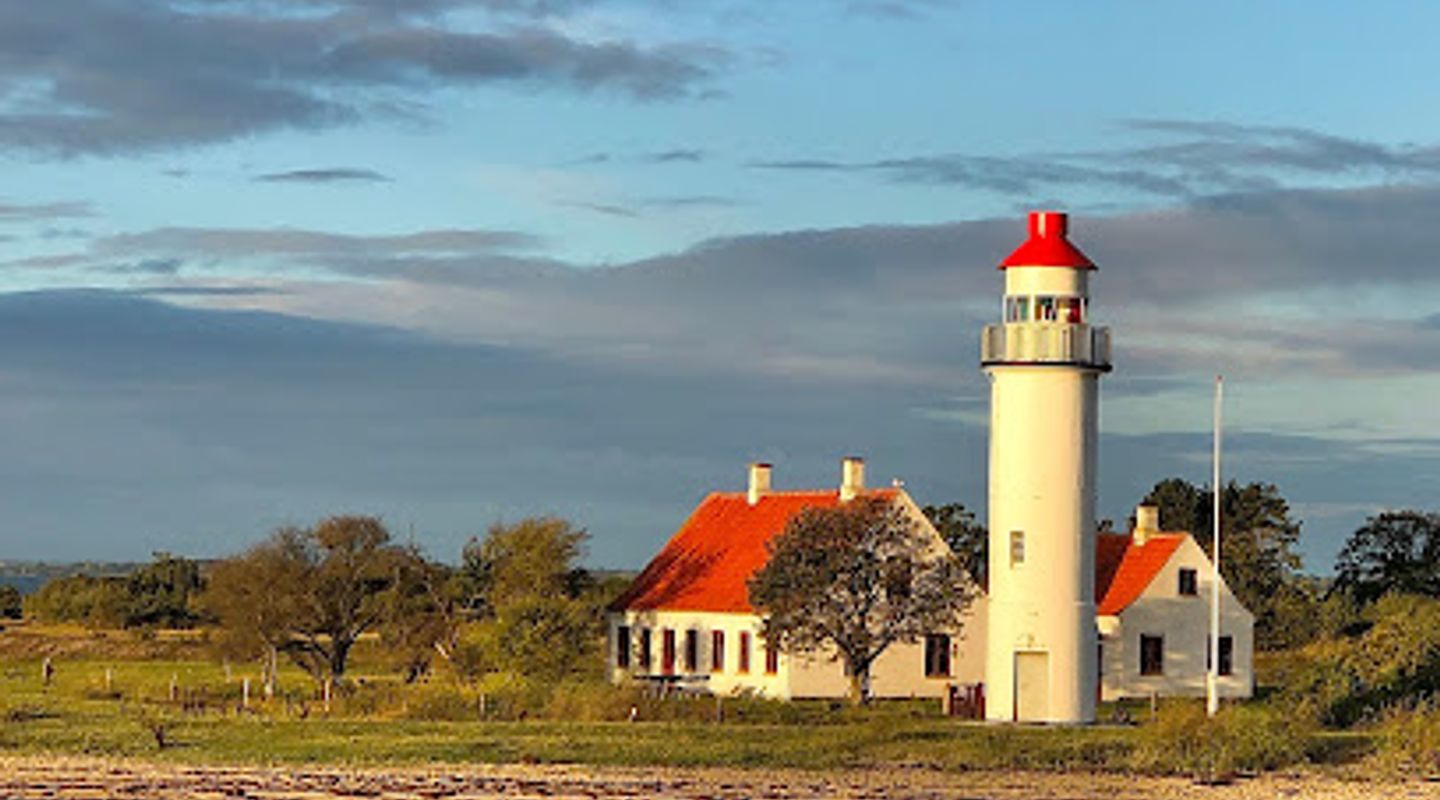
Free Guide: A modest white tower at the very tip of Enebærodde, where Odense Fjord meets the Kattegat and wide skies, strong currents and heathland create a wild coastal feel.


A brief summary of Enebærodde Fyr
A modest white tower at the very tip of Enebærodde, where Odense Fjord meets the Kattegat and wide skies, strong currents and heathland create a wild coastal feel.
Enebærodde Lighthouse rises in bright white at the very tip of the Enebærodde spit, guarding the narrow entrance to Odense Fjord between the Kattegat and the fjord’s sheltered waters. Built in the 1890s, this compact 14 m concrete tower is surrounded by heathland, low dunes and wide sea views. You cannot go inside, but the setting is the real attraction: a windswept headland, protected nature and long skies where seabirds, strong currents and shifting light make the lighthouse feel remote, even though it lies close to North Funen’s villages.
On-site amenities
 Trash bins
 Information boards
- Address
- Halshusene 45, 5450 Otterup
- Website
Getting there
Car plus walk
Local bus and walk
Cycling from nearby villages
Discover more about Enebærodde Fyr
Lighthouse at the Edge of Odense Fjord
Enebærodde Lighthouse stands at the extreme tip of the long, narrow spit that separates Odense Fjord from the Kattegat, a white concrete tower clearly visible against sea and sky. From here you overlook the narrow channel known as Gabet, where the waters squeeze between the spit and the mainland. The landscape feels open and exposed, with low vegetation, sand, shingle and winds that often arrive straight off the Kattegat.The tower itself is relatively modest at around 14 metres high, but the flat surroundings make it a prominent landmark. Its simple, functional design reflects its purpose: to guide ships safely into the fjord and warn of the strong currents and shallows around the headland. From the outside you can see the lantern atop the tower and the neat proportions typical of late 19th‑century Danish lighthouses.
Signals, Ships and Seafaring History
Before the current lighthouse was completed in the 1890s, smaller lights had already been helping ships find the entrance to the fjord. Earlier beacons were installed and upgraded several times as maritime traffic increased, and eventually the national lighthouse authorities built the present structure, adding a more advanced lens system to project its beam far across the water. Later technological updates brought modern fuel systems and eventually electric power, changing the way the light was maintained but not its essential role.In the era when nearby shipyards launched large vessels, this narrow passage saw impressive traffic passing close by the spit. Standing by the tower today, it is easy to imagine big hulls sliding through the confined waters, relying on the fixed light and the leading lights across at Lodshuse to line up their approach. The lighthouse still operates as a navigational aid, even though its daily drama has quietened with changes in shipping.
Heathland, Wildlife and Protected Nature
Around the lighthouse, the Enebærodde spit forms one of Funen’s largest heath areas, with juniper bushes that inspired its name, patches of heather and open sandy stretches near the shore. The combination of salty winds, poor sandy soil and exposure shapes a low, tough plant community that can endure harsh coastal conditions. It is a place where skylarks, waders and seabirds are part of the soundscape, and seasonal light changes quickly as clouds move across the flat horizon.The broader spit is protected, and visitors are asked to stay on paths away from sensitive dunes and vegetation. Grazing cattle are sometimes used to maintain the heathland character, and you may see them at a distance as you make your way out. The sense of space and the mix of sea on both sides create a distinctive atmosphere, especially on clear days when you can see towards Fyns Hoved, Hindsholm and further along Odense Fjord.
Reaching the Lighthouse on Foot or by Bike
Enebærodde Lighthouse has no road access right to its base; instead, the approach itself is part of the experience. A well‑used coastal and dune‑edge path runs along the spit, suitable for a steady walk or a bike ride on relatively firm sand and tracks. The distance from the start of the spit to the tip makes it a rewarding outing, and you feel the lighthouse slowly growing larger on the horizon as you advance.Because the area is relatively exposed, wind direction and weather make a big difference to how the journey feels. On calm summer days the walk can be gentle and almost meditative, with soft surf on one side and the quieter fjord on the other. In cooler seasons or in strong winds it becomes more bracing and dramatic, with gusts, blowing sand and waves emphasising how isolated the headland really is.
What You Can See and Do at the Tip
There is no public access inside the lighthouse, and the former keeper’s house beside it is privately owned. The experience here is therefore about being outdoors: watching the currents race through the Gabet, scanning for birdlife, and absorbing the wide panorama of sea and coastline. The light constantly changes, and photographers often linger to capture shifting skies, silhouettes of the tower and reflected colours on the water.Bring something to sit on and treat the area around the lighthouse as an open‑air viewpoint. On still days you may hear the slap of waves and distant calls of birds more clearly than any human sound. The sense of arriving at the end of the spit is satisfying in itself, and many visitors choose to pause here for a simple picnic before retracing their route, taking in the alternating views of fjord and open sea on the way back.
Practical Considerations and Safety by the Water
The waters off the tip of Enebærodde are known for strong and complex currents, so this is not a suitable place for swimming despite the tempting shoreline. It is safest to enjoy the sea from the land and choose calmer, more sheltered beaches elsewhere for bathing. Footwear that copes with sand, pebbles and occasional puddles is helpful, and windproof layers make visits more comfortable for much of the year.Because there are no services at the lighthouse itself, you should bring drinking water and any snacks you need. Rubbish must be taken back with you, as the area’s protection depends on low impact from visitors. Dogs, if present, should be kept under close control and on a lead to avoid disturbing wildlife and any grazing animals in the wider spit. With a little preparation, the walk to Enebærodde Lighthouse becomes a memorable small expedition to one of North Funen’s most distinctive coastal landmarks.
Evendo Review Centre
 Google
Guest reviews
Best time to go
Quietest: Jan, Feb & Dec · before 6am or from 9pm
Busy times are Evendo estimates for a typical year, to help you plan. Actual crowds vary with events, school holidays and the weather.
Explore Enebærodde Fyr on the map
A handpicked selection of must-see spots near Enebærodde Fyr, mapped for you.
Get your free copy of our complete guide to Enebærodde Fyr, delivered straight to you.
Everything on this page, from opening hours and how to get there to Eve’s tips and the best time to go, in one PDF you can read offline, print or share.
Already have an account? Sign in
Your Enebærodde Fyr guide is ready.
We'll send it to · Not you? Sign out

Getting your guide ready…
We are putting together a fresh copy of the Enebærodde Fyr guide. This can take up to a minute.
This can take a few moments. If your browser asks, choose Allow so the download can start. You'll find the guide in your Downloads folder.
Nothing happened? Download it again
Sorry, the guide is taking longer than usual. Please try again in a minute, or get it by email instead.
Other nearby places you may find interesting
The closest places of the same kind, if this one is not quite what you had in mind.
-
The Funen Village Step into a full‑scale Funen village of thatched farms, mills and animals, where 18th‑ and 19th‑century rural Denmark is carefully brought back to life.
-
Parsonage Experience authentic 18th-century Danish village life through restored buildings, costumed interpreters, and hands-on traditional crafts.
-
The Sea Horse A powerful bronze sea horse with a mermaid rider bursts from the Odense River, bringing Hans Christian Andersen’s underwater world to life at Munke Mose’s edge.
-
Brickworks Authentic 19th-century brick-making workshop preserving Denmark's industrial heritage within a living open-air village museum.
-
King's Garden Odense’s historic royal garden: a baroque-era green gateway where castle views, sculptures and summer concerts meet everyday city life.
Swipe for more places
More to explore near Enebærodde Fyr

 Best experiences near Enebærodde Fyr
 Best hotels near Enebærodde Fyr
 Best landmarks near Enebærodde Fyr
 Best attractions near Enebærodde Fyr
 Best shops near Enebærodde Fyr
 Best restaurants near Enebærodde Fyr
 Best bars near Enebærodde Fyr
Do you manage this location?
Take control to get all the benefits, like improved information, better appearance, and stronger visibility across AI-powered discovery.
Explore more
Explore more of Funen
Discover Funen, Denmark's lush island treasure, where fairy tales come to life amidst scenic landscapes, historic castles, and vibrant cultural heritage.
Explore Funen
Explore more of Denmark
Discover Denmark: A perfect blend of history, modern design, and the cozy concept of hygge. Explore vibrant cities, serene landscapes, and world-class cuisine.
Explore Denmark
