

The maiden jump Travel Guide
Free Guide: A modest paving stone in Odense’s old town that carries a haunting legend of a young woman’s fatal leap and the city’s centuries-old sense of morality.


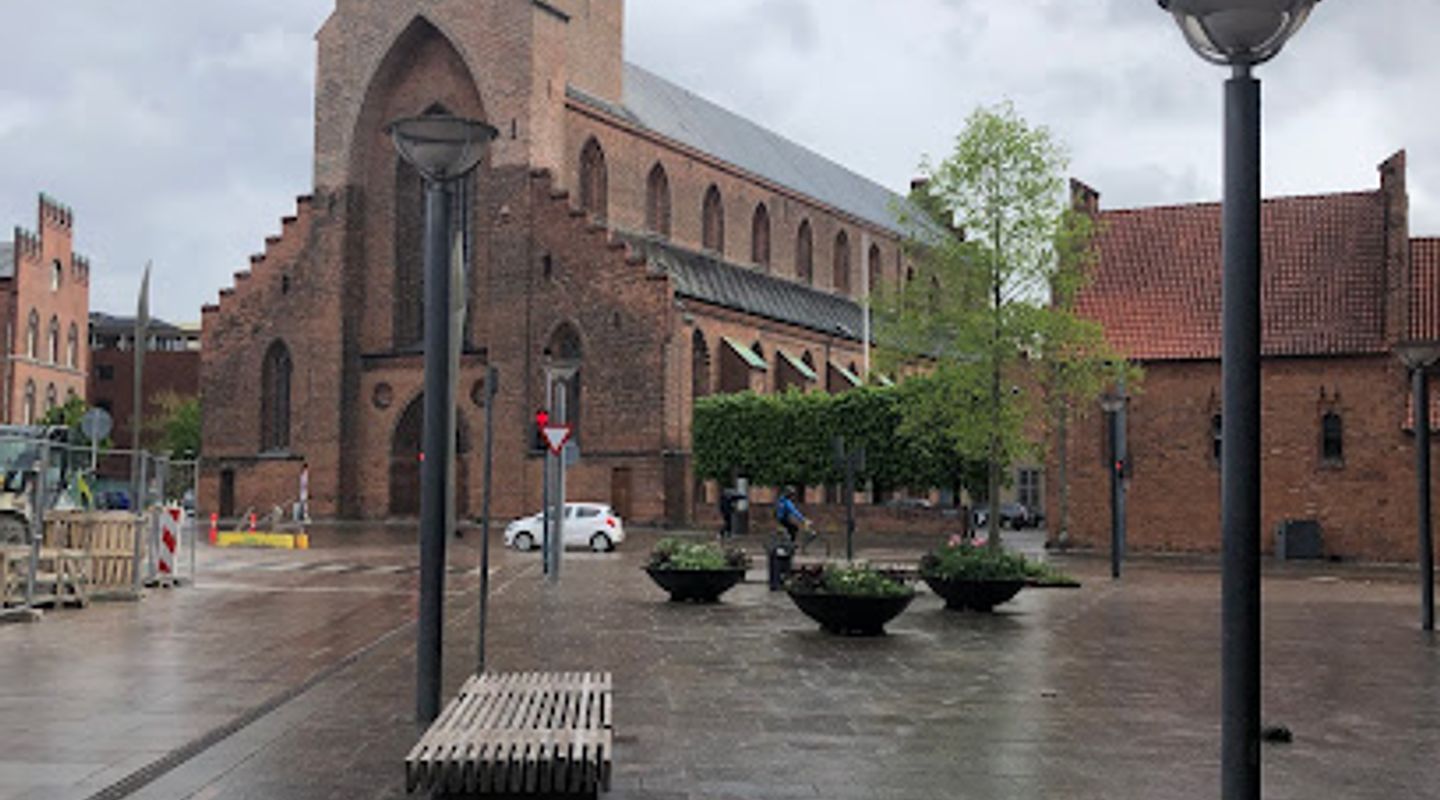
A brief summary of The maiden jump
A modest paving stone in Odense’s old town that carries a haunting legend of a young woman’s fatal leap and the city’s centuries-old sense of morality.
Tucked into the cobbled heart of Odense’s old town, The Maiden Jump (Jomfruspringet) is a small but evocative landmark bound up with one of the city’s most haunting legends. A worn paving stone near Odense Cathedral is said to bear the footprint of a desperate young woman who leapt from the church tower, her story echoing themes of shame, morality, and love gone wrong in centuries‑old folklore. Today the spot serves as a quiet pause point amid historic streets, inviting you to step closer, study the stone, and reflect on how myth and memory are woven into the fabric of the city.
On-site amenities
 Restrooms
 Drink options
 Drinking water
 Food options
 Seating areas
 Trash bins
 Information boards
Opening hours
- Every dayOpen 24 hours
Opening hours as listed on the venue’s Google Business Profile. Hours can change for services and special events, so check with the venue before you go.
- Address
- Munkemøllestræde 4, 5000 Odense
Getting there
Walking from Odense Banegård (central station)
City bus from central Odense
Cycling within central Odense
Discover more about The maiden jump
A quiet corner steeped in tragic legend
At first glance, The Maiden Jump at Munkemøllestræde 4 appears almost too modest to warrant a second look: just a worn stone set into the pavement, folded into the flow of Odense’s historic center. Yet this unassuming slab, a short stroll from Odense Cathedral and the bustle of Flakhaven, cradles one of the city’s most enduring stories. Here, local lore insists, you stand where a young woman’s fate was sealed centuries ago, her final act carved into stone and memory.The site’s power lies precisely in its understatement. There is no grand monument, only the textures of age—softened edges, faint discolorations, and the sense that countless feet have crossed this spot, layering their own fleeting journeys over a single unforgettable leap. You are in the middle of the city, yet the stone seems to draw a boundary between everyday errands and something older and more solemn.
The tale of the leap from the cathedral tower
According to Odense folklore, the maiden was a young woman who bore a child outside marriage at a time when such a scandal could cost everything: reputation, security, even a place in the community. Faced with shame and the harsh moral codes of her era, she is said to have climbed the nearby church tower with her baby in her arms and leapt. The story is stark and uncomfortable, a reminder of how unforgiving the past could be to those who stepped outside its rules.In some tellings, the stone you see today bears the imprint of her foot from the instant before she fell, a supernatural trace of the moment when despair and gravity intertwined. Other versions soften the details, emphasizing instead the allegorical force of the legend: a warning about judgment, a meditation on compassion, and an emblem of how quickly private grief can become public myth. Standing here, you are encouraged less to verify facts than to feel how stories take root in place.
Reading the stone in its urban setting
What makes The Maiden Jump compelling is the contrast between its somber narrative and its lively surroundings. Just beyond are narrow streets of old merchants’ houses, the cathedral’s Gothic mass, and the everyday rhythms of central Odense. The stone acts as a subtle hinge between sacred and secular spaces, linking the tower from which the maiden jumped in the story to the civic square where people have gathered for centuries.Because there is little in the way of signage, you experience the site almost like a whispered secret. Once you know what you are looking for, the stone’s location becomes a mental landmark: a place to pause on the way to the cathedral, Hans Christian Andersen–related sights, or the nearby river. Its small scale invites close inspection—tracing the outline said to be a footprint, noticing how the paving around it has shifted, and imagining how many generations have retold the tale while passing by.
Folklore, memory, and the character of Odense
The Maiden Jump sits within a wider tapestry of legends that ripple through Odense’s streets, churchyards, and riverbanks. This is a city that has long woven narrative into its identity, from medieval miracle tales to the later fairy stories of Hans Christian Andersen. The maiden’s leap belongs to that continuum: less polished than a literary fable, but no less revealing about local fears, values, and the weight of social expectations.Spending a few unhurried minutes here encourages you to think about how cities remember. Not every story is granted a statue or a plaque; some survive as little more than a name on a map and a half‑hidden stone underfoot. By seeking out The Maiden Jump, you participate in that memory-keeping, carrying the legend forward even as you move on to the next sight.
Experiencing the spot as part of an old-town wander
As a standalone attraction, The Maiden Jump is brief: you might spend ten or fifteen minutes examining the stone, reflecting on the story, and framing a discreet photograph. Its real value lies in how it enriches a broader walk through Odense’s historic core. Linking this stop with the cathedral, Flakhaven, nearby sculptures, and the tangle of side streets turns a simple stroll into an informal storytelling trail.Whether you approach with an interest in folklore, architecture, or simply quiet corners with a sense of depth, the site adds a note of gravity to the cityscape. It is a reminder that beneath contemporary cafes and shops lie centuries of human drama. After you leave, the next time you notice an odd stone or a curious name in another town, you may wonder what quiet legends hide there too.
Evendo Review Centre
 Google
Guest reviews
Best time to go
Quietest: Jan, Feb & Mar · before 7am or from 9pm
Busy times are Evendo estimates for a typical year, to help you plan. Actual crowds vary with events, school holidays and the weather.
Explore The maiden jump on the map
A handpicked selection of must-see spots near The maiden jump, mapped for you.
Get your free copy of our complete guide to The maiden jump, delivered straight to you.
Everything on this page, from opening hours and how to get there to Eve’s tips and the best time to go, in one PDF you can read offline, print or share.
Already have an account? Sign in
Your The maiden jump guide is ready.
We'll send it to · Not you? Sign out

Getting your guide ready…
We are putting together a fresh copy of the The maiden jump guide. This can take up to a minute.
This can take a few moments. If your browser asks, choose Allow so the download can start. You'll find the guide in your Downloads folder.
Nothing happened? Download it again
Sorry, the guide is taking longer than usual. Please try again in a minute, or get it by email instead.
Other nearby places you may find interesting
The closest places of the same kind, if this one is not quite what you had in mind.
-
-
-
-
-


Swipe for more places
More to explore near The maiden jump

 Best experiences near The maiden jump
 Best hotels near The maiden jump
 Best landmarks near The maiden jump
 Best attractions near The maiden jump
 Best shops near The maiden jump
 Best restaurants near The maiden jump
 Best bars near The maiden jump
Do you manage this location?
Take control to get all the benefits, like improved information, better appearance, and stronger visibility across AI-powered discovery.
Explore more
Explore more of Funen
Discover Funen, Denmark's lush island treasure, where fairy tales come to life amidst scenic landscapes, historic castles, and vibrant cultural heritage.
Explore Funen
Explore more of Denmark
Discover Denmark: A perfect blend of history, modern design, and the cozy concept of hygge. Explore vibrant cities, serene landscapes, and world-class cuisine.
Explore Denmark
