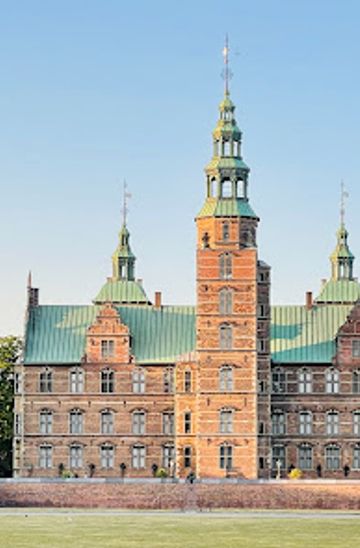
Rosenborg Castle
Copenhagen’s fairytale Renaissance castle, where intimate royal chambers, the dramatic Knights’ Hall and the Danish Crown Jewels bring 400 years of monarchy to life.
Rosenborg Castle rises like a red-brick fairytale in the heart of Copenhagen’s King’s Garden, a compact Renaissance palace built by Christian IV in the early 1600s as a pleasure residence. Inside, richly decorated rooms trace 400 years of Danish monarchy, culminating in the dazzling Knights’ Hall with coronation thrones and silver lions. In the vaulted treasury below, the nation’s Crown Jewels and royal regalia are displayed in secure chambers, making Rosenborg one of Denmark’s most evocative royal time capsules.
A brief summary to Rosenborg Castle
- Øster Voldgade 4A, Copenhagen, København K, 1350, DK
- Click to display
- Click to display
- Duration: 1 to 3 hours
- Mid ranged
-
 Mixed
Mixed
- Mobile reception: 5 out of 5
- Monday 9 am-5 pm
- Tuesday 9 am-5 pm
- Wednesday 9 am-5 pm
- Thursday 9 am-5 pm
- Friday 9 am-5 pm
- Saturday 9 am-5 pm
- Sunday 9 am-5 pm

Know before you go
Hi, I'm Eve. Here are a few practical things to know before exploring Rosenborg Castle.
- Arrive close to opening time or late afternoon to avoid the busiest slots, as daily visitor numbers inside the castle are limited for security reasons.
- Lockers are available for backpacks and larger bags; travel with a small daypack if you prefer to keep belongings with you in the rooms.
- Plan your route so you have time for both the castle interiors and a leisurely stroll or picnic in the surrounding King’s Garden.
- Allow extra time for the treasury and Crown Jewels in the basement, which can feel slower to navigate due to narrow passages and high interest.
- Check seasonal opening hours in advance, as the timetable and last entry times vary between summer and winter periods.
Do you manage this location?
Take control to get all the benefits, like improved information, better appearance, and stronger visibility across AI-powered discovery. Learn more
Activate your presence
Getting There
-
Metro and walking
From central Copenhagen, take metro line M1 or M2 to Nørreport Station; trains run frequently throughout the day and the ride from major hubs such as Kongens Nytorv is around 2–4 minutes. From Nørreport it is an easy, mostly level 5–10 minute walk through city streets and along the edge of the King’s Garden, suitable for most visitors including those with light mobility needs. A single metro ticket within the central zones typically costs about 20–30 DKK, and tickets must be purchased before boarding.
-
City bus
Several city bus routes stop near the King’s Garden and Øster Voldgade; journeys from inner-city areas usually take 10–20 minutes depending on traffic. Standard bus tickets within the central zones cost in the region of 20–30 DKK and are valid across metro, bus and local trains within their time limit. Buses are generally low-floor and accessible, but they can be crowded in peak sightseeing hours, so allow extra time if travelling in the middle of the day.
-
Bicycle
Rosenborg Castle sits on Copenhagen’s dense cycle network, making it straightforward to reach by bike from most central districts in 5–15 minutes. You can use personal bikes or city-share schemes, which typically charge either per minute or via short-term passes, often amounting to around 20–60 DKK for a casual ride depending on duration. Cycle routes are mostly flat and separated from traffic, but be prepared for busy lanes at commuting times and always park only in designated racks around the King’s Garden.
-
Taxi
Taxis can drop passengers near the entrances to the King’s Garden, with the final approach on foot across the park. From central Copenhagen locations such as the main railway station or Nyhavn, the ride usually takes 10–20 minutes depending on traffic. Fares into this area typically fall in the 100–200 DKK range, with surcharges possible in late evening or bad weather. Taxis are convenient for travellers with limited mobility, but they cannot drive directly up to the castle door due to the surrounding park layout.
For the on-the-go comforts that matter to you
-
 Restrooms
-
 Drink Options
-
 Drinking Water
-
 Food Options
-
 Lockers
-
 Seating Areas
-
 Sheltered Areas
-
 Picnic Areas
-
 Trash Bins
-
 Information Boards
-
 Visitor Center
Discover more about Rosenborg Castle
A Renaissance jewel in the King’s Garden
Rosenborg Castle stands at the edge of Copenhagen’s leafy King’s Garden, a slender red-brick silhouette crowned with copper-green spires. Built between 1606 and 1634 for King Christian IV, it began life as a summer retreat on the city’s outskirts and gradually evolved into a showpiece of royal power and taste. Its moat, drawbridge details and tall, narrow profile give it a distinctly romantic character that contrasts with the more formal royal palaces elsewhere in the city.Although modest in footprint compared with Europe’s grandest palaces, Rosenborg compresses centuries of Danish royal history within its walls. The setting in the park softens the formality; in good weather, visitors spill out into lawns and tree-lined avenues, so time here often feels like a seamless blend of museum visit and city garden escape.Inside Christian IV’s private world
Crossing the threshold, you step into Christian IV’s personal sphere. The castle’s lower floors contain intimate chambers that retain much of their original character. The celebrated Winter Room is among the best-preserved spaces from the early building phase, its wood panelling, painted ceilings and tiny writing closet evoking the everyday routines of a working monarch.Throughout the route, you encounter a succession of small rooms packed with detail: tiled stoves, intricate marquetry furniture, delicate wall paintings and cabinets filled with curiosities. Some spaces still hint at the more eccentric aspects of court life, including historic sanitary facilities and bathing arrangements that remind you this was once a lived-in royal residence, not purpose-built gallery space.The splendour of the Knights’ Hall
At the top of the castle, the building opens up into the dramatic Knights’ Hall, a single long room running the full length of the structure. Here, the visual language changes from cosy intimacy to baroque grandeur. Vaulted ceilings, painted allegories and polished floors create a stage-like setting for royal ceremonies and banquets.At one end stand the coronation thrones of the king and queen, richly ornamented and accompanied by three life-size silver lions that appear to guard the dais. The surrounding tapestries narrate conflicts between Denmark and Sweden, weaving military history into the decorative scheme. Portraits and heraldic motifs complete the sense of a room designed to project dynastic confidence to visiting dignitaries.Treasures in the vaults below
Beneath the castle, the atmosphere shifts again as you enter the treasury and vaults. Cool, dimly lit rooms showcase ceremonial arms, regalia and the famous Crown Jewels. The crowns and garnitures glint under carefully controlled lighting, their table-cut stones, enamel and goldwork emphasising fine craftsmanship rather than sheer scale.Displays are arranged to tell a chronological story of coronations and state occasions, linking specific pieces to monarchs and historical events. Beyond the jewels, you can find ornate sword hilts, sceptres and other ceremonial items that reveal how power was visually expressed in early modern Denmark, all set within heavy vault doors and thick masonry that underscore their national importance.Collections of glass, porcelain and portraiture
Rosenborg is more than a royal house museum; it also preserves significant art and decorative collections. In tower rooms and side chambers you encounter one of the world’s finer assemblies of Venetian glass, arranged in glittering ranks of bottles, goblets and delicate vessels. Nearby, service pieces from the famed Flora Danica porcelain series illustrate Denmark’s fascination with botany and scientific illustration.Portraits line staircases and galleries, including works connected with some of the more dramatic episodes in royal history, such as the story of Queen Caroline Mathilde and Johann Friedrich Struensee in the 18th century. Together, these pieces help visitors trace the evolving tastes, alliances and scandals of the Danish court across four centuries.Planning your time inside and out
A visit to Rosenborg typically involves both the castle interior and time in the surrounding King’s Garden. Inside, most guests spend around one to two hours moving through the three principal floors and the basement vaults, with a marked one-way route helping to manage the flow through narrow staircases and corridors.Outside, the formal beds, tree-lined paths and open lawns of the garden offer space to pause after the intensity of the interiors. Seasonal changes add variety: spring blossoms, summer greenery and autumn colours each frame the castle differently. Combined, the building and its landscape setting provide a compact but richly layered introduction to Denmark’s royal past in the very centre of modern Copenhagen.Explore the best of what Rosenborg Castle has to offer















More about North Zealand
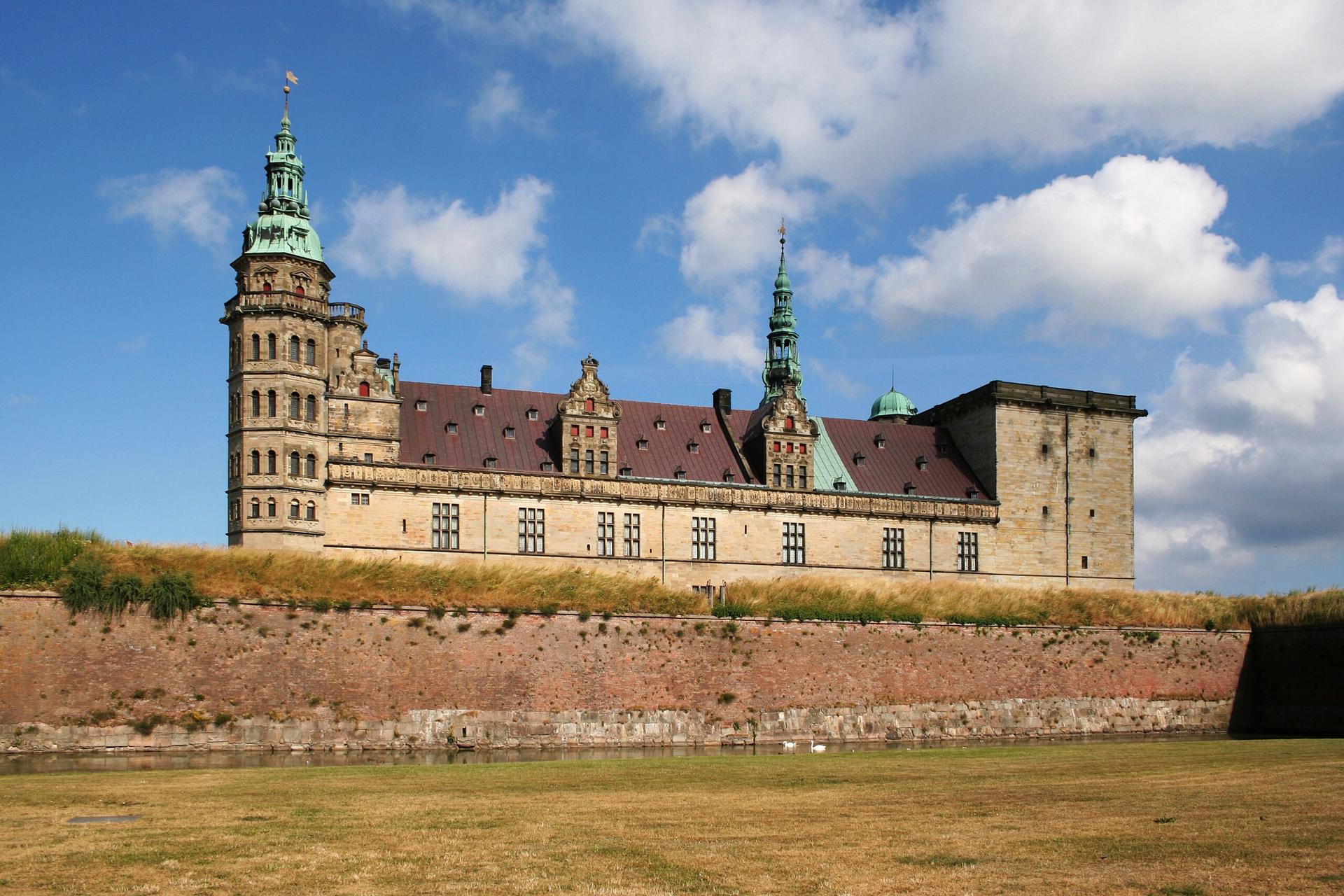
Explore North Zealand, Denmark's enchanting region of castles, beaches, and royal estates, perfect for history buffs, nature enthusiasts, and seaside lovers.
Tell me more about North Zealand
Explore Denmark's royal heritage at Rosenborg Castle, home to the crown jewels and set amidst the historic King's Garden in Copenhagen.

Touch a giant meteorite, wander glittering mineral halls, and step straight into the Botanical Garden at Denmark’s national museum of nature in central Copenhagen.