

Nytorv 2 and the Copenhagen Court House
A compact Copenhagen square where a grand neoclassical courthouse, former markets, and memories of public justice converge in the heart of the Strøget pedestrian zone.
Nytorv 2 anchors the western flank of Copenhagen’s historic Nytorv–Gammeltorv square, at the heart of the Strøget pedestrian zone. Behind its grand neoclassical colonnade rises the Copenhagen Court House, once also the city hall, facing one of the city’s oldest marketplaces. Centuries of civic life, crime and punishment, urban fires, and modern reinvention have unfolded on this compact stone square, now a lively open space framed by cafés, shops, and historic facades.
A brief summary to Nytorv 2
- Nytorv 2, Copenhagen Municipality, København K, 1450, DK
- Duration: 0.5 to 1.5 hours
- Free
-
 Outdoor
- Mobile reception: 5 out of 5

Know before you go
Hi, I'm Eve. Here are a few practical things to know before exploring Nytorv 2.
- Visit in the early morning for clear views and quieter photos of the court house façade before day-trippers and shopping crowds fill the square.
- Combine a stop at Nytorv 2 with a short stroll across to Gammeltorv to appreciate how the two squares form a single historic urban space.
- Bring a light layer in cooler months; the open square can feel breezy even when nearby side streets are more sheltered.
- Look up to notice the enclosed walkways linking the court house to neighbouring buildings and imagine their past role in prisoner transfers.
Do you manage this location?
Take control to get all the benefits, like improved information, better appearance, and stronger visibility across AI-powered discovery. Learn more
Activate your presenceOther nearby places you may find interesting
Getting There
-
Metro
From Nørreport Station, take the M3 or M4 metro one stop to Gammel Strand, then walk about 10 minutes along the pedestrian streets to Nytorv. The metro ride takes around 2–3 minutes, with trains every few minutes throughout the day. A single-zone ticket in Copenhagen typically costs around 20–25 DKK and is valid on metro, buses, and S-trains within the central area.
-
Bus
Several city buses run along inner Copenhagen’s main corridors; from the City Hall Square area, buses on routes such as 2A or 5C stop within a 5–10 minute walk of Nytorv. Journey time is usually 5–15 minutes depending on traffic. Expect to pay roughly 20–25 DKK for a single central fare, using the same ticketing system as the metro and S-trains.
-
Walking
From City Hall Square, allow about 10 minutes on foot along the Strøget pedestrian street to reach Nytorv. The route is flat, paved, and step-free, but can be crowded at peak shopping times, which may slow progress for wheelchair users or visitors with limited mobility.
For the on-the-go comforts that matter to you
-
 Restrooms
-
 Drink Options
-
 Drinking Water
-
 Food Options
-
 Seating Areas
-
 Sheltered Areas
-
 Trash Bins
-
 Information Boards
-
 Visitor Center
Discover more about Nytorv 2
From Medieval Market Yard to Royal ‘New Square’
Nytorv was laid out in the early 1600s as Copenhagen’s “new market,” carved out behind the former city hall to relieve pressure on the older Gammeltorv just next door. For centuries this pair of squares formed the commercial and administrative core of the city, bustling with stalls, shouting traders, and the smells of fresh meat and produce. Butchers worked primarily on the Nytorv side, while much of the actual selling took place across the way on Gammeltorv, illustrating how closely the two spaces have always been intertwined.Standing at Nytorv 2 today, you are on ground that once held timber booths, livestock, and the daily necessities of a growing northern capital. The square’s modest size belies its importance: this was the place where rural Denmark met urban Copenhagen, where farmers and merchants, officials and townspeople all crossed paths in a dense tangle of commerce and conversation.Justice, Punishment, and Public Spectacle
Nytorv was not only about buying and selling; it was also a theatre of justice. Public executions and corporal punishments were carried out here, making the square a stage for the city’s harshest moments. A scaffold once stood behind the old city hall, where counterfeiters and other serious offenders met their fate, while a pillory on the square was used for branding and whipping well into the 18th century.This dual character, part respectable civic stage, part grim warning, shaped the atmosphere of the area. Even as respectable burghers lived in townhouses around the square, the instruments of authority and punishment stood in full view. Modern paving and seating have softened the scene, but knowing this background adds a darker layer beneath the relaxed café tables and street musicians you may see today.The Neoclassical Court House at Nytorv 2
The dominant presence at Nytorv 2 is the Copenhagen Court House, whose pale neoclassical façade with tall Ionic columns fills almost the entire western side of the square. Completed in 1815 after a devastating fire had destroyed the previous city hall, the building was designed to serve both as courthouse and city hall, projecting order and rationality in a city still recovering from catastrophe.Look up at the colonnade and you can read the ideals of the age in stone: clear symmetry, restrained ornament, and a sense of calm authority. Discreet skyways link the court house to neighbouring buildings, including the former jail, once used to transfer prisoners directly into the courtroom. Locally these bridges have been nicknamed a northern echo of Venice’s “Bridge of Sighs,” a reminder that the walk across them could change a life forever.Fire, Reconstruction, and Urban Reinvention
Much of what you see around Nytorv today is the result of rebuilding after the Copenhagen Fire of 1795, which swept through this dense medieval quarter. The blaze erased many older structures, allowing planners and architects to rethink the layout and appearance of the twin squares. When the court house was erected, the space between Nytorv and Gammeltorv was opened up, visually blending them into one larger urban room framed by more regular, classically inspired facades.Over the 19th and early 20th centuries, market stalls gradually disappeared, and the squares became increasingly dominated by carts and then cars. That changed again in the 1960s, when this stretch was pedestrianised as part of the Strøget shopping street. The shift reclaimed Nytorv as a place for people on foot: a setting for outdoor café tables, seasonal decorations, small events, and the everyday choreography of shoppers, commuters, and flâneurs.Experiencing Today’s Square Life
Today, Nytorv 2 is less a single building address than a vantage point onto Copenhagen’s layered history. Stand by the court house steps and you can trace lines of sight across to Gammeltorv with its fountain, along the Strøget corridor, and down narrower side streets that hint at the medieval street pattern. At different times of day the mood shifts: from quiet mornings when locals cut through on their way to work, to afternoons when tourists and shoppers fill the space, to evenings when the façades glow softly above buskers and lingering café patrons.It is also an excellent place to notice architectural contrasts. The measured neoclassicism of the court house plays against the more modest townhouses and later commercial buildings, while pavement textures and subtle level changes reveal stages of redesign. Without leaving the square, you can read four centuries of Copenhagen’s civic story, compressed into a compact, walkable frame.Stories Beneath the Stones
Although nothing in the square openly advertises its past as a place of executions and punishments, those stories still echo beneath the cobbles. The same ground that now hosts temporary art installations, busking violinists, and impromptu photo shoots once held pillories and scaffolds. The transformation from grim spectacle to relaxed public living room says much about the city’s evolving values.As you take in Nytorv 2 and its surroundings, it is worth pausing for a moment of imaginative archaeology: picture butchers hauling carcasses, magistrates crossing between jail and courtroom, fire licking at half-timbered houses, planners sketching neoclassical facades, and designers plotting out a new pedestrian street. The result of all those layers is the everyday, unhurried urban square you experience here today.Explore the best of what Nytorv 2 has to offer















More about North Zealand
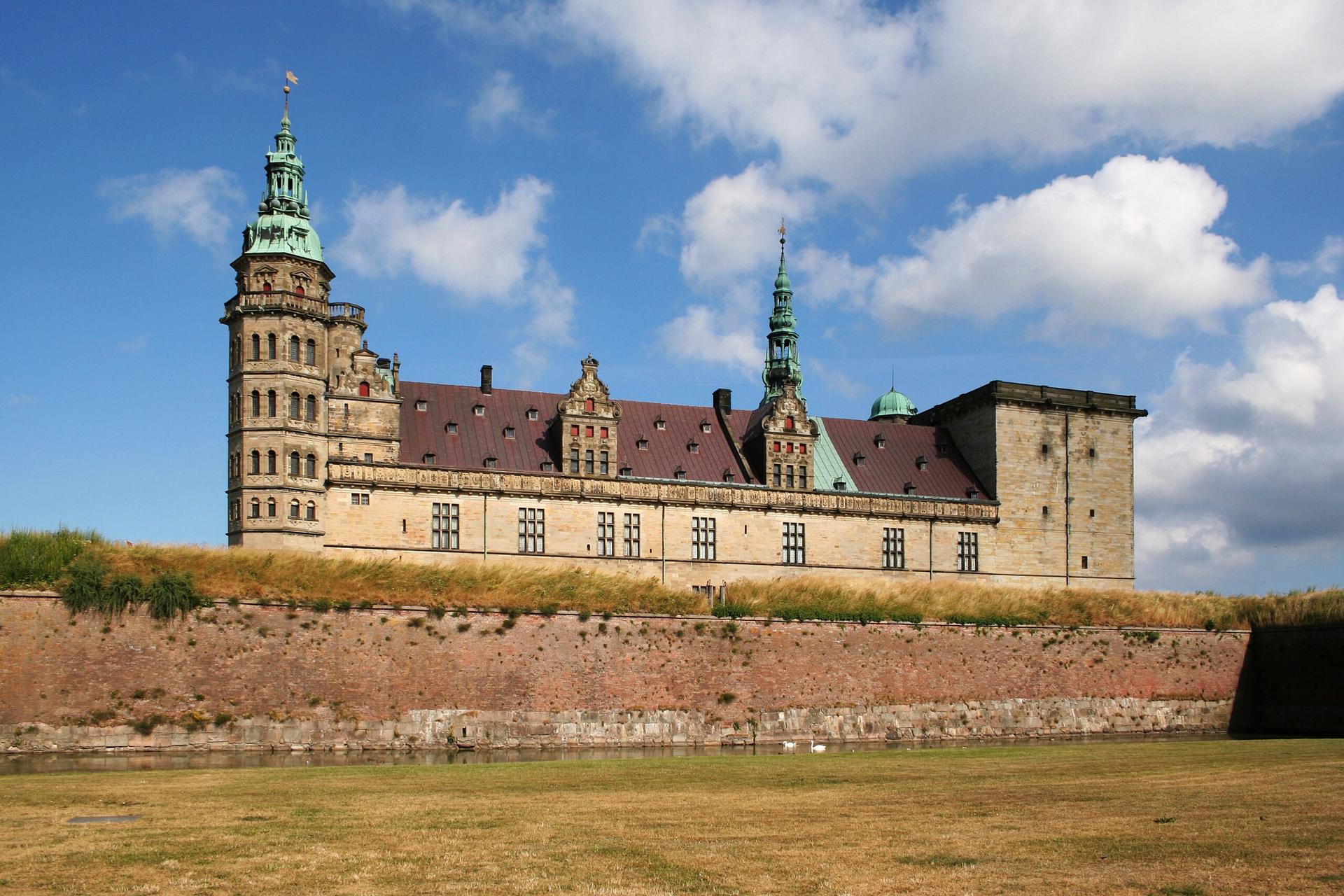
Explore North Zealand, Denmark's enchanting region of castles, beaches, and royal estates, perfect for history buffs, nature enthusiasts, and seaside lovers.
Tell me more about North Zealand
A historic iron arch bridging Copenhagen’s lively city centre and stately Slotsholmen, with hidden folklore sculptures stirring beneath its calm canal waters.

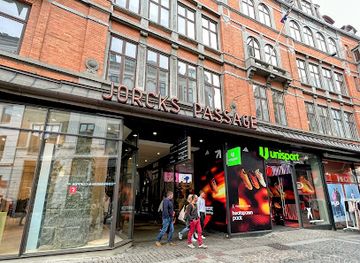
Historic 1890s covered arcade where telephone wires once connected a nation, now a charming shopping passage in Copenhagen's heart.
