Jættestuen grønhøj, Horsens Travel Guide
Free Guide: Atmospheric 5,000‑year‑old passage grave in gentle Horsens countryside, blending Stone Age craftsmanship with a peaceful walk near Bygholm Lake.


A brief summary of Jættestuen grønhøj
Atmospheric 5,000‑year‑old passage grave in gentle Horsens countryside, blending Stone Age craftsmanship with a peaceful walk near Bygholm Lake.
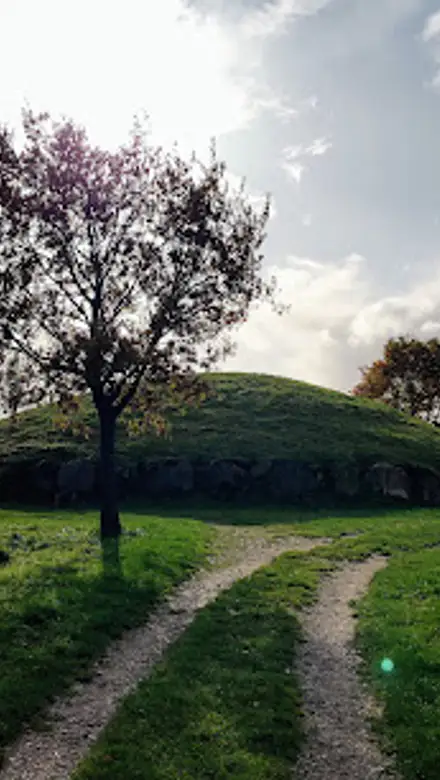
Hidden in the soft landscape by Bygholm Lake near Horsens, Jættestuen Grønhøj is a remarkably well‑preserved Neolithic passage grave, more than 5,000 years old. The low entrance leads into a compact stone chamber beneath a grassy mound, encircled by roughly 60 upright stones. Set between forests and open fields, it combines an evocative prehistoric monument with a gentle nature walk, making it an atmospheric stop for curious history lovers and families alike.
On-site amenities
 Trash bins
 Information boards
- Address
- 8700 Horsens
- Phone
- Website
Getting there
Car from central Horsens
Local bus and short walk
Bicycle from Horsens
Discover more about Jættestuen grønhøj
A Stone Age grave in the Horsens countryside
Grønhøj lies in rolling farmland between Rugballegård Forest and Åbjerg Forest, a rounded grassy mound that at first glance could be any hill in the Danish countryside. Step closer and its prehistoric character reveals itself: a circular barrow about three metres high and roughly 25 metres across, ringed by some 60 upright kerb stones around a metre tall. Built more than 5,000 years ago in the early farming era, it is one of the region’s most impressive megalithic tombs.The mound forms part of the wider landscape around Bygholm Lake, where mixed woodland, open fields and the nearby lakeshore create a tranquil, almost timeless setting. Birds call from the edge of the forest, grasses move in the wind across the barrow, and the low profile of the hill blends almost seamlessly with the surrounding fields.
Inside the ancient passage grave
At the heart of Grønhøj lies a compact burial chamber, modest in size at around 3.5 by 2.75 metres, yet constructed with remarkable care. A short, low passage leads into the interior, where large supporting stones carry a heavy capstone roof. Between these blocks, prehistoric builders created a dry-stone wall from thin, flat stones, designed to keep the chamber dry and stable over millennia.The entrance remains open, and agile visitors can still crawl inside to experience the quiet, cool darkness of the grave. From within, the sounds of the modern world largely fade, replaced by the close echo of your own movements and the faint rustle of the hillside above. The craftsmanship of the stonemasonry is clearly visible, offering a rare, tangible link to its creators.
Life, death and ritual in the Neolithic age
Jættestuer like Grønhøj were not homes for mythical giants but communal graves for early farming communities. A single mound could serve as the resting place for generations of one extended family group. Archaeological excavations at Grønhøj and similar sites have uncovered vast amounts of pottery sherds, flint tools and arrowheads, evidence of repeated burials and offerings.Outside the chamber, food and drink were dedicated to the dead, reflecting beliefs about an ongoing connection between the living and their ancestors. The careful engineering of the chamber and ring of kerb stones shows how much labour these small communities invested in honouring their dead and marking their place in the landscape.
Architecture that has endured five millennia
Grønhøj owes its remarkable state of preservation to both prehistoric engineering and a careful restoration in the mid‑20th century. During archaeological work the National Museum stabilised the structure, securing the capstones and reinforcing the mound without disturbing its essential character. Today it stands as one of Denmark’s better preserved passage graves, showcasing classic elements of its type.The ring of kerb stones forms a crisp outline around the mound, while sections of the dry-stone wall remain visible between the larger blocks. These details reveal sophisticated construction techniques: weight distribution, drainage and long-term stability were clearly understood by the builders. Even after thousands of winters, the chamber remains largely intact.
Exploring nature and prehistory in one stop
Grønhøj sits only a short detour from the popular walking route around Bygholm Lake, making it easy to combine with a leisurely lakeside stroll. The terrain around the mound is grassy and gently sloping, with open views towards fields on one side and forest on the other. On clear days, the low hill offers a subtle but pleasing vantage point over the surrounding landscape.There are no facilities directly at the barrow, which helps preserve its simple, rural character. The atmosphere is quiet and contemplative; it is a place to slow down, sit on the edge of the mound, and let the deep timescale of the site sink in. Families often enjoy the slight adventure of crawling into the chamber, while others simply wander around the kerb stones, tracing the outline of this enduring monument.
Evendo Review Centre
 Google
Guest reviews
Best time to go
Quietest: Jan, Feb & Dec · before 8am or at 7pm
Busy times are Evendo estimates for a typical year, to help you plan. Actual crowds vary with events, school holidays and the weather.
Explore Jættestuen grønhøj on the map
A handpicked selection of must-see spots near Jættestuen grønhøj, mapped for you.
Get your free copy of our complete guide to Jættestuen grønhøj, delivered straight to you.
Everything on this page, from opening hours and how to get there to Eve’s tips and the best time to go, in one PDF you can read offline, print or share.
Already have an account? Sign in
Your Jættestuen grønhøj guide is ready.
We'll send it to · Not you? Sign out

Getting your guide ready…
We are putting together a fresh copy of the Jættestuen grønhøj guide. This can take up to a minute.
This can take a few moments. If your browser asks, choose Allow so the download can start. You'll find the guide in your Downloads folder.
Nothing happened? Download it again
Sorry, the guide is taking longer than usual. Please try again in a minute, or get it by email instead.
Other nearby places you may find interesting
The closest places of the same kind, if this one is not quite what you had in mind.
-
The Uncovered Bridge A century-hidden railway bridge restored to glory, now a scenic riverside landmark with woodland trails and engineering heritage.
-
Jelling Mounds, Runic Stones and Church Viking earthworks, royal runestones and a modest village church come together in Jelling to mark the moment Denmark named itself and embraced Christianity.
-
Mindesten for Rytterfægtningen ved Torsted A modest roadside memorial on Horsens’ southern edge, marking a dramatic 1864 cavalry clash and weaving Denmark’s war history into an everyday suburban streetscape.
-
Årtusindeskifte Eg An ancient oak rooted in Horsens' heart, where nature and urban life converge in timeless harmony.
-
Our Lady Church Medieval layers of faith: from Viking-era crypt to Dominican monastery, Aarhus' oldest sacred space.
Swipe for more places
More to explore near Jættestuen grønhøj

 Best experiences near Jættestuen grønhøj
 Best hotels near Jættestuen grønhøj
 Best landmarks near Jættestuen grønhøj
 Best attractions near Jættestuen grønhøj
 Best shops near Jættestuen grønhøj
 Best restaurants near Jættestuen grønhøj
 Best bars near Jættestuen grønhøj
Do you manage this location?
Take control to get all the benefits, like improved information, better appearance, and stronger visibility across AI-powered discovery.
Explore more

Explore more of Horsens
Discover Horsens: A perfect blend of history, culture, and natural beauty in the heart of Denmark.
Explore Horsens
Explore more of Denmark
Discover Denmark: A perfect blend of history, modern design, and the cozy concept of hygge. Explore vibrant cities, serene landscapes, and world-class cuisine.
Explore Denmark