

Free Horsens Travel Guide & Mobile App
Plan your Horsens trip with Evendo. Get free guides to top attractions, restaurants, hotels, and bars. Web access or download the mobile app.


Horsens, Denmark, pairs medieval streets and fjord scenery with FÆNGSLET, industrial heritage, art museums, harbour walks and cultural events.
A Historic Market Town by the Water
Horsens lies on the eastern coast of Jutland, where the town opens towards Horsens Fjord and the wider landscapes of East Denmark. Its compact centre combines medieval traces, nineteenth-century streets and contemporary cultural venues, making it a manageable city to explore on foot. Søndergade forms the principal shopping street, while Torvet and the surrounding lanes lead towards churches, cafés and cultural institutions. The town's past is especially visible in its association with monasteries, trade, industry and the notorious former Horsens State Prison.Read more about Horsens
Culture Behind Historic Walls
Green Spaces and the Fjord
When is the best time to visit Horsens?
Best: June–August · 21–23°C| Month | High (°C) | Rainfall (mm) |
|---|---|---|
| January | 3 | 42 |
| February | 4 | 36 |
| March | 5 | 37 |
| April | 10 | 41 |
| May | 17 | 45 |
| June (best) | 21 | 47 |
| July (best) | 23 | 51 |
| August (best) | 23 | 50 |
| September | 19 | 48 |
| October | 14 | 46 |
| November | 8 | 46 |
| December | 5 | 45 |
Getting to and around Horsens
How to get there
Transportation
Best attractions in Horsens
Horsens offers a concentrated range of attractions that reflect both its regional history and its cultural reinvention. FÆNGSLET, the former state prison, combines an atmospheric prison museum with exhibition spaces and a busy programme of cultural events. The Danish Industrial Museum presents machinery, workshops and domestic objects that explain how industrialisation changed work and everyday life. At Horsens Art Museum, modern and contemporary Danish art is displayed in a setting close to the town centre. The medieval Church of Our Saviour and the Church of the Cross add older architectural layers, while Bygholm Park provides wooded paths and open lawns around a historic manor environment. For a quieter outing, the routes along Horsens Fjord reveal the town's relationship with the water and lead towards coastal nature beyond the centre. Together these sites make Horsens particularly appealing to visitors interested in social history, art and landscapes rather than monumental sightseeing alone.
-
Tourist attraction
FÆNGSLET
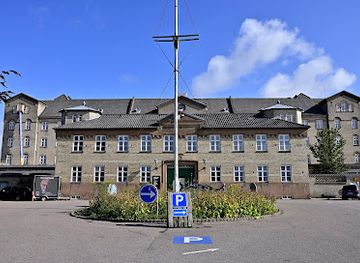
A vast former state prison in Horsens, transformed into an immersive museum, hostel and cultural venue where life behind bars is explored within intact cell blocks.
6 min drive · 2.0 km from city centre
-
 Hotel
Comwell Bygholm Park
Historic manor‑house hotel in Horsens’ Bygholm Park, blending stately 18th‑century charm with modern comfort, leafy parkland, family‑friendly space and easy city access.
5 min drive · 1.7 km from city centre
-
Museum
Industrimuseet
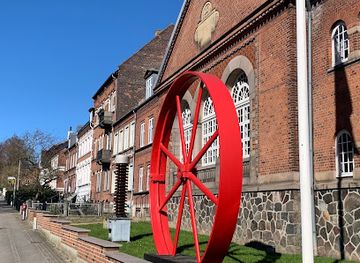
A living industrial museum in Horsens’ old gasworks, where roaring engines, workers’ homes and playful workshops bring Denmark’s modern story to life.
9 min walk · 0.7 km from city centre
-
Park
Langelinieanlægget
Horsens' beloved waterfront park where sandy beaches, summer culture, and fjord views create the perfect urban escape.
5 min drive · 1.7 km from city centre

Best landmarks in Horsens
Horsens's landmarks trace the town's development from medieval religious centre to industrial and cultural city. Vor Frelsers Kirke, or the Church of Our Saviour, is a prominent historic church in the central area, while the Church of the Cross preserves another important part of the old town's ecclesiastical heritage. FÆNGSLET is a landmark of a different kind: its enclosing walls and institutional buildings embody the nineteenth- and twentieth-century history of imprisonment, now reinterpreted through a museum and cultural complex. The former Horsens Town Hall and the streets around Torvet represent the civic face of the historic centre, while Bygholm's manor setting connects the urban story with landed estates and parkland. The town's Vitus Bering memorials and place names add a symbolic link to the explorer born here, extending Horsens's identity beyond local history to the geography of the wider world.
-
Historical landmark
Jættestuen grønhøj
Atmospheric 5,000‑year‑old passage grave in gentle Horsens countryside, blending Stone Age craftsmanship with a peaceful walk near Bygholm Lake.
13 min drive · 4.2 km from city centre
-
Memorial park
Mindesten for Rytterfægtningen ved Torsted
A modest roadside memorial on Horsens’ southern edge, marking a dramatic 1864 cavalry clash and weaving Denmark’s war history into an everyday suburban streetscape.
9 min drive · 3.1 km from city centre
-
Tourist attraction
Årtusindeskifte Eg
An ancient oak rooted in Horsens' heart, where nature and urban life converge in timeless harmony.
17 min drive · 5.8 km from city centre

Explore Horsens on the map
Plan your Horsens trip on one map. See where the top attractions, landmarks, restaurants, bars and hotels are, find what's near where you're staying, and book hotels and experiences in a few clicks.
Best hotels in Horsens
Best restaurants in Horsens
Horsens's dining scene reflects everyday Danish cooking as well as the broader culinary influences of East Jutland. Visitors will find cafés and restaurants around the pedestrian centre, particularly near Søndergade and Torvet, where open sandwiches, pastries, cakes and coffee fit naturally into a day of sightseeing. Traditional Danish menus commonly draw on rye bread, fish, pork, potatoes, seasonal vegetables and carefully prepared sauces, while newer restaurants interpret local ingredients in more contemporary ways. Bakeries provide an easy introduction to Danish pastries and bread, and casual venues offer international food alongside familiar Nordic fare. The town's markets and seasonal events can add locally produced cheese, preserves and other regional foods, although exact stalls vary. Dining is generally relaxed and informal, with lunch often taken earlier than in some European countries and reservations sensible for popular evening restaurants or event nights.
-
Danish
Dollys
Harbourfront, family-run Danish restaurant in Horsens serving hearty classics, generous portions and cosy marina views at a comfortable, mid-range price.
8 min walk · 0.7 km from city centre
-
Restaurant
Restaurant Oksen
Horsens's premier steakhouse since 1986, serving expertly prepared beef and Danish hospitality.
7 min walk · 0.6 km from city centre
-
Restaurant
Bone's Horsens
Lively American-style family restaurant in central Horsens, serving BBQ ribs, steaks, burgers and all-you-can-eat sides in a cosy, memorabilia-filled saloon setting.
2 min walk · 0.1 km from city centre
-
Takeout restaurant
Restaurant Flammen - Horsens
Big-hearted grill buffet in a cosy, antique-filled setting, serving all‑you‑can‑eat meats, hot dishes and salads for relaxed, social evenings in Horsens.
5 min walk · 0.4 km from city centre


Best bars in Horsens
Horsens has a modest but varied evening scene centred on the town's pedestrian streets and central squares rather than a single large club district. Pubs and bars provide informal places for Danish beer, cocktails and conversation, while cafés often remain part of the evening social landscape. The programme at FÆNGSLET can bring concerts, festivals and late-night activity to the former prison complex, giving the city a stronger entertainment focus on event dates. Live music and cultural performances are also more significant here than a continuous club scene, with venues and temporary events shaping the calendar. Most central nightlife is easy to reach on foot, although evening transport beyond the centre is more limited than in Denmark's major cities. Visitors should check current event listings and local venue information, since opening patterns and entertainment offerings change seasonally.
-
Bar
The Golden Horse
Unpretentious local bar in central Horsens, pouring affordable drinks from morning to late night amid slot machines, sports on TV and easygoing neighborhood chat.
7 min walk · 0.5 km from city centre
-
Bar
Hemingway's Horsens
Late-night bar and nightclub in central Horsens, delivering cocktail-fueled weekends, loud music, and a packed dance floor until the early morning hours.
8 min walk · 0.6 km from city centre
-
Bar
Zwei Grosse Bier Bar Horsens A/S
High-energy Alpine after-ski bar in central Horsens with big beer steins, Schlager singalongs and a late-night dance-floor party vibe.
7 min walk · 0.5 km from city centre
-
Bar
Morzybitten
Cozy Danish pub‑brasserie in central Horsens, pairing classic smørrebrød and hearty dishes with a remarkably broad beer list and occasional intimate live music.
7 min walk · 0.6 km from city centre


Best nightclubs in Horsens
Horsens has a modest but varied evening scene centred on the town's pedestrian streets and central squares rather than a single large club district. Pubs and bars provide informal places for Danish beer, cocktails and conversation, while cafés often remain part of the evening social landscape. The programme at FÆNGSLET can bring concerts, festivals and late-night activity to the former prison complex, giving the city a stronger entertainment focus on event dates. Live music and cultural performances are also more significant here than a continuous club scene, with venues and temporary events shaping the calendar. Most central nightlife is easy to reach on foot, although evening transport beyond the centre is more limited than in Denmark's major cities. Visitors should check current event listings and local venue information, since opening patterns and entertainment offerings change seasonally.
-
Hotel
Scandic Opus Horsens
Striking Kim Utzon–designed hotel between Horsens and Nørrestrand, blending Scandinavian comfort, local dining and wellness with generous space for stays and events.
6 min drive · 2.2 km from city centre
-
Disco club
Hemingway's Horsens
Late-night disco bar in central Horsens with a mature crowd, classic hits from past decades and a cozy-but-lively atmosphere every Friday and Saturday.
8 min walk · 0.6 km from city centre
-
Cocktail bar
Kokomo Horsens
Three floors of colorful cocktails, big beats and tropical nightclub energy at the heart of Horsens’ weekend nightlife.
6 min walk · 0.5 km from city centre
-
Night club
Jagtbar Horsens
Horsens' premier nightclub where relaxed cocktails transform into energetic dance nights.
7 min walk · 0.5 km from city centre


Best shops in Horsens
Shopping in Horsens is concentrated in and around Søndergade, the principal pedestrian shopping street, with adjoining lanes and the area around Torvet adding cafés, independent businesses and smaller specialist shops. Bytorv Horsens provides a more concentrated indoor retail setting, while the central streets combine national chains with local retailers rather than presenting a luxury-shopping district. Visitors looking for distinctive purchases can explore Danish design, homeware, knitwear, books, bakery goods and regional food products, although the selection changes between businesses and seasons. Markets and temporary town-centre events offer opportunities to find crafts, second-hand goods or locally made produce when scheduled. The compact layout makes it easy to combine shopping with the central churches, museums and cafés, and the retail character is oriented towards everyday Danish town life rather than souvenir commerce alone.
-
Shopping mall
bytorvHORSENS
Compact, modern shopping centre in the heart of Horsens, mixing everyday essentials, fashion and cafés in a bright, weather-proof hub off the main pedestrian street.
5 min walk · 0.4 km from city centre
-
Clothing store
dansk Horsens
Quality family fashion at accessible prices, serving all ages and sizes across Horsens.
5 min drive · 1.5 km from city centre
-
Thrift store
Blue Cross Op Shop
One of Denmark’s largest second-hand centers, blending bargain hunting, social impact and sustainable shopping in a vast, ever-changing thrift and flea market space.
19 min walk · 1.5 km from city centre
-
Store
Søstrene Grene
Scandinavian design meets everyday creativity in Horsens' premier lifestyle and home décor destination.
5 min walk · 0.4 km from city centre


Get your free copy of our complete guide to Horsens, delivered straight to you.
Everything on this page, from attractions and restaurants to essentials and local phrases, in one PDF you can read offline, print or share.
Already have an account? Sign in
Your Horsens guide is ready.
We'll send it to · Not you? Sign out

Getting your guide ready…
We are putting together a fresh copy of the Horsens guide. This can take up to a minute.
This can take a few moments. If your browser asks, choose Allow so the download can start. You'll find the guide in your Downloads folder.
Nothing happened? Download it again
Sorry, the guide is taking longer than usual. Please try again in a minute, or get it by email instead.
Horsens essentials
Currency and Payment
Safety
Emergency Situations
Do's and Don'ts
Local Tips
From Eve
Local phrases worth knowing
You don't need to get them perfect. A few words go a long way, and locals appreciate the effort.
Basics
| English | Local | Say it |
|---|---|---|
| Hello | Hej | [hey] |
| Goodbye | Farvel | [far-vel] |
| Yes | Ja | [ya] |
| No | Nej | [nay] |
| Please/You're welcome | Vær så venlig | [vair saw ven-lee] |
| Thank you | Tak | [tahk] |
| Excuse me/Sorry | Undskyld | [oon-skool] |
| How are you? | Hvordan har du det? | [vohr-dan har doo day] |
| Fine. And you? | Fint. Og du? | [feent oh doo] |
| Do you speak English? | Taler du engelsk? | [tah-ler doo engelsk] |
| I don't understand | Jeg forstår ikke | [yay for-stor ee-keh] |
Eating & Drinking
| English | Local | Say it |
|---|---|---|
| I'd like to see the menu, please | Jeg vil gerne se menuen, tak | [yay vil gehr-neh seh menu-en tahk] |
| I don't eat meat | Jeg spiser ikke kød | [yay spee-ser ee-keh kerth] |
| Cheers! | Skål! | [skawl] |
| I would like to pay, please | Jeg vil gerne betale, tak | [yay vil gehr-neh beh-tah-leh tahk] |
Emergencies
| English | Local | Say it |
|---|---|---|
| Help! | Hjælp! | [hyel-p] |
| Go away! | Gå væk! | [gow vay] |
| Call the Police! | Ring til politiet! | [ring teel poh-lee-tee-et] |
| Call a doctor! | Ring efter en læge! | [ring ef-ter en lay-eh] |
| I'm lost | Jeg er faret vild | [yay er fah-ret feel] |
| I'm ill | Jeg er syg | [yay er soog] |
Shopping
| English | Local | Say it |
|---|---|---|
| I'd like to buy... | Jeg vil gerne købe... | [yay vil gehr-neh ker-beh] |
| I'm just looking | Jeg kigger bare | [yay kee-geh beh-reh] |
| How much is it? | Hvor meget koster det? | [vohr meh-geh kost-er day] |
| That's too expensive | Det er for dyrt | [day er for deer-t] |
| Can you lower the price? | Kan du sænke prisen? | [kan doo sen-keh prees-en] |
Time & Numbers
| English | Local | Say it |
|---|---|---|
| What time is it? | Hvad er klokken? | [vahd er kloh-ken] |
| It's one o'clock | Den er et | [den er et] |
| Half past (10) | Halv ti | [hahlv tee] |
| Morning | Morgen | [mohr-gen] |
| Afternoon | Eftermiddag | [ef-ter-mee-dag] |
| Evening | Aften | [ahf-ten] |
| Yesterday | I går | [ee gohr] |
| Today | I dag | [ee dah] |
| Tomorrow | I morgen | [ee mohr-gen] |
| 1 | Et | [et] |
| 2 | To | [toh] |
| 3 | Tre | [treh] |
| 4 | Fire | [fee-reh] |
| 5 | Fem | [fem] |
| 6 | Seks | [seks] |
| 7 | Syv | [soov] |
| 8 | Otte | [ot-teh] |
| 9 | Ni | [nee] |
| 10 | Ti | [tee] |
Transport & Directions
| English | Local | Say it |
|---|---|---|
| Where's a/the...? | Hvor er en/et...? | [vohr er en/et] |
| What's the address? | Hvad er adressen? | [vahd er ah-dres-en] |
| Can you show me (on the map)? | Kan du vise mig (på kortet)? | [kan doo vee-seh meeh (poh kort-et)] |
| When's the next (bus)? | Hvornår er næste (bus)? | [vohr-nor er nay-steh (boos)] |
| A ticket (to ....) | En billet (til ....) | [en bee-let (teel)] |
History of Horsens
Early Settlement and Medieval Growth
Horsens developed around a natural harbour at the head of Horsens Fjord, a position that supported farming, fishing and regional trade. The name appears in early medieval records, and by the Middle Ages the settlement had become an established market town with churches, defensive elements and commercial links across Jutland. Its location between inland routes and the coast helped it serve surrounding communities, while the fjord provided access to maritime traffic. Medieval street patterns and the central churches preserve parts of this early urban structure, even though later rebuilding and modern expansion have altered much of the original townscape.
Monasteries and the Medieval Town
Religious foundations played an important role in medieval Horsens. Franciscan and Dominican communities established houses in the town, bringing worship, education and charitable activity alongside the commercial functions of the market. The monasteries also connected Horsens to wider European religious networks. Although the Reformation in the sixteenth century transformed church life and brought the dissolution of Catholic institutions, the town's surviving medieval churches and archaeological traces continue to indicate the importance of this period. Horsens remained a regional centre whose identity was shaped by both civic commerce and religious institutions.
Trade, Industry and Urban Expansion
From the early modern period into the nineteenth century, Horsens grew as a market and port town serving the agricultural hinterland of East Jutland. Improved roads, harbour facilities and, later, railway connections strengthened its role in moving goods and people. Industrialisation introduced factories, workshops and new forms of employment, while the urban population expanded beyond the medieval core. The Danish Industrial Museum records this transformation through machinery, craft traditions and domestic technology, showing how industrial change affected not only production but also housing, working life and everyday routines.
Vitus Bering and the Wider World
Horsens is the birthplace of Vitus Bering, born in 1681 and later a Danish-born explorer in Russian service. His expeditions across the north-eastern Pacific and the strait that bears his name gave the town an association with global exploration. Bering's story reflects the maritime and scientific networks of the early eighteenth century, when European powers sought new routes, geographical knowledge and imperial influence. In Horsens, his memory forms part of the town's historical identity and provides an international dimension to a city otherwise best known for its regional commercial and industrial importance.
The Prison and Contemporary Reinvention
Horsens State Prison opened in the nineteenth century as a high-security institution and remained an important part of the town's social and architectural landscape until it closed in 2006. The former prison was subsequently transformed into FÆNGSLET, retaining much of its institutional character while introducing a museum, cultural events and creative enterprises. This reuse illustrates a broader change in Horsens, where industrial and civic heritage have been adapted for public culture rather than erased. The prison's transformation has become one of the clearest examples of how the city presents difficult and complex history to modern visitors.
Travel experiences inspired by this city
-
 9 Day Trip
Solo Slow-Travel Escape to Samsø Island, Denmark (9 Days)
A slow-travel escape to Denmark’s Samsø Island with coastal hikes, cycling, farm-to-table flavors, and renewable energy—reached by train and ferry.
 12 Aug 2026
By Marie Morel -
 12 Day Trip
Slow Summer on Samsø: Eco-Friendly Island Escape from Berlin
A slow-travel escape to Denmark's energy island, Samsø: cycling lanes, farm-to-table finds, sandy beaches, and hygge evenings in a cozy cottage.
 10 Aug 2026
By Kirsten Nielsen -
 12 Day Trip
12 Days on Samsø: A Family Summer of Bikes, Beaches, and Danish Sustainability
Discover Samsø with the family: easy cycling, kid-friendly beaches, farm-to-table flavors, and a look at Denmark's renewable energy showcase on a tranquil island.
 5 Aug 2026
By Anna Johansson
Swipe for more travel diaries
Horsens in Photos
Browse through our photo collection highlighting the charm and character of the destination.
Cities near Horsens
The closest cities to Horsens, if you have time for more than one stop.
-

-

-

-

-


Swipe for more cities
Explore more

Explore more of Denmark
Discover Denmark: A perfect blend of history, modern design, and the cozy concept of hygge. Explore vibrant cities, serene landscapes, and world-class cuisine.
Explore Denmark