Our Lady Church, East Jutland Travel Guide
Medieval layers of faith: from Viking-era crypt to Dominican monastery, Aarhus' oldest sacred space.
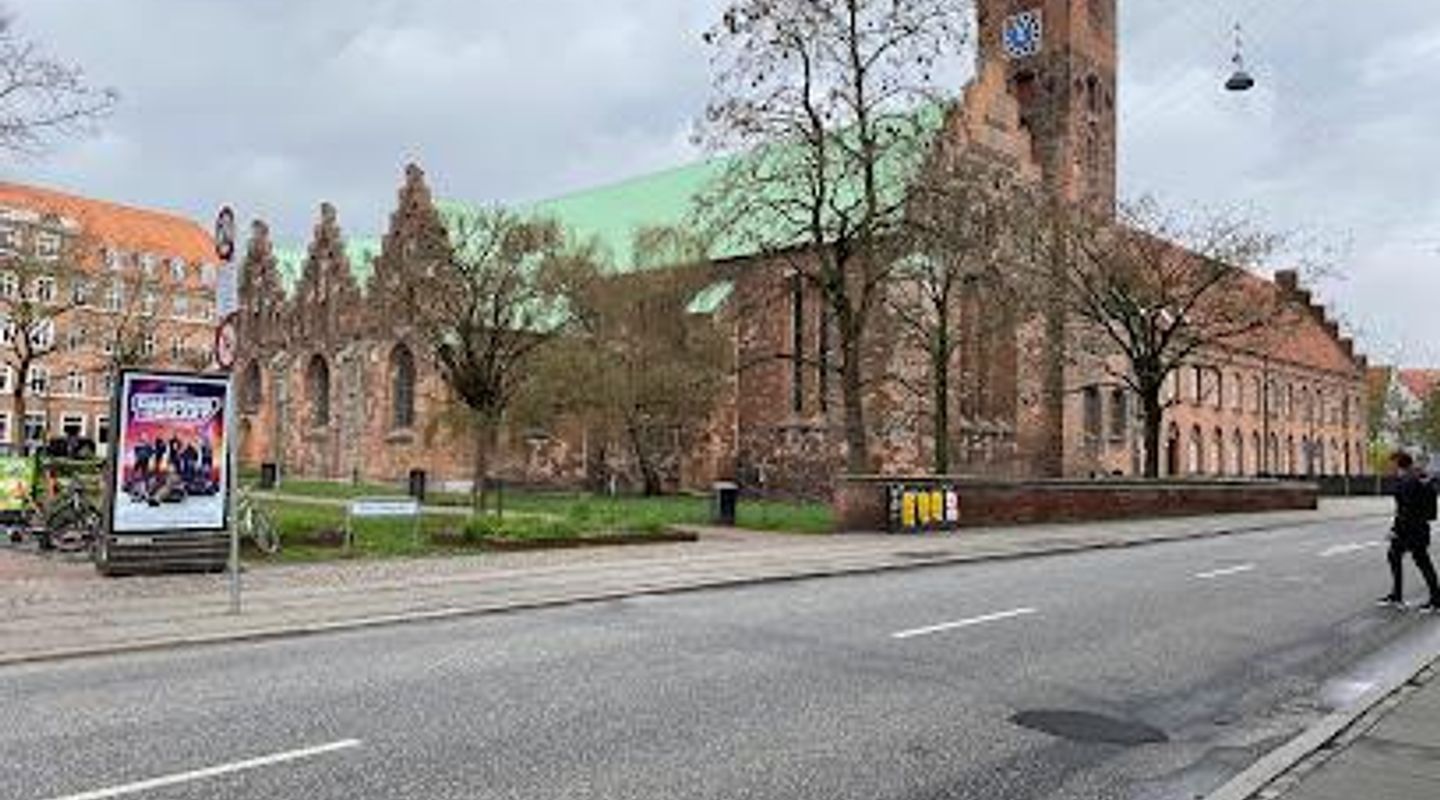
A layered medieval masterpiece in central Aarhus, the Church of Our Lady reveals over a thousand years of Danish ecclesiastical history. Its crown jewel is the crypt—Scandinavia's oldest stone church from 1060—discovered beneath the chancel in 1955. The site encompasses three distinct sacred spaces: the atmospheric crypt chapel, the 14th-century monastery church with its distinctive glass mosaic by renowned artist Per Kirkeby, and the main church with its soaring medieval tower. Originally built as St. Nicholas' Church, it was transformed by Dominican monks into a spiritual and architectural landmark that stands as a testament to medieval craftsmanship and Denmark's early Christianization.
A brief summary to Our Lady Church
- Frue Kirkeplads 3, Aarhus Municipality, Aarhus C, 8000, DK
- Click to display
- Click to display
- Duration: 0.75 to 2.5 hours
- Free
-
 Mixed
Mixed
- Mobile reception: 4 out of 5
- Monday 10 am-4 pm
- Tuesday 10 am-4 pm
- Wednesday 10 am-4 pm
- Thursday 10 am-4 pm
- Friday 10 am-4 pm
- Saturday 10 am-2 pm

Know before you go
Hi, I'm Eve. Here are a few practical things to know before exploring Our Lady Church.
- Visit the crypt first to fully appreciate the chronological journey through the site's history. The 1060 AD stone chamber is the emotional and historical heart of the complex.
- Attend a service on the first Sunday of the month in the crypt chapel for an authentic spiritual experience in Scandinavia's oldest arched stone space.
- Look for the restored frescoes from 1517 in the Abbey Church and the distinctive Per Kirkeby glass mosaic—examples of artistic continuity across centuries.
- Arrange a guided tour through the church office for detailed historical context and access to areas not always open to casual visitors.
- The surrounding monastery garden offers peaceful views and a respite from the city; the site's medieval walls create an intimate, contemplative atmosphere.
Do you manage this location?
Take control to get all the benefits, like improved information, better appearance, and stronger visibility across AI-powered discovery. Learn more about listing your business on Evendo
Activate your presenceOther nearby places you may find interesting
The closest places of the same kind, if this one is not quite what you had in mind.
Explore Our Lady Church on the Map
A handpicked selection of must-see spots near Our Lady Church, mapped for you.
Unlock the Best of Our Lady Church
Buy tickets
-
No tickets available
Book tours with entry


Getting There
-
Walking from Aarhus Central Station
From Aarhus Central Station, walk northwest through the city centre toward Vestergade. The journey takes approximately 8–10 minutes on foot. The church is located at Frue Kirkeplads 3, a small square just off Vestergade in the heart of Midtbyen (central Aarhus). The pedestrian-friendly streets make this an easy and pleasant walk through the historic core.
-
Local bus from city centre
Several local bus routes serve central Aarhus and stop near Vestergade. Journey times from outlying areas range from 10–25 minutes depending on origin. Aarhus has an integrated public transport system with frequent service. Buses are affordable, typically 24–50 DKK per journey depending on zones travelled.
-
Bicycle from surrounding neighbourhoods
Aarhus is highly bicycle-friendly with extensive cycle paths. From most central and inner-city locations, cycling to the church takes 5–15 minutes. The city offers bike-sharing schemes and numerous secure parking facilities near Vestergade. This is an economical and popular option for both locals and visitors.
-
Taxi or rideshare from Aarhus Airport
Aarhus Airport is approximately 40 kilometres northeast of the city centre. Taxi or rideshare services (such as local Danish operators) take 35–50 minutes depending on traffic. Expect costs of 300–450 DKK. Alternatively, airport buses connect to the city centre in approximately 45 minutes for 80–120 DKK, from which you can walk or use local transport to reach the church.
For the on-the-go comforts that matter to you
-
 Restrooms
-
 Information Boards
-
 Seating Areas
Discover more about Our Lady Church
A Thousand Years Beneath Stone
The Church of Our Lady is Aarhus' oldest building and one of Scandinavia's most historically significant religious sites. At its heart lies the crypt—an underground chamber dating to approximately 1060 AD, making it the oldest preserved room in Denmark and the oldest arched stone space in the Nordic region. This subterranean sanctuary was built during the reign of Svein II Estridson, when Christian became Aarhus' first bishop. The crypt was constructed as a "Trinity Church," its three aisles and three arches each originally housing their own altar, reflecting medieval theological symbolism. For centuries, this sacred space lay forgotten, walled off and used as storage, until its dramatic rediscovery during 1950s renovations. Today, stepping down into the crypt is a profound journey backward through time—a hushed, candlelit chamber where medieval stone walls and ancient air transport visitors to the dawn of Danish Christianity.Medieval Expansion and Monastic Life
The site's architectural evolution spans five centuries of continuous growth and transformation. Around 1080, a larger stone church named after Saint Nicholas was constructed above the crypt, becoming Aarhus' first cathedral. When Dominican monks arrived around 1240, they established a priory and began an ambitious expansion that would continue until the Reformation in the 1500s. The monastery's three wings, built primarily in the 14th century, created a self-contained religious community. The Abbey Church, a small chapel within the complex dating from the late 1300s, showcases six elegant cross vaults supported by distinctive columns of yellowish sandstone. Its frescoes, painted in 1517 but whitewashed during the Reformation, remain partially visible beneath layers of history. The main church itself underwent continuous enhancement, with the impressive medieval bell tower added between 1250 and 1500, eventually rising high enough to dominate Aarhus' medieval skyline.Reformation and Reinvention
The Protestant Reformation fundamentally altered the church's purpose and identity. When King Christian III decreed the Reformation in Denmark, the Dominican monks were expelled and the church was renamed from St. Nicholas' Church to the Church of Our Lady. Rather than closing the complex, the king repurposed the surrounding priory buildings as a hospital for the sick and poor—a transformation that reflected both practical necessity and religious principle. The church itself was granted congregational privileges, officially establishing it as a centre for clerical activities in its area. This shift from monastic to parochial use preserved the buildings while changing their spiritual function, a transition that shaped Aarhus' religious landscape for centuries to come.Artistic Treasures and Modern Restoration
The church's interior is enriched with remarkable artistic elements spanning centuries. The 15th-century altar remains a focal point, its carved details reflecting medieval craftsmanship and devotion. The restored wall paintings, carefully conserved during modern renovations, offer glimpses into the church's pre-Reformation artistic programme. A particularly distinctive feature is the glass mosaic in the Abbey Church window, created by renowned contemporary Danish artist Per Kirkeby, whose work appears in numerous Danish churches. This juxtaposition of medieval and modern art creates a visual dialogue across centuries. The main church's three naves and soaring vaulted spaces create an atmosphere of spiritual grandeur, while the crypt's intimate scale invites quiet contemplation. Comprehensive restoration work undertaken in the 1950s and again in 2000 has preserved these treasures while making them accessible to modern visitors.Living Heritage and Spiritual Practice
Despite its ancient origins, the Church of Our Lady remains an active spiritual centre. The three distinct spaces—crypt, Abbey Church, and main church—continue to serve the congregation and welcome visitors. On the first Sunday of each month, afternoon services are held in the atmospheric crypt chapel, while other Sundays see worship in the Abbey Church. The surrounding monastery buildings, though no longer housing religious communities, serve as apartments for residents over 60, maintaining the site's role as a place of care and community. The church office offers guided tours for those seeking deeper understanding of its complex history. This continuity of use, spanning from the Viking era through the medieval period to the present day, makes the Church of Our Lady not merely a museum piece but a living monument to Danish faith and cultural identity.












Your all‑in‑one travel companion app
Explore expert travel guides, compare and book tours, experiences, hotels, and more—all from the palm of your hand. Download now for seamless trip planning wherever your wanderlust takes you.


Explore More of East Jutland
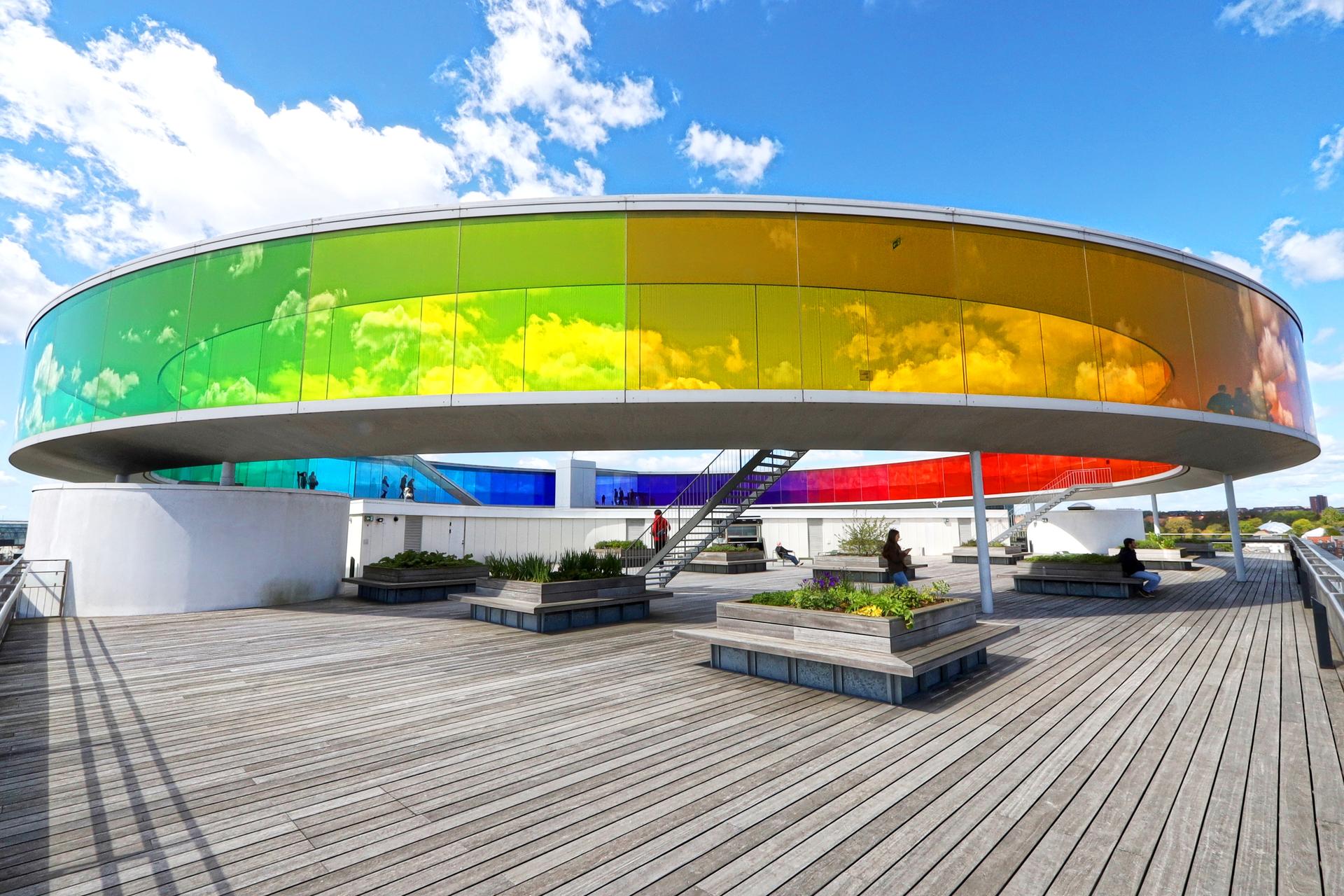
Looking beyond Our Lady Church? Discover East Jutland for broader travel guides, local hot-spots, and regional highlights.
Explore East Jutland