

Dronning Louises Bro, Køge Travel Guide
Free Guide: Copenhagen’s stone gateway between old town and Nørrebro, Dronning Louises Bro blends 1880s grandeur, lakefront views and everyday city life on two wheels.


A brief summary of Dronning Louises Bro
Copenhagen’s stone gateway between old town and Nørrebro, Dronning Louises Bro blends 1880s grandeur, lakefront views and everyday city life on two wheels.
Dronning Louises Bro (Queen Louise’s Bridge) is Copenhagen’s classic stone bridge arching across the city’s central lakes, linking historic Indre By with lively Nørrebro. Completed in 1887 in French Empire style, its broad sidewalks, granite arches and ornamental lampposts frame some of the city’s finest everyday views. By day it’s a busy commuter artery; on sunny evenings it turns into an open-air living room where locals sit on the balustrades, coffee or beer in hand, watching cyclists, swans and city life glide by.
On-site amenities
 Restrooms
 Drink options
 Drinking water
 Food options
 Seating areas
 Trash bins
 Information boards
Opening hours
- Every dayOpen 24 hours
Opening hours as listed on the venue’s Google Business Profile. Hours can change for services and special events, so check with the venue before you go.
- Address
- Søtorvet 2, 1371 København
- Phone
- Website
Getting there
Metro from central Copenhagen
City bus to the lakes
Bicycle through the city
Walking from the old town area
Discover more about Dronning Louises Bro
A historic gateway between old town and Nørrebro
Dronning Louises Bro stretches confidently across Copenhagen’s central lakes, forming a grand stone threshold between the city centre and the multicultural district of Nørrebro. Completed in 1887 and named for Queen Louise, consort of King Christian IX, it replaced earlier crossings that had linked the city to the surrounding countryside for centuries. Where wooden causeways once carried carts and washerwomen, the current bridge introduced granite arches, generous pavements and a sense of ceremony to this crucial approach.Walk to the centre and you stand almost exactly on the former line of the city’s northern fortifications. When those earthen ramparts were dismantled in the late 19th century, elegant boulevards, squares and apartment blocks rose in their place. The bridge became the natural continuation of this new urban axis, funnelling traders, workers and visitors from the growing neighbourhoods north of the lakes into the markets and food halls around what is now Israels Plads.
Stone arches, imperial details and waterfront drama
Architect Vilhelm Dahlerup, one of Copenhagen’s most prolific designers, gave Dronning Louises Bro a distinctly monumental character. Three broad granite arches span the water, their weighty blocks reflected in the lake’s surface below. Along the railings, bronze cartouches display Copenhagen’s coat of arms framed by helmets, shields and rearing lions, small flourishes that reward a closer look.The bridge’s lampposts, flagpoles and rhythmic balustrades create a strong horizontal line against the low city skyline. On the city side, the fanciful towers and mansard roofs of the Søtorvet apartment blocks rise like French châteaux, turning the lakeshore into a stage set of 19th-century ambition. At night, reflections of neon signs from Nørrebro – including the famous hen from a historic supermarket brand – shimmer across the water, giving the scene a cinematic quality.
From traffic artery to urban living room
For much of the 20th century, Dronning Louises Bro was dominated by vehicles and tram lines, its pavements squeezed at the edges. As cycling culture surged and the lakes became a recreational focus, the bridge’s role shifted. Wider cycle lanes and broader sidewalks transformed it into one of Copenhagen’s most human-scaled crossings, where people linger as much as they move.On warm days, the stone parapets become informal benches. Groups gather with takeaway coffee, craft beers or ice creams from nearby kiosks, while runners and dog walkers loop around the lake paths below. The constant flow of cyclists in both directions forms an almost continuous ribbon of motion, a vivid illustration of how the city prioritises two wheels over four.
Everyday views and seasonal moods
Part of the bridge’s appeal lies in its ever-changing outlook. To one side stretches Peblinge Lake, to the other Sortedam Lake, both contained by formal stone embankments and lined with trees. In the early morning, mist sometimes lingers above the water as joggers trace the shore. On bright afternoons, the surface sparkles with pedal boats and the occasional rowing crew.Each season paints the scene differently. Spring brings fresh green reflections and nesting birds along the reeds. Summer draws crowds who perch shoulder to shoulder along the balustrade. Autumn mutes the city in copper and gold, mirrored in the still lake. Winter can be stark and graphic, with bare branches etched against pale skies and, in cold snaps, thin ice forming geometric patterns across the water.
A bridge woven into city life
Although it spans only a short distance, Dronning Louises Bro encapsulates several strands of Copenhagen’s story: historic defences turned into leisure landscapes, grand 19th-century planning, a deep commitment to cycling, and a culture that happily turns infrastructure into social space. It is as much a place to pause as it is a way to cross.Whether you stop for a few minutes or use it as a base to explore Nørrebro and the inner city, the bridge offers a quick, vivid sense of how locals inhabit their urban waterfront. Stand at the centre, feel the faint vibration of passing bikes underfoot, listen to the mix of languages around you, and you are very much in the contemporary heartbeat of Copenhagen.
Evendo Review Centre
 Google
Guest reviews
Best time to go
Quietest: Jan, Feb & Mar · at 1am or at 2am or at 5am
Busy times are Evendo estimates for a typical year, to help you plan. Actual crowds vary with events, school holidays and the weather.
Explore Dronning Louises Bro on the map
A handpicked selection of must-see spots near Dronning Louises Bro, mapped for you.
Get your free copy of our complete guide to Dronning Louises Bro, delivered straight to you.
Everything on this page, from opening hours and how to get there to Eve’s tips and the best time to go, in one PDF you can read offline, print or share.
Already have an account? Sign in
Your Dronning Louises Bro guide is ready.
We'll send it to · Not you? Sign out

Getting your guide ready…
We are putting together a fresh copy of the Dronning Louises Bro guide. This can take up to a minute.
This can take a few moments. If your browser asks, choose Allow so the download can start. You'll find the guide in your Downloads folder.
Nothing happened? Download it again
Sorry, the guide is taking longer than usual. Please try again in a minute, or get it by email instead.
Unlock the best of Dronning Louises Bro
Skip-the-line tickets, guided tours with entry, and walking tours of the area, booked in a few clicks.
 Tour with entry
Self-Guided Tour In Copenhagen with 100 Captivating Audio Stories
from $3.17 Tour with entry
Copenhagen’s Nørrebro: fifty shades of red and green city game
from $27.60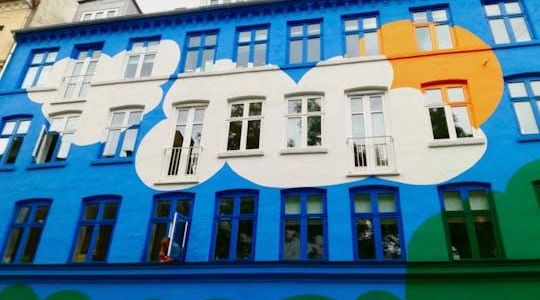 Tour with entry
Self-guided discovery walk in Copenhagen’s Nørrebro neighborhood
from $29.98 Tour with entry
Copenhagen 3 Hour Bike Tour: The World's Most Livable City
from $60.52


Other nearby places you may find interesting
The closest places of the same kind, if this one is not quite what you had in mind.
-
Køge Miniby Step into Køge’s past at 1:10 scale, where hand-built model houses, harbour scenes and church spires recreate the market town of 1865 in a tranquil seaside garden.
-
Køge Museum Time‑travel through Køge’s past inside a 17th‑century merchant’s house where Viking treasures, buried secrets and a tranquil courtyard meet in one intimate museum.
-
Ølsemagle Revle A shifting sandbar of shallow lagoons, rich birdlife and wide sandy beaches, where Køge’s urban edge gives way to one of Zealand’s most evocative coastal nature reserves.
-
Solgårdsparken Romantic coastal park between Køge Bay and Tryggevælde River, where historic garden design, tranquil nature, play areas and reflective audio stories meet in one green retreat.
-
Vandkunsten - Stationspladsen A sculptural fountain anchoring Køge’s station square, where moving water, stone and light turn a busy transport hub into an inviting urban meeting place.
Swipe for more places
More to explore near Dronning Louises Bro

 Best experiences near Dronning Louises Bro
 Best hotels near Dronning Louises Bro
 Best landmarks near Dronning Louises Bro
 Best attractions near Dronning Louises Bro
 Best shops near Dronning Louises Bro
 Best restaurants near Dronning Louises Bro
 Best bars near Dronning Louises Bro
Do you manage this location?
Take control to get all the benefits, like improved information, better appearance, and stronger visibility across AI-powered discovery.
Explore more
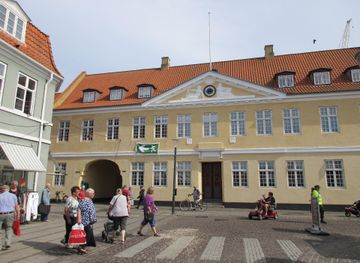
Explore more of Køge
Explore Køge, Denmark's coastal gem, with its medieval charm, beautiful marina, and close proximity to the stunning Stevns Klint UNESCO World Heritage site.
Explore Køge
Explore more of Denmark
Discover Denmark: A perfect blend of history, modern design, and the cozy concept of hygge. Explore vibrant cities, serene landscapes, and world-class cuisine.
Explore Denmark
