Cykelslangen, Køge Travel Guide
Free Guide: A vivid orange cycle bridge that snakes above Copenhagen’s harbour, blending everyday commuting with elevated views, smart design and pure two‑wheeled pleasure.


A brief summary of Cykelslangen
A vivid orange cycle bridge that snakes above Copenhagen’s harbour, blending everyday commuting with elevated views, smart design and pure two‑wheeled pleasure.
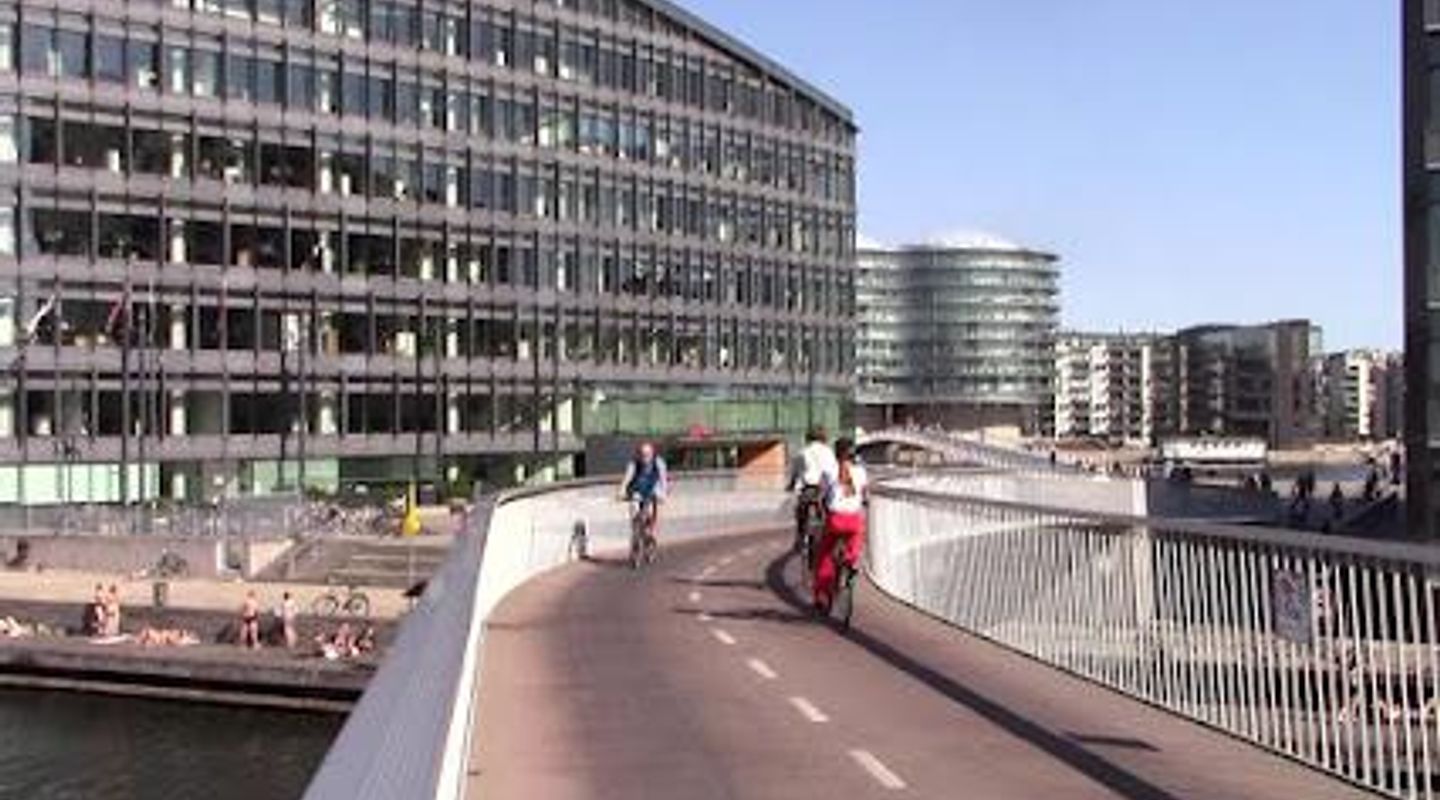
Cykelslangen, or The Bicycle Snake, is a striking elevated cycle bridge snaking through Copenhagen’s harbourfront between Vesterbro and Islands Brygge. Opened in 2014 and painted a vivid orange, the 200‑plus‑metre structure glides between glassy facades and over the water, separating cyclists from pedestrians and traffic. It is both everyday infrastructure and urban sculpture, offering sweeping views of the harbour while embodying the city’s commitment to bike‑centric design and human‑scale planning.
On-site amenities
 Restrooms
 Drink options
 Drinking water
 Food options
 Seating areas
 Sheltered areas
 Trash bins
 Information boards
Opening hours
- Every dayOpen 24 hours
Opening hours as listed on the venue’s Google Business Profile. Hours can change for services and special events, so check with the venue before you go.
- Address
- Cykelslangen, 1560 Vesterbro
Getting there
Train and walking
City bus
Cycling from central Copenhagen
Walking from central Vesterbro
Discover more about Cykelslangen
An orange ribbon above Copenhagen’s harbour
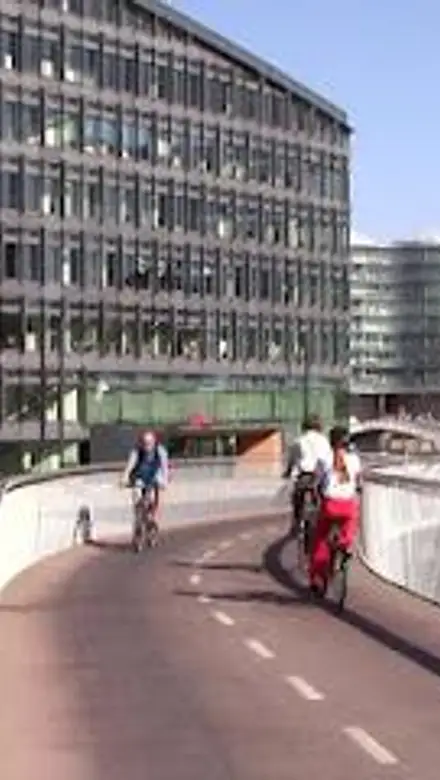
Cykelslangen, literally “The Bicycle Snake,” is an elevated cycle bridge that twists gracefully through Copenhagen’s inner harbour, linking Kalvebod Brygge with Havneholmen and onward towards Bryggebroen. Finished in 2014 and designed by Dissing+Weitling, it rises around seven metres above the water at its highest point, a vivid orange ribbon set against the steel, glass and concrete of the surrounding developments.From ground level it appears almost weightless, carried on slim white columns that touch down sparingly on quay and pier. From the saddle, the structure feels like a dedicated aerial roadway, bending and curving in long, gentle arcs that make the gradient easy even for everyday commuters and casual riders.
From awkward stairs to a cycle superhighway
Before the bridge was built, cyclists heading between Vesterbro and Islands Brygge faced an inelegant detour: lugging bikes up and down stairs beside the Fisketorvet shopping centre or edging through crowded pedestrian spaces. As cycling numbers grew, this pinch point became a daily bottleneck and a symbol of how the harbourfront redevelopment still favoured cars and malls over bikes.City planners responded with a competition for a dedicated cycle connection. The winning scheme reimagined the area not with a simple ramp, but with an elevated “superhighway” that would float cyclists clear of conflicts with walkers and vehicles. The result is a 200‑plus‑metre steel bridge with a clear, continuous bike lane that can carry tens of thousands of riders a day while keeping pedestrians safely on separate quayside promenades below.
Design that moves with the city
The bridge’s serpentine form is more than visual flair. Its curves subtly slow riders while maintaining a steady flow, an important safety feature on a path used heavily at rush hour. The consistent, modest gradient allows people of all ages and fitness levels to coast along without abrupt climbs or descents.At just over four metres wide, Cykelslangen feels intimate rather than monumental, yet its placement between highway overpass, shopping mall and harbour basin transforms a formerly leftover space into an urban experience. Overhead, you sense the city’s traffic networks intersecting; below, people stroll, sit by the water and watch the constant stream of bikes skim past above them.
Harbour panoramas from the saddle
Riding across, the bridge offers shifting perspectives with each turn. One moment you are threading between the glass facade of Fisketorvet and neighbouring hotels, seeing office life and café terraces at eye level. The next, the view opens suddenly onto the harbour, with boats moored below and the skyline stretching towards the historic centre and the modern developments on Islands Brygge.The railings are kept low and visually light so the water and cityscape remain in full view. At night, discreet lighting traces the curve of the deck, and the orange surface glows softly, turning the bridge into a luminous path that is as practical for late commuters as it is atmospheric for an evening spin.
A symbol of Copenhagen’s cycling culture
Cykelslangen has become shorthand for Copenhagen’s philosophy of designing a city around bikes rather than merely accommodating them. It demonstrates how infrastructure can be both efficient and playful: a daily route to work that also functions as an urban lookout and piece of contemporary design.Together with nearby crossings like Bryggebroen, it completes key links in the harbour’s car‑free network and anchors longer “super cycle” corridors running deep into the suburbs. In doing so, the bridge quietly advances broader aims of cleaner air, reduced congestion and more livable waterfronts.
Encountering the Bicycle Snake up close
Whether you arrive with a rented bike or on foot, the first impression is of motion. Even when you stand still under the structure, riders slide past overhead in a near‑constant flow, their wheels humming on the smooth deck. From the quayside you can trace the line of the bridge as it dips and rises, almost like watching a kinetic sculpture.Step onto the ramp and the city rearranges itself around you: traffic noise softens, the harbour air becomes more noticeable and the buildings feel more like a backdrop than an obstacle. In a minute or two you will be back among streets and intersections, but for that brief stretch, suspended between land and water, you experience Copenhagen at the speed and scale it is increasingly designed for.
Evendo Review Centre
 Google
Guest reviews
Best time to go
Quietest: Jan, Feb & Dec · before 6am
Busy times are Evendo estimates for a typical year, to help you plan. Actual crowds vary with events, school holidays and the weather.
Explore Cykelslangen on the map
A handpicked selection of must-see spots near Cykelslangen, mapped for you.
Get your free copy of our complete guide to Cykelslangen, delivered straight to you.
Everything on this page, from opening hours and how to get there to Eve’s tips and the best time to go, in one PDF you can read offline, print or share.
Already have an account? Sign in
Your Cykelslangen guide is ready.
We'll send it to · Not you? Sign out

Getting your guide ready…
We are putting together a fresh copy of the Cykelslangen guide. This can take up to a minute.
This can take a few moments. If your browser asks, choose Allow so the download can start. You'll find the guide in your Downloads folder.
Nothing happened? Download it again
Sorry, the guide is taking longer than usual. Please try again in a minute, or get it by email instead.
Unlock the best of Cykelslangen
Skip-the-line tickets, guided tours with entry, and walking tours of the area, booked in a few clicks.
 Tour with entry
Copenhagen 3 Hour Bike Tour: The World's Most Livable City
from $60.74 Tour with entry
3 Hour Copenhagen Architecture Masterclass Bike Tour
from $63.41 Tour with entry
Copenhagen Architecture and Sustainability Tour with local Guide
from $63.94 Tour with entry
Copenhagen 3H Private Bike Tour: The World's Most Livable City
from $419.41
Other nearby places you may find interesting
The closest places of the same kind, if this one is not quite what you had in mind.
-
-
-
-
-


Swipe for more places
More to explore near Cykelslangen

 Best experiences near Cykelslangen
 Best hotels near Cykelslangen
 Best landmarks near Cykelslangen
 Best attractions near Cykelslangen
 Best shops near Cykelslangen
 Best restaurants near Cykelslangen
 Best bars near Cykelslangen
Do you manage this location?
Take control to get all the benefits, like improved information, better appearance, and stronger visibility across AI-powered discovery.
Explore more
Explore more of Køge
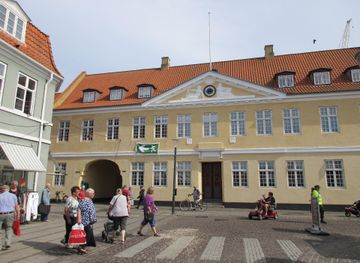
Explore Køge, Denmark's coastal gem, with its medieval charm, beautiful marina, and close proximity to the stunning Stevns Klint UNESCO World Heritage site.
Explore Køge
Explore more of Denmark
Discover Denmark: A perfect blend of history, modern design, and the cozy concept of hygge. Explore vibrant cities, serene landscapes, and world-class cuisine.
Explore Denmark