Lur Blowers, Køge Travel Guide
Free Guide: A towering column of bronze horn players above Copenhagen’s City Hall Square, blending Bronze Age symbolism, brewer philanthropy and urban theatre in one landmark.


A brief summary of Lur Blowers
A towering column of bronze horn players above Copenhagen’s City Hall Square, blending Bronze Age symbolism, brewer philanthropy and urban theatre in one landmark.
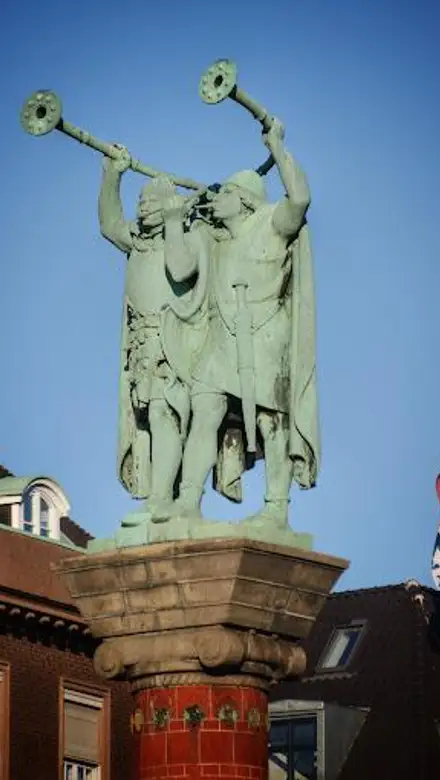
Towering above Copenhagen’s busy City Hall Square, the Lur Blowers monument is a 20m‑high bronze-and-brick column topped by two caped figures playing ancient-style lurs, the curved Bronze Age horns of Scandinavia. Gifted by the Carlsberg foundations in 1914 to mark brewer J. C. Jacobsen’s centenary, it has become one of the city’s most recognisable silhouettes. Up close, the red-brick column, circular bench and finely modelled musicians reward a lingering look amid the urban bustle of Rådhuspladsen.
On-site amenities
 Restrooms
 Drink options
 Drinking water
 Food options
 Seating areas
 Trash bins
 Information boards
Opening hours
- Every dayOpen 24 hours
Opening hours as listed on the venue’s Google Business Profile. Hours can change for services and special events, so check with the venue before you go.
- Address
- Rådhuspladsen 57, 1550 København
Getting there
Metro
City Bus
On Foot from Central Copenhagen
Bicycle
Discover more about Lur Blowers
Bronze Horns Above the City Hall Square
Standing beside Copenhagen City Hall on Rådhuspladsen, the Lur Blowers monument lifts your gaze high above the traffic and trams to two stern bronze figures frozen mid-note. Cloaked and helmeted, they lean into their long, curved horns – lurs – instruments that trace their origins back to Scandinavia’s Bronze Age. Perched atop a tall red-brick column, they seem to call across the square, a visual fanfare announcing the heart of the Danish capital.At street level, the monument is surprisingly approachable. A circular bench is built into the base of the column, inviting you to sit directly beneath the looming musicians. From here, the column’s details come into focus: the warm tone of the brickwork, the carefully proportioned pedestal, and the inscription that links this dramatic sculpture to one of Denmark’s most influential industrialists.
Carlsberg’s Gift and a Brewer’s Centenary
The Lur Blowers were commissioned as a gift from the Carlsberg Foundation and New Carlsberg Foundation to the City of Copenhagen, created to mark the 100th anniversary of Carlsberg founder J. C. Jacobsen’s birth in 1811. The inscription on the column namechecks Jacobsen and his birth date, firmly tying the monument to the era when Danish brewing wealth was channelled into public art and architecture.Architect Anton Rosen designed the column, while sculptor Siegfried Wagner crafted the powerful bronze figures at its summit. The monument was inaugurated in 1914, at a time when Copenhagen was rapidly modernising. Placing this bold, historicising sculpture in the new City Hall Square aligned civic pride, commercial success and an idealised Nordic past in a single, highly visible landmark.
Design Choices and the Pair of Musicians
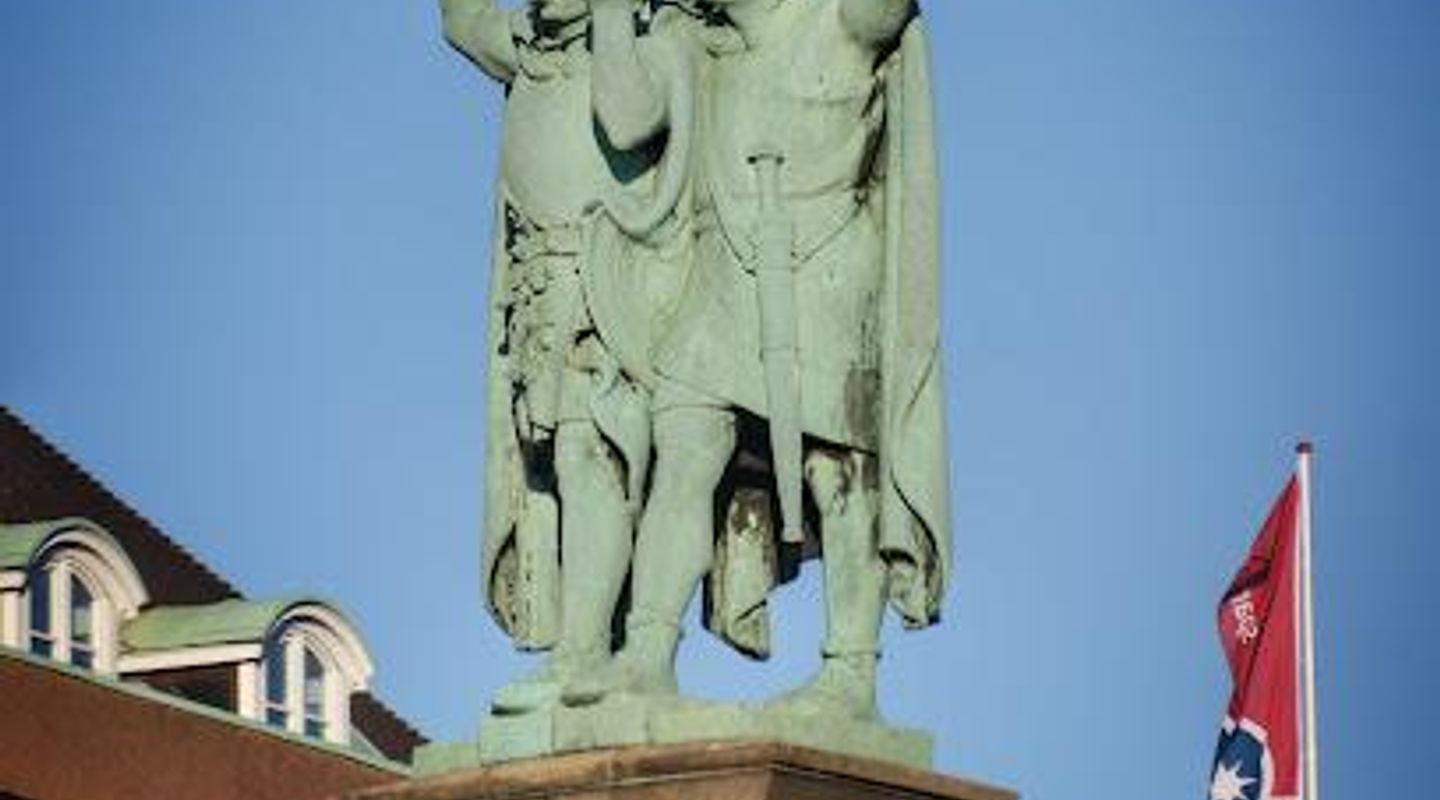
Early plans envisioned only a single horn player on the column, but the design was altered late in the process. Lurs are tuned in pairs, and archaeological finds in Denmark often uncover them as matched sets. Reflecting this, the final sculpture shows two musicians standing very close together, their instruments raised in parallel arcs. The tight grouping gives the work a compact, unified silhouette that reads clearly against the sky from far across the square.Look closely and you can see how the cloaks, helmets and muscular poses evoke a romanticised vision of ancient warriors or ritual specialists. The lurs themselves are modelled on real finds such as the Brudevælte lurs, with their distinctive inverted curves. Even if you know nothing of Bronze Age music, the upward sweep of metal and the purposeful stances convey a sense of ceremony and sound.
An Ancient Instrument in a Modern Capital
The monument’s power rests partly on the mystique of the lur. These bronze horns, dating to around 1000 BC, have been unearthed in Danish bogs and are thought to have been used in rituals, processions or possibly in battle. They are strongly associated with Nordic identity and have entered everyday culture through brands, imagery and folklore. By placing lur players above the City Hall Square, Copenhagen fused a prehistoric emblem with its modern civic stage.Just a short walk away, original lurs are displayed in the National Museum of Denmark, where you can see the intricate craftsmanship that inspired the sculpted instruments overhead. On the square itself, the Lur Blowers act as an accessible introduction – a giant, theatrical reminder that the past is never far from the surface in this otherwise contemporary urban setting.
Part of the Theatre of Rådhuspladsen
The Lur Blowers do not stand alone. Around them, Rådhuspladsen is framed by the red-brick City Hall with its tall clock tower, the Dragon Fountain, the Hans Christian Andersen statue, and the start of the pedestrian street Strøget. In this ensemble, the column functions as a vertical exclamation mark, punctuating the space and helping visitors orient themselves among the crowds, buses and bikes.Because the monument is outdoors and always accessible, you can experience it in many moods: silhouetted against a pale winter sky, glowing in late-evening summer light, or lit dramatically at night as the square thrums with events and gatherings. Whether you pause briefly for a photograph or linger on the bench beneath the column, the Lur Blowers offer a compact but characterful insight into Copenhagen’s blend of history, artistry and everyday life.
Evendo Review Centre
 Google
Guest reviews
Best time to go
Quietest: Jan, Feb & Mar · at 1am or at 2am or at 5am
Busy times are Evendo estimates for a typical year, to help you plan. Actual crowds vary with events, school holidays and the weather.
Explore Lur Blowers on the map
A handpicked selection of must-see spots near Lur Blowers, mapped for you.
Get your free copy of our complete guide to Lur Blowers, delivered straight to you.
Everything on this page, from opening hours and how to get there to Eve’s tips and the best time to go, in one PDF you can read offline, print or share.
Already have an account? Sign in
Your Lur Blowers guide is ready.
We'll send it to · Not you? Sign out

Getting your guide ready…
We are putting together a fresh copy of the Lur Blowers guide. This can take up to a minute.
This can take a few moments. If your browser asks, choose Allow so the download can start. You'll find the guide in your Downloads folder.
Nothing happened? Download it again
Sorry, the guide is taking longer than usual. Please try again in a minute, or get it by email instead.
Unlock the best of Lur Blowers
Skip-the-line tickets, guided tours with entry, and walking tours of the area, booked in a few clicks.
 Tour with entry
Copenhagen History and Folklore Self Guided Audio Walking Tour
from $9.26 Tour with entry
Private Walking Grand Tour of Copenhagen
from $357.29 Tour with entry
Copenhagen City, Old Town, Nyhavn, Architecture Walking Tour
from $410.83 Tour with entry
Family Tour of Copenhagen Old Town, Nyhavn with Boat Cruise
from $448.45
Other nearby places you may find interesting
The closest places of the same kind, if this one is not quite what you had in mind.
-
-
-
-
-


Swipe for more places
More to explore near Lur Blowers

 Best experiences near Lur Blowers
 Best hotels near Lur Blowers
 Best landmarks near Lur Blowers
 Best attractions near Lur Blowers
 Best shops near Lur Blowers
 Best restaurants near Lur Blowers
 Best bars near Lur Blowers
Do you manage this location?
Take control to get all the benefits, like improved information, better appearance, and stronger visibility across AI-powered discovery.
Explore more
Explore more of Køge
Explore Køge, Denmark's coastal gem, with its medieval charm, beautiful marina, and close proximity to the stunning Stevns Klint UNESCO World Heritage site.
Explore Køge
Explore more of Denmark
Discover Denmark: A perfect blend of history, modern design, and the cozy concept of hygge. Explore vibrant cities, serene landscapes, and world-class cuisine.
Explore Denmark