Jens Olsen's World Clock Travel Guide
Free Guide: A gilded astronomical masterpiece with 15,448 parts, calculating time and cosmos for the next 2,500 years.


A brief summary of Jens Olsen's World Clock
A gilded astronomical masterpiece with 15,448 parts, calculating time and cosmos for the next 2,500 years.
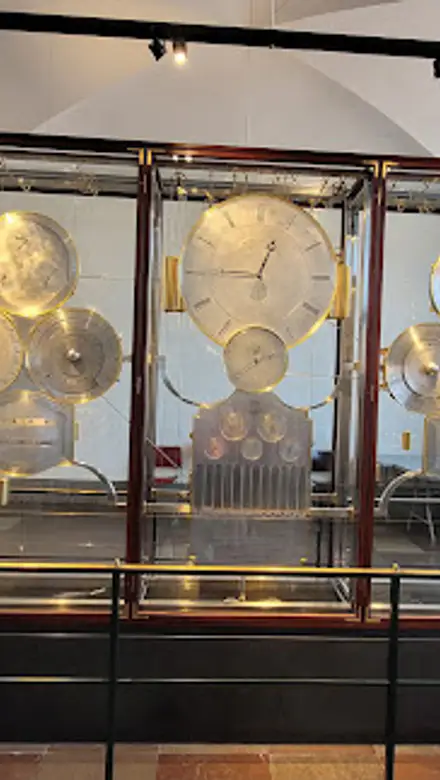
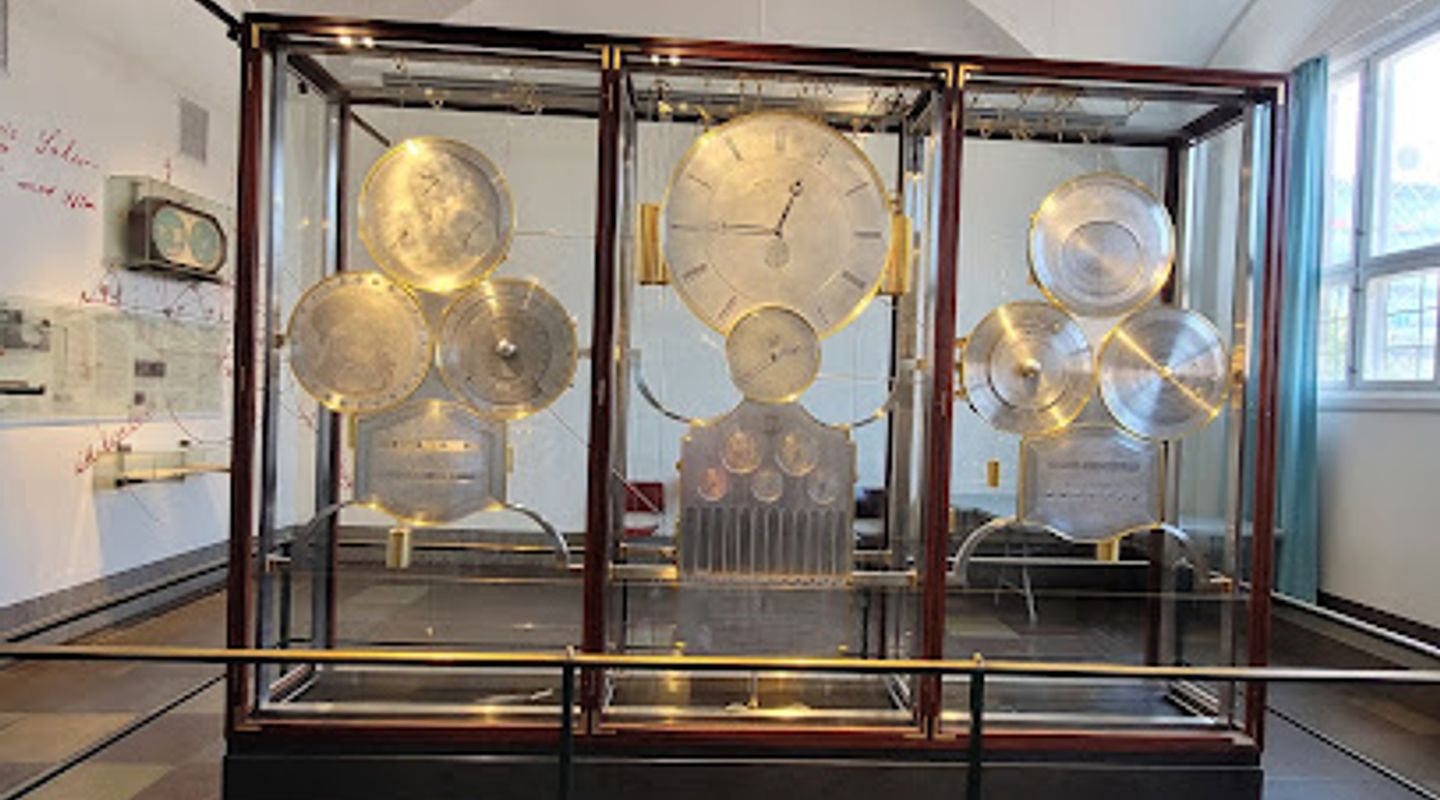
A masterpiece of mechanical engineering housed in Copenhagen's City Hall, Jens Olsen's World Clock is one of the world's most precise astronomical timepieces. With 15,448 working parts, this gilded marvel displays not only local and solar time but also planetary positions, celestial events, and a perpetual calendar. Completed in 1955 after decades of meticulous calculation and craftsmanship, the clock requires winding just once weekly and will function accurately for the next 2,500 years.
On-site amenities
 Restrooms
 Seating areas
 Information boards
 Visitor centre
Opening hours
- Mon9:30 am–4 pm
- Tue9:30 am–4 pm
- Wed9:30 am–4 pm
- Thu9:30 am–4 pm
- Fri9:30 am–4 pm
- Sat9:30 am–1 pm
- SunClosed
Opening hours as listed on the venue’s Google Business Profile. Hours can change for services and special events, so check with the venue before you go.
- Address
- Rådhuspladsen 1, 1552 København
- Phone
- Website
Getting there
Metro
Walking
Bicycle
Bus
Discover more about Jens Olsen's World Clock
A Mechanical Wonder Born from Inspiration
Jens Olsen's World Clock stands as one of the most remarkable achievements in horological history. The story begins in 1897 when a young locksmith named Jens Olsen, then just 25 years old, visited Strasbourg and encountered the astronomical clock at Notre-Dame Cathedral. This encounter sparked a lifelong obsession. Olsen dedicated himself to mastering watchmaking and spent years calculating and planning his own comprehensive astronomical clock—a project that would consume the remainder of his life and outlive him by a decade.
Engineering Precision Across 15,448 Parts
The clock's complexity is staggering. It comprises 12 independent movements working in concert, with a total of 15,448 precisely calibrated parts. The fastest gear completes a revolution every ten seconds, while the slowest turns at a glacial pace—one complete rotation every 25,753 years. This extraordinary range of speeds allows the clock to simultaneously track immediate time and cosmic cycles spanning millennia. The construction materials reflect meticulous attention to detail: the gearing and module structure are largely gold-plated brass, while the dials are rhodium plated. The pendulum rod is made of Invar, and the impulse rods are sapphire, ensuring durability and accuracy across centuries.
From Vision to Reality: A Collaborative Achievement
Olsen began the actual production phase in 1943, assembling a skilled team of craftspeople to bring his calculations to life. However, illness claimed him in 1945, before the clock's completion. The project was carried forward by Otto Mortensen, a young clockmaker, working alongside architect Gunnar Biilmann Petersen, who designed the clock's striking exterior. After more than a decade of careful calibration and assembly, the masterpiece was finally set in motion at precisely 3 p.m. on December 15, 1955, by King Frederik IX and Olsen's youngest grandchild, Birgit—a symbolic moment honoring both the creator's legacy and the collaborative effort that brought his vision to completion.
A Display of Astronomical and Temporal Knowledge
The clock's dials reveal an extraordinary range of information. Beyond displaying local time and true solar time, it shows the exact time at locations around the globe through its Synchronoscope—a dial featuring a fixed map around which a 24-hour dial rotates. The clock calculates sunrises and sunsets, tracks the positions of stars and planets with remarkable precision, displays lunar and solar eclipses, and maintains a perpetual Gregorian calendar that automatically accounts for leap years and changing holiday dates far into the future. This comprehensive astronomical display transforms the clock into both a timekeeping device and an educational instrument about our place in the cosmos.
Preservation and Modern Display
The clock is housed in a dedicated room within City Hall, enclosed in a large glass case with wooden and stainless steel framing, sitting on a granite base. The enclosure features internal lighting and is maintained at precise temperature and humidity levels by a ventilation system in the building's basement. This careful environmental control ensures the mechanism's longevity. A restoration process undertaken between 1995 and 1997 by Danish clock conservation specialist Søren Andersen returned the clock to optimal working condition. Today, visitors can view the clock from all sides, appreciating both its intricate mechanical beauty and the profound knowledge embedded within its design.
A Legacy of Human Ingenuity
Jens Olsen's World Clock represents far more than a functional timepiece. It embodies decades of astronomical calculation, mechanical innovation, and artistic craftsmanship. The clock stands as a testament to human curiosity about time, space, and our relationship to the cosmos. Its requirement for winding just once per week, combined with its projected accuracy for 2,500 years, speaks to the timeless quality of precision engineering. For visitors, the clock offers a window into both the history of horology and the enduring power of a single person's vision to create something that will outlast generations.
Evendo Review Centre
 Google
Guest reviews
Best time to go
Quietest: Jan, Feb & Nov · before 9am or from 5pm
Busy times are Evendo estimates for a typical year, to help you plan. Actual crowds vary with events, school holidays and the weather.
Explore Jens Olsen's World Clock on the map
A handpicked selection of must-see spots near Jens Olsen's World Clock, mapped for you.
Get your free copy of our complete guide to Jens Olsen's World Clock, delivered straight to you.
Everything on this page, from opening hours and how to get there to Eve’s tips and the best time to go, in one PDF you can read offline, print or share.
Already have an account? Sign in
Your Jens Olsen's World Clock guide is ready.
We'll send it to · Not you? Sign out

Getting your guide ready…
We are putting together a fresh copy of the Jens Olsen's World Clock guide. This can take up to a minute.
This can take a few moments. If your browser asks, choose Allow so the download can start. You'll find the guide in your Downloads folder.
Nothing happened? Download it again
Sorry, the guide is taking longer than usual. Please try again in a minute, or get it by email instead.
Unlock the best of Jens Olsen's World Clock
Skip-the-line tickets, guided tours with entry, and walking tours of the area, booked in a few clicks.

Other nearby places you may find interesting
The closest places of the same kind, if this one is not quite what you had in mind.
-
-
-
-
-


Swipe for more places
More to explore near Jens Olsen's World Clock
-
 Best experiences near Jens Olsen's World Clock
-
 Best hotels near Jens Olsen's World Clock
-
 Best landmarks near Jens Olsen's World Clock
-
 Best attractions near Jens Olsen's World Clock
-
 Best shops near Jens Olsen's World Clock
-
 Best restaurants near Jens Olsen's World Clock
-
 Best bars near Jens Olsen's World Clock


Do you manage this location?
Take control to get all the benefits, like improved information, better appearance, and stronger visibility across AI-powered discovery.
Explore more
Explore more of Zealand
Discover the charm of Zealand, Denmark's largest island, blending vibrant city life in Copenhagen with serene coastal beauty and rich cultural heritage.
Explore Zealand
Explore more of Denmark
Discover Denmark: A perfect blend of history, modern design, and the cozy concept of hygge. Explore vibrant cities, serene landscapes, and world-class cuisine.
Explore Denmark