Cold war museum Stevnsfort Travel Guide
Free Guide: Descend into a former NATO stronghold carved into the cliffs of Stevns Klint, where underground tunnels, heavy guns and Baltic Sea views bring the Cold War vividly to life.


A brief summary of Cold war museum Stevnsfort
Descend into a former NATO stronghold carved into the cliffs of Stevns Klint, where underground tunnels, heavy guns and Baltic Sea views bring the Cold War vividly to life.
Carved deep into the chalk cliffs above the Baltic Sea, the Cold War Museum Stevnsfort reveals a once-top-secret NATO fortress that guarded the entrance to Øresund and Copenhagen. Eighteen metres below ground, a 1.6–1.8km network of tunnels, command rooms and gun emplacements tell the story of nuclear brinkmanship, radar surveillance and everyday life for the soldiers stationed here. Above ground, missiles, tanks and coastal views complete an atmospheric journey into recent history.
On-site amenities
 Restrooms
 Drink options
 Food options
 Seating areas
 Sheltered areas
 Picnic areas
 Trash bins
 Information boards
 Visitor centre
Opening hours
- Every day10 am–5 pm
Opening hours as listed on the venue’s Google Business Profile. Hours can change for services and special events, so check with the venue before you go.
- Address
- Korsnæbsvej 60, 4673 Rødvig Stevns
- Phone
- Website
Getting there
Regional train and bus from Copenhagen
Car from Copenhagen and Køge area
Cycling along the Stevns coastline
Discover more about Cold war museum Stevnsfort
From Secret Fortress to Story of the Cold War
Stevnsfort was built in the 1950s as part of Denmark’s frontline defence in the Cold War, positioned to monitor and, if necessary, block Soviet ships moving through the Baltic towards Copenhagen and the NATO heartland. Hidden beneath a flat coastal field by the dramatic cliffs of Stevns Klint, the fortress remained classified for decades, its existence known only to those who served here and a handful of officials.Today the site has been transformed into a museum, but much of the infrastructure remains exactly as it was during its operational life. Maps still line the walls of the operations rooms, equipment is left in place, and you can trace the fort’s role as a listening post, radar station and heavy artillery battery poised for a conflict that, fortunately, never erupted.
Life 18 Metres Underground
The heart of the museum lies 18 metres below ground in a honeycomb of tunnels and chambers carved out of resilient limestone. The underground complex stretches for roughly 1.6 to 1.8 kilometres, housing everything from communications centres and radar plotting rooms to dormitories, storerooms and technical workshops. The thick chalk and reinforced construction were designed to withstand blast pressure and protect the garrison from nuclear, biological and chemical weapons.Guided tours lead you through these passageways, where constant cool temperatures and a slightly damp atmosphere add to the sense of stepping back in time. You pass heavy blast doors, cable-lined ceilings and narrow stairways, imagining how several hundred personnel could seal themselves inside for weeks, cut off from the surface yet still actively monitoring the Baltic Sea.
Artillery, Missiles and the View to Sweden
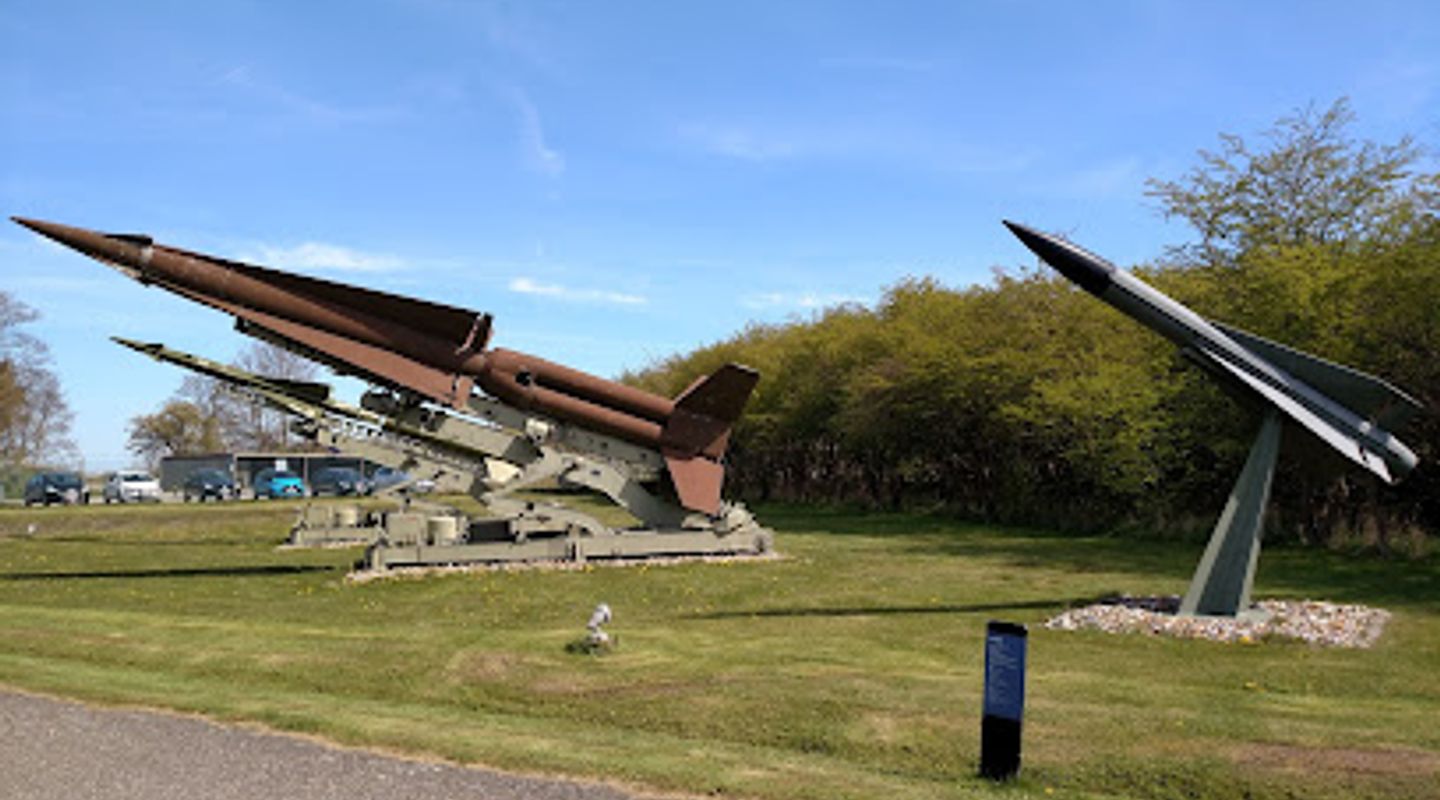
Above ground, the military landscape opens up around you. The most striking features are the big 150 mm coastal guns, originally built for the Atlantic Wall and later moved here to form Stevnsfort’s main artillery. From their positions they could reach targets up to around 23 kilometres away, including the Swedish coast, effectively controlling the gateway between the Baltic and the rest of NATO waters.Scattered around the terrain you also find Hawk surface-to-air missiles, radar installations, searchlights and tanks, all set against wide views over the Baltic Sea. Information panels explain how guns, missiles and sensors worked together: coastal artillery covering the sea, missiles guarding the air, and radar and listening equipment feeding data into the underground command hub.
Atmosphere, Accessibility and Practical Details
On the surface, the museum grounds feel spacious and windswept, with grass, concrete platforms and a few sheltered areas where you can sit with a packed lunch. The welcome building includes a visitor centre, small exhibition spaces and a shop selling drinks, snacks and souvenirs. Restrooms are located here; there are no toilets in the underground complex itself, which is worth bearing in mind before a tour.Access underground is via a flight of around 65 steps, but there is also an elevator that improves accessibility for visitors with limited mobility. Some internal rooms and corridors remain narrow or stepped, so not every area is fully accessible, though manual wheelchairs can be used on parts of the route. The museum recommends warm layers: even on hot summer days, temperatures underground hover around 10°C.
Planning Your Visit to Stevnsfort
Stevnsfort is generally open daily in the main season, with shorter hours and selected weeks open in the shoulder months, while winter often brings a closure period. The outdoor terrain and exhibitions can be explored independently during opening hours, but the underground complex is only accessible on guided tours at set times, so advance booking is strongly advised, especially in summer and school holidays.A typical visit lasts two to three hours, combining a guided tour below ground with time to wander the surface installations and enjoy the sea views. Families should note that prams are not allowed underground, and dogs are only permitted in the open-air areas (service dogs are an exception). With its blend of history, engineering and coastal scenery, the museum works well as a focused day trip or as part of a wider exploration of Stevns Klint and South Zealand.
Evendo Review Centre
 Google
Guest reviews
Best time to go
Quietest: Jan, Mar & Dec · before 8am or from 7pm
Busy times are Evendo estimates for a typical year, to help you plan. Actual crowds vary with events, school holidays and the weather.
Explore Cold war museum Stevnsfort on the map
A handpicked selection of must-see spots near Cold war museum Stevnsfort, mapped for you.
Get your free copy of our complete guide to Cold war museum Stevnsfort, delivered straight to you.
Everything on this page, from opening hours and how to get there to Eve’s tips and the best time to go, in one PDF you can read offline, print or share.
Already have an account? Sign in
Your Cold war museum Stevnsfort guide is ready.
We'll send it to · Not you? Sign out

Getting your guide ready…
We are putting together a fresh copy of the Cold war museum Stevnsfort guide. This can take up to a minute.
This can take a few moments. If your browser asks, choose Allow so the download can start. You'll find the guide in your Downloads folder.
Nothing happened? Download it again
Sorry, the guide is taking longer than usual. Please try again in a minute, or get it by email instead.
Other nearby places you may find interesting
The closest places of the same kind, if this one is not quite what you had in mind.
-
Labyrint Lolland-Falster Navigate winding paths through Denmark's enchanting countryside maze—a family adventure combining nature, challenge, and outdoor exploration.
-
Guldborgsund Zoo & Botanisk Have A compact blend of zoo and botanical garden that long served Nykøbing Falster as a green, family-friendly escape of animals, flowers and playgrounds close to town.
-
Horreby Lyng Falster’s last raised bog: a quiet mosaic of peat, heather and history, where boardwalks, rare habitats and ancient finds meet under wide Danish skies.
-
Ejegod Windmill A beautifully restored 1816 smock mill on Falster, Ejegod Windmill pairs classic Danish milling heritage with a cosy toy-filled mill house in northern Nykøbing.
-
Gedser Lighthouse Historic brick lighthouse at Denmark’s southern tip, where raw Baltic coastline, seabird migration and two centuries of maritime history meet in wide-open skies.
Swipe for more places
More to explore near Cold war museum Stevnsfort
-
 Best experiences near Cold war museum Stevnsfort
-
 Best hotels near Cold war museum Stevnsfort
-
 Best landmarks near Cold war museum Stevnsfort
-
 Best attractions near Cold war museum Stevnsfort
-
 Best shops near Cold war museum Stevnsfort
-
 Best restaurants near Cold war museum Stevnsfort
-
 Best bars near Cold war museum Stevnsfort







Do you manage this location?
Take control to get all the benefits, like improved information, better appearance, and stronger visibility across AI-powered discovery.
Explore more

Explore more of Lolland-Falster
Discover Lolland-Falster: Denmark's serene southern islands with stunning beaches, historic castles, and charming coastal towns offering a perfect blend of nature and culture.
Explore Lolland-Falster
Explore more of Denmark
Discover Denmark: A perfect blend of history, modern design, and the cozy concept of hygge. Explore vibrant cities, serene landscapes, and world-class cuisine.
Explore Denmark