Halsted Priory Travel Guide
Free Guide: Historic manor and former Benedictine priory on Lolland, where riverside parkland, a Neo‑Gothic hall and a medieval church trace centuries of Danish history.


A brief summary of Halsted Priory
Historic manor and former Benedictine priory on Lolland, where riverside parkland, a Neo‑Gothic hall and a medieval church trace centuries of Danish history.
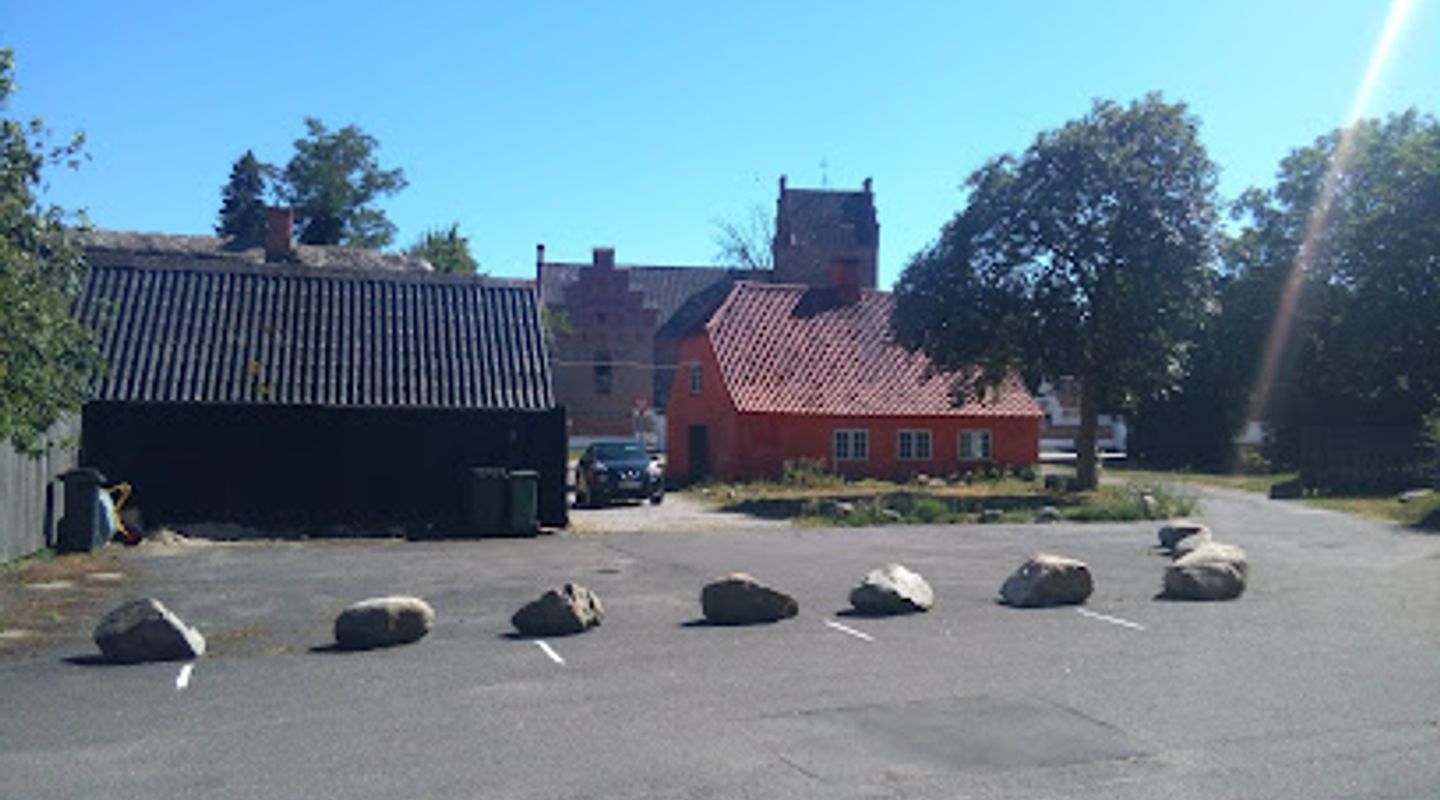
Halsted Priory, just outside Nakskov on the island of Lolland, is a historic manor and former Benedictine priory set in gentle riverine parkland. The estate layers a Neo‑Gothic 19th‑century main building, a 16th‑century wing, and the neighbouring medieval church into one cohesive ensemble. Public access typically focuses on the landscaped park, riverside paths and exteriors, offering a tranquil glimpse of Danish aristocratic life and monastic heritage in a serene countryside setting.
On-site amenities
 Restrooms
 Seating areas
 Trash bins
 Information boards
- Address
- 4900 Nakskov
- Phone
- Website
Getting there
Regional train and bus from the Lolland–Falster area
Taxi from central Nakskov
Driving from elsewhere on Lolland
Cycling from Nakskov and nearby villages
Discover more about Halsted Priory
Monastic roots on quiet Lolland shores
Halsted Priory, known in Danish as Halsted Kloster, lies in the small village of Halsted a few kilometres from Nakskov on Lolland. The story begins in the Middle Ages, when a Benedictine community was established here under royal patronage, adding a religious chapter to an estate that had already been crown property since Viking times. The nearby granite parish church, first mentioned in the 12th century, predates the priory and later became its monastery church, tying worship, landownership and local life closely together.Life at the priory followed the steady rhythm of monastic days: prayer in the church, work in the surrounding fields and woods, and hospitality to travellers moving across this low, fertile island. Over time the priory’s influence grew, with successive monarchs confirming its rights and holdings, weaving it into the broader ecclesiastical network of medieval Denmark.
Fire, reformation and the rise of a manor estate
In the early 16th century, the tranquillity here was violently interrupted when raiders from the Hanseatic League pushed up the nearby fjord and set fire to the priory buildings. The complex was badly damaged, and within a few decades the Reformation swept across Denmark, dissolving Catholic houses and transferring their lands to the Crown. At Halsted, monastic life ended, but the estate itself entered a new phase as a secular manor.The Crown later granted Halsted to noble families, and across the 16th and 17th centuries the site was reshaped into a barony with a representative main building and working farmlands. The old priory structures gave way to wings and service buildings suited to aristocratic residence. What had once been cloisters and convent gardens gradually transformed into courtyards, formal plantings and productive fields, reflecting changing ideas about power, status and landscape.
Architecture from Renaissance wing to Neo‑Gothic hall
Today the architectural core of Halsted Priory tells this layered story in brick and stone. To one side stands the older main building from the late 16th century, with its more modest Renaissance proportions and references to fortified manor houses. Opposite it rises the Neo‑Gothic mansion erected in the mid‑1800s, with pointed gables, decorative brickwork and tall windows consciously evoking a romanticised medieval past.Halsted Church forms a third anchor in this ensemble, just north of the manor. The church retains Romanesque masonry from the 12th century, later Gothic extensions and Baroque interior details such as carved pulpits and altarpieces. Together, church and manor outline the evolution from priory to private estate, and from medieval piety to 19th‑century historicism.
Parkland, river and a carefully managed landscape
Encircling the buildings is a gently sloping Baroque‑influenced park laid out along the Halsted River. The design favours long sightlines, clipped lawns and scattered mature trees framing views of facades and water. Walking paths follow the riverbank and loop through open grass and shaded edges, giving visitors an unhurried way to experience the setting.The park is relatively compact yet feels expansive thanks to the open agricultural land beyond. Birdsong, the sound of wind in the trees and the slow movement of the river contribute to a calm, contemplative atmosphere. The estate still functions as a working property, and areas may occasionally be set aside for events or private use, so the landscape balances heritage preservation with contemporary life.
Visiting a partly private historic enclave
Halsted Priory remains in private ownership, and access is structured to respect both heritage and privacy. The church and park are generally the focus for casual visitors, while the interiors of the main houses open only on selected days or for special occasions. This limited access means the experience concentrates on exteriors, landscape and the broader historic context rather than detailed interior tours.Information on site is typically modest, so arriving with some background enhances appreciation of the subtle architectural details, relationship between church and manor, and the way the river shapes the grounds. Even a short visit can be rewarding, especially for travellers interested in Danish history beyond the major castles and for those who enjoy quiet, uncrowded places.
A peaceful stop in the Lolland countryside
Set away from major highways and urban noise, Halsted Priory lends itself to slow travel. It works well as part of a wider exploration of Lolland’s manor landscapes, small villages and coastal scenery. The gently rolling fields, hedgerows and occasional wind turbines surrounding the estate underline the island’s long agricultural tradition.Whether you pause for a short walk in the park, study the church architecture or simply sit on a bench to watch light shift across the brick walls, the priory rewards an unhurried pace. It offers a compact yet telling cross‑section of Danish history—from medieval monasticism to Reformation politics and 19th‑century romanticism—quietly preserved beside a small river on a green island.
Evendo Review Centre
 Google
Guest reviews
Best time to go
Quietest: Jan, Feb & Mar · before 8am or at 8pm
Busy times are Evendo estimates for a typical year, to help you plan. Actual crowds vary with events, school holidays and the weather.
Explore Halsted Priory on the map
A handpicked selection of must-see spots near Halsted Priory, mapped for you.
Get your free copy of our complete guide to Halsted Priory, delivered straight to you.
Everything on this page, from opening hours and how to get there to Eve’s tips and the best time to go, in one PDF you can read offline, print or share.
Already have an account? Sign in
Your Halsted Priory guide is ready.
We'll send it to · Not you? Sign out

Getting your guide ready…
We are putting together a fresh copy of the Halsted Priory guide. This can take up to a minute.
This can take a few moments. If your browser asks, choose Allow so the download can start. You'll find the guide in your Downloads folder.
Nothing happened? Download it again
Sorry, the guide is taking longer than usual. Please try again in a minute, or get it by email instead.
Other nearby places you may find interesting
The closest places of the same kind, if this one is not quite what you had in mind.
-
-
-
-
-


Swipe for more places
More to explore near Halsted Priory

 Best experiences near Halsted Priory
 Best hotels near Halsted Priory
 Best landmarks near Halsted Priory
 Best attractions near Halsted Priory
 Best shops near Halsted Priory
 Best restaurants near Halsted Priory
 Best bars near Halsted Priory
Do you manage this location?
Take control to get all the benefits, like improved information, better appearance, and stronger visibility across AI-powered discovery.
Explore more

Explore more of Lolland-Falster
Discover Lolland-Falster: Denmark's serene southern islands with stunning beaches, historic castles, and charming coastal towns offering a perfect blend of nature and culture.
Explore Lolland-Falster
Explore more of Denmark
Discover Denmark: A perfect blend of history, modern design, and the cozy concept of hygge. Explore vibrant cities, serene landscapes, and world-class cuisine.
Explore Denmark