

Stiftsmuseum Maribo, Lolland Falster Travel Guide
Intimate island museum beside Maribo Station, bringing 10,000 years of Lolland-Falster history to life from Stone Age girl Lola to rune stones and storm surges.
Housed in a stately 1890s building beside Maribo’s railway station, Stiftsmuseet Maribo is the cultural history hub for the islands of Lolland and Falster. Inside, atmospheric exhibitions trace 10,000 years of local life, from the Stone Age story of “Lola” – reconstructed from DNA found in ancient birch-bark chewing gum – to medieval Christianity, rune stones, and dramatic storm surges that reshaped the coastline. Compact yet rich in detail, it’s an engaging stop for anyone curious about Denmark’s southern islands.
A brief summary to Stiftsmuseum Maribo
- Banegårdspladsen 11, Maribo, 4930, DK
- Click to display
- Click to display
- Duration: 1.5 to 3 hours
- Mid ranged
-
 Indoor
- Mobile reception: 5 out of 5
- Monday 10 am-4 pm
- Tuesday 10 am-4 pm
- Wednesday 10 am-4 pm
- Thursday 10 am-4 pm
- Friday 10 am-4 pm
- Saturday 10 am-3 pm

Know before you go
Hi, I'm Eve. Here are a few practical things to know before exploring Stiftsmuseum Maribo.
- Check current opening dates in advance; the museum sometimes closes for extended periods outside the main season.
- Start on the ground floor with Lola and OMG to grasp the museum’s core stories before heading upstairs to more detailed exhibits.
- Allow time in the foyer to study the rune stones; use the translations to understand their brief but revealing inscriptions.
- If you prefer quieter galleries, plan a visit during the last couple of hours of opening, when school groups are less common.
- Combine your visit with a lakeside walk or a stop at the nearby open-air museum “De gamle Huse” for a fuller picture of Maribo’s heritage.
Do you manage this location?
Take control to get all the benefits, like improved information, better appearance, and stronger visibility across AI-powered discovery. Learn more about listing your business on Evendo
Activate your presenceOther nearby places you may find interesting
The closest places of the same kind, if this one is not quite what you had in mind.
Explore Stiftsmuseum Maribo on the Map
A handpicked selection of must-see spots near Stiftsmuseum Maribo, mapped for you.
Getting There
-
Regional train
From Copenhagen, take the regional train towards Rødby or Nykøbing Falster and change at Nykøbing Falster for the branch line to Maribo; the total journey usually takes about 1.5–2 hours, with trains typically running once an hour. A standard adult single from Copenhagen to Maribo generally costs around 180–260 DKK in standard class. Maribo Station is directly beside the museum, making this the most convenient option if you are travelling without a car.
-
Car from Copenhagen region
Driving from the Copenhagen area to Maribo typically takes around 1.5–2 hours, depending on traffic and route. The trip follows major motorways across Zealand and the Lolland-Falster connection, with no special vehicle requirements. Fuel and toll costs together are usually in the range of 200–350 DKK one way, depending on your car. In Maribo, look for public parking areas around Banegårdspladsen, close to both the station and the museum; time limits may apply during weekdays.
-
Local bus within Lolland-Falster
If you are staying elsewhere on Lolland or Falster, local buses link towns such as Nakskov, Rødby and Nykøbing Falster with Maribo in roughly 30–60 minutes. A standard adult single ticket for regional buses usually costs about 24–60 DKK, depending on zones. Services are less frequent in the evenings and on weekends, so check timetables in advance, and be aware that buses generally stop near the station square, a short walk from the museum.
-
Cycling on regional routes
Maribo sits on Denmark’s National Cycle Route 8, the Baltic Sea Route, and several local themed routes. From nearby countryside accommodations or campsites you can expect cycling times of 20–60 minutes on mostly flat terrain. There is no extra cost beyond bike rental, which in the region commonly ranges around 100–200 DKK per day, and the ride brings you directly into town near the station. Surfaces are generally good, but wind and rain can make the journey more demanding outside the summer months.
For the on-the-go comforts that matter to you
-
 Restrooms
-
 Drink Options
-
 Drinking Water
-
 Food Options
-
 Seating Areas
-
 Sheltered Areas
-
 Trash Bins
-
 Information Boards
-
 Visitor Center
Discover more about Stiftsmuseum Maribo
A museum at the heart of Maribo’s story
Stiftsmuseet Maribo stands just across from the town’s railway station, in a solid red-brick building from 1890 that once expressed Maribo’s confidence as a regional centre. Today it serves as the cultural history museum for Lolland and Falster, gathering archaeology, art and everyday objects into one compact, thoughtful space. Inside, high ceilings, generous windows and polished floors create a calm, almost civic atmosphere, where carefully lit exhibits draw you through layers of local history.The museum focuses on the surrounding islands rather than grand national narratives. Everyday tools, religious art, documents and personal belongings all help sketch out how people here have lived, worked and worshipped. It is an easy place to get your bearings if you are exploring the wider South Sea Islands, putting landscapes, churches and villages into context before you head back outside.Lola and the deep past of Lolland
On the ground floor, you step straight into the world of “Lola”, a Stone Age girl who lived on Lolland around 5700 years ago. Her story is based on DNA extracted from a piece of birch-bark chewing gum uncovered during archaeological excavations, an unusually intimate trace of a single individual in prehistory. Using this research, the museum reconstructs aspects of her appearance, ancestry and even likely diet, then sets her within a wider Stone Age landscape of hunters, gatherers and early farmers.The exhibition uses soundscapes, lighting and large-format visuals to evoke wetlands, shorelines and forest clearings. Stone tools, pottery and bone artefacts are displayed in a way that links them to Lola’s imagined daily routines. It is an accessible way into archaeology, turning abstract dates and typologies into something personal and memorable while underlining how modern science can wring stories from tiny, unlikely finds.Faith, symbols and medieval craftsmanship
Close by, the aptly named OMG (Oh My God) exhibition concentrates on medieval Christianity on Lolland-Falster. Here you encounter finely carved crucifixes, church furnishings and fragments of frescoes that once coloured the interiors of local village churches. Clever spotlighting isolates each object against a dark backdrop, emphasising the sculptural detail and sometimes raw emotional power of Christ figures and saints.Panels and models unpack how these churches were built, painted and used, showing how faith structured the rhythm of rural life. Symbols in the artworks are decoded, linking them to wider European traditions while keeping the focus firmly on the local parishes that commissioned and cared for them. The result is both an art-historical and social glimpse into a period when the church was the central institution in almost every community.Runestones, storm surges and shifting coastlines
The museum’s foyer hosts two rune stones, including the Sædinge and Skovlænge stones, which immediately anchor the building in Denmark’s Viking and early medieval past. Their dense runic bands, interpreted on nearby labels, offer terse commemorations of people and relationships in a landscape of farms and waterways. Standing beside them, you sense how public messages and memorials once looked in stone rather than on screens.Upstairs, more recent history comes into focus, particularly the devastating storm surges and floods that have periodically struck Lolland. Maps, photographs and eyewitness accounts illustrate how the sea has advanced and retreated, swallowing fields and reshaping the coastline. Exhibits explore the human response: dykes, drainage projects and engineering schemes that turned marshland into some of Denmark’s most fertile farmland, while always under the shadow of the next big storm.Exploring the building and practical details
The museum occupies three floors, though only the ground level – including the shop, tourist information point, Lola exhibition and OMG gallery – is step-free via a ramp at the entrance. Upper galleries are reached by wide staircases with handrails, reflecting the constraints of a 19th-century structure. Lighting varies from bright, open rooms to darker, sensor-controlled spaces where illumination follows you through the displays.Although the institution occasionally closes for seasonal breaks or refurbishment, when open it usually keeps daytime hours on weekdays with a slightly shorter Saturday. Admission is paid for adults, while children often enter free or at reduced rates, and a joint annual pass covers other Museum Lolland-Falster sites in Maribo and Nykøbing Falster. Combined with the museum’s location by the station and near the lakes, it makes an easy addition to a day exploring the town and its surroundings.












Your all‑in‑one travel companion app
Explore expert travel guides, compare and book tours, experiences, hotels, and more—all from the palm of your hand. Download now for seamless trip planning wherever your wanderlust takes you.


Explore More of Lolland Falster
Looking beyond Stiftsmuseum Maribo? Discover Lolland Falster for broader travel guides, local hot-spots, and regional highlights.
Explore Lolland Falster
World-class real dinosaur fossils and a 300-million-year journey through evolution, set inside Denmark’s Knuthenborg Safaripark on the island of Lolland.
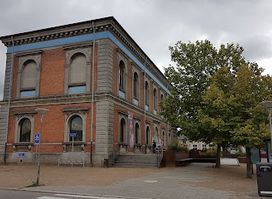
A compact island museum where a Stone Age girl, medieval church art and rune stones tell 10,000 years of Lolland-Falster stories under one historic roof.
