Glentehøj Travel Guide
Free Guide: A serene grass‑covered mound on Lolland, Glentehøj invites you inside a 5,000‑year‑old stone chamber for an intimate encounter with Denmark’s Neolithic past.


A brief summary of Glentehøj
A serene grass‑covered mound on Lolland, Glentehøj invites you inside a 5,000‑year‑old stone chamber for an intimate encounter with Denmark’s Neolithic past.
Set in gentle farmland near Torrig on Lolland, Glentehøj is a remarkably well‑preserved Neolithic passage grave dating to around 3200 BC. The grass‑covered mound rises about 5 m and spans roughly 30 m, sheltering a stone chamber reached by a low, 4 m passage. Inside, massive megaliths form a nine‑metre chamber where stone slabs still cap the tomb. Simple to visit, atmospheric and free, Glentehøj offers a vivid encounter with Denmark’s Stone Age and pairs well with nearby Dodecalith.
On-site amenities
 Seating areas
 Picnic areas
 Information boards
Opening hours
- Every dayOpen 24 hours
Opening hours as listed on the venue’s Google Business Profile. Hours can change for services and special events, so check with the venue before you go.
- Address
- 4943 Torrig
- Website
Getting there
Car from Nakskov
Car from Maribo
Bus and walking from Maribo area
Cycling from Kragenæs
Discover more about Glentehøj
Ancient mound in the Lolland countryside
Glentehøj rises from the rolling fields north of Torrig as a broad, grass‑clad mound, quietly dominating the surrounding farmland. The burial mound is about 5 metres high and roughly 30 metres across, a rounded hill that looks almost natural until you notice the stone‑framed entrance on the southern side. Sheep often graze nearby, birds circle overhead, and the wind moves through long grass, adding to the sense of timelessness.From a distance the structure seems simple, but standing at its base you begin to appreciate the sheer volume of earth and stone moved by Neolithic builders more than 5,000 years ago. In an otherwise open landscape, Glentehøj forms a focal point, one of several prehistoric mounds scattered across this part of Lolland.
Inside a 5,000‑year‑old stone chamber
A narrow, about 4‑metre‑long passage leads into the heart of the mound. You must stoop or even crawl to enter, squeezing between five upright stones on each side, topped by heavy cover slabs. Beyond, the passage opens into an elongated stone chamber approximately 9 metres long, tapering from about 3 metres wide at one end to 1.5 metres at the other.Here, seven massive support stones line each side, carrying five enormous capstones that form the roof. The air is cool and still, the light dim. With a torch or candle you can trace the contours of the stones, the gaps between them and the weight of the ceiling above. The space is empty today, yet it still feels ceremonial, inviting quiet reflection on the rituals that once took place here.
From convent estate to protected monument
For centuries Glentehøj lay within the lands of Halsted Convent, its origins already ancient and mysterious. In 1826 the mound was excavated by E. C. Kamla, private tutor to Count Reventlow, as antiquarians began to take interest in Denmark’s prehistoric remains. The work revealed the internal structure of the grave and brought some of the chamber back into use as a site of study rather than burial.By the early twentieth century, growing awareness of archaeological heritage led to restoration in 1925, stabilising the stones and reshaping the mound. On 1 January 1983 Glentehøj was formally transferred to the regional authorities, ensuring its protection as a cultural monument. Today it stands as both an outdoor museum piece and a quiet corner of rural Lolland.
Experiencing the atmosphere of the Stone Age
Visiting Glentehøj is as much about the mood as the structure. The short walk from the parking area along a footpath eases you away from modern life into a pocket of countryside where traffic noise fades. An information board explains the site in Danish, but the essentials are easy to grasp simply by looking and stepping inside.The tomb feels different in each season: in summer it is framed by vibrant green fields and buzzing insects; in autumn mists and low clouds lend a more sombre tone; in winter the mound may be dusted with frost, the stones cold to the touch. Many travellers spend time simply sitting on the grassy slope, listening to the wind and imagining the people who once gathered here for funerary rites.
A wider prehistoric landscape on Lolland
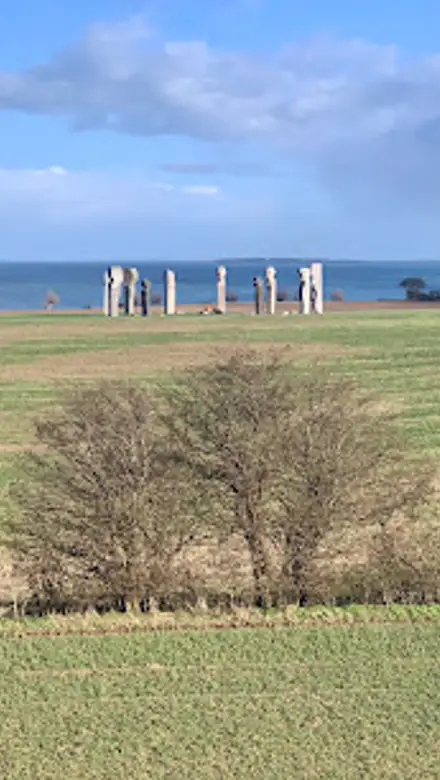
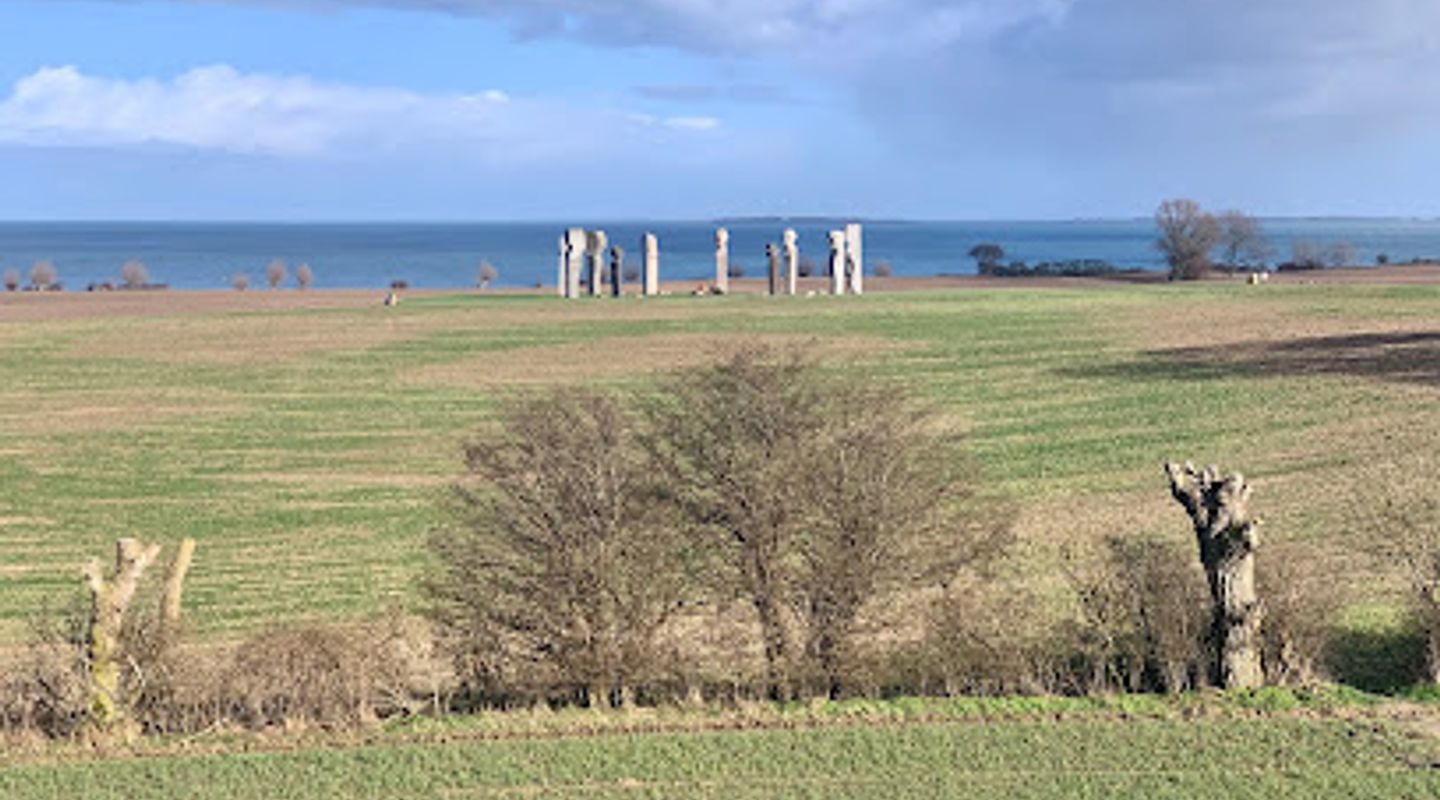
Glentehøj is part of a broader prehistoric and artistic landscape sometimes referred to as the "Lolland Alps". From nearby viewpoints you can see other burial mounds dotting the low ridges, reminders that this entire area was significant long before modern villages took shape. Just a short distance away, the contemporary stone sculpture circle of Dodecalith adds a striking modern counterpart to Glentehøj’s Neolithic engineering.Combining Glentehøj with surrounding walking paths turns a brief stop into a half‑day excursion in nature. Soft ground, open views towards the Småland waters, and ever‑changing skies make this corner of Lolland appealing even beyond its archaeological interest, especially for those who enjoy quiet, contemplative landscapes.
Practical notes for a smooth visit
The tomb interior is low and uneven, so sturdy shoes and clothes that can handle a bit of dust are useful. The passage is narrow, meaning some visitors may find it claustrophobic or choose to remain at the entrance. There is no artificial lighting inside, which is why a flashlight or candle is strongly recommended.Facilities at the mound itself are simple, but basic amenities can be found in the wider Torrig and Kragenæs area. Because Glentehøj is open all year without set opening hours, you are free to time your visit for soft morning light or an atmospheric late‑afternoon exploration, when the low sun slants across the mound and emphasises its contours in the landscape.
Evendo Review Centre
 Google
Guest reviews
Best time to go
Quietest: Jan, Feb & Mar · before 8am or at 8pm
Busy times are Evendo estimates for a typical year, to help you plan. Actual crowds vary with events, school holidays and the weather.
Explore Glentehøj on the map
A handpicked selection of must-see spots near Glentehøj, mapped for you.
Get your free copy of our complete guide to Glentehøj, delivered straight to you.
Everything on this page, from opening hours and how to get there to Eve’s tips and the best time to go, in one PDF you can read offline, print or share.
Already have an account? Sign in
Your Glentehøj guide is ready.
We'll send it to · Not you? Sign out

Getting your guide ready…
We are putting together a fresh copy of the Glentehøj guide. This can take up to a minute.
This can take a few moments. If your browser asks, choose Allow so the download can start. You'll find the guide in your Downloads folder.
Nothing happened? Download it again
Sorry, the guide is taking longer than usual. Please try again in a minute, or get it by email instead.
Other nearby places you may find interesting
The closest places of the same kind, if this one is not quite what you had in mind.
-
-
-
-
-


Swipe for more places
More to explore near Glentehøj

 Best experiences near Glentehøj
 Best hotels near Glentehøj
 Best landmarks near Glentehøj
 Best attractions near Glentehøj
 Best shops near Glentehøj
 Best restaurants near Glentehøj
 Best bars near Glentehøj
Do you manage this location?
Take control to get all the benefits, like improved information, better appearance, and stronger visibility across AI-powered discovery.
Explore more
Explore more of Lolland
Discover Lolland, Denmark's tranquil island retreat, offering lush landscapes, historic sites, and delightful local cuisine for an unforgettable escape.
Explore Lolland
Explore more of Denmark
Discover Denmark: A perfect blend of history, modern design, and the cozy concept of hygge. Explore vibrant cities, serene landscapes, and world-class cuisine.
Explore Denmark