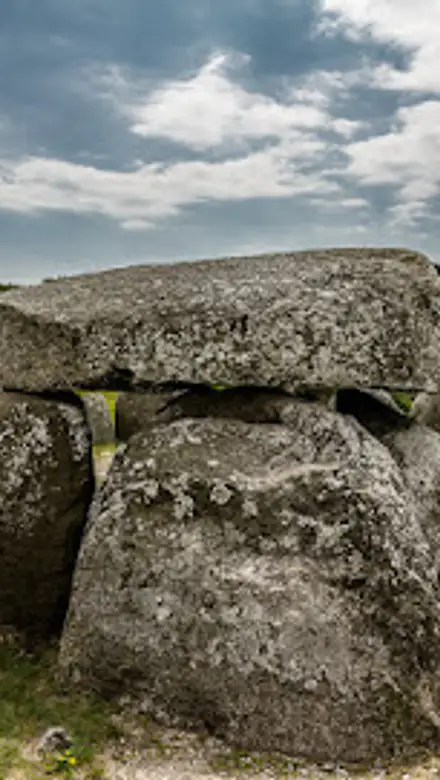
Poskær Stenhus Travel Guide
Free Guide: Denmark's largest Stone Age burial chamber, a 5,300-year-old megalithic marvel of granite and mystery.


A brief summary of Poskær Stenhus
Denmark's largest Stone Age burial chamber, a 5,300-year-old megalithic marvel of granite and mystery.
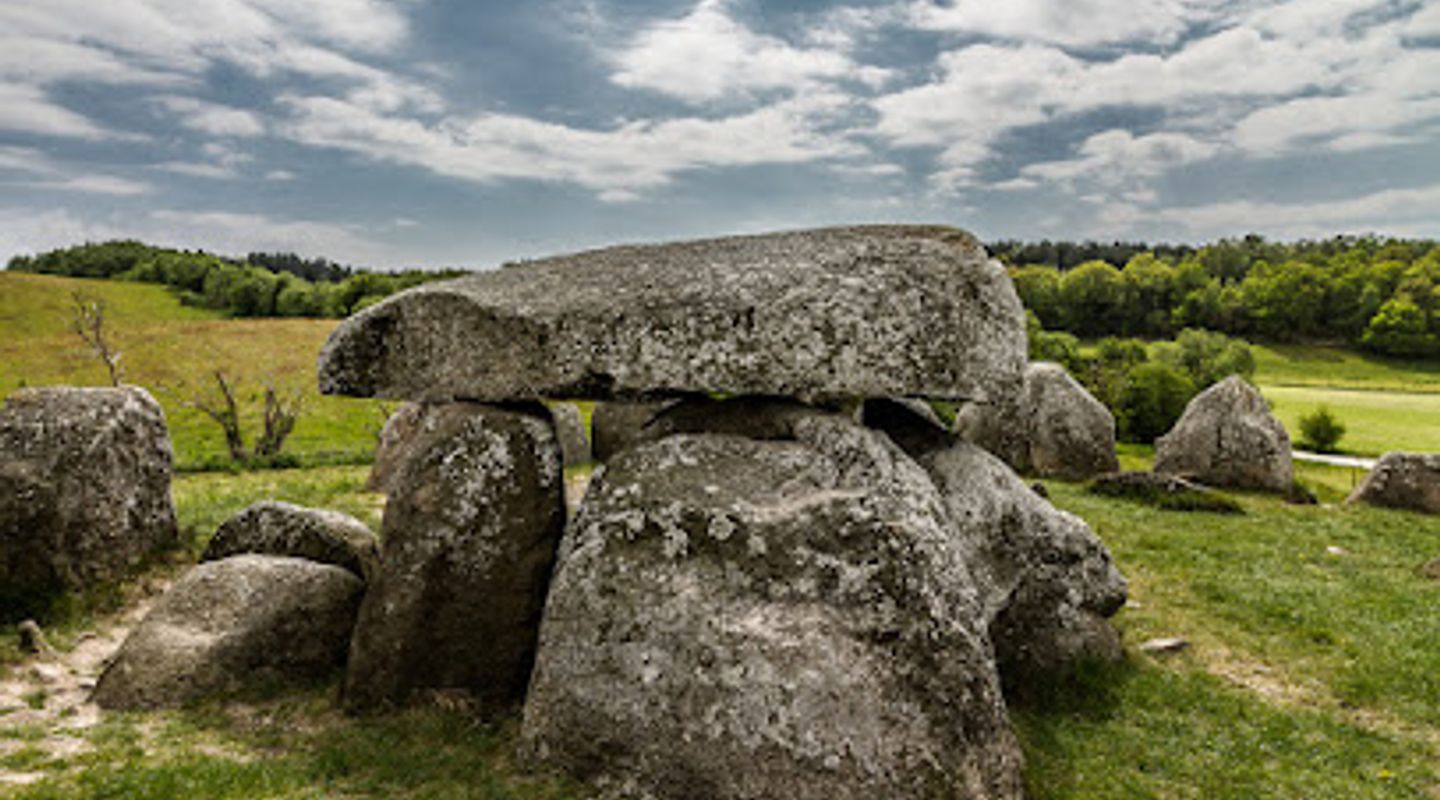
Denmark's largest round barrow, Poskær Stenhus is a monumental Stone Age burial chamber dating to around 3300 BC. Located near the village of Knebel in Djursland, this remarkable megalithic site features 23 towering kerb stones surrounding a central chamber capped by an 11-tonne granite slab. The site offers a profound connection to prehistoric Denmark and stands as a testament to the engineering ingenuity of Funnelbeaker culture peoples.
On-site amenities
 Picnic areas
 Trash bins
 Information boards
Opening hours
- Every dayOpen 24 hours
Opening hours as listed on the venue’s Google Business Profile. Hours can change for services and special events, so check with the venue before you go.
- Address
- 8420 Knebel
- Phone
Getting there
Car from Aarhus
Bus from Aarhus
Bicycle from Knebel village
Guided tour from Aarhus
Discover more about Poskær Stenhus
An Ancient Monument from the Stone Age
Poskær Stenhus stands as Denmark's largest round barrow, a monumental burial structure dating back approximately 5,300 years to around 3300 BC, during the Funnelbeaker culture period. The site consists of a central burial chamber with a diameter exceeding 2 metres and a ceiling height of nearly 1.8 metres, crowned by a massive capstone weighing 11 tonnes. This capstone is remarkable not only for its size but for its origin—it is half of an enormous granite slab that was transported to Denmark by Ice Age glaciers from Northern Scandinavia. The other half of this slab, weighing 19 tonnes, was placed as a capstone on another dolmen, Agri Dyssen, located 2 kilometres to the northwest.
The Circle of Stones and Their Arrangement
The burial chamber is encircled by 23 kerb stones, many of which rise more than 2.5 metres high, creating a striking geometric arrangement with a diameter of approximately 20 metres. Originally, there were 24 stones completing the circle, but one was removed in the 1890s by a stone cutter who had purchased it with the intention of cutting it into pieces for building material. Local officials intervened to stop the destruction, preserving the site as it largely remains today. Each of these massive stones weighs approximately 5 tonnes, and their precise arrangement suggests sophisticated understanding of spatial planning and ceremonial purpose among prehistoric peoples.
The Mystery of Stone Transport and Construction
One of the enduring mysteries surrounding Poskær Stenhus is how Stone Age people transported and erected these enormous granite slabs. It is believed that all the stones were originally sourced from the beach of Knebel Bay, approximately 2 kilometres west of the site. The logistics of moving multi-tonne stones across this distance and positioning them with such precision remains unknown, prompting ongoing speculation about the methods, tools, and social organization required for such an undertaking. The flat underside of the capstone is particularly remarkable, suggesting it may have been deliberately split from its larger parent stone by the dolmen builders themselves.
Rescue from Destruction and Modern Protection
The site's survival into the modern era was far from assured. In 1859, the landowner Ole Hansen, struggling to make a living from the land where the barrow stood, began dynamiting stones from the monument to sell them as building material. A local priest, recognizing the historical significance of the site, initiated a formal process to halt the destruction. This effort culminated in official protection of Poskær Stenhus in 1860, with Hansen receiving compensation of 100 rigsdaler for his loss. A broken slab bearing drill marks from the dynamiting remains visible at the site, serving as a tangible reminder of this near-catastrophic episode. The site is now protected as part of Mols Bjerge National Park, established in 2007.
Astronomical Alignment and Seasonal Significance
Poskær Stenhus is believed to be aligned with the rising sun of the summer equinox, a characteristic shared with many other megalithic stone circles across Northern Europe. At the spring equinox, observers positioned at the entrance to the burial chamber can witness the sunrise appearing directly above the surrounding hills, suggesting that the site's builders possessed considerable knowledge of celestial movements and incorporated this knowledge into the monument's orientation and design.
Landscape and Regional Context
The monument is situated on the hilly southern part of the Djursland peninsula, positioned at the entrance to the Baltic Sea between Denmark and Sweden. The surrounding landscape, particularly the beautiful Mols Bjerge hills to the east, provides a striking natural backdrop that enhances the sense of stepping back in time. The area's geology is significant—apart from Denmark's easternmost island, Bornholm, the country has no bedrock, making large granite slabs exceptionally valuable for construction purposes. This scarcity explains why so many dolmens have disappeared or been damaged over the centuries, making Poskær Stenhus's preservation all the more remarkable.
Evendo Review Centre
 Google
Guest reviews
Best time to go
Quietest: Jan, Feb & Nov · before 6am or at 7pm
Busy times are Evendo estimates for a typical year, to help you plan. Actual crowds vary with events, school holidays and the weather.
Explore Poskær Stenhus on the map
A handpicked selection of must-see spots near Poskær Stenhus, mapped for you.
Get your free copy of our complete guide to Poskær Stenhus, delivered straight to you.
Everything on this page, from opening hours and how to get there to Eve’s tips and the best time to go, in one PDF you can read offline, print or share.
Already have an account? Sign in
Your Poskær Stenhus guide is ready.
We'll send it to · Not you? Sign out

Getting your guide ready…
We are putting together a fresh copy of the Poskær Stenhus guide. This can take up to a minute.
This can take a few moments. If your browser asks, choose Allow so the download can start. You'll find the guide in your Downloads folder.
Nothing happened? Download it again
Sorry, the guide is taking longer than usual. Please try again in a minute, or get it by email instead.
Other nearby places you may find interesting
The closest places of the same kind, if this one is not quite what you had in mind.
-
Dragsmur Medieval stone wall and glacial isthmus where history, geology, and coastal ecology converge.
-
Himmelbjerget Denmark's iconic sky mountain: where democracy was born and panoramic lake views stretch endlessly.
-
Museum Østjylland - Det Gamle Rådhus Denmark's smallest town hall preserves centuries of market-town heritage in an intimate, time-capsule setting.
-
Statue of Michael Drewsen Bronze monument to the industrialist who built Silkeborg from wilderness into prosperity.
-
Kroghs Bænk A woodland viewpoint honoring Denmark's forest heritage with sweeping lake vistas and centuries of natural history.
Swipe for more places
More to explore near Poskær Stenhus

 Best experiences near Poskær Stenhus
 Best hotels near Poskær Stenhus
 Best landmarks near Poskær Stenhus
 Best attractions near Poskær Stenhus
 Best shops near Poskær Stenhus
 Best restaurants near Poskær Stenhus
 Best bars near Poskær Stenhus
Do you manage this location?
Take control to get all the benefits, like improved information, better appearance, and stronger visibility across AI-powered discovery.
Explore more

Explore more of Mols Bjerge National Park
Discover the natural beauty and historical charm of Mols Bjerge National Park, where rolling hills, ancient woodlands, and serene lakes create a perfect outdoor escape.
Explore Mols Bjerge National Park
Explore more of Denmark
Discover Denmark: A perfect blend of history, modern design, and the cozy concept of hygge. Explore vibrant cities, serene landscapes, and world-class cuisine.
Explore Denmark